
When shopping for desktop memory, the real decision is not simply whether one kit has a higher speed rating. The more useful question is whether the memory’s overclocking profile matches your processor, motherboard, budget, and willingness to adjust settings. That is the practical meaning behind the DDR5 EXPO vs XMP memory profile difference.
AMD EXPO and Intel XMP are stored BIOS profiles that tell compatible hardware how to run memory beyond its basic JEDEC settings. They can configure data rate, timings, and voltage with a few clicks rather than requiring manual tuning. Neither profile is a furniture-style feature such as finish or footprint, but the same buyer concerns still matter: fit, ease of use, appearance, long-term value, and total cost.
As an Amazon Associate we earn from qualifying purchases at no extra cost to you.

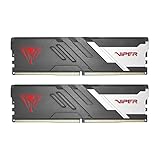


For a current gaming or productivity desktop, DDR5-6000 is a common target. A 32GB kit with two 16GB modules is enough for most users, while 64GB is more comfortable for heavy creative work, virtual machines, or large multitasking loads. In 2026, compatibility remains more important than choosing the biggest number printed on the box.
Top 3 picks at a glance
Quick Verdict
Choose AMD EXPO when you are building an AMD Ryzen system and want the most direct path to a rated DDR5 speed. EXPO profiles are designed for AMD platforms and typically make memory setup straightforward on compatible Ryzen motherboards.
Choose Intel XMP when you are using an Intel processor and motherboard, particularly if the kit is specifically validated for XMP 3.0. XMP has been widely used across Intel desktop platforms and offers broad motherboard support.
If you want flexibility, look for a kit that lists both AMD EXPO and Intel XMP. The G.SKILL Flare X5 Series DDR5 kit, for example, advertises both standards, 32GB capacity, speeds up to 6000MT/s, CL36 timings, and 1.35V operation. A dual-profile kit is useful if you might move between platforms later, though it does not guarantee identical results on every board.
Side by Side
| Consideration | DDR5 EXPO | Intel XMP |
|---|---|---|
| Primary platform | AMD Ryzen desktops | Intel Core desktops |
| Comfort, or ease of setup | Usually simple on compatible AMD boards | Usually simple on compatible Intel boards |
| Durability | Profile does not determine physical durability | Profile does not determine physical durability |
| Price range for 32GB DDR5 | About $90–$515, depending on brand and design | About $90–$515, depending on brand and design |
| Maintenance | Normally enable once; BIOS updates may require checking settings | Normally enable once; BIOS updates may require checking settings |
| Space needed | Usually two DIMM slots; module height varies from roughly 32mm to 45mm | Usually two DIMM slots; module height varies from roughly 32mm to 45mm |
| Look | Available in plain black, white, and RGB designs | Available in plain black, white, and RGB designs |
| Resale flexibility | Best when the kit also includes XMP | Best when the kit also includes EXPO |
| Best for | AMD-focused builds and easy Ryzen tuning | Intel-focused builds and established XMP support |
These are not separate types of memory chips. A DDR5 module can carry an EXPO profile, an XMP profile, both, or neither. The profile is stored information that the motherboard reads during setup. The memory’s capacity, physical dimensions, heat spreader, rated speed, timings, and voltage are separate specifications.
Where DDR5 EXPO Wins
EXPO’s main advantage is platform alignment. On an AMD motherboard, selecting an EXPO profile in firmware is generally the intended way to reach the kit’s advertised performance. Instead of entering values for frequency, primary timings, and DRAM voltage individually, the board loads the saved settings together.
This can be especially useful for buyers who want a tidy, low-maintenance build. A 32GB DDR5-6000 kit may run at a slower standard speed until EXPO is enabled. Once activated, the system can use the advertised data rate and timings, assuming the processor and motherboard’s memory controller can handle them.
EXPO also helps shoppers compare AMD-oriented kits more clearly. For example, the Patriot Viper Venom DDR5 32GB kit is listed at 6000MHz with CL30 timings. Compared with a CL36 kit at the same general data rate, its advertised latency specification looks more aggressive, although real-world performance depends on the complete system and workload. A profile label alone does not make one kit universally faster.
There are still practical limits. Some Ryzen systems may need a BIOS update, a different memory slot arrangement, or a slightly lower setting for complete stability. Two matching modules are normally preferable to four because they place less strain on the memory controller. Always consult the motherboard’s memory support list when possible.
Where XMP Memory Profile Difference Wins
XMP’s strength is its long-established presence on Intel-compatible motherboards. XMP 3.0 can store multiple settings and, on supported platforms, may allow users to save customized profiles. For an Intel desktop, selecting an XMP profile is often the simplest way to use a performance-rated kit without manual overclocking.
The important distinction is that XMP is not automatically restricted to Intel hardware. Many AMD boards can read an XMP profile, and many memory kits support both standards. However, an XMP-only kit may not behave exactly as expected on an AMD platform, while an EXPO-only kit may not offer the most convenient setup on an Intel board.
Compatibility matters more than the name on the package. A kit advertised as 6000MT/s may require 1.35V, specific timings, and a modern motherboard BIOS. If the profile fails to boot, the board may revert to its safe default. That is a settings issue, not necessarily defective memory.
For shoppers who want a neutral-looking build, XMP and EXPO are available in many styles. The CORSAIR Vengeance LPX DDR4 kit, for instance, supports Intel XMP and AMD EXPO, but it is DDR4 rather than DDR5. It cannot be installed in a DDR5 motherboard because the notch position and electrical design differ. The lesson is simple: confirm the memory generation before comparing profiles.
Cost Over 5 Years
The profile itself usually adds little to the cost. Price is driven more by capacity, speed, timings, heat spreader, RGB lighting, brand, and availability. A realistic five-year comparison should include the complete platform rather than treating EXPO and XMP as separate paid features.
For a 32GB DDR5 kit, a sensible shopping range is roughly $90–$180 for mainstream non-RGB models, with premium or decorative kits reaching approximately $200–$515. The listed G.SKILL Flare X5 kit is priced at $479.99, while the RGB-equipped G.SKILL Trident Z5 RGB kit is listed at $514.99. Those prices are substantially above typical sale pricing, so compare current listings carefully rather than assuming the profile explains the difference.
The Patriot Viper Venom 32GB DDR5 kit is listed at $479.99, while the CORSAIR Vengeance LPX 32GB DDR4 kit is listed at $249.99. The lower DDR4 price does not make it a direct substitute for DDR5; it belongs to an older memory platform. Over five years, buying the correct generation and capacity is usually more economical than saving money on incompatible or undersized memory.
Power costs are normally minor. A two-module DDR5 kit commonly operates around 1.25–1.35V under its performance profile, and the difference in household electricity cost is generally much smaller than the cost of replacing a mismatched motherboard or upgrading capacity later. RGB lighting can add some consumption, but the larger financial issue is platform compatibility.
Which One for Your Home
Small apartment
Choose a compact, non-RGB two-module kit with a low or medium heat spreader. Confirm that the module height will clear the CPU cooler; roughly 32mm is easier to accommodate than a 44mm-plus RGB design. EXPO is a natural choice for a compact AMD build, while XMP is equally sensible for Intel.
Family with kids or pets
Prioritize stability, warranty support, and a closed case over lighting. A plain black kit reduces visual distraction and has fewer lighting controls to manage. Use two matched modules, enable the appropriate profile, and run a stability test before relying on the computer for schoolwork or household administration.
Rental
A dual-profile kit provides the most flexibility if you may sell or move the desktop later. The G.SKILL Flare X5 and Trident Z5 RGB examples both list AMD EXPO and Intel XMP 3.0 support. Select the profile that matches the installed platform, and keep the original packaging for easier resale.
Long-term home
Buy for the motherboard and processor you expect to keep, but consider 64GB if you regularly edit high-resolution video, use design software, or run several demanding applications. For a conventional gaming and productivity system, 32GB remains a practical baseline. A reliable DDR5-6000 kit with the correct profile is usually a better long-term choice than paying for extreme speeds you will not use.
FAQ
Is EXPO faster than XMP?
Neither is inherently faster. EXPO and XMP are profile standards, not performance grades. The actual result depends on the kit’s data rate, timings, voltage, processor, motherboard, and workload.
Can I use XMP RAM with an AMD processor?
Often, yes. Many AMD motherboards can load XMP settings, but support varies by board and BIOS. A kit labeled for both EXPO and XMP is the safer choice when platform flexibility matters.
Can I use EXPO RAM with Intel?
Sometimes. Intel boards may read EXPO settings, but an XMP-labeled or dual-profile kit is generally more predictable for an Intel system. Check the motherboard’s supported memory list before buying.
Do EXPO and XMP affect compatibility with a CPU cooler?
No. The profile does not change the module’s physical height. The heat spreader and RGB diffuser do. Check the RAM clearance specification for the cooler, especially when choosing tall modules in a small case.


