Our Short List of 3
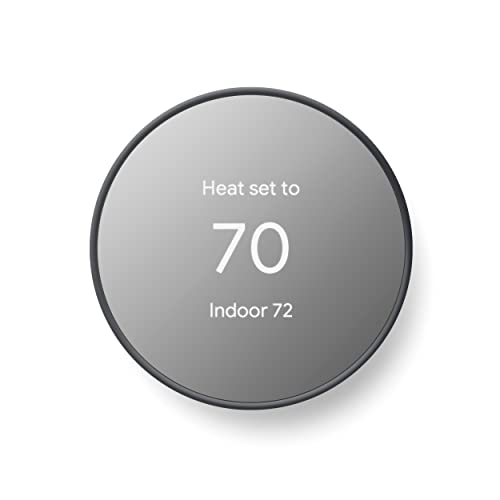
- Best for: Renters on conventional systems with no C wire who want the simplest swap.
- Works with 85 percent of 24-volt heating and cooling systems, including heat pumps
- Conventional systems: one stage of heat and cool, plus a second stage of either
- Heat pumps: one stage with auxiliary or emergency heat
- Power: HVAC system wires with 2 AAA backup batteries included

- Best for: Renters who want a room sensor and wide system compatibility with no wiring changes.
- Works with most 24-volt systems, including gas, electric, oil, forced air, heat pump and radiant
- Conventional: up to three stages of heating and three of cooling
- Heat pump: up to three stages with auxiliary and emergency heat
- C wire: not required in most homes; patented Power Sharing

- Best for: Renters on conventional systems who prefer a guided, level-assisted install.
- C wire not required on most systems; the maker’s footnote requires one for heat-only, cool-only and heat pump systems
- Application: single-stage and multi-stage heat and cool; 2 Heat/1 Cool or 1 Heat/2 Cool
- Built-in level and guided app installation
- Works with Amazon Alexa, Google Assistant and Samsung SmartThings
All 5 Picks at a Glance
| Product | Specs | Action |
|---|---|---|
| Google Nest Thermostat (2020) |
| Check price on Amazon |
| Google Nest Learning Thermostat (4th Gen) |
| Check price on Amazon |
| Sensi Lite Smart Thermostat |
| Check price on Amazon |
 ecobee Smart Thermostat Premium |
| Check price on Amazon |
 Amazon Smart Thermostat |
| Check price on Amazon |
In an apartment, the thermostat decision is rarely about screens or apps. It is about the wires behind the unit you already have and what your lease lets you change. Many rentals have no C wire, and some thermostats quietly require one, or expect an adapter fitted at the furnace — a part of the building you may not be allowed to touch. Pick the wrong model and the install stalls before it starts, however good the thermostat itself is.
This guide is for renters on conventional furnaces or air conditioning, renters with heat pumps, and Alexa households in buildings wired for 24-volt systems. The picks below were chosen from the install facts stated on their Amazon product pages: each model’s C-wire position, what adapters are included in the box, and which system types the listing names. Models that demand furnace access are flagged as such rather than presented as renter-friendly.
Our Top Picks
Top 3 picks at a glance
Quick Picks
As an Amazon Associate we earn from qualifying purchases.
| Product | Best for | Key spec from title |
|---|---|---|
| Google Nest Thermostat (2020) | Renters on conventional systems with no C wire | Programmable Wi-Fi thermostat with guided self-install |
| Google Nest Learning Thermostat (4th Gen) | Renters who want a room sensor included | Adaptive Eco with a Nest Temperature Sensor in the box |
| Sensi Lite Smart Thermostat | Renters who want the simplest guided install | C-Wire Not Required on Most Systems, per the listing title |
| ecobee Smart Thermostat Premium | Renters whose landlord allows furnace-board access | Smart Sensor and air quality monitor included |
| Amazon Smart Thermostat | Apartments that already have a C wire | Works with Alexa and Ring; C-wire required, per the listing title |
How to Choose
Start With the C-Wire Question
The common wire, or C wire, gives a thermostat continuous power. Older apartment systems often run on four wires with no C wire at the wall, and that single fact eliminates some models outright. Two of the picks below, the Nest Thermostat (2020) and the Sensi Lite, are designed to run without one on most conventional systems, and the Nest Learning Thermostat’s maker states it needs no C wire in most homes. Before ordering anything, pull your current thermostat off its base and count the wires; if a C terminal is already connected, your options widen considerably.
Know What You Are Allowed to Touch
Swapping the thermostat at the wall is one thing; fitting an adapter at the furnace is another. The ecobee models solve a missing C wire with a Power Extender Kit, and the Honeywell T9 includes a power adapter, but both wire in at the heating equipment, not at the thermostat. In a rental, that usually means landlord permission and possibly access to a locked utility space. Ask before you buy, keep the old thermostat and a photo of its wiring, and plan to refit the original unit when you move out.
Match the Thermostat to Your System Type
Most apartment systems are single-stage conventional furnaces or air conditioners, and every pick here covers those. Heat pumps are the trap: the Nest Thermostat (2020) and the Sensi Lite both run without a C wire on conventional systems, yet both makers state that heat pump systems need a C wire or a power connector after all. Apartments heated by line-voltage electric baseboards are a different case again — none of these 24-volt thermostats is made for 120 to 240 volt baseboard circuits.
Room Sensors, Apps and Voice Control
Apartment temperatures are rarely even, and a room sensor can matter more than a bigger screen. The Nest Learning Thermostat includes one Nest Temperature Sensor in the box, and the ecobee Premium includes its SmartSensor; the 2020 Nest Thermostat, notably, does not work with Nest’s temperature sensor at all. App control is standard across the picks. Voice support varies: the Amazon Smart Thermostat is built around Alexa and Ring and has no microphone of its own, while the Nest models work with Google Assistant and Alexa.
A Safety Note on Wiring
Every thermostat in this guide is a low-voltage, 24-volt device. Amazon states plainly that its Smart Thermostat does not work with 110 to 240 volt systems such as electric baseboard heat, and Honeywell scopes its thermostats the same way; if your apartment’s heaters are wired at line voltage, stop here — none of these picks is safe or compatible for that job. On heat pump systems, Amazon’s own wiring guide puts backup electric heat on the W2 terminal, never on W, and emergency heat on E, so copy your old wiring exactly and photograph it before you disconnect anything.
The 5 Best Options
Google Nest Thermostat (2020)
- Best for: Renters on conventional systems with no C wire who want the simplest swap.
- Works with 85 percent of 24-volt heating and cooling systems, including heat pumps
- Conventional systems: one stage of heat and cool, plus a second stage of either
- Heat pumps: one stage with auxiliary or emergency heat
- Power: HVAC system wires with 2 AAA backup batteries included
Renters on conventional systems with no C wire who want the simplest swap.
Availability was thin in the most recent check — offers came from marketplace sellers with only a few units — so confirm a new-condition offer on the live listing before ordering; it also does not work with the Nest Temperature Sensor, and heat pump systems need a C wire or Nest Power Connector despite the no-C-wire headline.
For a renter on a conventional furnace or air conditioner, this is the lowest-friction pick in the pool. Google designed it to work if your home doesn’t have a common wire, and the listing’s own install claim is that installation usually takes 30 minutes or less, with step-by-step guidance in the Google Home app. It covers one stage of heating and cooling plus a second stage of either, runs from your system wires with two included AAA batteries as backup, and keeps the feature list deliberately simple — which is exactly what a reversible rental install needs.
Google Nest Learning Thermostat (4th Gen)
- Best for: Renters who want a room sensor and wide system compatibility with no wiring changes.
- Works with most 24-volt systems, including gas, electric, oil, forced air, heat pump and radiant
- Conventional: up to three stages of heating and three of cooling
- Heat pump: up to three stages with auxiliary and emergency heat
- C wire: not required in most homes; patented Power Sharing
Renters who want a room sensor and wide system compatibility with no wiring changes.
The no-C-wire claim is the maker’s “most homes” wording — a small share of systems still needs a C wire or the Power Connector, which is sold separately.
The Learning Thermostat is the pick for renters who want more than a basic swap without touching the furnace wiring. Google states it is designed to work whether or not your home has a C wire, using its patented Power Sharing, and that a C wire or Nest Power Connector is needed in under one percent of cases. It handles a far wider range of systems than the 2020 model — up to three stages of heating and cooling on conventional systems — and the box includes a Nest Temperature Sensor (2nd Gen), useful when one room in the apartment runs hot or cold.
Sensi Lite Smart Thermostat
- Best for: Renters on conventional systems who prefer a guided, level-assisted install.
- C wire not required on most systems; the maker’s footnote requires one for heat-only, cool-only and heat pump systems
- Application: single-stage and multi-stage heat and cool; 2 Heat/1 Cool or 1 Heat/2 Cool
- Built-in level and guided app installation
- Works with Amazon Alexa, Google Assistant and Samsung SmartThings
Renters on conventional systems who prefer a guided, level-assisted install.
The no-C-wire promise excludes heat pump, heat-only and cool-only systems — if your apartment has a heat pump, budget for a C wire; it also cannot use room sensors.
The Sensi Lite is built around the same renter problem: its listing title states a C wire is not required on most systems, and the install aids are practical ones — a built-in level and guided installation in the app. It covers single-stage and multi-stage conventional systems, carries Copeland’s data-privacy positioning, and the maker states savings of about 23 percent of HVAC energy from scheduling, remote access and geofencing. For a straightforward apartment furnace or air conditioner, it is the alternative to the Nest approach from a long-established thermostat maker.
ecobee Smart Thermostat Premium
- Best for: Renters whose landlord will allow the furnace-end Power Extender Kit install.
- Compatible with most 24-volt systems: furnaces, air conditioners (2H/2C), heat pumps (2H/2C plus 2-stage auxiliary heat), boilers and PTACs
- Power Extender Kit and trim kit included for homes without a C wire; the kit fits at the control board
- Includes SmartSensor for room temperature and occupancy
- Built-in air quality monitor; Siri or Alexa built in (Siri needs a compatible home hub)
Renters whose landlord will allow the furnace-end Power Extender Kit install.
The Power Extender Kit wires in at the heating equipment — in many rentals that means landlord permission and utility-room access, so confirm both before ordering.
The Premium is the strongest thermostat here — built-in air quality monitoring, a SmartSensor in the box, and compatibility with 95 percent of systems per its listing — but in an apartment it comes with a condition. If your wall wiring has no C wire, ecobee’s answer is the included Power Extender Kit, and that kit installs at the furnace or air-handler control board, not at the thermostat. With a cooperative landlord and access to the equipment, it is an excellent install; without that access, the no-C-wire route is closed and the picks above are the realistic ones.
Amazon Smart Thermostat
- Best for: Alexa households in apartments that already have a C wire.
- C wire required, or a C-wire power adapter (sold separately); no battery fallback
- Compatible with most 24-volt systems, including conventional forced air, heat pumps and radiant boilers
- Heat pumps: air-to-air and geothermal only; dual fuel is not supported
- Works with Alexa and Ring; controlled through the Alexa app; no built-in microphone
Alexa households in apartments that already have a C wire.
Without an existing C wire you are back to a furnace-end adapter install, which most renters cannot do — check your wiring before choosing it.
Amazon’s thermostat only makes sense in an apartment under one condition: a C wire already exists at the wall. The listing title itself says a C wire is required, Amazon’s guide confirms there is no battery fallback — without the wire the display stays unpowered — and the alternative is a C-wire power adapter, sold separately, fitted at the equipment end. If your newer apartment already has the wire, you get a simple Alexa- and Ring-centred thermostat controlled through the Alexa app. If it doesn’t, this is the wrong pick for a rental.
Which One Fits Your Situation
Your Apartment Has No C Wire and a Conventional Furnace
Start with the Nest Thermostat (2020) or the Sensi Lite. Both are designed to run without a C wire on conventional systems, both install at the wall only, and both come out again cleanly at move-out. The Nest adds dual-band Wi-Fi and battery backup; the Sensi Lite adds a built-in level and guided app setup. Either way, photograph the old wiring before you swap.
One Room Is Always Too Hot or Too Cold
Choose between the two sensor-in-the-box picks. The Nest Learning Thermostat (4th Gen) includes a Nest Temperature Sensor (2nd Gen) and needs no C wire in most homes, making it the easier rental install. The ecobee Premium includes its SmartSensor and adds air quality monitoring, but its no-C-wire route runs through the furnace-end Power Extender Kit, so it suits renters with landlord cooperation.
Your Landlord Will Allow a Furnace-End Adapter
The ecobee Premium becomes the strongest option: the Power Extender Kit is in the box, the listing claims compatibility with 95 percent of systems, and the SmartSensor is included. Get the permission in writing, have the kit fitted at the control board as ecobee directs, and keep the original thermostat to refit when the lease ends.
Your Apartment Already Has a C Wire and Runs on Alexa
The Amazon Smart Thermostat is the natural fit: it is built for Alexa and Ring, controlled through the Alexa app, and its one hard requirement — the C wire — is already met. Note it has no microphone of its own, so voice control runs through your other Alexa devices, and its Wi-Fi is 2.4 GHz only.
Common Mistakes
- Assuming “no C wire needed” covers heat pumps — the Nest Thermostat (2020) and Sensi Lite both require a C wire or power connector on heat pump systems.
- Fitting a Power Extender Kit or power adapter at the furnace without the landlord’s permission.
- Choosing a C-wire-mandatory model such as the Sensi Touch 2 for a rental — it has no no-C-wire path at all.
- Discarding the old thermostat instead of keeping it to refit at move-out.
- Ordering a 24-volt thermostat for line-voltage electric baseboard heat, which none of these models supports.
Frequently Asked Questions
Can I install a smart thermostat in a rental without rewiring?
Often, yes. The Nest Thermostat (2020), Sensi Lite and Nest Learning Thermostat are all designed to work without a C wire on most conventional systems, so the swap happens at the wall only. Heat pump systems are the exception — even the no-C-wire models need a C wire or a power connector there.
Do I need my landlord’s permission to change the thermostat?
If the install is a like-for-like swap at the wall, many renters simply keep the original unit to refit later. Anything that touches the furnace — a Power Extender Kit or a C-wire adapter — changes the building’s equipment, so get permission first. When in doubt, ask; a thermostat is not worth a deposit dispute.
What if my apartment has a heat pump?
Every pick here supports heat pumps, but the wiring caveat flips: the Nest Thermostat (2020) and Sensi Lite need a C wire or power connector on heat pump systems, and the Amazon Smart Thermostat supports only air-to-air and geothermal heat pumps, not dual fuel. Check the system type before relying on any no-C-wire claim.
Will these thermostats work with electric baseboard heat?
No. These are 24-volt thermostats for systems such as furnaces, boilers and heat pumps. Amazon states its thermostat does not work with 110 to 240 volt systems like electric baseboard heat, and the other makers scope their models the same way. Line-voltage heating needs a thermostat built for that voltage class.
Related guides
More from Amazon
Programs that pair well with the guide above. Offers and eligibility are set by Amazon and may change.
A free business account with business pricing and bulk-buying tools for work, shop or home office.
Create a business accountFree shipping on eligible items, Prime Video and more. Eligible new members can start with a free trial.
Start a Prime free trialAudiobooks and podcasts to listen to on the go. Eligible new members can start with a free trial.
Try Audible freeAd-free music streaming. Eligible new subscribers can start with a free trial.
Try Music Unlimited freeAs an Amazon Associate we earn from qualifying purchases.