
The best RGB RAM for most gaming PCs is a 32GB (2×16GB) DDR5-6000 kit with AMD EXPO or Intel XMP support, a CAS latency around CL30–36, and a low enough heat spreader to clear your CPU cooler.
As an Amazon Associate we earn from qualifying purchases at no extra cost to you.


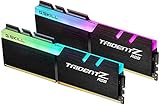
Top 3 picks at a glance
Quick Picks for Different Gaming Builds
| Build situation | Recommended specification | Suitable RGB kit examples | Why it fits |
|---|---|---|---|
| Most AM5 gaming PCs | 32GB, 2×16GB, DDR5-6000, CL30–36, EXPO | G.Skill Trident Z5 Neo RGB; Corsair Vengeance RGB DDR5 | Strong gaming performance without pushing the Ryzen memory controller too hard |
| High-end Intel gaming PC | 32GB, 2×16GB, DDR5-6400 to 7200, CL32–36, XMP | Kingston Fury Beast RGB DDR5; TeamGroup T-Force Delta RGB DDR5 | Higher bandwidth can benefit Intel platforms when the motherboard and CPU support it |
| Gaming plus streaming or creation | 64GB, 2×32GB, DDR5-6000, CL30–36 | G.Skill Trident Z5 Neo RGB or Corsair Vengeance RGB DDR5 capacity kits | More headroom for games, browser tabs, streaming software, and creative applications |
| Older DDR4 motherboard | 32GB, 2×16GB, DDR4-3600, CL16–18 | Corsair Vengeance RGB Pro SL; Kingston Fury Beast RGB DDR4 | DDR5 will not work in a DDR4 motherboard, regardless of physical appearance |
| Large air cooler or compact case | Low-profile RGB DDR5, preferably under 45mm tall | Corsair Vengeance RGB DDR5 | Reduced chance of interference with a front CPU-fan clip or side panel |
What Makes RGB RAM Good for Gaming?
RGB lighting is mainly a design feature; memory speed, timings, capacity, and platform compatibility determine gaming performance. The best RGB RAM balances those specifications rather than choosing the kit with the most elaborate diffuser.
For a new DDR5 gaming PC, 32GB remains the sensible starting point. A 2×16GB kit runs in dual-channel mode and is usually easier for the CPU’s integrated memory controller than four separate modules. Choose 64GB if you play heavily modded games, stream while gaming, edit video, run virtual machines, or keep a large number of applications open.
Capacity beyond 64GB is rarely necessary for gaming alone. It can make sense for professional workloads, but adding more memory does not automatically increase frame rates if the game is already comfortably below your existing capacity.
Speed and Latency: The Numbers That Matter
DDR5-6000 is a particularly practical target on AMD Ryzen 7000 and Ryzen 9000 desktop platforms because it often offers a good balance between bandwidth, latency, stability, and price. DDR5-6400 or faster can be worthwhile on some Intel systems, but the result depends on the processor’s memory controller and the motherboard’s layout.
Do not judge a kit by its advertised data rate alone. CAS latency also matters. A useful approximation for first-word CAS latency is:
Latency in nanoseconds = CAS latency × 2000 ÷ memory data rate
| Memory kit | Approximate CAS latency | Approximate first-word latency | The practical takeaway |
|---|---|---|---|
| DDR5-6000 CL30 | 30 cycles | 10.0 ns | Excellent balanced target for many AM5 gaming systems |
| DDR5-6000 CL36 | 36 cycles | 12.0 ns | Often cheaper, with a small latency disadvantage |
| DDR5-6400 CL32 | 32 cycles | 10.0 ns | Similar CAS latency to DDR5-6000 CL30, but with more bandwidth |
| DDR5-7200 CL34 | 34 cycles | 9.4 ns | Fast on paper, but more dependent on motherboard and CPU support |
Bandwidth also rises with data rate. A dual-channel DDR5-6000 configuration has a theoretical bandwidth of approximately 96GB/s: 6000 million transfers per second × 8 bytes per channel × two channels. Real applications deliver less than this because of overhead, but the calculation shows why two matched modules are preferable to a single stick.
Recommended RGB RAM Kits
G.Skill Trident Z5 Neo RGB
Trident Z5 Neo RGB is a strong choice for AMD AM5 builds when purchased in an EXPO-rated configuration. DDR5-6000 versions with tight timings, including CL30 variants, are especially attractive for gaming. The tall heat spreader and light bar look premium, but check cooler clearance before buying.
There are also Intel-oriented Trident Z5 RGB versions using XMP profiles. Make sure the exact kit—not just the product family—lists the memory profile your motherboard supports.
Corsair Vengeance RGB DDR5
Corsair Vengeance RGB DDR5 is a versatile option with broad capacity and speed availability. It is generally a better fit than very tall enthusiast modules when a build uses a large air cooler, although the exact height still varies by model and heat spreader design.
Its main advantage is ecosystem integration. Corsair’s iCUE software can coordinate memory lighting with compatible Corsair fans, coolers, keyboards, and other components. This is useful if you want one lighting application, but installing multiple RGB utilities can create conflicts.
Kingston Fury Beast RGB DDR5
Kingston Fury Beast RGB DDR5 is a sensible mainstream option for both AMD and Intel systems. It is available in gaming-friendly 32GB configurations and commonly includes platform-specific XMP or EXPO versions. Check the product label carefully because similar-looking kits may use different profiles and timings.
The relatively conventional design makes it easier to match with a wide range of cases and motherboard layouts. It is a good choice when stability and broad compatibility matter more than chasing the highest possible frequency.
TeamGroup T-Force Delta RGB DDR5
T-Force Delta RGB DDR5 emphasizes a large, visible lighting area and is available in high-speed configurations. It suits a showcase case with a tempered-glass side panel, particularly when the memory is positioned clearly beneath the motherboard’s top edge.
Its angular heat spreader can be taller than low-profile alternatives, so measure around the CPU socket. High-frequency versions should be treated as enthusiast choices: verify the motherboard’s memory support list and be prepared to reduce the speed if the advertised profile is unstable.
RGB Software and Lighting Compatibility
RGB memory normally connects to the motherboard through software rather than a separate lighting cable. Common control ecosystems include ASUS Aura Sync, MSI Mystic Light, Gigabyte RGB Fusion, ASRock Polychrome RGB, and Corsair iCUE. A kit may support motherboard control through standard RGB protocols, while some Corsair products offer deeper control inside iCUE.
Before installing software, decide which application should be the “owner” of the lighting. Running several RGB programs at once can cause flickering, settings that reset after reboot, or devices disappearing from the control panel. If your motherboard software detects the RAM reliably, using one motherboard utility for all components is usually the simplest approach.
Lighting effects consume very little power compared with the CPU or graphics card, but they can add a small amount of heat to the module. This is not normally a gaming concern. The more important issue is whether the RGB diffuser adds height.
Check CPU Cooler and Case Clearance Before Buying
RAM clearance is frequently overlooked with tower air coolers. The front fan may sit directly over the first memory slot, forcing you to raise the fan or move it outward. Raising the fan can make the cooler exceed the case’s maximum CPU-cooler height and prevent the side panel from closing.
- Check the RAM height in the manufacturer’s specifications.
- Check the cooler’s published memory clearance, not only its overall dimensions.
- Measure the distance from the motherboard surface to the case side panel.
- Remember that a front fan moved upward may reduce side-panel clearance by several millimeters.
- For a compact build, favor modules around 35–45mm tall over large showcase designs.
Liquid coolers usually leave the DIMM slots unobstructed, but radiator and tubing placement can still affect access during installation. Install the memory before mounting a top radiator whenever possible.
How to Choose the Right Kit for Your Platform
For AMD Ryzen AM5
Start with 2×16GB DDR5-6000 and an EXPO profile. CL30 is a strong target; CL32 or CL36 may offer better value if the price difference is substantial. Do not assume that a kit rated for Intel XMP will produce the same plug-and-play experience on AMD.
For Intel Core Desktop Systems
DDR5-6400 is a reasonable performance target, while DDR5-7200 and above can be worthwhile for enthusiasts with a capable motherboard and processor. Higher speeds can require manual tuning or a change in memory-controller mode, so a slightly slower kit with tighter timings may be the better everyday choice.
For Existing DDR4 PCs
Buy DDR4 RGB memory rather than DDR5. The notches and electrical requirements differ, and a DDR5 module cannot be installed in a DDR4 DIMM slot. DDR4-3600 CL16 or CL18 remains a practical gaming specification for compatible older platforms.
Setup Steps After Installation
- Install the two modules in the motherboard’s recommended dual-channel slots, commonly A2 and B2. Consult the motherboard manual because slot naming varies.
- Boot at default speed first and confirm that the full capacity appears in the firmware and operating system.
- Enable the EXPO or XMP profile in UEFI. This applies the advertised speed, voltage, and primary timings.
- Run a memory stability test. If the system crashes, fails to boot, or produces errors, update the motherboard firmware and retest.
- If problems continue, reduce the memory speed one step—for example, from DDR5-6400 to DDR5-6000—before changing voltages manually.
The reason for testing after enabling the profile is that the advertised setting is an overclock relative to the platform’s basic JEDEC fallback speed. A kit can be perfectly functional while still needing a lower setting on a particular CPU and motherboard combination.
Frequently asked questions
Is RGB RAM faster than non-RGB RAM for gaming?
No. RGB lighting is mainly a design feature, so it does not determine gaming performance. Memory speed, timings, capacity, and platform compatibility matter more. A suitable gaming kit balances those specifications, such as 32GB in two matched modules with an appropriate DDR5 data rate and CAS latency. Choose RGB based on appearance and software compatibility, not expected frame-rate gains.
Can I mix two different RGB RAM kits in the same PC?
The article recommends using two matched modules rather than four separate modules, but it does not establish that mixing different kits is reliable. Similar-looking memory can use different profiles and timings, so check the exact kit’s specifications and your motherboard’s support. For a new DDR5 gaming PC, a 2×16GB kit is presented as the sensible starting point.
What should I do if my advertised memory profile is unstable?
If a high-frequency profile is unstable, reduce the memory speed. The article specifically notes that high-frequency versions should be treated as enthusiast choices and that advertised speeds depend on the motherboard, processor, and memory controller. A slightly slower kit with tighter timings may be preferable, especially when stability matters more than chasing the highest possible frequency.
Do I need separate cables to control RGB RAM lighting?
Normally, no. RGB memory connects to the motherboard through software rather than a separate lighting cable. Common control ecosystems include ASUS Aura Sync, MSI Mystic Light, Gigabyte RGB Fusion, ASRock Polychrome RGB, and Corsair iCUE. Decide which application should own the lighting, because running several RGB programs at once can cause flickering or settings that reset after reboot.
Will RGB RAM work in any motherboard with memory slots?
No. DDR5 will not work in a DDR4 motherboard, regardless of physical appearance. You also need a kit with a memory profile your platform supports, such as AMD EXPO for many AM5 systems or Intel XMP for Intel-oriented configurations. Check the exact kit, motherboard support list, timings, and physical clearance before buying.
Final Buying Advice
For most new gaming PCs, choose a matched 32GB DDR5 kit at 6000MT/s with CL30–36, selecting EXPO for AMD or XMP for Intel. Move to 64GB if your applications regularly exceed 24GB of usage. Choose a low-profile design when using a large air cooler, and treat 6400MT/s or faster as a platform-dependent upgrade rather than an automatic improvement.
Among the named options, G.Skill Trident Z5 Neo RGB is particularly compelling for an AMD EXPO build, Corsair Vengeance RGB DDR5 is convenient for a Corsair-centered lighting setup, Kingston Fury Beast RGB DDR5 is a dependable mainstream choice, and TeamGroup T-Force Delta RGB DDR5 is well suited to a high-visibility showcase PC. The best RGB RAM is ultimately the kit whose capacity, profile, latency, and physical height match the rest of your system.


