
The modern home office is no longer just a space for a desk lamp, a comfortable chair, and a laptop. For many professionals, creators, and gaming enthusiasts, it has evolved into a high-performance workspace housing custom-built desktop computers. Maintaining these machines is a vital part of keeping your home office running smoothly. Among all maintenance tasks, updating your motherboard’s BIOS is one of the most critical. This essential process ensures compatibility with new hardware, patches security vulnerabilities, and improves overall system stability. However, anyone who has ever stared at a progress bar during a firmware flash knows the lingering anxiety that comes with it: a sudden interruption or a read error can permanently brick an expensive motherboard.
To execute this vital task safely, you need a highly reliable and compatible storage medium. While modern motherboards feature advanced UEFI interfaces, their built-in flashing utilities are notoriously selective about the drives they will read. Attempting to use a massive, high-capacity external hard drive formatted to modern file systems like NTFS or exFAT often leads to detection failures during the pre-boot phase. That is why finding the best high speed flash drive for quick bios updates is a crucial step for any home tech toolkit. We have researched, analyzed, and selected three stellar, highly compatible USB drives that deserve a dedicated spot in your office desk drawer, ensuring your next system maintenance cycle is fast, safe, and completely stress-free.
As an Amazon Associate we earn from qualifying purchases at no extra cost to you. Product prices and availability are accurate as of the date shown and are subject to change.


Top 3 picks at a glance
Quick Picks
| Product | Best for | Price |
|---|---|---|
| 16GB FAT32 USB 2.0 Flash Drive with a USB3.0 C Adapter and Keychain (Grey) | Best for Legacy Systems and USB-C Laptops | $12.34 |
| Vansuny 3 Pack 32GB USB Flash Drives USB 3.0 Metal Waterproof Flash Drive | Best for Rugged Durability and Workstation Value | $22.79 |
| RAOYI 16GB USB 3.0 Flash Drive Up to 80MB/s, Pack of 5, Multicolor | Best for Workspace Organization and Color-Coding | $32.99 |
How We Picked
Selecting the ideal flash drive for motherboard firmware maintenance requires looking past raw storage capacity. In fact, when it comes to BIOS flashing, larger is rarely better. Motherboard flashing utilities typically run in a very basic pre-boot environment that lacks the sophisticated drivers found in modern operating systems. Consequently, these systems rely heavily on the simple, universally recognized FAT32 file system. Because Windows natively limits FAT32 formatting to partitions of 32GB or smaller, we prioritized drives with capacities of 16GB and 32GB. This ensures you can easily format the drive using standard operating system tools without having to download sketchy third-party partition software.
We also evaluated physical construction, port versatility, and electrical stability. A flash drive used for critical updates must maintain a stable connection; a loose physical fit in the USB port can cause a catastrophic disconnection mid-flash. We looked for models with sturdy metal casings, integrated keychains to prevent them from getting lost in a cluttered desk drawer, and options that include USB-C adapters to bridge the gap between thin modern laptops and desktop ports. Finally, we kept pricing within a sensible $10 to $35 range, ensuring you get excellent value whether you need a single dedicated drive or a multi-pack for organizing various system recovery tools.
The 3 Best Picks
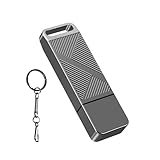
16GB FAT32 USB 2.0 Flash Drive with a USB3.0 C Adapter and Keychain (Grey)
This compact grey drive is tailored specifically for maximum compatibility across both older and modern motherboard platforms. Pre-formatted to FAT32, it eliminates setup headaches right out of the package. It features a highly reliable USB 2.0 interface that is universally recognized by older legacy BIOS chips, yet it includes a modern USB 3.0 Type-C adapter. This allows you to easily download the latest BIOS files on a modern, ultra-thin laptop before plugging the drive into your desktop’s standard Type-A port. Measuring roughly 1.4 inches in length and weighing just 0.3 ounces, it is the perfect dedicated tool for system maintenance.
- Pros: Pre-formatted to FAT32 for immediate compatibility; includes a versatile USB-C adapter.
- Pros: Sturdy grey metal build with a convenient keychain loop.
- Cons: USB 2.0 speeds are relatively slow for transferring massive daily work files.
When to skip: Skip this drive if you regularly transfer large 4K video files or need high-speed daily storage alongside your system maintenance tasks.
Vansuny 3 Pack 32GB USB Flash Drives USB 3.0 Metal Waterproof Flash Drive
For home offices where coffee spills and busy desk environments are common, the Vansuny 3-pack offers exceptional physical protection and modern speed. These 32GB drives feature rugged, waterproof metal casings that safeguard your critical firmware update files from environmental hazards. Utilizing a fast USB 3.0 interface, they drastically reduce the time it takes to move files from your main computer to the drive. Each drive measures 1.5 by 0.4 inches and weighs a solid 0.45 ounces. The 32GB capacity is the sweet spot, offering plenty of space while remaining fully compatible with FAT32 formatting guidelines.
- Pros: Waterproof and shockproof metal design protects critical data from office spills.
- Pros: Fast USB 3.0 interface speeds up file preparation on your PC.
- Cons: May require manual formatting to FAT32 depending on factory settings.
When to skip: Skip this pack if you only have a single computer and prefer not to manage multiple loose drives in your workspace.
RAOYI 16GB USB 3.0 Flash Drive Up to 80MB/s, Pack of 5, Multicolor
Organizing a busy home workshop or a multi-PC household requires clear visual cues, and this RAOYI 5-pack delivers perfectly. These 16GB USB 3.0 drives feature distinct, vibrant colors, allowing you to dedicate the blue drive for BIOS updates, the red for operating system recovery, and others for general storage. With read speeds up to 80MB/s, transferring files is remarkably swift. They feature a classic 360-degree swivel design that protects the USB connector without a cap to lose. Each drive weighs approximately 0.35 ounces and operates on standard 5V USB power, ensuring stable performance during delicate motherboard flash sequences.
- Pros: Multicolor design simplifies organization and system labeling in your office.
- Pros: Capless swivel design prevents lost caps in cluttered drawers.
- Cons: Swivel metal clip can loosen over years of heavy, continuous rotation.
When to skip: Skip this option if you prefer heavy, solid metal-body drives over lightweight plastic and metal hybrid designs.
Buying Guide
Why FAT32 and Small Capacities Matter for BIOS Flashing
When you enter your motherboard’s BIOS or UEFI screen, the computer is operating on a very basic level. It has not loaded your operating system, your advanced storage drivers, or your high-speed controller configurations. Because of this, motherboard firmware can usually only read drives formatted in the simple, legacy FAT32 file system. Modern file systems like NTFS, exFAT, or APFS will simply go unrecognized, leaving you unable to select your update file. Furthermore, standard operating systems like Windows have a native formatting limitation that prevents partitions larger than 32GB from being formatted to FAT32. Opting for a 16GB or 32GB drive ensures that you can format the drive instantly without relying on third-party software tools, guaranteeing a seamless detection process when your PC boots into its flashing utility.
USB 2.0 vs. USB 3.0: Speed vs. Compatibility
The choice between USB 2.0 and USB 3.0 is a common dilemma when looking for the best high speed flash drive for quick bios updates. USB 2.0 is an older standard that operates at a maximum theoretical speed of 480 Mbps. While slow by modern standards, its simplicity makes it incredibly reliable and universally compatible with almost every motherboard ever made, including legacy systems. On the other hand, USB 3.0 drives offer transfer rates up to 5 Gbps (with real-world read speeds often reaching 80MB/s). This speed is highly beneficial when you are downloading and copying files from your primary workstation. For modern motherboards (especially those with dedicated BIOS Flashback buttons on the rear I/O panel), USB 3.0 drives are perfectly safe and offer a faster overall experience, though having a USB 2.0 drive on hand is a great insurance policy for older hardware.
Physical Build and Port Selection for Home Office Setups
Your home office desk is a hub of activity, which means your tech accessories need to be both durable and easy to locate. When choosing a drive for critical system updates, look for physical features that enhance usability and protection:
- Metal Casings: Metal bodies disperse heat more efficiently during prolonged read/write cycles and protect the internal controller from physical crushing.
- Waterproofing: A waterproof rating ensures that an accidental splash from a coffee mug or water bottle won’t ruin your prepared update files.
- Keychain Loops: Small drives are easily lost. A sturdy loop allows you to clip the drive to a wall hook, a key ring, or a dedicated tech organizer.
- Interface Adapters: Many modern laptops only feature USB-C ports, while desktop motherboard I/O panels still rely heavily on USB-A ports for BIOS updates. A drive that includes a high-quality Type-A to Type-C adapter ensures you can bridge these two standards without buying extra dongles.
Our Verdict
If your primary goal is absolute, hassle-free compatibility right out of the box, the 16GB FAT32 USB 2.0 Flash Drive with a USB3.0 C Adapter and Keychain ($12.34) is an outstanding choice. Its pre-formatted FAT32 state and included USB-C adapter make it a versatile tool for bridging old and new office tech. For those who prioritize physical durability and want multiple backup drives for their workstation, the Vansuny 3 Pack 32GB USB Flash Drives ($22.79) provides heavy-duty, waterproof metal construction that can survive any desk mishap. Finally, if you manage multiple computers or want to keep your system recovery tools meticulously organized, the RAOYI 16GB USB 3.0 Flash Drive Pack of 5 ($32.99) offers excellent color-coded convenience and fast 80MB/s speeds. As we look ahead to system builds in 2026, keeping a dedicated set of these highly compatible drives in your desk drawer remains the smartest way to future-proof your tech maintenance routine.
FAQ
Can I use a 64GB or larger drive for a BIOS update?
While it is technically possible, it is not recommended. Windows does not natively allow you to format drives larger than 32GB to the FAT32 file system. To do so, you would have to use third-party partition managers. Furthermore, many older motherboard UEFI utilities struggle to read partition maps on high-capacity drives, which can lead to your update file not being detected during the critical boot phase.
Why does my motherboard not recognize the high-speed flash drive?
This issue is usually caused by incorrect formatting or partition style. Ensure your drive is formatted to FAT32 and that it uses the Master Boot Record (MBR) partition scheme rather than GUID Partition Table (GPT), as basic motherboard utilities often cannot read GPT drives. Additionally, ensure the BIOS file is placed in the root directory of the drive and is named correctly according to your motherboard manufacturer’s instructions.
Is USB 3.0 safe for flashing an older motherboard?
Yes, USB 3.0 is backward compatible with USB 2.0 ports. However, some legacy motherboards manufactured before 2012 may have trouble initializing USB 3.0 controllers before the operating system loads. If you are updating a very old system, using a dedicated USB 2.0 drive plugged into a black USB 2.0 port on the back of the motherboard is the safest approach.
How do I format my drive to FAT32 on Windows?
Insert your drive, open File Explorer, and right-click on the drive icon. Select “Format” from the dropdown menu. In the “File System” box, select “FAT32” (this option will only appear if the drive is 32GB or smaller). Leave the allocation unit size at default, check the “Quick Format” box, and click “Start.” Once complete, your drive is ready to receive the BIOS file.
Related guides
- 8 Best Secondary SSDs for Storing Steam Library Games: Tested and Ranked (2026)
- 4 Best Thin Client M2 SSDs for Handheld Gaming Pcs: Tested and Ranked (2026)
- 8 Best Rugged Portable SSDs for Outdoor Photography Workflow: Tested and Ranked (2026)
- Best High Capacity Nas Drives for Home Media Backup: Tested and Ranked: 8 Tested (2026)


