
The Xbox Series X comes with a 1TB internal drive, and after the operating system takes its share you’re left with roughly 800GB of usable space. Modern games routinely eat 80–150GB each — Call of Duty titles can push past 200GB — so a serious player can fill that drive in a handful of installs. The catch with the Series X is that external drives can’t run optimized Series X|S games directly; they store and archive them, then games are transferred to the internal drive (or an expansion card) to play. That makes choosing the right external storage a balance of capacity for your library, transfer speed for fast swaps, and, if you want true native-speed play, an expansion card that slots into the back of the console.
We’ve rounded up eight drives across every category: purpose-built expansion cards, high-speed portable SSDs, and high-capacity mechanical game drives. Some are Xbox-specific with official licensing and perks like bundled Game Pass; others are cross-platform workhorses you can share with a PS5, PC, or Mac. Prices range from $34.99 for a starter drive to $479.99 for a 2TB expansion card, so there’s something for every budget and library size heading into 2026.
As an Amazon Associate we earn from qualifying purchases at no extra cost to you. Product prices and availability are accurate as of the date shown and are subject to change.




Top 3 picks at a glance
Quick Picks
| Product | Best for | Price |
|---|---|---|
| Seagate 5TB Game Drive for Xbox | Massive licensed capacity on a budget | $219.99 |
| Sandisk 1TB Optimus GX C50 Expansion Card | Native-speed Series X game play | $239.99 |
| Avolusion PRO-Z 4TB (White, Renewed) | Cheapest bulk storage | $139.99 |
| Western Digital 1TB P40 Game Drive SSD | Fast cross-platform SSD with RGB | $209.99 |
| WD_BLACK 4TB P10 Game Drive for Xbox | Balanced capacity with Game Pass bonus | $229.99 |
| Sandisk 2TB Optimus GX C50 Expansion Card | Maximum expansion-card storage | $479.99 |
| WD_Black 6TB P10 Game Drive | Largest library storage | $334.99 |
| YOTUO 500GB External Hard Drive | Tightest budgets and light use | $34.99 |
How We Picked
We focused on the practical realities of Xbox Series X storage. First, capacity: with games averaging 50–150GB, we prioritized drives that hold at least a handful of titles, up to a 6TB option that can archive dozens. Second, transfer behavior: mechanical drives connect over USB 3.0 and typically move optimized Series X games at roughly 100–130MB/s in practice, so a 100GB game can take 15–20 minutes to shift to internal storage; the expansion cards and the P40 SSD cut that dramatically. Third, legitimacy and support: licensed Xbox drives plug into the console’s storage setup seamlessly, while renewed and third-party drives trade some assurance for price. We excluded nothing purely on brand — the YOTUO earns its place as an honest ultra-budget option — but we flagged every trade-off. Prices below are list prices at the time of writing and frequently dip 10–20% during sale events.
The 8 Best Picks
1. Seagate 5TB Game Drive for Xbox (STKX5000403)
Seagate’s officially licensed Game Drive is the straightforward choice for anyone whose main problem is too many games and too little space. At 5TB, it archives a genuinely enormous library — think 40–70 titles depending on size — and setup is as simple as plugging into the Xbox’s USB port and confirming the format prompt. The compact clamshell housing travels easily, and Xbox-specific licensing means firmware updates and compatibility are handled without fuss. It’s a hard drive, so expect traditional USB 3.0 transfer speeds rather than SSD quickness.
- Officially licensed for Xbox with plug-and-play setup
- 5TB of archival space for a very large game library
- Mechanical drive speeds mean slower game transfers
Skip it if you frequently move games back and forth and would rather pay more for SSD-level transfer speed.
2. Sandisk 1TB Optimus GX C50 Storage Expansion Card
This is the closest thing to a flawless Xbox storage upgrade: a card that plugs into the Series X’s dedicated expansion port and behaves exactly like internal storage, meaning optimized Series X|S games run directly from it at full speed. The 1TB capacity roughly doubles your usable space, and its compact, pocketable form disappears behind the console. If your frustration is the constant shuffle of installing and reinstalling games, this ends it. It’s the premium route — per-gigabyte it costs far more than mechanical drives — but nothing else plays your Series X library this seamlessly.
- Runs optimized Series X|S games directly at native speed
- Installs in seconds via the console’s expansion port
- Expensive per gigabyte compared with external hard drives
Skip it if you only archive games and rarely need them playable straight from external storage.
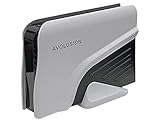
3. Avolusion PRO-Z Series 4TB (White, Renewed)
The Avolusion PRO-Z is the value play of this list: 4TB of USB 3.0 storage for $139.99, less than the cost of many 1TB drives here. It’s marketed for Xbox Series X|S out of the box and the white housing matches Xbox-branded setups nicely. Being a renewed unit, the savings come with a caveat — the drive has been refurbished, so buy from a seller with a solid return window and expect cosmetic wear. For someone who just wants to park a large backlog somewhere cheap and reliable-enough, it’s hard to argue with the price per terabyte.
- Excellent price per terabyte at 4TB for $139.99
- White housing pairs well with Xbox-themed setups
- Renewed stock means variable cosmetics and shorter expected life
Skip it if you want new-in-box hardware and a manufacturer warranty you can lean on for years.
4. Western Digital 1TB P40 Game Drive SSD
The WD P40 is the speed pick for players who bounce between platforms. It’s a true portable SSD rated up to 2,000MB/s on compatible hardware, with RGB lighting and a tough, pocketable chassis — moving a 100GB game off it onto the Xbox’s internal drive is dramatically quicker than from any mechanical drive here. It works with Xbox, PlayStation, PC, and Mac, so it doubles as fast general-purpose storage. The trade-offs: 1TB fills up fast, and at $209.99 you’re paying a premium for SSD speed and styling over raw capacity.
- Up to 2,000MB/s transfer speeds for fast game moves
- Works across Xbox, PlayStation, PC, and Mac
- Only 1TB, so capacity is limited for the price
Skip it if you want to archive a huge library rather than move a few games quickly.
5. WD_BLACK 4TB P10 Game Drive for Xbox (WDBA5G0040BBK-WESN)
The WD_BLACK P10 hits a sweet spot: 4TB of licensed Xbox storage, a rugged shell sized for a laptop bag, and a bonus one-month Xbox Game Pass membership for new subscribers — a nice value add that effectively offsets part of the $229.99 price if you weren’t already subscribed. Setup is the usual one-prompt format on Xbox. Like all P10 drives it’s mechanical, so game transfers run at standard USB hard drive speeds, but for storing a deep library and keeping it portable, it’s one of the most balanced options available.
- 4TB of licensed Xbox storage with Game Pass included
- Durable, portable build that travels well
- Mechanical speeds only — no SSD quickness
Skip it if you already have Game Pass and would rather put the money toward more capacity.
6. Sandisk 2TB Optimus GX C50 Storage Expansion Card
This is the no-compromise option: the same plug-in expansion card experience as the 1TB C50, with 2TB of storage that tripled your usable space in one purchase. Series X|S games install, launch, and run directly from the card exactly as if they were on the internal drive, with no shuffling whatsoever. At $479.99 it costs more than some consoles, but for households with multiple players, huge digital libraries, and no patience for storage management, it’s the definitive fix. It’s small enough to stay permanently installed and forgotten.
- 2TB of true internal-quality storage for Series X games
- Zero game-shuffling — everything plays directly from the card
- Very expensive at $479.99
Skip it if your budget is capped under $250; a hard drive plus the 1TB card covers more needs for less.
7. WD_Black 6TB P10 Game Drive (WDBZ7D0060BBK-WESN)
The 6TB P10 is for collectors. It holds the largest library of any drive here — realistically dozens upon dozens of titles — and because it’s cross-platform, you can also park PC and PlayStation content on it. The enclosure matches the rest of the WD_BLACK line: sturdy, portable, and designed for desk-to-lan-party duty. Transfers are standard USB 3.0 hard drive speeds, which is the expected compromise at this capacity and $334.99 price point. If your Series X is one console in a multi-platform house, this is the biggest single-drive archive on the list.
- 6TB of storage — the largest capacity in this roundup
- Compatible with Xbox, PlayStation, and PC
- Slower mechanical transfers and a premium price
Skip it if your library is modest; a 4TB drive gets most people the same experience for less.
8. YOTUO 500GB External Hard Drive
At $34.99, the YOTUO is the gateway option. 500GB holds roughly four to eight modern games depending on size — enough to offload a few titles and free up breathing room on the internal drive. It offers USB 3.0 and USB-C connectivity and works with PCs, Macs, phones, PS4, Xbox One, and Xbox 360, making it genuinely useful beyond the Xbox. It’s a mechanical HDD in a compact black shell, so it’s not fast, and its small capacity means it’s a stopgap rather than a solution for a growing Series X library.
- Extremely affordable at $34.99
- Broad compatibility across consoles, computers, and phones
- Only 500GB — fills up almost immediately with modern games
Skip it if you buy more than a few games a year; spend a bit more for 4TB class storage.
Buying Guide
Understand What External Storage Can and Can’t Do
The single most important fact before buying: an external drive (HDD or SSD) connected over USB can store optimized Xbox Series X|S games but cannot play them. To play, you transfer the game to the internal drive or run it from an expansion card. External drives do play Xbox One, Xbox 360, and backward-compatible titles directly. If most of your library is older games, a big mechanical drive is perfect. If your shelf is all Series X blockbusters, either budget time for transfers or step up to an expansion card.
Capacity vs. Speed vs. Price
Mechanical drives deliver the best cost per terabyte — the Avolusion at roughly $35/TB and the 6TB P10 at about $56/TB — but transfer games at conventional hard drive speeds, so moving a 100GB title takes real minutes. SSDs like the P40 (rated up to 2,000MB/s) cut transfer times dramatically but cost several times more per gigabyte. Expansion cards cost the most but eliminate transfers entirely. A sensible strategy for many buyers: a 4–6TB drive for the archive, plus the 1TB C50 for games you’re actively playing.
Licensing, Renewed Stock, and Reliability
Licensed drives from Seagate and WD_BLACK are validated for Xbox, format with a single prompt, and carry full manufacturer warranties. Renewed drives like the Avolusion can save serious money, but check the seller’s return window and read the refurbisher’s grading before committing. Whatever you buy, keep large libraries backed up where possible — mechanical drives in portable enclosures lead hard lives, and a dropped 5TB drive is a long redownload queue.
Our Verdict
For most Xbox Series X owners, the best external SSD strategy is the WD_BLACK 4TB P10 for Xbox at $229.99 — licensed, portable, generously sized, with the Game Pass sweetener. If you want your entire Series X library playable without any shuffling, the Sandisk Optimus GX C50 cards are the only real answer; choose the 1TB ($239.99) unless budget is no object. Bulk collectors should grab the Seagate 5TB at $219.99 or the 6TB WD_Black P10 at $334.99, bargain hunters can take the chance on the Avolusion 4TB at $139.99, and the YOTUO at $34.99 remains the cheapest way to buy yourself some breathing room.
FAQ
Can I play Xbox Series X games directly from an external SSD?
No. Optimized Series X|S games can be stored and archived on USB-connected drives, but they must be transferred to the internal drive — or run from a dedicated expansion card like the Sandisk Optimus GX C50 — before playing. Older Xbox One and backward-compatible titles do play directly from USB storage.
Is an external SSD faster than an external hard drive for Xbox?
Yes, for transfers. Moving a game from an SSD rated up to 2,000MB/s, like the WD P40, back to the internal drive is much quicker than from a USB 3.0 hard drive. Neither matches the expansion card’s direct-play speed, since USB storage can’t run Series X games regardless.
How much storage do I actually need?
Count your library: modern games average 50–150GB, with some exceeding 200GB. A 4TB drive holds roughly 30–60 titles; 500GB holds fewer than ten. If you buy more than a handful of games a year, start at 4TB.
Are renewed external hard drives safe to buy?
They can be a good deal, but buy from reputable sellers with clear return policies and warranty coverage. Renewed drives like the Avolusion PRO-Z cost far less than new, yet carry shorter expected lifespans and possible cosmetic wear, so treat them as a calculated savings rather than a long-term investment.


