The Secretlab Titan Evo is the best gaming chair for most people in 2026, because it comes in three sizes, has a built-in adjustable lumbar system and has a long track record of parts and warranty support. If you sit more than six hours a day, the Herman Miller x Logitech G Vantum is the better ergonomic pick. If you are on a tight budget, the Corsair TC100 Relaxed is the safest cheap choice. The ranking below is built on fit and adjustability, not looks.
As an Amazon Associate we earn from qualifying purchases at no extra cost to you.
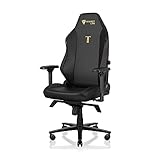


Our Top Picks
 Razer Iskur V2 X Ergonomic Gaming ChairStandard27.58 x 27.58 x 49.64 inches50.26 poundsCheck on Amazon

Top 3 picks at a glance
Quick comparison of the ranked picks
| Rank | Pick | Best for | Key specs and features | Price tier |
|---|---|---|---|---|
| 1 | Secretlab Titan Evo | Most players, best overall | Three sizes, integrated magnetic-style lumbar adjustment, 4D armrests, cold-cure foam, recline with tilt lock | Premium |
| 2 | Herman Miller x Logitech G Vantum | Long daily sessions, ergonomics first | Office-chair-grade adjustment, tilt mechanism, adjustable arms, designed with Logitech G | Premium to high-end |
| 3 | Razer Iskur V2 | Lower-back support with a racing look | Adjustable lumbar built into the backrest, multi-layer synthetic leather, 4D armrests | Upper mid-range |
| 4 | Noblechairs Hero | Tall or heavier users | Wide, tall backrest, firm cold-foam padding, 4D armrests, real or synthetic leather options | Premium |
| 5 | Corsair TC100 Relaxed | Budget buyers | Wider seat than racing-style chairs, fabric or leatherette, 2D armrests, class-4 gas lift | Budget to lower mid-range |
| 6 | Mesh ergonomic chair class (for example Herman Miller Aeron or Steelcase Leap) | Hot rooms, all-day sitting | Breathable mesh or flexible shell, adjustable seat depth, no racing-style bolsters | Premium to high-end |
Prices change often by region and sale period, so check the current tier before buying. Specs are taken from each manufacturer’s product pages, and sizing charts differ between brands.
1. Best overall: Secretlab Titan Evo
The Titan Evo suits the widest range of bodies because it ships in small, regular and XL sizes. Choosing the right size matters more than any feature. Its lumbar support is integrated into the backrest, so you adjust depth with a dial instead of fiddling with a strap-on pillow. The armrests move in four directions, and the foam is firm enough to stay supportive after hours of use.
Trade-off: the seat is still a bucket-style racing shape, with bolsters that can feel restrictive if you sit cross-legged or have wider hips. Seat depth is fixed, so very short or very tall users should check the size chart carefully.
2. Best for ergonomics: Herman Miller x Logitech G Vantum
The Vantum is the pick if you want an office-chair-grade mechanism in a gaming-styled body. It comes from a company known for ergonomic seating, and the tilt, arm and back adjustments are more refined than on most racing-style chairs. It suits people who work and game at the same desk, and who care about spine support more than appearance.
Trade-off: it costs noticeably more than the Titan Evo and is harder to find in every region. If most of your sitting is under four hours a day, the extra spend is difficult to justify.
3. Best lumbar support: Razer Iskur V2
The Iskur V2 revises the original Iskur with a more adjustable lumbar curve, so you can fine-tune support instead of relying on a fixed hump. It suits people with lower-back fatigue who prefer a bold racing look. The 4D armrests and multi-layer synthetic leather are in line with other premium gaming chairs.
Trade-off: synthetic leather retains heat, so it is a poor match for warm rooms. Armrest padding wears faster than the frame on most faux-leather chairs, so check the warranty terms for parts coverage.
4. Best for tall or heavy users: Noblechairs Hero
The Hero has a tall, wide backrest and a firm seat that holds its shape. Taller players often find that standard backrests end below their shoulder blades, and the Hero avoids that. It is a good fit for the 6’2″+ (188 cm+) range. Heavier users should still compare the stated weight rating with their own weight, which brings us to the sizing rules below.
Trade-off: it is large and heavy, and it needs desk clearance for the armrests. It also lacks the built-in lumbar adjustment of the Titan Evo, so you may need an add-on cushion.
5. Best budget: Corsair TC100 Relaxed
The TC100 Relaxed has a wider, less aggressive seat than most racing-style chairs, which makes it comfortable for many body types. It is available in fabric or leatherette. Fabric breathes better, and leatherette is easier to wipe clean. It suits students, secondary desks and anyone testing whether they like a gaming chair at all.
Trade-off: the armrests have fewer adjustments (2D), the foam is softer and compresses sooner, and lumbar support usually means a separate pillow. Expect a shorter useful life than the premium picks.
6. Best alternative: a mesh ergonomic chair
Gaming chairs are not automatically better for gaming. A mesh ergonomic chair such as the Herman Miller Aeron or Steelcase Leap offers adjustable seat depth, firmer lumbar control and much better airflow. Choose one if you live in a hot climate, sit for eight hours or more, or find bucket seats confining.
Trade-off: the styling is plainer, there is no neck pillow, and the price is usually at the top of the range.
How to choose: the numbers that matter
Step 1: Match chair height to your desk
Your forearms should rest level on the desk with your elbows at about 90 degrees. Use this formula: required seat height = desk height minus your seated elbow height (the distance from the seat surface to your elbow when your upper arm hangs straight down).
Worked example: a standard desk is about 29 in (74 cm) tall. If your seated elbow height is 9.5 in (24 cm), you need a seat height of 19.5 in (50 cm), measured with the cushion compressed. Most gas lifts cover roughly 16 to 21 in, so this works. At 26 in (66 cm), a low desk would need a seat height of 16.5 in, which only some chairs reach. Check the minimum seat height on the spec sheet, not just the maximum.
| Desk height | Seated elbow height | Needed seat height | What to check |
|---|---|---|---|
| 29 in (74 cm) | 9 in (23 cm) | 20 in (51 cm) | Maximum seat height with room to spare |
| 29 in (74 cm) | 11 in (28 cm) | 18 in (46 cm) | Most chairs cover this |
| 27 in (69 cm) | 9.5 in (24 cm) | 17.5 in (44 cm) | Gas lift and minimum height |
| 25 in (64 cm), a low console desk | 9.5 in (24 cm) | 15.5 in (39 cm) | Many chairs will not go this low |
If the needed seat height is too high for the chair, you can raise the chair and add a footrest, which is a poor fix. If it is too low, consider a height-adjustable desk instead.
Step 2: Use the weight rating with a margin
Chair weight ratings are maximum static loads, and manufacturers typically publish them on the spec sheet. As a rule of thumb, pick a chair whose rating is at least 30 percent above your weight. A 250 lb (113 kg) user should look for a rating of roughly 325 lb (147 kg) or more. Also check the seat width, because a rated chair that squeezes your hips will not be comfortable.
Step 3: Choose the size class before the brand
- Under about 5’5″ (165 cm): look for a small size or a chair with adjustable seat depth. Large seats leave your feet dangling, which cuts circulation.
- About 5’5″ to 6’0″ (165 to 183 cm): regular sizes work for most chairs.
- Over about 6’0″ (183 cm): look for XL or tall-back models, so the backrest reaches your shoulders and thighs are supported.
Step 4: Pick a material that suits your room
Synthetic leather wipes clean but runs warm. Fabric breathes but absorbs spills. Mesh is the coolest. If your room regularly passes 77°F (25°C), leather-type upholstery gets uncomfortable quickly.
Decision matrix: your situation to the right chair
| Your situation | Best choice | Why |
|---|---|---|
| Average build, 4 to 8 hours a day, mid to premium budget | Secretlab Titan Evo | Right size options and integrated lumbar |
| Work and game at the same desk, 8+ hours | Herman Miller x Logitech G Vantum or a mesh ergonomic chair | Better adjustment and long-session comfort |
| Lower-back fatigue, you like the racing look | Razer Iskur V2 | Adjustable lumbar curve |
| Over 6’2″ or a larger frame | Noblechairs Hero or an XL-size chair | Taller, wider body and firm foam |
| Tight budget, light use | Corsair TC100 Relaxed | Wide seat and low cost |
| Warm room | Fabric or mesh model | Airflow beats synthetic leather |
| Low desk (around 25 in) | Check minimum seat height, or change the desk | Many gas lifts do not go low enough |
Features that are worth paying for, and ones that are not
- Worth it: adjustable lumbar, 4D armrests, a documented gas lift class (class 4 is the common standard), replaceable parts and a clear warranty period.
- Often not: neck pillows (many people remove them), RGB lighting, built-in massage or “Bluetooth speaker” features, and race-car branding.
- Verify: warranty length and what it covers (frame, mechanism, upholstery) on the manufacturer’s official page, since terms vary by region.
Frequently Asked Questions
Are gaming chairs actually good for your back?
They can be, if the chair fits you and supports your lower back. Posture depends more on adjustability than on the “gaming” label. A chair with adjustable lumbar, correct seat height and armrests that support your forearms is good for most backs. A poorly fitted racing chair can be worse than a basic office chair.
How long should a gaming chair last?
Budget chairs commonly show foam compression or upholstery wear within a few years of daily use. Premium chairs with replaceable parts and longer warranties tend to last longer. Check the manufacturer’s warranty page for current terms, as they differ by model and region.
Is a gaming chair better than an office chair?
Not automatically. Gaming chairs usually offer a taller backrest and more padding, but good office chairs often have better seat-depth adjustment and breathability. If you are sitting eight hours or more, a quality ergonomic office chair is often the better pick.
What size gaming chair do I need?
Match size to height and weight. Smaller users, roughly under 5’5″, should look for a small size or adjustable seat depth. Users over about 6’0″ should look for XL or tall-back models. Always compare the weight rating to your weight with a 30 percent margin.
Should I choose leather, fabric or mesh?
Choose synthetic leather if you want easy cleaning and a cool room. Choose fabric for a softer feel and better airflow. Choose mesh for hot rooms or very long sessions. Mesh breathes best but looks less gamer-styled.
Do I need a lumbar pillow?
Only if the chair lacks built-in lumbar adjustment, or if the support does not sit at your lower-back curve. Chairs like the Secretlab Titan Evo and Razer Iskur V2 include adjustable lumbar support. Budget chairs often depend on a removable pillow, which you can place at belt height.
Related guides
More from Amazon
Programs that pair well with the guide above. Offers and eligibility are set by Amazon and may change.
A free business account with business pricing and bulk-buying tools for work, shop or home office.
Create a business accountFree shipping on eligible items, Prime Video and more. Eligible new members can start with a free trial.
Start a Prime free trialAudiobooks and podcasts to listen to on the go. Eligible new members can start with a free trial.
Try Audible freeAd-free music streaming. Eligible new subscribers can start with a free trial.
Try Music Unlimited freeAs an Amazon Associate we earn from qualifying purchases.