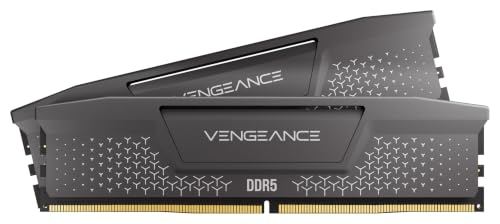
The best DDR5 32GB kit for gaming in this group is the Corsair Vengeance DDR5 32GB (2 x 16GB) at 6000 MT/s with CL30 timings. Tight timings at the 6000 speed that AMD Ryzen 7000 and 9000 platforms favor, a low-key heat spreader without lighting, and support for both AMD EXPO and Intel XMP 3.0 profiles make it an easy default. If you want the same CL30 class with lighting, the Corsair Vengeance RGB CL30 kit and the Patriot Viper Venom CL30 kit are the closest matches, while the G.Skill Trident Z5 RGB and Flare X5 kits suit builders who care about a specific look or a low profile under a big air cooler. The CL36 and CL38 kits, including the Corsair RS family and the Lexar Thor Z RGB, are the relaxed-timing options that still deliver the same 6000 MT/s speed. Below you will find the numbers behind that ranking, an explanation of what timings really mean, and a note on how to tell the near-identical Corsair listings apart.
Our Top Picks
 Corsair Vengeance RGB RS DDR5 32GB32GB (2 x 16GB)5.43 x 0.27 x 1.77 Inches0.11 poundsCheck on Amazon
 CORSAIR Vengeance RGB RS DDR5 32GB32GB (2 x 16GB)5.43 x 0.28 x 1.73 inches0.11 PoundsCheck on Amazon


Top 3 picks at a glance
Top 3 Picks
Best overall: Corsair Vengeance DDR5 32GB 6000 CL30. A 2 x 16GB kit at 6000 MT/s with CL30 timings, compatible with both EXPO and XMP 3.0 according to the listing. The first-word latency works out to 10 nanoseconds, the lowest in this group, and the plain heat spreader keeps clearance simple.
Best value: Patriot Viper Venom 32GB 6000 CL30. The listing states 6000 MHz, CL30 and 1.35V with support for both Intel XMP and AMD EXPO. That is the same headline performance class as the best overall pick from a brand that focuses on straightforward gaming kits.
Best for a premium look: G.Skill Trident Z5 RGB 32GB. A well-known enthusiast design with RGB lighting, CL36-36-36-96 timings at 1.35V and support for both XMP 3.0 and EXPO. It is a showpiece kit for builders who want a lit, tall heat spreader, and it is the one to choose when appearance matters as much as speed.
Quick Comparison
| Product | Best for | Key specs |
|---|---|---|
| Corsair Vengeance RGB RS 32GB (gray, CL36) | RGB with moderate timings | 2 x 16GB, 6000 MT/s, CL36-44-44-96, 1.35V, EXPO and XMP 3.0 |
| Corsair Vengeance RS 32GB (no RGB) | Plain, low-key look | 2 x 16GB, 6000 MT/s, CL38 per listing data, EXPO and XMP 3.0 |
| Patriot Viper Venom 32GB | Value CL30 | 2 x 16GB, 6000 MHz, CL30, 1.35V, XMP and EXPO |
| Corsair Vengeance RGB RS 32GB (gray, CL38) | RGB, relaxed timings | 2 x 16GB, 6000 MT/s, CL38 per listing data |
| G.SKILL Flare X5 32GB | Low-profile builds | 2 x 16GB, 6000 MT/s, CL36-36-36-96, 1.35V, EXPO and XMP 3.0 |
| Corsair Vengeance RGB RS 32GB (white, CL38) | White-themed RGB build | 2 x 16GB, 6000 MT/s, CL38 per listing data, white finish |
| Corsair Vengeance 32GB (CL30) | Best overall | 2 x 16GB, 6000 MT/s, CL30, EXPO and XMP 3.0 |
| Lexar Thor Z RGB 32GB | RGB at relaxed timings | 2 x 16GB, 6000 MHz, CL38, 1.35V, XMP 3.0 and EXPO |
| G.SKILL Trident Z5 RGB 32GB | Premium RGB look | 2 x 16GB, 6000 MT/s, CL36-36-36-96, 1.35V, XMP 3.0 and EXPO |
| Corsair Vengeance RGB 32GB (CL30) | RGB with tight timings | 2 x 16GB, 6000 MT/s, CL30-36-36-76, 1.40V, EXPO and XMP |
How We Chose
This ranking is based on manufacturer specifications, listing data and the general direction of published technical coverage, not on our own lab measurements. We compared capacity configuration, rated speed, CAS latency and the full timing string where stated, voltage, profile support for AMD EXPO and Intel XMP 3.0, heat spreader design and the brand’s record with desktop memory. All ten listings are 32GB kits built from two 16GB modules at a rated speed of 6000, so the deciding factors are timings, profile support, lighting, height and how clearly each listing is labeled. Four of the Corsair listings share a similar title, so we used the model details visible on each product page to tell them apart and ask you to confirm the model number before ordering. Speeds and timings are rated values that depend on your motherboard and processor.
Latency Math: Why CL30 at 6000 Beats CL38 at 6000
Memory speed and timing together decide how quickly a kit responds. Speed in megatransfers per second tells you how much data moves each second. CAS latency, written CL, counts clock cycles before the first data arrives. Because DDR5 transfers data twice per clock, the clock runs at half the MT/s figure. For a 6000 MT/s kit, the clock is 3000 MHz, so each cycle lasts about 0.333 nanoseconds.
To convert CL into real time, use this formula: first-word latency in nanoseconds equals CL multiplied by 2000 and divided by the MT/s rating. Using it:
- CL30 at 6000 MT/s gives 30 x 2000 / 6000 = 10.0 nanoseconds.
- CL36 at 6000 MT/s gives 36 x 2000 / 6000 = 12.0 nanoseconds.
- CL38 at 6000 MT/s gives 38 x 2000 / 6000 = about 12.7 nanoseconds.
The CL30 kits are about 2 nanoseconds quicker to the first word than CL36 and about 2.7 nanoseconds quicker than CL38. In games the effect is small, usually in the low single-digit percent range at most and often below what you would notice, but it is free performance if the kits are otherwise comparable. It also helps CPU-bound games and minimum frame rates more than average frame rates.
Capacity matters more than any of this when 16GB is not enough, which is why 32GB has become the sensible gaming target. All ten kits here are 2 x 16GB, so you get dual-channel bandwidth with two modules.
1. Corsair Vengeance RGB RS (Gray, CL36) – Best for RGB With Moderate Timings
As an Amazon Associate we earn from qualifying purchases at no extra cost to you.

This listing is the Corsair Vengeance RGB RS DDR5 32GB kit, rated up to 6000 MT/s. The product details associated with this listing show CL36-44-44-96 timings at 1.35V in a gray finish with support for both AMD EXPO and Intel XMP 3.0. The RS in the name refers to a refined heat spreader with fewer LEDs per module than the original RGB design, according to Corsair.
It suits builders who want lit memory, easy profile support on both platforms and the reassurance of a large brand.
- Capacity: 32GB as two 16GB modules.
- Speed: up to 6000 MT/s.
- Timings: CL36-44-44-96 according to listing data; confirm on the page.
- Voltage: 1.35V.
- Profiles: AMD EXPO and Intel XMP 3.0.
- Lighting: RGB, controlled by Corsair software or compatible motherboard lighting tools.
Strengths. The kit runs at a conventional 1.35V, which is easier on the platform than higher-voltage kits. Its heat spreader is designed to be slimmer than the older Vengeance RGB, so clearance with coolers is usually friendlier. Profile support for both platforms means you can switch between AMD and Intel in a later upgrade without replacing the memory.
Where it fits in a build. This kit is a good match for a lit gaming PC where you are happy with CL36. On an AM5 system at 6000 MT/s, it offers the speed that matches the platform’s sweet spot. The slightly looser timing means it will not match the CL30 kits in latency-sensitive games, but the real-world difference is small.
What to check before buying. Corsair sells several kits with almost identical titles that differ by color and timings. Confirm that the model number and latency on the page match what you expect. Check the module height against your CPU cooler and make sure your motherboard is on a recent BIOS.
Real-world expectations. In games, a 6000 MT/s kit at CL36 behaves very much like its CL30 and CL38 neighbors. Frame rates in GPU-bound titles will not change at all, and CPU-bound titles may gain or lose a percent or two depending on the processor and game. The visible difference is the lighting: six LEDs per module give a softer glow than older designs. If you intend to control lighting through Corsair software, install it after the memory is stable, so you can confirm that crashes, if any, are not related to background utilities.
Who should skip it. Skip this kit if you want the lowest possible latency, since the CL30 options are measurably quicker on paper, or if you run a very large air cooler and prefer a low-profile design. Otherwise it is a safe, mainstream pick.
Pros
- RGB lighting with a refined heat spreader
- Works with EXPO and XMP 3.0
- Standard 1.35V
- Strong brand support
Cons
- CL36 is looser than the CL30 kits
- Listing titles are shared with other variants
- Lighting needs software to customize
Compared with the nearest alternative. The G.Skill Trident Z5 RGB offers the same CL36 class with a taller premium design. The Corsair Vengeance RGB CL30 kit further down this list is faster in latency but runs at 1.40V. Choose this kit for balance and lighting, and the CL30 kit for the tightest timings.
2. Corsair Vengeance RS (No RGB) – Best for a Plain, Low-Key Build

The Vengeance RS is the non-RGB version of the RS line, rated up to 6000 MT/s as a 2 x 16GB kit. Data on the product page lists a gray finish and CL38 timings, with compatibility for AMD EXPO and Intel XMP 3.0. With no lighting, it suits builds that rely on a clean, understated appearance.
It suits builders who do not want RGB, want a simpler heat spreader and are happy with relaxed timings in exchange for a reputable brand.
- Capacity: 32GB as two 16GB modules.
- Speed: up to 6000 MT/s.
- Timings: CL38 according to page data; confirm the full timing string.
- Profiles: AMD EXPO and Intel XMP 3.0.
- Lighting: none.
- Finish: gray.
Strengths. Without lighting, there is no software to install and no extra headers to connect, which keeps the build simple. A non-RGB heat spreader is usually shorter than an RGB one, which helps with large air coolers. Dual profile support makes it flexible across platforms.
Where it fits in a build. This kit works well in a quiet, minimalist build with a dark case and no lighting theme. It is also a sensible choice for a work-and-play PC where memory timings matter less than reliability. At 6000 MT/s and CL38, the first-word latency is about 12.7 nanoseconds, which is perfectly acceptable for gaming.
What to check before buying. Confirm the model number and CL, because earlier Corsair non-RGB lines were offered with different timings. Measure the module height if you use a large cooler, and update your motherboard BIOS before enabling the profile.
Real-world expectations. A plain kit like this one disappears into a build, which is the point. You enable the profile, confirm the speed and forget about it. Performance at 6000 MT/s and CL38 is fine for modern games, and the gap to CL30 is mostly a number on paper in everyday play. If you later decide you want lighting, you can replace the kit, but most buyers who choose a plain design stay with it for the life of the system.
Who should skip it. Skip this kit if you want lighting, or if you are hunting for the tightest timings. Builders who want a plain look with CL30 should look at the plain Vengeance kit later in the list instead, which keeps the same understated styling.
Pros
- No lighting for a clean look
- Dual-platform profiles
- Simple, well-supported brand
- Shorter spreader than RGB versions
Cons
- CL38 is the loosest timing in the Corsair group
- No lighting for builders who want it
- Details vary across similar listings
Compared with the nearest alternative. The Corsair Vengeance CL30 kit is also plain but offers tighter timings. Choose the RS for its refined design, and the CL30 kit for performance.
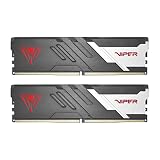
3. Patriot Viper Venom 32GB 6000 CL30 – Best for Value With Tight Timings

The Patriot Viper Venom is a 2 x 16GB kit rated at 6000 MHz with CL30 timings and 1.35V, with support for Intel XMP and AMD EXPO stated in the listing. CL30 at 6000 puts it in the top performance class of this list, and the 1.35V rating is easier on the platform than higher-voltage kits.
It suits builders who want tight timings without paying for a large brand’s design extras. It also suits AM5 builders who want the standard sweet-spot speed.
- Capacity: 32GB as two 16GB modules.
- Speed: 6000 MHz.
- Timings: CL30.
- Voltage: 1.35V.
- Profiles: Intel XMP and AMD EXPO.
- Type: desktop UDIMM.
Strengths. The spec sheet is excellent for its class: CL30 timings and 1.35V are an attractive pairing. The Viper line has a long history of gaming memory, and its heat spreader is generally a simple, tidy design. If you want performance without lighting, this is a straightforward pick.
Where it fits in a build. The Viper Venom fits an AM5 gaming PC where you want to enable the EXPO profile and be done. It also works on Intel boards using XMP. Because the listing does not describe lighting, height or finish in the title, treat those as items to confirm on the product page.
What to check before buying. Check the module height, the finish and whether the kit has lighting. Confirm that your motherboard’s qualified vendor list or BIOS supports the kit, since newer brands sometimes appear later on those lists. Ensure your BIOS is current before enabling the profile.
Real-world expectations. With CL30 and 1.35V on the spec sheet, the Viper Venom is the kind of kit that rewards a quick BIOS check. After enabling the profile, confirm in the BIOS or a monitoring tool that both modules report the same speed and timings. If you see a lower speed, reseat the modules and update the BIOS before blaming the kit. Because the listing does not describe the styling in detail, look at the product images to see whether the heat spreader suits your case and cooler.
Who should skip it. Skip it if you rely on a specific lighting ecosystem or want a kit with a lot of visual flair, since the listing does not promise either. Also skip it if your motherboard vendor publishes a short qualified list that omits the brand and you prefer to stay on it.
Pros
- CL30 timings at 6000
- 1.35V voltage
- Supports both XMP and EXPO
- Clear, simple specification
Cons
- Listing is light on height and styling details
- Brand is less visible in premium builds
- Check compatibility lists on some boards
Compared with the nearest alternative. The Corsair Vengeance CL30 kit shares the timing class and adds the larger brand and more common availability. The Patriot is the one to look at for a plain, value-led CL30 pick.
4. Corsair Vengeance RGB RS (Gray, CL38) – Best for RGB With Relaxed Timings
This listing is another Corsair Vengeance RGB RS 32GB kit with a title identical to the first one. The product page data shows a gray finish and CL38 timings, with AMD EXPO and Intel XMP 3.0 compatibility. The key difference from the first RGB RS listing is the timing: CL38 here against CL36 there.
It suits builders who want lit memory and are not focused on the lowest latency. It is a straightforward option for an RGB build where the memory is more a part of the look than a performance focus.
- Capacity: 32GB as two 16GB modules.
- Speed: up to 6000 MT/s.
- Timings: CL38 according to page data.
- Profiles: AMD EXPO and Intel XMP 3.0.
- Lighting: RGB.
- Finish: gray.
Strengths. The kit offers the same refined RS design and brand support as its siblings. RGB integrates with common motherboard lighting systems. The looser timings are a trade-off that often accompanies lower-binned kits, and for gaming the effect is small.
Where it fits in a build. Choose this kit if you like the look and want the Corsair name. For an AM5 system, 6000 MT/s remains the right speed, and the real-world difference from CL36 is usually too small to feel. If latency matters more to you than lighting, pick one of the CL30 kits.
What to check before buying. Because several listings share the same title, compare the model number, timing and color on the page. Do not assume it matches the other RGB RS listing.
Real-world expectations. Expect everyday performance to be indistinguishable from the CL36 version in most games. The real consideration is whether you are comfortable paying attention to the exact model number, because the title alone does not tell the listings apart. Once you have confirmed the model, installation is routine. Enable the profile, let the board train the memory on first boot and run a short stability check if the system ever shows unexplained restarts or application crashes.
Who should skip it. Skip this version if you care about the lowest latency, or if you want a different color. The gray CL36 kit above and the CL30 kits below both give you a better timing profile for the same general style.
Pros
- Refined RGB design
- EXPO and XMP 3.0 support
- Established brand
- Gray finish suits most builds
Cons
- CL38 timings are relaxed
- Title does not distinguish it from other variants
- Lighting needs software for custom effects
Compared with the nearest alternative. The first RGB RS listing offers CL36 for slightly lower latency. The white variant is the same in specification but with a different color. Pick this one only if the gray finish and listing match what you want.
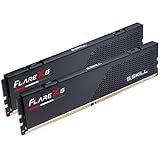
5. G.SKILL Flare X5 32GB – Best for Low-Profile Builds

The G.Skill Flare X5 is a 2 x 16GB DDR5 kit rated up to 6000 MT/s with CL36-36-36-96 timings at 1.35V, listed with support for AMD EXPO and Intel XMP 3.0. The Flare X5 line is known for its low-profile heat spreader, which helps when a large air cooler hangs over the memory slots.
It suits builders with big air coolers, small cases or any build where memory height is a concern. It also suits AMD builders who like the platform’s tuning and want a well-known memory brand.
- Capacity: 32GB as two 16GB modules.
- Speed: up to 6000 MT/s.
- Timings: CL36-36-36-96.
- Voltage: 1.35V.
- Profiles: AMD EXPO and Intel XMP 3.0.
- Design: low-profile heat spreader, no lighting.
Strengths. The timings are balanced across the primary values (36-36-36), and the 1.35V rating keeps things simple. The low profile avoids conflicts with dual-tower air coolers. G.Skill has a long record of enthusiast memory.
Where it fits in a build. This kit pairs naturally with a dual-tower air cooler like the Thermalright or ID-COOLING models, because those coolers often overhang the first DIMM slot. The kit works well on AM5 at 6000 MT/s with EXPO enabled. It is also a clean choice for a build that does not need lighting.
What to check before buying. Confirm the exact model code, since G.Skill sells Flare X5 in several speeds and timings. Check that your board lists the kit as compatible, and update the BIOS before you enable the profile. This line was originally focused on AMD platforms, so double-check your Intel board if you go that route.
Real-world expectations. The practical benefit of a low-profile kit is peace of mind during the build. You can install the cooler with its front fan in the normal position instead of raising it, and you do not need to remove memory to fit the cooler. Performance at 6000 MT/s and CL36 is solid for gaming. On AM5, EXPO profiles tend to be straightforward to enable, and the kit’s moderate voltage keeps things simple. A clean, unlit look also suits builds that already have other lighting.
Who should skip it. Skip the Flare X5 if you want lighting or the tightest timings. A builder who wants a lit kit with a tall, dramatic spreader should look at the Trident Z5 RGB instead, and a latency-focused buyer should prefer a CL30 kit.
Pros
- Low-profile heat spreader
- Balanced CL36 timings at 1.35V
- Both EXPO and XMP 3.0 listed
- Well-known memory brand
Cons
- CL36 is looser than the CL30 kits
- No lighting
- Compatibility is best on AMD platforms
Compared with the nearest alternative. The G.Skill Trident Z5 RGB shares the timings but is taller and lit. The Corsair Vengeance CL30 kit has tighter timings but a taller spreader than the Flare X5. Choose the Flare X5 when clearance is the priority.
6. Corsair Vengeance RGB RS (White, CL38) – Best for a White-Themed RGB Build

The third Corsair Vengeance RGB RS listing shares its title with the others, and the page data shows a white finish, CL38 timings, and AMD EXPO and Intel XMP 3.0 compatibility. White memory is useful for builds with a white case, white motherboard or a bright color theme.
It suits builders who want white lit memory from a major brand and who accept relaxed timings.
- Capacity: 32GB as two 16GB modules.
- Speed: up to 6000 MT/s.
- Timings: CL38 according to page data.
- Profiles: AMD EXPO and Intel XMP 3.0.
- Lighting: RGB.
- Finish: white.
Strengths. White RGB memory is not as common as gray or black, so this kit offers a style choice that fits a themed build. It carries the same dual-platform support and brand backing as other Vengeance RS kits.
Where it fits in a build. Pair it with a white case, white cooler and white graphics card. As with the other RS kits, 6000 MT/s is the sweet spot on AM5. The first-word latency of about 12.7 nanoseconds is comfortable for gaming, though the CL30 kits are quicker. If your build is not white, one of the gray versions is a more flexible option.
What to check before buying. Confirm that you are looking at the white version and that the listing’s model number ends with the white designation. Check lighting software and whether your motherboard supports the lighting sync method you want.
Real-world expectations. This kit performs like the gray CL38 version. The difference is cosmetic, and so the decision should be made on whether white fits your build. If your case, cooler and motherboard are white, matching memory completes the look. Keep in mind that white finishes can show dust, so a gentle clean with a soft brush now and then keeps them looking fresh. Always handle the modules by the edges when installing them.
Who should skip it. Skip the white kit if your build is not white, because the memory will stand out against dark parts. Anyone who wants the quickest timings should also look at the CL30 kits, which are available in gray and without lighting.
Pros
- White finish for themed builds
- RGB lighting
- Dual-platform profiles
- Major brand
Cons
- CL38 timings
- Limited appeal outside white builds
- Shares its title with similar listings
Compared with the nearest alternative. The gray CL38 kit has the same specs in a different color. The Lexar Thor Z RGB is another lit CL38 option from a different brand. Pick the white kit for style and nothing else, and only if the model number on the page confirms the white finish and the timing you expect.
7. Corsair Vengeance 32GB CL30 – Best Overall for Gaming

The Corsair Vengeance DDR5 32GB kit is rated up to 6000 MT/s, with listing data showing CL30 timings, a gray finish and support for AMD EXPO and Intel XMP 3.0. There is no lighting, and the heat spreader follows the plain Vengeance design. It combines the lowest latency in this group with simplicity.
It suits almost every gaming build, especially AM5 systems that benefit from 6000 MT/s with tight timings, and anyone who wants to avoid lighting software.
- Capacity: 32GB as two 16GB modules.
- Speed: up to 6000 MT/s.
- Timings: CL30 according to page data; confirm the full timing string.
- Profiles: AMD EXPO and Intel XMP 3.0.
- Lighting: none.
- Finish: gray.
Strengths. Ten nanoseconds of first-word latency is the best figure in this roundup, and the plain heat spreader is shorter than RGB versions, which eases cooler clearance. Corsair’s long record with desktop memory and its support infrastructure add confidence.
Where it fits in a build. This kit is an excellent match for an AM5 gaming PC, whether the chip is a Ryzen 7 or a Ryzen 5. It also works on Intel boards with XMP. On a first boot with the profile enabled, expect the system to take a while to train the memory, which is normal.
What to check before buying. Confirm the model number and CL on the product page, since the Vengeance family includes many kits. CL30 at 6000 often runs at 1.40V, so check the stated voltage. If your motherboard is older, update the BIOS before enabling the profile.
Real-world expectations. On an AM5 system, a 6000 MT/s CL30 kit is the combination many builders aim for, because it gives low latency without pushing the platform beyond its comfortable range. Games will load and run the same as with other kits, with a slight lead in CPU-bound scenarios. Because the kit has no lighting, you can set it up once in the BIOS and ignore it. If the system ever fails to boot after enabling the profile, clear the CMOS and try again after a BIOS update.
Who should skip it. Skip this kit if you want lighting, or if you prefer a kit that runs at 1.35V rather than a higher-voltage CL30 design. In those cases the Corsair RGB CL30 kit and the Patriot Viper Venom are the alternatives to compare.
Pros
- CL30 timings at 6000
- Plain, low-profile style
- EXPO and XMP 3.0 support
- Large brand with strong support
Cons
- No lighting
- Voltage may be higher than 1.35V kits
- Many similar Corsair listings can confuse buyers
Compared with the nearest alternative. The Patriot Viper Venom matches the timing class at 1.35V, while the Corsair Vengeance RGB CL30 adds lighting. For a no-nonsense pick, this Corsair kit leads the group.
8. Lexar Thor Z RGB 32GB – Best for RGB at Relaxed Timings

The Lexar Thor Z RGB is a 2 x 16GB DDR5 kit rated at 6000 MHz with CL38 timings and 1.35V, a 288-pin UDIMM design with XMP 3.0 and AMD EXPO support according to listing data. It includes on-die ECC and a power management chip, as every DDR5 module does, and adds RGB lighting.
It suits builders who want lit memory from a brand outside the usual names, and who accept looser timings.
- Capacity: 32GB as two 16GB modules.
- Speed: 6000 MHz.
- Timings: CL38.
- Voltage: 1.35V.
- Profiles: Intel XMP 3.0 and AMD EXPO.
- Lighting: RGB.
Strengths. Lexar is an established name in flash storage, and the Thor Z kit offers standard-voltage operation and dual-platform profiles. The lighting is built in, so there is nothing extra to buy. It is a reasonable alternative to the Corsair RGB RS kits.
Where it fits in a build. This kit fits an RGB gaming build at the platform’s 6000 MT/s sweet spot. The first-word latency is the same as the CL38 Corsair kits at about 12.7 nanoseconds. It is a fine choice for general use, though it will not satisfy a builder who wants the tightest timings.
What to check before buying. Look for the module height on the product page, confirm that your motherboard supports the lighting control method and check the warranty terms. Because the brand is newer in DDR5 desktop memory, check motherboard compatibility lists if you want extra assurance.
Real-world expectations. The Thor Z RGB should deliver the same gaming experience as other 6000 MT/s CL38 kits. The main area where a newer memory brand can differ is in firmware and lighting software behavior, so be prepared to use your motherboard’s lighting tools and check for any firmware notes from the maker. If you run into trouble enabling the profile, a BIOS update is the first thing to try, followed by reseating the modules in the recommended slots.
Who should skip it. Skip the Thor Z RGB if tight timings matter to you, or if you prefer a memory brand with a long history in DDR5 desktop kits. Builders who want RGB with a larger support network may prefer the Corsair or G.Skill options.
Pros
- Standard 1.35V
- RGB lighting included
- Both EXPO and XMP 3.0 listed
- Lexar name in flash storage
Cons
- CL38 timings are relaxed
- Less track record in DDR5 desktop memory
- Lighting software varies by motherboard
Compared with the nearest alternative. The Corsair Vengeance RGB RS CL38 kits are the closest equivalents, with a bigger brand behind them. The Lexar is worth considering if you want an alternative brand and like its styling.
9. G.SKILL Trident Z5 RGB 32GB – Best for a Premium RGB Look

The Trident Z5 RGB is G.Skill’s flagship-style DDR5 kit, listed here as 2 x 16GB at up to 6000 MT/s with CL36-36-36-96 timings at 1.35V and support for Intel XMP 3.0 and AMD EXPO. It features a tall aluminum heat spreader with a light bar across the top.
It suits builders who want a statement kit with premium styling, and anyone with a case that shows off the memory.
- Capacity: 32GB as two 16GB modules.
- Speed: up to 6000 MT/s.
- Timings: CL36-36-36-96.
- Voltage: 1.35V.
- Profiles: Intel XMP 3.0 and AMD EXPO.
- Lighting: RGB light bar.
Strengths. The kit’s design is one of the most recognizable in DDR5 memory. Timings are balanced and the voltage is standard. The brand has a long record in enthusiast memory and in memory overclocking.
Where it fits in a build. Pick it for a showcase build with a large, open case. The tall heat spreader means that you must check cooler clearance, especially with dual-tower air coolers. A liquid cooler or a single tower with high clearance avoids conflicts. For gaming, it performs like other 6000 CL36 kits.
What to check before buying. Confirm the exact model code and the height of the modules. The Trident Z5 line has many variants, and the specifications differ between them. Make sure your cooler leaves enough space above the memory.
Real-world expectations. Performance at 6000 MT/s and CL36 is dependable, and the Trident Z5 RGB’s reputation rests as much on its look and its tuning headroom as on its default behavior. For gaming, the practical difference from lower-tier kits is small. What you get is a distinctive design and a brand that enthusiasts know well. Because the modules are tall, plan the cooler choice first and the memory second, or choose a cooler that offers generous clearance above the slots.
Who should skip it. Skip it if your cooler has limited memory clearance, if you prefer a plain look, or if you want CL30 timings. A low-profile kit or a plain CL30 kit would suit those priorities better.
Pros
- Distinctive premium design
- Balanced CL36 timings at 1.35V
- Dual-platform profile support
- Strong brand reputation
Cons
- Tall modules can collide with large coolers
- CL36 is looser than the CL30 kits
- Many variants in the family
Compared with the nearest alternative. The Flare X5 shares timings but is low-profile and unlit, while the Corsair Vengeance RGB CL30 offers tighter timings and lighting. Choose the Trident Z5 RGB for its looks and brand, and only after you have confirmed that your cooler leaves enough clearance above the memory slots.
10. Corsair Vengeance RGB 32GB CL30 – Best for RGB With Tight Timings

The Corsair Vengeance RGB DDR5 32GB kit is rated up to 6000 MT/s with CL30-36-36-76 timings at 1.40V, in gray, with AMD EXPO and Intel XMP support. This is the original Vengeance RGB design rather than the RS version, with more lighting and a taller heat spreader.
It suits builders who want tight CL30 timings and RGB lighting in the same kit, and who are comfortable with the slightly higher voltage.
- Capacity: 32GB as two 16GB modules.
- Speed: up to 6000 MT/s.
- Timings: CL30-36-36-76.
- Voltage: 1.40V.
- Profiles: AMD EXPO and Intel XMP.
- Lighting: RGB, with more LEDs than the RS version.
Strengths. The CL30 timing gives a first-word latency of 10 nanoseconds, matching the best in the group, while the lighting adds visual appeal. The kit is widely supported by Corsair software, and the brand is well established.
Where it fits in a build. This is an excellent kit for an AM5 build where you want lights and tight timings. The 1.40V rating is common for CL30 kits, but on AM5 you should leave the platform’s voltages on the board’s automatic EXPO settings rather than raising them manually. The taller heat spreader means checking cooler clearance.
What to check before buying. Confirm the model number and the stated voltage. Check that your cooler clears the module height, which is taller than the plain Vengeance. Update your BIOS and enable the EXPO or XMP profile, then verify the memory speed in the BIOS or a system information tool.
Real-world expectations. A CL30 kit with lighting offers the best of both worlds, and for gaming it performs at the top of this group. The higher voltage means the modules can run slightly warmer than 1.35V kits, which is normal and well within what the heat spreaders are designed to handle. As with any tall RGB kit, make sure airflow around the memory is reasonable and that the cooler clears the modules before you tighten everything down.
Who should skip it. Skip this kit if you want a low-profile spreader, a plain look or a 1.35V rating. The Flare X5, the plain Vengeance and the Patriot Viper Venom each cover one of those priorities more directly.
Pros
- CL30 timings with lighting
- Major brand with software support
- EXPO and XMP support
- Gray finish
Cons
- 1.40V is higher than 1.35V kits
- Taller than the plain and RS versions
- More lighting may not suit minimal builds
Compared with the nearest alternative. The plain Vengeance CL30 kit offers the same timings without lighting and with a shorter profile. The Patriot Viper Venom is the 1.35V alternative. Choose this kit if you want lighting and tight timings together.
How to Choose DDR5 32GB for Gaming
Start with your platform and your cooler, then pick timings and style.
Step 1: Match the speed to your processor
AMD Ryzen 7000 and 9000 processors on AM5 do best with DDR5-6000, because the memory controller and the fabric clock can run in sync at that speed. Faster kits can run, but they often force a different ratio that offsets the gain. On Intel platforms, 6000 is a good, stable speed, and faster kits are available if your board and processor support them. All ten kits here are rated at 6000, so any of them fits.
Step 2: Pick the timings
Use the latency formula from earlier. CL30 gives 10 nanoseconds, CL36 gives 12 nanoseconds and CL38 gives about 12.7. If the kits cost about the same, take the lower number. If a lit CL38 kit is the only one that matches your build, the difference is small enough that style can decide.
Step 3: Check the height
Measure the space between the memory slot and your cooler. The low-profile Flare X5 sits comfortably under big air coolers. Tall RGB modules, such as the Trident Z5 RGB and the original Vengeance RGB, can reach 44mm or more, which may collide with the front fan or tower of a large cooler. If your cooler overhangs the slots, choose a low-profile kit or raise the cooler fan.
Step 4: Check profile support and the QVL
EXPO is AMD’s memory profile standard and XMP 3.0 is Intel’s. A kit that lists both generally works on either platform, but check your motherboard’s supported memory list and make sure the BIOS is up to date.
Step 5: Install in the right slots
With two modules, use the slots your motherboard manual specifies for dual channel, usually the second and fourth from the processor. Press until both clips click. Turn on the profile in the BIOS, save and allow time for the first boot to train.
Step 6: Understand single-rank 16GB modules
All ten kits are built from two 16GB modules. At this size, DDR5 modules are generally single-rank, which makes them easier on the memory controller than dual-rank modules and helps 6000 MT/s profiles work reliably. Four modules of 16GB, or 64GB in total, would be more demanding and often require a lower speed. For gaming, two modules is the right call: it keeps the profile stable and leaves two slots free for a later upgrade, although mixing a new pair with the old one is not recommended.
Step 7: Consider your upgrade path
Memory is tied to the platform. A DDR5 kit will not work on a DDR4 board, and a kit bought for AM5 today can move to a later AM5 processor without replacement. If you might move between AMD and Intel, a kit that lists both EXPO and XMP 3.0 gives you the most flexibility, even if you only use one profile now. Because every kit here lists both, you can base the decision on timings, height and looks.
Step 8: Do not overspend on speed
Kits rated at 7200 MT/s and above exist, but they often need higher voltage, may not run at their rated speed on every board and rarely improve gaming frame rates enough to justify the extra effort. On AM5 they can even perform worse than a tuned 6000 kit because the memory controller falls out of its balanced ratio. A 6000 MT/s CL30 or CL36 kit is a strong target for nearly everyone.
Step 9: Match the kit to your cooler and case
Walk through your build in order: motherboard, cooler, memory. Place the cooler on the board in your mind, or on a test fit if you can, and look at where the fan sits relative to the first memory slot. If the fan overhangs the slot, you need a low-profile kit or a cooler with a raised fan. If you have a liquid cooler, height is rarely an issue, and you can choose any kit you like on style and timings.
Decision matrix
| Your situation | Best pick | Why |
|---|---|---|
| AM5 gaming PC, no lighting | Corsair Vengeance 32GB CL30 | Tightest timings with a plain design |
| Want CL30 at 1.35V | Patriot Viper Venom 32GB | CL30 and 1.35V stated in the listing |
| Tight timings with RGB | Corsair Vengeance RGB CL30 | CL30-36-36-76 with lighting |
| Large air cooler overhanging the slots | G.SKILL Flare X5 | Low-profile heat spreader |
| Showcase build | G.SKILL Trident Z5 RGB | Premium design with RGB |
| White-themed build | Corsair Vengeance RGB RS white | White finish with RGB |
| RGB at moderate timings | Corsair Vengeance RGB RS CL36 | CL36 with a refined design |
| Alternative brand with RGB | Lexar Thor Z RGB | 1.35V RGB kit with dual profiles |
BIOS Setup and Stability Tips
- Update the BIOS first. Newer BIOS versions often improve memory compatibility and shorten first-boot training times, especially on AM5.
- Enable EXPO or XMP. Without a profile, a DDR5 kit runs at a slow default speed. Select the profile in the BIOS and save.
- Allow for training. The first boot after enabling a profile can take a minute or more with a black screen. Do not power off during this time.
- Verify the speed. Use a system information tool to confirm that the memory runs at its rated speed and that both modules are detected.
- Leave voltages on auto. Avoid manually raising SoC or memory controller voltages beyond what your board sets for the profile, since AM5 processors are sensitive to excessive voltage.
- Test for stability. Run a memory test for several passes if you see crashes or errors. If problems appear, try lowering the speed one step.
- Handle modules carefully. Hold the memory by the edges, touch the case to discharge static and never install it with the PC powered on.
- Keep modules matched. Use the two sticks from the same kit rather than mixing kits, since kits are validated by the maker as matched pairs.
Frequently Asked Questions
Is 32GB of DDR5 enough for gaming?
Yes. 32GB is a comfortable amount for current games, background applications and streaming. Sixteen gigabytes still works for many titles, but 32GB leaves more headroom and is the more common choice for a new build.
Is DDR5-6000 the right speed for AMD Ryzen?
For Ryzen 7000 and 9000 processors, 6000 MT/s is widely regarded as the sweet spot because the memory and fabric clocks can run in a balanced ratio. Faster kits can work but may not improve gaming results.
Does CL30 make a noticeable difference over CL36 or CL38?
The gap is about two to nearly three nanoseconds in first-word latency. In games the effect is usually small and sometimes within normal run-to-run variation, though it can help CPU-bound titles slightly.
Can I use an EXPO kit on an Intel board?
Kits that list both EXPO and XMP 3.0 profiles can generally run on either platform. If a kit lists only EXPO, an Intel board may not load its profile automatically. All the kits in this list state support for both.
Will tall RGB memory fit under my cooler?
It depends on the cooler. Dual-tower coolers with a fan above the memory slots can touch modules taller than about 40mm. Check the cooler’s stated memory clearance, or choose a low-profile kit such as the Flare X5.
Why does my PC take so long to start after installing new memory?
DDR5 platforms retrain memory timings after a change, which can take a minute or longer on the first boot. It should shorten on later starts. If it never completes, reseat the modules and update the BIOS.
Is RGB memory worse than non-RGB?
Not by itself. RGB kits are often taller and add lighting software, but their performance is determined by the memory chips and timings. Choose based on your style and clearance.
Our Recommendation by Situation
For most gaming builds, choose the Corsair Vengeance 32GB CL30 kit. For the same timing class at 1.35V, take the Patriot Viper Venom. If you want lights with tight timings, choose the Corsair Vengeance RGB CL30, and if you want a premium look, the G.Skill Trident Z5 RGB. Low-profile builds should look at the G.Skill Flare X5. The Corsair RGB RS kits and the Lexar Thor Z RGB suit lit builds that do not need the tightest timings. Confirm the model number, timing and color on the product page, especially for the near-identical Corsair listings, before you order.