The best binoculars for Yellowstone are a good 8×42 or 10×42 roof-prism model with waterproof sealing and fully multi-coated, ideally ED, glass. The Nikon Monarch M5 8×42 is the best all-rounder, and the Vortex Diamondback HD 10×42 is the pick if you will spend dawn and dusk in Lamar Valley scanning for wolves. Add a spotting scope only if distant wildlife is your main reason for going.
Yellowstone is an unusual place to buy optics for. Most animals are viewed from roadside pullouts at long range, light is poor at the hours when wildlife is active, and the park requires you to stay at least 100 yards from bears and wolves and 25 yards from other wildlife, according to the National Park Service. Binoculars are how you follow those rules and still see something. That changes which specs matter.
As an Amazon Associate we earn from qualifying purchases at no extra cost to you.

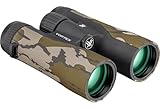
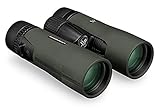
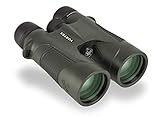
Top 3 picks at a glance
Quick comparison of the picks
| Pick | Best for | Key specs | Price range |
|---|---|---|---|
| Nikon Monarch M5 8×42 | Best overall, all-day use | 8x, 42 mm lenses, ED glass, waterproof and fogproof, about 5.25 mm exit pupil | Mid-range |
| Vortex Diamondback HD 10×42 | Wolves and bears at long range | 10x, 42 mm lenses, HD glass, about 4.2 mm exit pupil | Mid-range |
| Celestron Nature DX 8×42 | Best budget | 8x, 42 mm lenses, multi-coated, waterproof, roof prism | Budget |
| Vortex Diamondback HD 8×32 | Best compact for hiking | 8x, 32 mm lenses, lighter body, about 4 mm exit pupil | Mid-range |
| Swarovski EL 8×42 | Best premium | 8x, 42 mm lenses, wide field, top-tier glass and coatings | Premium |
| 20-60x 80 mm spotting scope (spec class) | Wolf watching from pullouts | Zoom eyepiece, 80 mm objective, needs a tripod | Mid-range to premium |
Best overall: Nikon Monarch M5 8×42
An 8×42 is the safest single choice for the park. It is steady enough to hold by hand while you stand in a cold pullout, and the wide field makes it easy to find a moving animal. Geysers, bison herds, elk and birds also fit comfortably in the frame. The Monarch M5 adds ED glass for cleaner edges on high-contrast scenes such as a dark bison against bright snow. Per the manufacturer’s spec sheet, it is waterproof and fogproof, which matters around geyser basins, where steam and spray are constant.
Trade-off: at 8x, a distant wolf is a small shape. If you mostly watch from far away, the extra magnification of a 10x is worth the shakier image.
Best for wolves and bears: Vortex Diamondback HD 10×42
Lamar Valley and Hayden Valley reward magnification because animals are often a mile or more away, and you are not allowed to walk closer. A 10×42 gives you about 25 percent more image size than an 8×42 at the same distance. The Diamondback HD range is known for its HD glass and the company’s unconditional warranty, which is useful for gear that lives in a car door pocket.
Trade-off: a narrower field of view, a smaller exit pupil and more visible hand shake. Plan to rest your elbows on a car door or use a monopod, or a trekking pole with a bino adapter.
Best budget: Celestron Nature DX 8×42
If you only visit once and want something decent, this is a sensible entry point. It has the 8×42 layout, multi-coated optics and waterproof construction at a budget price. The Nikon Prostaff P3 8×42 is a comparable alternative in the same class.
Trade-off: expect softer edges and more color fringing on bright backgrounds, plus less brightness in the last 20 minutes of dusk than ED-glass models.
Best compact for hiking: Vortex Diamondback HD 8×32
For trails around Mammoth, Tower Fall or Fairy Falls, a 32 mm binocular is lighter and easier to carry on a chest harness. Most 8×32 models weigh roughly 18 to 20 ounces, against 24 to 30 ounces for typical 42 mm models. That difference matters after several miles.
Trade-off: a smaller objective means a dimmer image at dawn and dusk, which is exactly when Yellowstone’s animals are most active.
Best premium: Swarovski EL 8×42
This is the choice if you travel often for wildlife and want the brightest, most comfortable image you can buy in a handheld. The wide, flat field and glass quality are noticeably better in low light, and the balance makes long scanning sessions less tiring. Zeiss and Leica make competing models in the same class.
Trade-off: the price is several times that of the mid-range picks, and the gain at midday is small. Most of the extra value shows up in the last half hour of light.
Do the numbers: what 8x and 10x actually show you
Magnification divides distance. An 8x binocular makes an animal look as if it were one eighth of the distance away, and a 10x makes it one tenth.
- Wolf at 1 mile (1,760 yards): 8x makes it look like 220 yards away. 10x makes it look like 176 yards. Both still show a small animal, which is why serious wolf watchers use a spotting scope at 20x to 60x.
- Bear at the legal minimum of 100 yards: 8x makes it look like 12.5 yards away, and 10x like 10 yards. That is plenty of detail without breaking park rules.
- Exit pupil (objective divided by magnification): 8×42 gives 5.25 mm, 10×42 gives 4.2 mm, 8×32 gives 4 mm. In dim light your pupil opens to about 5 to 7 mm in young eyes and less with age, so 8×42 uses more of the light available.
- Twilight factor (square root of magnification times objective): 8×42 is about 18.3, 10×42 about 20.5, 8×32 about 16. A higher figure means better detail separation in dim light. Note that 10×42 scores higher here because magnification boosts resolving power, while 8×42 delivers the brighter image.
- Field of view: one degree equals about 52.4 feet at 1,000 yards. A typical 8×42 with a 7.0 degree field shows roughly 367 feet at 1,000 yards. A 10×42 at 6.0 degrees shows about 314 feet. The wider field makes finding a running elk much easier.
Decision matrix: match your trip to the binocular
| Your situation | Choose | Why |
|---|---|---|
| First visit, general sightseeing, family | 8×42 or 8×32 | Wide field, steady image, easy to share |
| Dawn and dusk wildlife drives in Lamar or Hayden Valley | 10×42 with ED glass, plus a rest | More reach at distance, and 42 mm lenses for low light |
| Long hikes with kids or a heavy pack | 8×32 | About 6 to 10 ounces lighter |
| You wear glasses | Any model with 15 mm or more eye relief | Lets you see the full field with glasses on |
| Winter visit, snowmobile or snowcoach tours | Waterproof 8×42, rubber armor, gloves-friendly focus wheel | Cold, snow glare and fast temperature swings |
| You mainly watch wolves from pullouts | 10×42 plus a 20-60x 80 mm scope and tripod | Binoculars to find, scope to identify |
| Casual use on a tight budget | Budget 8×42 | Best value for the 8×42 layout |
How to choose: the criteria that matter in Yellowstone
Magnification: 8x vs 10x
Pick 8x if you share the binoculars, take photos with your other hand, or have a mild hand tremor. Pick 10x if you will mostly be parked and resting the binocular on something. Higher than 10x without a tripod is usually frustrating.
Objective size: 42 mm for wildlife, 32 mm for carrying
Animals are most visible near sunrise and sunset, so 42 mm is the default for wildlife-focused trips. Choose 32 mm only if weight is your main concern.
Glass and coatings
ED or HD glass reduces color fringing, which shows up as purple or green edges on dark animals against bright sky or snow. Fully multi-coated lenses and phase-corrected roof prisms improve brightness and sharpness. The step from a budget model to a mid-range one is the most noticeable improvement per dollar of any tier, and the step to premium is smaller.
Weatherproofing
Look for waterproof, nitrogen or argon purged construction. Steam in geyser basins, rain in summer thunderstorms and snow in winter all test seals. Per manufacturers’ specs, purged housings resist internal fogging when temperatures change quickly.
Eye relief and ergonomics
Glasses wearers should look for at least 15 mm of eye relief and twist-up eyecups. A smooth focus wheel you can use with gloves is a practical feature for spring and winter trips.
Accessories worth buying
- A chest harness, which carries weight better than the supplied neck strap.
- A lens cloth, because geyser mist leaves mineral spots.
- A beanbag or window mount for car-door viewing.
- A monopod or tripod adapter if you choose 10x or a scope.
Frequently Asked Questions
Is 8×42 or 10×42 better for Yellowstone?
8×42 is better for most visitors because it is steadier, has a wider field and gathers more usable light at dusk. 10×42 is better if you spend most of your time watching distant wolves or bears from a fixed position. If you can only buy one pair and will hold it by hand, choose 8×42.
Do I need a spotting scope in Yellowstone?
You do not need one for general sightseeing, but it makes a big difference for wolf watching in Lamar Valley, where animals are often more than a mile away. A scope at 20x to 60x shows behavior and markings that 10x binoculars cannot. Most wildlife watchers carry binoculars to find animals and a scope to study them.
How close can I get to wildlife in Yellowstone?
The National Park Service requires at least 100 yards from bears and wolves and at least 25 yards from all other wildlife, including bison and elk. Good binoculars let you stay within those limits and still see detail. If an animal approaches you, move away rather than forward.
Are cheap binoculars good enough for Yellowstone?
A budget 8×42 with multi-coated lenses and waterproofing is good enough for daytime sightseeing and occasional wildlife viewing. It will look dimmer and show more color fringing at dawn and dusk. If wildlife is the main purpose of your trip, a mid-range ED model is worth the extra spend.
What binoculars are best if I wear glasses?
Choose a model with at least 15 mm of eye relief and fold the rubber eyecups down. Most 8×42 mid-range models from Nikon, Vortex and Zeiss meet this, but check the manufacturer’s spec sheet before buying. A long eye relief on a 10x model is harder to find, so check it carefully.
Can I use binoculars to watch geysers?
Yes, though geysers are large and often close, so you rarely need more than 8x. Keep a lens cloth handy for spray and mineral deposits. The wide field of an 8x model helps follow eruptions as the plume rises and drifts.
Related guides
More from Amazon
Programs that pair well with the guide above. Offers and eligibility are set by Amazon and may change.
A free business account with business pricing and bulk-buying tools for work, shop or home office.
Create a business accountFree shipping on eligible items, Prime Video and more. Eligible new members can start with a free trial.
Start a Prime free trialAudiobooks and podcasts to listen to on the go. Eligible new members can start with a free trial.
Try Audible freeAd-free music streaming. Eligible new subscribers can start with a free trial.
Try Music Unlimited freeAs an Amazon Associate we earn from qualifying purchases.