The best binoculars for travelling are a roof-prism 8×32 model with a close-focus distance under 2 m and a weight around 500–600 g, such as the Zeiss Terra ED 8×32, Vortex Diamondback HD 8×32 or Celestron Nature DX 8×32. If luggage space matters more than low-light performance, an 8×25 pocket model is the better trade. Pick 8×42 only if you mostly watch wildlife at dawn and dusk and can carry the extra weight.
As an Amazon Associate we earn from qualifying purchases at no extra cost to you.
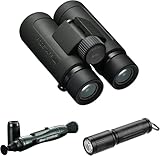


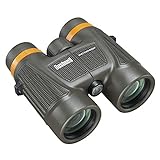
Top 3 picks at a glance
Quick comparison of the travel picks
| Pick | Best for | Key specs (approximate, per manufacturer spec sheets) | Price range |
|---|---|---|---|
| Zeiss Terra ED 8×32 | Best overall for most trips | 8x, 32 mm, 4.0 mm exit pupil, ED glass, roughly 550 g | Mid-range to premium |
| Vortex Diamondback HD 8×32 | Best value all-rounder | 8x, 32 mm, 4.0 mm exit pupil, HD glass, roughly 500–550 g | Mid-range |
| Celestron Nature DX 8×32 | Best budget-friendly full-size travel pair | 8x, 32 mm, 4.0 mm exit pupil, roughly 550–600 g | Budget to mid-range |
| Nikon Aculon A30 8×25 | Best cheap pocket pair | 8x, 25 mm, 3.1 mm exit pupil, roughly 300 g | Budget |
| Zeiss Terra ED Pocket 8×25 | Best compact with good optics | 8x, 25 mm, 3.1 mm exit pupil, ED glass, roughly 300–350 g | Mid-range to premium |
| Swarovski CL Pocket 8×25 | Best premium pocket pair | 8x, 25 mm, 3.1 mm exit pupil, roughly 350 g | Premium |
| Nikon Monarch M5 8×42 | Best for wildlife and safaris | 8x, 42 mm, 5.25 mm exit pupil, ED glass, roughly 650–700 g | Mid-range to premium |
| Canon 10×30 IS II | Best stabilised pair for boats and long glassing | 10x, 30 mm, image stabilisation, takes AA batteries, roughly 600 g | Premium |
Weights are rounded and vary slightly by batch and accessories, so check the current manufacturer spec sheet before you buy.
Best overall: Zeiss Terra ED 8×32
An 8×32 pair is the sweet spot for travel. It gives a bright image, a wide field and a steady view without the bulk of a 42 mm barrel. The Terra ED uses extra-low-dispersion glass, which reduces colour fringing on high-contrast edges like birds against sky, and it holds up in dim museums, cathedral interiors and evening city views. The trade-off is price: you pay a premium over the budget 8×32 class, and at around 550 g it still takes a dedicated spot in a day bag.
Best value: Vortex Diamondback HD 8×32
The Diamondback HD brings HD glass, waterproof and fogproof construction and a lifetime warranty (per Vortex) into the mid-range. It suits travellers who want one pair for city breaks, national parks and the odd beach walk. The trade-off is that the edge sharpness and eye relief are good rather than class-leading, so glasses wearers should check that the eyecups actually let them see the full field.
Best budget full-size: Celestron Nature DX 8×32
This is the pair for people who want an honest 8×32 without spending much. Expect a good centre-field image and decent close focus. Edge sharpness and colour correction are a step behind ED models, and the body is a little heavier for its size. It is a sensible first travel pair or a “safe to lose” pair for hostels and group tours.
Best pocket pairs: Nikon Aculon A30, Zeiss Terra ED Pocket, Swarovski CL Pocket
Pocket 8×25 binoculars fold small enough for a jacket pocket and weigh roughly half as much as a 32 mm pair. The Nikon Aculon A30 8×25 is the budget option and fine for daylight sightseeing. The Zeiss Terra ED Pocket 8×25 is the mid-to-premium choice with noticeably better contrast. The Swarovski CL Pocket 8×25 is the premium choice with superior build and optics. The shared trade-off is a 3.1 mm exit pupil: they look dim at dusk and tire your eyes faster in low light, and the small eyepieces are harder to line up if you wear glasses.
Best for wildlife and safaris: Nikon Monarch M5 8×42
For game drives and dawn birdwatching, a 42 mm objective collects far more light. The Monarch M5 8×42 has ED glass, a 5.25 mm exit pupil and a wide field of view. The trade-off is weight and bulk. At roughly 650–700 g it is heavy on a neck strap all day, and it eats carry-on space. Use a harness-style strap if you pick this class.
Best stabilised pair: Canon 10×30 IS II
Image stabilisation lets you hold 10x magnification steadily on a moving ferry, a train or a whale-watching boat, and it makes distant signs and animals far easier to resolve. It needs two AA batteries (per Canon), so carry spares and remember the pair is heavier and costlier than an unstabilised 8×32. It is a specialist tool rather than an everyday travel default.
How to choose: the numbers that matter
Worked example: what 8×25, 8×32 and 8×42 actually give you
Two simple calculations explain most of the difference between sizes.
- Exit pupil = objective diameter ÷ magnification. A 25 mm 8x gives 3.1 mm, a 32 mm 8x gives 4.0 mm, a 42 mm 8x gives 5.25 mm. Your own pupil is roughly 2–3 mm in bright daylight and can open to about 5–7 mm in the dark (less as you age). An exit pupil smaller than your pupil means the view dims.
- Twilight factor = square root of (magnification × objective diameter). 8×25 gives √200 ≈ 14.1, 8×32 gives √256 = 16.0, 8×42 gives √336 ≈ 18.3, and 10×42 gives √420 ≈ 20.5. A higher number means better detail in poor light.
So moving from 8×25 to 8×32 raises the twilight factor by about 13% for a weight penalty of roughly 200–250 g. Moving from 8×32 to 8×42 raises it by about 14% for another 100–150 g. For daytime sightseeing, the 25 mm gain is hardly worth it. At dusk, the 32 mm gain is where most travellers feel the difference.
Magnification: stay at 8x unless you have a reason
At 8x, a 1° apparent angle covers about 17.5 m at 1,000 m distance, so a typical 8.0° field shows roughly 140 m of width at that range. A 10x pair with a 6.5° field shows only about 114 m. The narrower view makes it harder to find a moving subject, and hand shake is amplified by 25% going from 8x to 10x. Choose 10x only if it is stabilised or you will brace it on a rail or tripod.
Field of view, close focus and eye relief
- Field of view: aim for 7.5° or wider at 8x for scanning landscapes and moving animals.
- Close focus: 2 m or less is useful for butterflies, museum details and market stalls. Some pocket models focus to about 1.5–2 m.
- Eye relief: glasses wearers need roughly 15 mm or more of usable eye relief, with eyecups that twist or fold down.
- Weatherproofing: look for waterproof and fogproof (nitrogen- or argon-purged) construction, since travel means rain, humidity and temperature swings.
Roof prism vs Porro prism
Roof-prism binoculars have straight barrels and are slimmer and easier to pack. Porro-prism designs are bulkier but can give good depth and brightness for the price. For travel, roof prism is the sensible default.
Decision matrix: match your trip to a size
| Your situation | Choose | Why |
|---|---|---|
| City breaks, museums, daylight sightseeing, hand luggage only | 8×25 pocket | Lightest at roughly 300–350 g, fits in a jacket pocket |
| Mixed trips: cities, parks, coast, evenings | 8×32 | 4.0 mm exit pupil, a balance of brightness and weight |
| Safari, dawn and dusk wildlife, birding holidays | 8×42 | 5.25 mm exit pupil, best low-light detail |
| Cruises, ferries, whale watching | 10x stabilised, or 8×32 with a waterproof body | Stabilisation steadies the view on moving decks |
| Wears glasses | 8×32 or 8×42 with 15 mm or more eye relief | Pocket models often have tight eyepieces |
| Tight budget or risk of loss or theft | Budget 8×32 or 8×25 | Lower cost of loss, still good daylight performance |
Packing and travel tips
- Binoculars are generally allowed in carry-on and checked luggage, but check your airline and destination rules. Carry them in hand luggage so they are not knocked around.
- Use a padded pouch or a harness strap instead of a thin neck strap, especially for pairs over 600 g.
- Carry a microfibre cloth and keep the objective and eyepiece caps on when not in use.
- For stabilised models, pack spare AA batteries and check local battery restrictions in your airline’s guidelines.
- Before you leave, set the diopter ring using the right eyepiece and note the setting so you can reset it quickly.
Frequently Asked Questions
What size binoculars are best for travelling?
8×32 is the best all-round size for most travellers. It gives a 4.0 mm exit pupil and a good field of view at roughly 500–600 g. Choose 8×25 if you need the smallest and lightest option, and 8×42 for wildlife trips where dawn and dusk viewing matters.
Are compact binoculars good enough for travel?
Yes, for daytime sightseeing, sports and scenery. Compact 8×25 models have a 3.1 mm exit pupil, so they look dimmer in low light than 32 mm or 42 mm pairs. They are also harder to use with glasses, so try before you buy if you can.
Is 10x magnification too much for travel?
For handheld use without stabilisation, usually yes. 10x magnifies hand shake by 25% over 8x and has a narrower field, so it is harder to hold steady and find subjects. It works well if the binoculars are image-stabilised or if you often use a railing or tripod.
Do I need waterproof binoculars for travelling?
It is strongly recommended. Waterproof and fogproof (sealed and gas-purged) designs cope with rain, humidity and moving between cold and warm environments without internal fogging. If you only visit dry cities, it is less crucial but still adds protection against dust and spills.
Can I take binoculars in hand luggage on a plane?
In general, yes, and it is the safest place for them. Rules can vary by country and airline, so check the security guidance for your route. Carry spare batteries for stabilised models in your hand luggage according to your airline’s rules.
How much should I spend on travel binoculars?
A budget pair is fine for casual sightseeing, and a mid-range ED or HD glass 8×32 is the best value for regular travellers. Premium models add better build, edge sharpness and low-light contrast, which matter most for frequent birding or wildlife trips. Spend more on the size and features you will really use before paying for a badge.
Related guides
More from Amazon
Programs that pair well with the guide above. Offers and eligibility are set by Amazon and may change.
A free business account with business pricing and bulk-buying tools for work, shop or home office.
Create a business accountFree shipping on eligible items, Prime Video and more. Eligible new members can start with a free trial.
Start a Prime free trialAudiobooks and podcasts to listen to on the go. Eligible new members can start with a free trial.
Try Audible freeAd-free music streaming. Eligible new subscribers can start with a free trial.
Try Music Unlimited freeAs an Amazon Associate we earn from qualifying purchases.


