The best binoculars for most sports fans are 8×42 models with a wide field of view, such as the Nikon Monarch M5 8×42. They keep fast action in frame, stay bright under stadium lights and are steady enough to hold for a full game. If you sit far from the action or follow golf or tennis, step up to a stabilized 10x or 12x model like the Canon 10×30 IS II or 12×36 IS III.
As an Amazon Associate we earn from qualifying purchases at no extra cost to you.

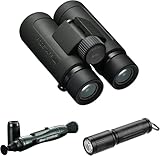


Top 3 picks at a glance
Quick comparison of the best sports binoculars
Specs below are approximate, taken from manufacturer spec sheets. Exit pupil is objective diameter divided by magnification. Confirm exact field of view and weight for the version you buy, since manufacturers revise models.
| Pick | Best for | Key specs | Price range |
|---|---|---|---|
| Nikon Monarch M5 8×42 | Best overall (football, soccer, baseball) | 8x, 42 mm, 5.25 mm exit pupil, about 8° field (about 420 ft at 1000 yd), roughly 20-24 oz | Mid-range |
| Nikon Prostaff P3 8×42 | Best budget | 8x, 42 mm, 5.25 mm exit pupil, roughly 6-7° field, lightweight body | Budget |
| Canon 10×30 IS II | Best stabilized for upper decks | 10x, 30 mm, 3 mm exit pupil, about 6° field, AA-powered stabilization, about 21 oz | Premium-leaning mid-range |
| Canon 12×36 IS III | Best for golf, tennis, motorsport, distant seats | 12x, 36 mm, 3 mm exit pupil, about 5° field, stabilization | Premium |
| Vortex Diamondback HD 10×42 | Best for outdoor stadiums with a rail or rest | 10x, 42 mm, 4.2 mm exit pupil, about 6.5° field | Mid-range |
| Compact 8×25 class (e.g. Nikon Prostaff-series compacts) | Best for bag-size limits and arenas | 8x, 25 mm, about 3.1 mm exit pupil, often under 12 oz | Budget to mid-range |
Best overall: Nikon Monarch M5 8×42
An 8×42 binocular is the sweet spot for team sports. Eight-power magnification is forgiving of hand shake, and the 42 mm lenses give a 5.25 mm exit pupil, which stays bright at dusk and under floodlights. The M5’s wide field of view (about 8° per Nikon’s spec sheet) makes it easy to find a ball carrier or follow a pass without hunting for the subject.
Trade-off: At roughly 20 ounces or more, it gets tiring if you hold it to your eyes for long stretches. It is also bulkier than a compact if your venue has strict bag rules.
Best budget: Nikon Prostaff P3 8×42
This is the entry-level pick for fans who want the right size and magnification without paying for premium glass. It uses the same 8×42 layout, so brightness and hand steadiness are in the same class as the Monarch. A budget alternative in the same format is the Vortex Crossfire HD 8×42.
Trade-off: Expect a narrower sharp area and more color fringing at the edges of the image. Edge sharpness matters when you pan across a pitch quickly.
Best stabilized: Canon 10×30 IS II
Image stabilization cancels hand tremor, so 10x looks as steady as a good 6x or 7x without it. That helps when you sit in the upper tier and want a closer view of faces, numbers or the pitcher’s grip. It is also easier on your eyes during a three-hour game.
Trade-off: The 3 mm exit pupil is dimmer than an 8×42 in poor light, and it needs batteries. It costs well above a standard 8×42 and is heavier than a compact. The stabilizer also cannot fix a narrow field of view.
Best for distant action: Canon 12×36 IS III
For golf, tennis from the back rows, motorsport and horse racing, 12x with stabilization pulls in a lot of detail. Unstabilized 12x binoculars are shaky for most people, so this is the one class where stabilization is close to essential.
Trade-off: The field of view is about 5°, so you will lose a fast-moving subject more often. It is also pricey and not ideal for fast team sports at close range.
Best for outdoor stadiums with a rest: Vortex Diamondback HD 10×42
If you can brace your elbows on a railing or your knees, an unstabilized 10×42 gives more reach than an 8×42 and keeps a 4.2 mm exit pupil, which is bright enough for evening events. It suits baseball from the outfield, soccer from the upper tier and track and field.
Trade-off: It is less forgiving of hand shake, and the narrower field makes tracking fast play harder.
Best compact: 8×25 class
Small 8×25 binoculars slip into a jacket pocket, and some venues restrict bag size. They suit indoor arenas, where distances are short and light is controlled. Their small lenses limit low-light performance and eye relief, so they are a poor choice for night games from far seats. Check each venue’s policy before bringing any optics, as rules on bags and equipment vary.
Worked example: how much closer and how much field you get
Say you sit about 120 yards from the near edge of a soccer pitch. Magnification tells you how close the action seems. The field width at that distance tells you how much of it you can see. Field width in feet at 1000 yards is the field of view in degrees multiplied by about 52.5, and you then scale it to your distance.
| Binocular | Apparent distance of a player 120 yd away | Field of view | Width seen at 120 yd | Exit pupil |
|---|---|---|---|---|
| 8×42 (8.0° field) | 15 yd | about 420 ft at 1000 yd | about 50 ft | 5.25 mm |
| 10×42 (6.5° field) | 12 yd | about 341 ft at 1000 yd | about 41 ft | 4.2 mm |
| 12×36 (5.0° field) | 10 yd | about 262 ft at 1000 yd | about 31 ft | 3.0 mm |
The numbers show the trade-off. Going from 8x to 12x makes the action 50% closer (15 yards to 10 yards), but you see only about 62% as much width (31 ft versus 50 ft). A football field is 160 feet wide, so even the 8×42 shows only a third of the field’s width at that distance. A narrow 12x view means constantly re-finding the subject, which is why 8x wins for fast team sports.
Brightness follows the same logic. Your pupil dilates to roughly 2-3 mm in bright daylight and 5-7 mm in the dark. Under stadium lights it typically sits around 3-5 mm, so a 4-5 mm exit pupil is plenty. A 3 mm exit pupil is fine for daytime events but dimmer at dusk.
Which binoculars fit which sport
| Sport or situation | Recommended class | Why |
|---|---|---|
| Football, soccer, rugby (stadium, any seat) | 8×42 | Wide field, bright, easy to pan |
| Baseball and softball | 8×42 or 10×42 | Fixed play area; extra reach helps in the outfield and upper decks |
| Basketball, hockey, indoor arena | 8×25 compact or 8×32 | Short distances, bag limits, controlled light |
| Golf and tennis | 10×30 or 12×36 stabilized | Slow action, long distances, small targets |
| Motorsport and horse racing | 8×42 for panning, or 10x stabilized | Fast movement needs a wide field; steadier images help at range |
| Track and field, cycling | 8×32 to 10×42 | Mixed distances; pick for portability |
| Night games | 42 mm objective or larger | Exit pupil of at least 4 mm for floodlit conditions |
How to choose: the numbers that matter
Magnification: 8x for most, 10x-12x only with stabilization or a rest
As a rule of thumb, handheld viewing without stabilization gets noticeably shaky from 10x upward. If you are unsure, pick 8x. You can always see the action more closely, but you cannot easily recover a field of view you gave up.
Field of view: look for about 6.5° or wider
Aim for at least 340 ft at 1000 yards (about 6.5°) for team sports. Wider is better for motorsport and fast ball sports. Remember that quoted fields are measured at the center, and cheaper models blur toward the edges.
Objective size and weight
A 42 mm objective suits evening and floodlit games. A 30-32 mm model saves weight and is fine for daytime events. Under about 12 ounces you can carry the binoculars all day, while a 22-ounce model feels heavy by the third hour.
Eye relief and glasses
If you wear glasses, look for at least 15 mm of eye relief and twist-up eyecups. Without it, your field of view shrinks sharply because you cannot get your eye close enough.
Close focus
For indoor arenas and for watching the bench or sideline, check that the close focus is under about 10 feet. Most sports binoculars manage this, but some compacts do not.
Weather sealing and coating
Waterproof, fogproof binoculars are worth having for outdoor events in rain and cold. Fully multi-coated lenses improve contrast and brightness under lights.
Common mistakes to avoid
- Buying by the biggest magnification number. A cheap 20x or 30x model will be shaky, dark and hard to aim.
- Ignoring weight. A heavy pair stays in the bag after the first quarter.
- Skipping the strap. A neck strap with a padded or harness-style design reduces fatigue far more than a lighter body would.
- Ignoring venue rules. Some stadiums limit bag sizes and may restrict certain equipment, so check the policy first.
Frequently Asked Questions
What magnification is best for watching sports?
8x is the best choice for most team sports because it balances reach, brightness and a wide field of view. Use 10x or 12x for golf, tennis and distant seats, and only with stabilization or a solid rest if you want a steady image.
Are 10×42 or 8×42 binoculars better for stadium games?
8×42 is better for fast action because the wider field makes it easier to follow the ball. 10×42 gets you about 25% closer, but you see less of the play and notice more hand shake. Choose 10×42 if you sit far away and can brace your elbows.
Is image stabilization worth it for sports?
It is worth it if you want 10x or 12x magnification handheld, since it steadies the image dramatically. For 8x models, it is a luxury. Stabilized models cost more, weigh more and need batteries, and they do not widen your field of view.
Can I bring binoculars into a stadium?
Often yes, but rules vary by venue, league and event. Many stadiums have bag-size limits, and some restrict equipment. Check the official venue policy before you go, and consider a compact pair if bag space is tight.
What binoculars are best for night games?
Choose a 42 mm model with fully multi-coated optics, giving a 4 mm or larger exit pupil. Stadium floodlights are bright, so you do not need the largest lenses, but small 25 mm compacts will look dim from far seats.
Do I need special binoculars if I wear glasses?
You need long eye relief, at least 15 mm, and adjustable eyecups you can fold down. Without enough eye relief, you will see a narrow circle instead of the full field of view, which is especially annoying when tracking fast play.
Related guides
More from Amazon
Programs that pair well with the guide above. Offers and eligibility are set by Amazon and may change.
A free business account with business pricing and bulk-buying tools for work, shop or home office.
Create a business accountFree shipping on eligible items, Prime Video and more. Eligible new members can start with a free trial.
Start a Prime free trialAudiobooks and podcasts to listen to on the go. Eligible new members can start with a free trial.
Try Audible freeAd-free music streaming. Eligible new subscribers can start with a free trial.
Try Music Unlimited freeAs an Amazon Associate we earn from qualifying purchases.