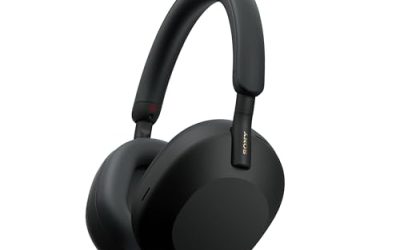
The best Audio-Technica headset for most PC gamers is the ATH-M50xSTS-USB, because it pairs the brand’s well-known M50x sound with a built-in boom mic and a plug-and-play USB connection. If you only want headphones and will add your own mic, the ATH-M50x is still the safest all-round buy. For a wide, positional soundstage in shooters, the open-back ATH-AD700X or ATH-ADG1X is the better tool.
Audio-Technica’s catalog is split into studio headphones and a smaller gaming range, so “headset” can mean two different things. The choice below comes down to four questions: does it have a mic, is it open or closed back, is it wired or wireless, and can your PC drive it.
Quick comparison of the picks
| Pick | Best for | Key specs (per manufacturer spec sheets) | Price range |
|---|---|---|---|
| ATH-M50xSTS-USB | Best overall PC headset | Closed-back, 45 mm drivers, USB, boom mic | Mid-range to upper mid-range |
| ATH-M50x | Best sound for the money (add a mic) | Closed-back, 45 mm drivers, 38 ohm, 99 dB/mW, detachable cables | Mid-range |
| ATH-M50xBT2 | Best wireless / multi-device | Bluetooth, up to about 50 hours battery, built-in mic | Upper mid-range |
| ATH-ADG1X | Best open-back with a mic | Open-air design, detachable boom mic, 3.5 mm | Mid-range to upper mid-range |
| ATH-AD700X | Best for positional audio | Open-back, 53 mm drivers, 38 ohm, 105 dB/mW | Mid-range |
| ATH-M40x | Best budget pick | Closed-back, 40 mm drivers, 35 ohm, 98 dB/mW | Budget to mid-range |
| ATH-R70x | Best for an amp / music-first gamers | Open-back, 470 ohm, 99 dB/mW | Upper mid-range to premium |
Best overall: ATH-M50xSTS-USB
This is the M50x family’s answer to gaming and streaming headsets. You get a closed-back design with a boom mic and a USB connection, so there is no sound card, amp or separate mic to buy. It suits players who want one cable, decent isolation and a sound signature that works for games, music and calls.
Trade-off: closed-back headphones have a narrower sense of space than open-back ones, and the USB version ties you to a USB-capable device rather than a 3.5 mm console controller.
Best sound for the money: ATH-M50x
The ATH-M50x has 45 mm drivers, a 38 ohm impedance and detachable cables, so it runs from nearly any onboard audio, DAC or controller. It has no microphone, which makes it a headphone rather than a headset. Pair it with a USB desktop mic or a clip-on boom mic and it becomes one of the most flexible setups in this list. Because the cables detach, a frayed cable costs you a replacement lead, not a new headset.
Trade-off: the extra mic is a second purchase and a second thing on your desk. The sound also leans toward punchy bass and a lively treble, which some players find fatiguing in long sessions.
Best wireless: ATH-M50xBT2
This is the Bluetooth M50x. Audio-Technica rates battery life at up to about 50 hours, which is the real selling point: even at a heavy 4 hours a day you charge it only about once every two weeks. It has a built-in mic for calls and works well with phones, laptops and handhelds.
Trade-off: Bluetooth adds latency. Standard codecs often add well over 100 ms, which is fine for video and single-player games but noticeable in competitive shooters and rhythm games. It also lacks a 2.4 GHz USB dongle, so it is a poor fit for a dedicated desktop gaming rig. Check that your PC or handheld supports a low-latency mode before you commit.
Best open-back with a mic: ATH-ADG1X
The ATH-ADG1X is Audio-Technica’s open-air gaming headset with a detachable boom mic. Open-back cups let sound escape and let you hear the room, but they give a more natural, speaker-like presentation in which directional cues are easier to place. It suits players in quiet rooms who want soundstage without buying a separate mic.
Trade-off: open-back cups leak your game to anyone nearby and let your mic pick up some room noise. They are not for shared bedrooms or noisy offices.
Best for positional audio: ATH-AD700X
The AD700X is a long-running favorite for first-person shooters. It uses large 53 mm drivers in an open-back design, has a 38 ohm impedance and a high 105 dB/mW sensitivity, so even a laptop jack drives it loudly. It is light and comfortable, with a self-adjusting headband.
Trade-off: it has no microphone and delivers less bass punch than the M-series. You will need a separate mic, and explosions will sound thinner than on a closed-back headphone.
Best budget: ATH-M40x
The ATH-M40x is a flatter, more neutral sibling of the M50x, with 40 mm drivers, 35 ohm impedance and 98 dB/mW sensitivity. It is easy to drive and a good starting point if you want studio-style clarity without paying for the M50x. Like the M50x, it needs an external mic.
Trade-off: the sound is less exciting than the M50x, and it has fewer premium touches. Players who want a big bass impact may prefer the M50x.
Best for an amp: ATH-R70x
The ATH-R70x is a lightweight open-back reference headphone with a 470 ohm impedance. It rewards a good headphone amp or DAC with a wide, airy presentation, and suits gamers who listen to a lot of music and want a single pair of headphones for both. See the amplifier maths below before buying.
Trade-off: it needs a proper amp, has no mic and leaks sound. Most laptops and many motherboards will leave it quiet or dynamically flat.
Can your PC actually drive it? A worked calculation
Impedance and sensitivity decide how much voltage a headphone needs. Per the manufacturer’s sensitivity figures, here is the voltage needed to reach a loud 100 dB SPL and a peak of 110 dB SPL:
- Power needed (mW) = 10 ^ ((target dB − sensitivity dB/mW) / 10).
- Voltage (Vrms) = √(power in watts × impedance in ohms).
| Headphone | Impedance | Sensitivity | Voltage for 100 dB | Voltage for 110 dB peaks |
|---|---|---|---|---|
| ATH-AD700X | 38 ohm | 105 dB/mW | about 0.07 V | about 0.22 V |
| ATH-M40x | 35 ohm | 98 dB/mW | about 0.24 V | about 0.76 V |
| ATH-M50x | 38 ohm | 99 dB/mW | about 0.22 V | about 0.69 V |
| ATH-R70x | 470 ohm | 99 dB/mW | about 0.77 V | about 2.4 V |
Example: the M50x at 99 dB/mW needs about 1.26 mW for 100 dB, then √(0.00126 × 38) ≈ 0.22 V. For 110 dB peaks it needs 12.6 mW, or about 0.69 V. Many PC motherboards and laptop jacks deliver somewhere around 1 V or more, but this varies by model, so the M-series and AD700X are comfortable on nearly any output. The R70x needs about 2.4 V for clean peaks, which is more than many onboard outputs deliver, so a desktop amp or DAC with a strong output makes sense. These are calculated from the spec sheet; real listening levels also depend on source quality and fit.
How to choose: a decision matrix
| Your situation | Choose | Why |
|---|---|---|
| PC, one USB cable, want a built-in mic | ATH-M50xSTS-USB | No sound card or extra mic needed |
| Shared room or noisy home | ATH-M50x or ATH-M40x (closed-back) | Isolation, minimal sound leakage |
| Quiet room, competitive FPS | ATH-AD700X or ATH-ADG1X | Open-back soundstage helps locate footsteps |
| Phone, laptop or handheld, no cables | ATH-M50xBT2 | Long battery life, multiple devices |
| Own a headphone amp or DAC | ATH-R70x | High-impedance design benefits from a real amp |
| Tight budget, already have a mic | ATH-M40x | Low impedance, easy to drive |
Check these before you buy
- Microphone: most Audio-Technica headphones have none. If chat quality matters, buy a model with a boom mic or budget for a separate mic.
- Connection: match the plug to your device. A 3.5 mm headset with a single TRRS plug suits consoles and phones. On a PC with separate headphone and mic ports you may need a splitter or a USB adapter.
- Open vs closed back: open-back gives wider imaging but leaks; closed-back isolates but sounds more enclosed.
- Cable and repairability: detachable cables extend the life of a headset, a point where the M-series is strong.
- Comfort: the AD700X is light, while the M50x family is firmer with a tighter clamp. Glasses wearers should weigh this.
Frequently Asked Questions
Does Audio-Technica make a real gaming headset with a mic?
Yes. Its gaming range includes models such as the ATH-ADG1X, which is open-back with a detachable boom mic, plus closed-back options like the ATH-GL3. The ATH-M50xSTS-USB is a studio-derived alternative with a built-in mic.
Is the ATH-M50x good for gaming without a mic?
It is good for the audio side: strong bass, clear detail and easy driving. You will need to add a separate mic for voice chat, such as a USB desktop mic or a clip-on boom mic. It works with most PC jacks, consoles and controllers.
Are open-back or closed-back headphones better for games?
Open-back models usually give a wider, more natural soundstage that helps in shooters, but they leak sound both ways. Closed-back models isolate better and sound more bass-heavy. Pick based on your room first and your genre second.
Do I need an amp for Audio-Technica headphones?
Not for the M40x, M50x or AD700X, which need well under 1 V for loud listening according to the sensitivity maths above. The 470 ohm ATH-R70x is different and benefits from a headphone amp or DAC with enough output voltage.
Is the ATH-M50xBT2 fast enough for competitive games?
Not ideally. Bluetooth latency is often well over 100 ms with common codecs, which is noticeable in fast shooters. It is a better fit for single-player games, video and mobile use, so choose a wired model or one with a 2.4 GHz dongle for competitive play.
Can I use these headphones with a console?
The 3.5 mm models plug straight into most controllers, though you will need a headset-type connector for chat. Check the plug type and whether the mic is supported, since the USB version is designed mainly for PCs.
Related guides
More from Amazon
Programs that pair well with the guide above. Offers and eligibility are set by Amazon and may change.
A free business account with business pricing and bulk-buying tools for work, shop or home office.
Create a business accountFree shipping on eligible items, Prime Video and more. Eligible new members can start with a free trial.
Start a Prime free trialAudiobooks and podcasts to listen to on the go. Eligible new members can start with a free trial.
Try Audible freeAd-free music streaming. Eligible new subscribers can start with a free trial.
Try Music Unlimited freeAs an Amazon Associate we earn from qualifying purchases.