
A home media server has to do more than hold a growing movie, music, and photo library. It needs to sit quietly in the living room, office, or utility closet while making files available to televisions, streaming devices, phones, and computers around the house. The right choice depends on whether you already own a NAS enclosure or want a complete network-storage appliance with drives included.
For this 2026 roundup, the strongest options break into two camps: internal hard drives for people building or upgrading their own NAS, and BUFFALO LinkStation units for shoppers who want a more direct path to private-cloud and network storage. Capacity matters, but so do drive compatibility, future expansion, backup planning, and the difference between a single-bay setup and a multi-bay system.
As an Amazon Associate we earn from qualifying purchases at no extra cost to you. Product prices and availability are accurate as of the date shown and are subject to change.


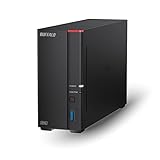





Top 3 picks at a glance
Quick Picks
| Product | Best for | Price |
|---|---|---|
| Seagate 8TB IronWolf Internal NAS Hard Drive (ST8000VNZ04) | Best internal drive for an existing NAS | $329.99 |
| BUFFALO LinkStation 220 8TB 2-Bay NAS | Best ready-to-use two-bay home NAS | $362.99 |
| BUFFALO LinkStation 710 8TB 1-Bay NAS | Best simple private-cloud setup | $318.99 |
| BUFFALO LinkStation 720 8TB 2-Bay Home Office Private Cloud | Best two-bay media-server alternative | $417.99 |
| Seagate IronWolf 4TB NAS Internal Hard Drive (ST4000VNZ06/006) | Best lower-capacity NAS-drive option | $189.99 |
| Seagate 8TB BarraCuda Internal Hard Drive (ST8000DM004) | Best value-minded internal 8TB drive | $249.99 |
| Western Digital 8TB WD Red Plus NAS Internal Hard Drive (WD80EFAX) | Best WD option for NAS builders | $439 |
| BUFFALO LinkStation 210 2TB 1-Bay NAS | Best small-library starter NAS | $153.99 |
How We Picked
We prioritized products that make sense for a home media-server workflow: storing a central media library, sharing files across a home network, and creating a more private alternative to relying entirely on online storage. We also separated bare internal drives from complete NAS appliances, since they solve different buying problems. A bare drive requires a compatible NAS enclosure or computer, while a LinkStation is positioned as a finished network-storage device with hard drives included.
Capacity, stated interface details, bay configuration, included-drive status, and price were the key comparison points. We did not assign invented speed, noise, power-use, size, or reliability results where those specifications were not provided. Before buying, confirm physical dimensions, supported drive formats, network ports, operating-system compatibility, and media-app support directly with the seller or manufacturer.
The 8 Best Picks
Seagate 8TB IronWolf Internal NAS Hard Drive (ST8000VNZ04)
The Seagate IronWolf 8TB is the most straightforward pick for someone who already owns a compatible NAS enclosure and needs more room for a home media collection. Its SATA 6 Gb/s interface makes it a natural fit for many conventional internal-drive NAS setups, and the 8TB capacity is better aligned with larger video libraries than entry-level storage. At $329.99, it sits above some general-purpose alternatives, but it is specifically positioned as a NAS internal drive.
- Pro: Built and marketed for NAS use rather than as a general desktop drive.
- Pro: Offers 8TB of media-library capacity.
- Con: It is a bare internal drive, not a complete network-storage solution.
Skip it if you need an appliance with drives included or do not already have a compatible NAS.
BUFFALO LinkStation 220 8TB 2-Bay NAS
The BUFFALO LinkStation 220 is a compelling choice for households that want network storage without separately shopping for drives and an enclosure. This 8TB, two-bay unit is described as a home cloud and network-storage device, making it well suited to a shared family library of photos, music, documents, and media files. Its $362.99 price is especially notable for buyers who value an included-drive setup over building from components. The two-bay format also gives it a more flexible starting point than a single-bay appliance.
- Pro: Includes hard drives, reducing setup complexity.
- Pro: Two bays suit buyers who want a more expandable-style platform.
- Con: Confirm the included storage configuration before planning redundancy.
Skip it if you already own a NAS enclosure and only need an internal replacement drive.
BUFFALO LinkStation 710 8TB 1-Bay NAS
The BUFFALO LinkStation 710 targets the home user who wants an 8TB private-cloud-style storage device with fewer decisions to make. It is a one-bay NAS with hard drives included, so it can appeal to someone moving a media collection off a computer’s internal drive and onto a shared network location. At $318.99, it costs less than the LinkStation 220 while retaining the same stated 8TB capacity. That makes it an approachable option for a single-library household or a straightforward personal media server.
- Pro: Includes storage, so no separate drive purchase is required.
- Pro: Lower price than the listed two-bay LinkStation options.
- Con: A one-bay design provides less flexibility than a two-bay model.
Skip it if you want multiple bays for a more adaptable storage plan.
BUFFALO LinkStation 720 8TB 2-Bay Home Office Private Cloud
The BUFFALO LinkStation 720 is the premium ready-to-use option here for a household that also needs network storage for a home office. It is described as private-cloud data storage, a media server, and a file server, giving it a broad purpose beyond simply parking video files. With 8TB of storage, two bays, and included hard drives, it is designed for buyers who prefer an all-in-one NAS path. Its $417.99 price is the highest among the listed complete 8TB LinkStation units, so convenience is the central value proposition.
- Pro: Combines media-server, file-server, and private-cloud roles.
- Pro: Two-bay design and included hard drives simplify purchasing.
- Con: Costs more than the other listed 8TB LinkStation models.
Skip it if a simpler one-bay setup fits your storage needs and budget.
Seagate IronWolf 4TB NAS Internal Hard Drive (ST4000VNZ06/006)
This Seagate IronWolf is not an 8TB drive, but it deserves consideration for shoppers with a smaller media library or an existing multi-bay NAS that needs an additional drive. It is a 4TB NAS internal hard drive with CMR recording, a SATA 6Gb/s interface, 5400 RPM speed, and a 64MB cache. At $189.99, it lowers the entry cost for NAS-specific storage while retaining a feature set clearly aimed at RAID network-attached storage use.
- Pro: NAS-focused drive with CMR recording.
- Pro: Lower upfront price than the listed 8TB NAS drives.
- Con: Its 4TB capacity falls short of the primary 8TB target.
Skip it if you need a single 8TB drive for a large media-server library.
Seagate 8TB BarraCuda Internal Hard Drive (ST8000DM004)
The Seagate BarraCuda 8TB is the price-conscious internal-drive alternative for a buyer who already has compatible hardware and wants 8TB of capacity for $249.99. It uses SATA 6 Gb/s, matching the interface stated for the IronWolf 8TB, while costing less. That price difference can matter when the media-server budget also needs to cover a NAS enclosure, backup storage, or networking gear. Still, this model is presented as an internal hard drive rather than a NAS-specific drive, so buyers should check their enclosure’s drive guidance before committing.
- Pro: Provides 8TB at the lowest listed price among the 8TB internal drives.
- Pro: Uses a SATA 6 Gb/s interface.
- Con: It is not identified here as a NAS-specific drive.
Skip it if you specifically want a drive marketed for NAS and RAID storage.
Western Digital 8TB WD Red Plus NAS Internal Hard Drive (WD80EFAX)
The WD Red Plus 8TB is a NAS-focused internal drive for buyers committed to Western Digital’s WD Red Plus line. Its stated specifications include 5400 RPM, SATA 6 Gb/s, CMR recording, a 256 MB cache, and a 3.5-inch form factor. Those details make compatibility checking easier for shoppers with a NAS that accepts standard 3.5-inch SATA drives. The drawback is price: at $439, it is the most expensive 8TB internal-drive choice in this group.
- Pro: Explicitly designed and branded for NAS use.
- Pro: CMR recording and a 256 MB cache are clearly specified.
- Con: Highest price among the listed 8TB internal drives.
Skip it if price per drive is your main concern or if you need a ready-made NAS.
BUFFALO LinkStation 210 2TB 1-Bay NAS
The BUFFALO LinkStation 210 is the budget-oriented outlier in this list. It offers a one-bay NAS with hard drives included for $153.99, making it an easy entry point for basic home-cloud and network-storage needs. It can make sense for documents, photos, and a modest music collection, particularly for someone who wants a dedicated network device rather than another external drive connected to one computer. However, its 2TB capacity is substantially smaller than the 8TB options that better suit a serious home media server.
- Pro: Lowest purchase price in the roundup.
- Pro: Includes hard drives in a complete NAS device.
- Con: Only 2TB, limiting its usefulness for large video libraries.
Skip it if 8TB capacity is a firm requirement for your media server.
Buying Guide
Choose Between a Bare Drive and a Complete NAS
Buy an internal drive only if you have a compatible NAS enclosure or are deliberately building your own storage system. The Seagate and Western Digital models listed here are drives, not network appliances. The LinkStation products include hard drives and are marketed as NAS or network-storage devices, making them a better fit for shoppers who want fewer components and a simpler purchasing decision.
Match Capacity to Your Actual Library
An 8TB drive or appliance provides considerably more headroom than the 2TB and 4TB alternatives in this roundup, especially for video-heavy collections. Capacity should not be your only plan, though. Leave room for future additions and for a separate backup. A NAS can centralize files, but it is not automatically a complete backup strategy.
Consider Bay Count Before You Buy
A one-bay NAS can be the simplest way to put files on your network. A two-bay NAS offers a more flexible physical platform, particularly for households thinking ahead about storage organization. Do not assume a particular redundancy arrangement from bay count alone; confirm the device’s supported storage modes and the capacity layout of included drives before ordering.
Our Verdict
For most people who already own a NAS enclosure, the Seagate 8TB IronWolf is the best fit for the target use case because it combines 8TB capacity with a NAS-specific identity and SATA 6 Gb/s connectivity. For buyers who want a finished home media-server foundation instead of a component, the BUFFALO LinkStation 220 is the best overall convenience pick: it supplies 8TB, two bays, and included hard drives for $362.99. The LinkStation 710 is the simpler choice when a one-bay, 8TB setup is enough.
FAQ
Is an 8TB NAS drive enough for a home media server?
It can be a strong starting point for a home media library, but the right capacity depends on how much video, music, photography, and backup material you plan to keep. If your collection is growing quickly, plan for additional storage and a separate backup destination.
What is the difference between a NAS drive and a NAS device?
A NAS drive is an internal hard drive that must be installed in compatible hardware. A NAS device is the network-connected appliance itself. The listed LinkStation models include hard drives, while the Seagate and Western Digital drive options require a compatible enclosure or computer.
Should I buy a one-bay or two-bay NAS?
Choose a one-bay model for the simplest setup and a two-bay model when you want a more flexible hardware platform. Before buying, verify supported storage configurations rather than assuming that every two-bay device handles files or backups in the same way.
Can I use a regular internal hard drive in a NAS?
Compatibility depends on the NAS enclosure and its drive requirements. The Seagate BarraCuda is listed as an internal SATA 6 Gb/s drive, while the IronWolf and WD Red Plus models are explicitly positioned for NAS use. Check your NAS documentation before installing any drive.


