
Top 3 picks at a glance
 Samsung SSD 990 PRO 4TB, PCIe 4.0 M.2 2280, Up to 7,450...
 Sandisk 4TB Extreme Portable SSD, Up to 1050MB/s, USB-C, USB 3.2 Gen...
 WD_Black SN8100 4TB NVMe SSD - PCIe 5.0x4, M.2 2280, Up to...
Video editors keep running out of drive space faster than any other creative professionals
If you cut 4K or 6K footage, a 4TB SSD has become the practical floor rather than a luxury. A single hour of ProRes 422 HQ eats roughly 100GB, and an hour of 8K RAW can top 1TB. Layer on proxies, cache files, project archives, and the audio stems, and a working editor can fill a 1TB boot drive in a week. The problem is that the 4TB market now spans everything from $349 SATA drives to $1,469 NAS-grade units — and picking the wrong tier means either bottlenecking your timeline or paying for throughput you will never use.
This roundup covers both camps: internal NVMe drives that live inside your editing rig and portable USB-C drives that move projects between a studio desktop, a laptop, and a client’s machine. Every product below is ranked for the specific job of video editing — sustained write speeds for long clip copies, thermal behavior during hour-long renders, and durability when a drive rides in a camera bag. Pricing reflects what we saw at publication in early 2026, and 4TB pricing shifts weekly, so treat the numbers as a snapshot rather than a promise.
As an Amazon Associate we earn from qualifying purchases at no extra cost to you. Product prices and availability are accurate as of the date shown and are subject to change.


Quick Picks
| Product | Best for | Price |
|---|---|---|
| Samsung SSD 990 PRO 4TB | Best overall internal editing drive | $979.99 |
| Sandisk 4TB Extreme Portable SSD (1050MB/s) | Best rugged field drive | $725 |
| WD_Black SN8100 4TB | Best PCIe 5.0 performance | $699.99 |
| SSK Portable SSD 4TB | Best budget portable | $469.99 |
| Sandisk 4TB Extreme Portable SSD (2000MB/s) | Best fast portable | $879.99 |
| TEAMGROUP T-Force Vulcan Z 4TB | Best cheap project archive | $349.99 |
| Bestoss 4TB PCIe 4.0 with Heatsink | Best value internal / PS5 | $610.98 |
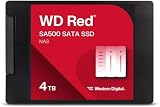
| Western Digital WD Red SA500 4TB NAS | Best shared NAS scratch disk | $1,469 |
How We Picked
We focused on three questions. First, can the drive sustain the write speeds video work actually demands — not just hit a headline number for a few seconds before throttling? Long clips, multicam sync, and cache writes punish drives with weak SLC caching. Second, does the form factor match an editing workflow? Internal M.2 drives want heatsinks and PCIe lanes; portable drives want USB-C, shock resistance, and ideally an IP rating for field work.
Third, is the price defensible per terabyte for what the drive does? A $1,469 SATA NAS drive is slow on paper but earns its cost differently than a $699 PCIe 5.0 stick. We kept the hard specifications listed for each product — interface, rated read/write speeds, resistance ratings, and form factor — and avoided claims we could not verify. Durability, firmware maturity, and real-world thermal performance we assessed from manufacturer specifications and general knowledge of how these product lines behave under sustained load.
The 8 Best Picks
1. Samsung SSD 990 PRO 4TB — Best Overall Internal Editing Drive
The 990 PRO is the default recommendation for editorial workstations, and at $979.99 it is priced like the flagship it is. Its PCIe 4.0 M.2 2280 interface delivers up to 7,450 MB/s, which comfortably covers 4K multicam playback, heavy cache scrubbing, and concurrent media management without a hiccup. Samsung’s controller and firmware are famously consistent under sustained writes, which matters when you are copying 400GB of dailies before lunch. The M.2 2280 form factor fits virtually every modern motherboard and laptop. It is the drive most editors should buy if budget is secondary to reliability.
- Pros: Up to 7,450 MB/s rated reads on PCIe 4.0; proven firmware consistency for sustained transfers
- Pros: Standard M.2 2280 fit across desktops and modern laptops
- Con: Flagship pricing at $979.99 — near double some PCIe 4.0 rivals
Skip it if your editing rig tops out at PCIe 3.0, where you will never see the rated speeds, or if the Bestoss below covers your needs for $370 less.
2. Sandisk 4TB Extreme Portable SSD (1050MB/s) — Best Rugged Field Drive
This is the drive that lives in camera bags. At $725, the Extreme Portable pairs up to 1050MB/s transfers over USB 3.2 Gen 2 with IP65 water and dust resistance, so a rain-soaked documentary shoot will not end your project. The updated firmware addresses the reliability concerns that dogged earlier revisions, which is worth confirming on arrival before trusting it with client footage. The 1050MB/s ceiling handles 4K proxy workflows and offload duties without complaint, though it is not the drive for scrubbing 8K RAW directly off the device. It is small enough to pocket and needs no external power — just the included USB-C cable.
- Pros: IP65-rated against water and dust for genuine field durability
- Pros: USB 3.2 Gen 2 speeds up to 1050MB/s with bus power over a single USB-C cable
- Con: Updated firmware matters — verify your unit ships current
Skip it if you mostly edit tethered at a desk; the internal picks are faster and cheaper per gigabyte of real performance.
3. WD_Black SN8100 4TB — Best PCIe 5.0 Performance
The SN8100 is the headline-chaser here, and its numbers justify the noise: up to 14,900MB/s reads and 11,000MB/s writes over PCIe 5.0 x4 in a standard M.2 2280 package. For editors, that translates to near-instant project loads, blazing proxy generation, and headroom for AI-assisted tools like transcription, upscaling, and auto-cut rough assemblies — use cases WD explicitly targets with this drive alongside gaming and video editing. At $699.99 it is actually cheaper than the Samsung 990 PRO, which is remarkable for double the rated read bandwidth. You need a PCIe 5.0 motherboard and a proper motherboard heatsink to exploit it.
- Pros: Up to 14,900MB/s read and 11,000MB/s write on PCIe 5.0
- Pros: Undercuts the 990 PRO on price while doubling rated bandwidth
- Con: Useless overhead without a PCIe 5.0 platform, and 5.0 runs hot
Skip it if your desktop is PCIe 4.0 or older — you will pay for lanes you cannot light up.
4. SSK Portable SSD 4TB — Best Budget Portable
At $469.99, the SSK is the affordable way to move projects between machines. It tops out at 1050MB/s over USB-C, matching the pricier Sandisk on paper for day-to-day offloads and proxy handoffs. The trade is build quality: there is no IP rating here, so it is a desk-to-desk drive, not a monsoon-shoot drive. The housing is compact plastic, it draws power over the cable, and it works across Windows, macOS, and consoles without fuss. For film students, freelance editors shuttling drives weekly, or anyone building a labeled library of project archives, spending $255 less than the Sandisk for identical rated speed is an easy call.
- Pros: Matches 1050MB/s rated speeds for $255 less than the rugged alternative
- Pros: Simple USB-C bus-powered operation across platforms
- Con: No water or dust resistance — treat it gently
Skip it if the drive will travel outdoors or in a checked bag; spend up for the IP65-rated option.
5. Sandisk 4TB Extreme Portable SSD (2000MB/s) — Best Fast Portable
The newer Extreme model doubles throughput to 2000MB/s for $879.99, making it the fastest portable option in this roundup. That extra bandwidth is meaningful for editors who genuinely work off external drives: scrubbing ProRes timelines, launching projects directly from the SSD, and cutting proxies without first copying to internal storage. It keeps the Extreme line’s pocketable footprint and USB-C connectivity. The question is math: you are paying $155 more than the 1050MB/s version for 2x the rated speed, and your host device must support 20Gbps transfers to see it. If it does, this is the best external editing drive you can pocket.
- Pros: Up to 2000MB/s — double the standard Extreme for direct-from-drive editing
- Pros: Compact, pocketable, USB-C powered
- Con: $879.99 demands a 20Gbps-capable host to justify the premium
Skip it if your laptop’s ports top out at 10Gbps — the cheaper 1050MB/s Extreme will perform identically.
6. TEAMGROUP T-Force Vulcan Z 4TB — Best Cheap Project Archive
The Vulcan Z is the value play of the roundup at $349.99, and it succeeds by being honest about what it is: a 2.5-inch SATA III drive with rated speeds of 550/470 MB/s and QLC NAND backed by SLC caching. That is roughly a quarter of the 990 PRO’s read bandwidth, but it is still four times faster than any spinning archive drive, and it is dramatically cheaper per terabyte than any NVMe option here. Use it as a cold-storage sink for finished projects, LTO-adjacent backups, or a media library inside an older editing tower with a spare SATA bay. Do not use it as your active cache or scratch disk.
- Pros: $349.99 is roughly a third the price of the premium NVMe picks
- Pros: Standard 2.5-inch, 7mm-class form factor fits nearly any SATA bay
- Con: QLC with 550/470 MB/s rated speeds — too slow for active editing
Skip it for anything cache-related; buy it only for archive and library duty.
7. Bestoss 4TB PCIe 4.0 M.2 NVMe SSD with Heatsink — Best Value Internal
Bestoss is the least famous name here, but the $610.98 package is compelling: a 4TB PCIe 4.0 NVMe drive rated up to 7350MB/s — within 100 MB/s of the Samsung flagship — shipping with a heatsink preinstalled. That included cooler makes it a natural fit for the PlayStation 5, where Sony requires a heatsink, and for budget editing builds where motherboard airflow is mediocre. It is also a genuinely good PS5 storage expansion in a market where 4TB drives routinely cost more. The obvious caveat is brand history: Bestoss lacks Samsung’s decade of firmware track record, so keep a second copy of anything precious.
- Pros: 7350MB/s rated speed with heatsink included for $370 less than Samsung
- Pros: Heatsink-equipped out of the box for PS5 and hot-running boards
- Con: Unproven brand compared with Samsung or WD
Skip it if firmware maturity and warranty confidence matter more to you than $370 in savings.
8. Western Digital 4TB WD Red SA500 NAS — Best Shared NAS Scratch Disk
The WD Red SA500 is the specialist pick, and its $1,469 price reflects that. This is a SATA III 2.5-inch drive rated up to 560 MB/s, built specifically for always-on NAS enclosures — meaning sustained 24/7 duty, vibration tolerance for multi-bay chassis, and firmware tuned for RAID environments. For a small studio running a Synology or QNAP box where multiple editors pull from a shared media pool, it is the right tool: a standard 2.5-inch, 7mm form factor that slides into any NAS bay. It is emphatically not a workstation boot drive or a timeline scratch disk at 560 MB/s — you are paying for endurance and NAS-specific engineering, not speed.
- Pros: NAS-duty firmware built for 24/7 multi-drive RAID environments
- Pros: Slim 2.5-inch/7mm form factor fits standard NAS bays
- Con: $1,469 for 560 MB/s — the highest price and lowest speed here
Skip it entirely unless you run a shared NAS; a workstation editor has no business paying this premium.
Buying Guide
Match the Interface to Your Timeline, Not the Marketing
PCIe 5.0 drives like the SN8100 hit 14,900MB/s, but 4K ProRes timelines rarely saturate even PCIe 4.0’s 7,450MB/s. The realistic dividing line is this: SATA (550MB/s) is for archives only; PCIe 4.0 NVMe handles virtually all 4K and most 6K/8K proxy work; PCIe 5.0 is future-proofing and AI-workflow headroom. For portables, check your host port — a 1050MB/s drive needs a 10Gbps port, and the 2000MB/s Extreme needs 20Gbps, or you are paying for speed your laptop cannot deliver.
Sustained Writes and Thermals Matter More Than Peaks
Video editing is a sustained-write workload: offloading 300GB of dailies, generating proxies, writing render caches. Drives with aggressive SLC caching can hit blazing peak numbers, then crater once the cache exhausts mid-transfer. Internal M.2 drives on PCIe 5.0 especially need heatsinks — the SN8100 and Bestoss both expect one. If you regularly copy clips longer than 100GB at a stretch, prioritize drives from manufacturers that publish sustained-write behavior, and keep your case airflow pointed at the M.2 slots.
Budget Per Tier, Not Per Brand
The 4TB market currently prices out in clear tiers: $349–$470 buys SATA archive or basic portable storage; $610–$725 covers PCIe 4.0 internal or rugged portable; $700–$980 is flagship territory (PCIe 5.0 or Samsung pedigree); and $1,469 is specialized NAS hardware. Decide your tier before you shop. An editor with a $1,000 drive budget is better served by a $700 SN8100 for the workstation plus a $470 SSK for shuttling than by one $979 Samsung.
Our Verdict
For most editors, the WD_Black SN8100 4TB is the pick: $699.99 buys PCIe 5.0 speeds up to 14,900MB/s — more performance than the $979.99 Samsung for less money, provided your motherboard supports PCIe 5.0. If it does not, the Samsung 990 PRO remains the safest flagship, while the Bestoss at $610.98 is the shrewd value internal. For portable duty, the $725 IP65-rated Sandisk Extreme earns the camera-bag slot, with the SSK at $469.99 as the budget shuttle. Save the TEAMGROUP Vulcan Z ($349.99) for archives and reserve the WD Red SA500 strictly for NAS builds.
FAQ
Is 4TB enough for video editing?
As a working drive, yes — with discipline. An hour of 4K ProRes 422 HQ runs roughly 100GB, so a 4TB drive holds around 35–40 hours of footage before proxies, caches, and project files crowd it out. Editors shooting 6K or 8K RAW should treat 4TB as one project’s worth of active media and pair it with cheaper SATA archive drives for finished work.
NVMe internal or USB-C portable — which should I buy first?
Internal NVMe if you edit in one place: it is faster, cheaper per terabyte of performance, and feeds your cache directly. A portable SSD earns its keep the moment footage moves — between a desktop and laptop, to a client, or off a camera card in the field. Serious setups need one of each, which is why this roundup covers both.
Can I use a portable SSD to edit directly off the drive?
Yes, if speeds allow. The 2000MB/s Sandisk Extreme comfortably plays 4K ProRes timelines, which need roughly 200–250MB/s per stream. The 1050MB/s models handle 4K proxies and lighter codecs fine but may stutter on high-bitrate multicam. SATA-speed drives at 550MB/s are not suitable for direct editing at all.
Do I really need a heatsink on my M.2 SSD?
On PCIe 4.0 drives like the Samsung 990 PRO, a motherboard-supplied heatsink is recommended for long render sessions but not strictly required. On PCIe 5.0 drives like the SN8100, cooling is effectively mandatory — sustained writes generate enough heat to throttle performance without it. The Bestoss ships with one preinstalled, which is part of its value for PS5 and hot-running builds.


