The best 36R auto battery for most drivers is a mid-range AGM (absorbent glass mat) unit with a CCA rating at or above your vehicle’s original spec and a free-replacement warranty of at least 36 months. If you only need a dependable replacement for a car without start-stop or heavy electronics, a standard flooded Group 36R is the sensible budget choice. Confirm the “R” (reversed terminal layout) before you buy, because a Group 36 and a Group 36R are not interchangeable.
As an Amazon Associate we earn from qualifying purchases at no extra cost to you.


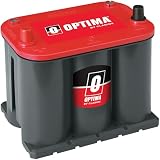
Top 3 picks at a glance
What “36R” actually means
“36R” is a BCI (Battery Council International) group size. The group number fixes the case dimensions and the terminal type. The “R” means the positive and negative posts are in the reversed positions compared with the plain Group 36. A battery with the right voltage and capacity but the wrong terminal side may not fit the tray, and the cables may not reach the posts without strain. Check the exact length, width and height on the manufacturer’s spec sheet and compare them with your old battery before ordering.
Group size does not tell you how powerful the battery is. Two 36R batteries can differ a lot in cold-cranking amps (CCA), reserve capacity (RC), chemistry and warranty. Those differences are what this guide covers.
Quick comparison of 36R pick types
Rather than naming a single model that may be out of stock or reformulated, these are the spec classes worth shopping. Most major battery brands and store brands sell some version of each.
| Pick | Best for | Key specs to look for | Price range |
|---|---|---|---|
| Best overall: AGM 36R | Daily drivers with many electronics, cold winters, or start-stop | AGM, CCA at or above OEM, 36–48 month free replacement, date code under 3 months old | Mid-range to premium |
| Best budget: flooded 36R | Older vehicles with simple electrical loads | Flooded lead-acid, CCA matching OEM, 24–36 month free replacement | Budget |
| Best for cold climates: high-CCA 36R | Regions with regular freezing temperatures | CCA 10–20% above OEM spec, AGM preferred, sealed case | Mid-range |
| Best for stored or occasional-use vehicles: AGM with low self-discharge | Weekend cars, trucks parked for weeks | AGM, compatible with a smart maintainer, low self-discharge | Mid-range to premium |
| Best for heavy accessories: high-RC 36R | Added audio, dash cams, lighting, or short-trip use | Higher reserve capacity in minutes, deep-cycle tolerance, AGM | Premium |
Best overall: AGM Group 36R
An AGM battery suits most buyers because it handles repeated discharge and recharge better than a flooded battery. It is also spill-resistant and generally tolerates vibration well. If your vehicle came with an AGM from the factory, you should replace it with another AGM. The charging system and battery-management logic may be tuned for that chemistry, and a flooded battery can wear out much faster in that setup.
Trade-off: AGM costs noticeably more than flooded, and a longer warranty only matters if the retailer honors it locally. Read the warranty terms to see how much is free replacement and how much is prorated.
Best budget: flooded Group 36R
A standard flooded 36R is fine when the vehicle has no start-stop system, no AGM requirement, and modest electrical demand. It is the cheapest way to restore reliable starting. Look for a free-replacement period of at least 24 months, and treat anything shorter as a warning sign about build quality.
Trade-off: Flooded batteries usually tolerate deep discharge less well, and some designs need periodic checks of electrolyte level. A forgotten dome light or a dead-battery incident can shorten their life more than it would an AGM.
Best for cold climates: high-CCA 36R
CCA is the current a battery can deliver at 0°F (-18°C) for 30 seconds while holding at least 7.2 volts, per the standard BCI/SAE test definition. Real-world capacity falls as temperatures drop. Published battery guidance commonly puts usable capacity at roughly 35–50% of the rated figure around 0°F, and engine oil thickens at the same time, so the starter needs more current. Choosing a CCA 10–20% above the OEM figure gives you margin as the battery ages, because CCA declines with sulfation and plate wear.
Trade-off: A higher CCA number does not guarantee a longer-lived battery. Some high-CCA designs use thinner plates, which can reduce cycle life. Compare the warranty length alongside the CCA figure.
Best for occasional-use or stored vehicles
Vehicles that sit for weeks lose charge through parasitic draw (clock, alarm, modules) and normal self-discharge. An AGM that accepts a smart maintainer is the best fit. Disconnecting the negative cable also helps over long storage.
Trade-off: You still need a maintainer or periodic driving. No battery type escapes self-discharge entirely, and a deeply discharged lead-acid battery can lose capacity permanently.
Worked example: how long can a battery sit unused?
Parasitic draw is the hidden reason many batteries die early. Here is a simple calculation you can adapt to your own car.
- Assume a battery with about 45 Ah of capacity. This is a representative figure for the class. Check your own spec sheet for the actual number.
- Only about 50% of that is safely usable if you want the engine to start afterward: 45 × 0.5 = 22.5 Ah.
- Assume a parasitic draw of 50 mA (0.05 A), which is higher than ideal but common with aftermarket accessories.
- Runtime = 22.5 Ah ÷ 0.05 A = 450 hours, or about 18.75 days.
At a healthy 25 mA draw the same battery lasts about 37 days. Add a dash cam in constant-record parking mode drawing 300 mA (0.3 A) and the same calculation gives 22.5 ÷ 0.3 = 75 hours, or about 3 days. These are illustrative numbers. Measure your own draw with a multimeter in series on the negative cable, after the car’s modules have gone to sleep (often 20–45 minutes after locking).
Decision matrix: match your situation to a 36R type
| Your situation | Choose | Why |
|---|---|---|
| Factory AGM or start-stop vehicle | AGM 36R | Charging logic and cycling demand match AGM; flooded can fail early |
| Older car, short budget, mild climate | Flooded 36R, CCA at OEM spec | Lowest cost, adequate for simple loads |
| Winters below freezing | AGM, CCA 10–20% above OEM | Margin against cold-start losses and aging |
| Dash cam with parking mode or added electronics | High-RC AGM | Tolerates deeper discharge; consider a hardwire kit with a low-voltage cutoff |
| Car parked for weeks | AGM plus smart maintainer | Offsets self-discharge and parasitic draw |
| Mostly short trips under 15 minutes | AGM, premium warranty | Alternator rarely fully recharges the battery; better charge acceptance helps |
How to choose: criteria that matter, in order
- Group and terminal layout. Confirm 36R against your owner’s manual or the battery tray, and compare physical dimensions.
- Chemistry required. If the car came with AGM, stay with AGM.
- CCA. Meet or exceed the OEM rating. Going far beyond it gives diminishing returns in mild climates.
- Reserve capacity. RC is how many minutes the battery can supply 25 amps before dropping to 10.5 volts. A higher figure helps if the alternator fails or you run accessories with the engine off.
- Warranty terms. Free-replacement months matter more than total months. A 36-month free replacement is a stronger signal than a longer prorated term.
- Freshness. Check the date code. Many manufacturers use a letter for the month (A = January, B = February, and so on) followed by a digit for the year, but formats vary, so check the brand’s guide. Avoid a battery that has sat on a shelf more than about six months, since it may already be partly sulfated.
- Core charge and installation. Many retailers charge a refundable core fee and will install and test the battery. Ask in advance.
Installation and break-in tips
- Disconnect the negative cable first and reconnect it last to avoid shorting a wrench to the body.
- Clean the terminals and cable clamps with a wire brush or terminal cleaner. Corrosion adds resistance that can mimic a weak battery.
- Tighten the hold-down so the battery does not move. Vibration is a major killer of lead-acid batteries.
- If the vehicle has a battery-management system, check whether the new battery needs to be registered. Many start-stop cars require this so charging is tuned to the battery’s age.
- After installing, have the charging system tested. A failing alternator will quickly ruin a new battery.
Frequently Asked Questions
Can I use a Group 36 battery instead of a 36R?
Usually not. The terminal positions are reversed, so the cables may not reach or may be stretched across the battery. Using the wrong layout risks a short circuit or damaged cables, so stick to the group size your vehicle specifies.
Is AGM worth the extra cost for a 36R?
It is worth it if your vehicle came with AGM, has start-stop, or carries significant electronics, or if you face harsh winters. For a simple older car in a mild climate, a good flooded battery with a solid free-replacement warranty is often enough.
How long should a 36R battery last?
Typical car batteries last about three to five years, depending on climate, driving pattern and charging system health. Heat shortens life more than cold does, and frequent short trips also accelerate wear. Warranty length is a rough proxy for expected durability, but not a guarantee.
How much CCA do I need?
Start with the CCA listed in your owner’s manual or on the original battery. Meeting that number is the minimum. In very cold regions, choosing 10–20% above it provides a margin as the battery ages. More CCA than that rarely helps and can come with trade-offs in plate design.
Can a new battery still be dead quickly?
Yes. Common causes are a high parasitic draw, a weak alternator, or a battery that sat unused in the store for too long. Check the date code before buying and test the charging voltage after installation. A healthy system typically shows roughly 13.8–14.7 volts at the battery with the engine running.
Should I trust the date code on the battery?
Yes, but learn the manufacturer’s format first, since each brand uses its own scheme. The code is usually a sticker or heat stamp on the case or terminal side. If it shows the battery is more than a few months old, ask for a fresher one.
Related guides
More from Amazon
Programs that pair well with the guide above. Offers and eligibility are set by Amazon and may change.
A free business account with business pricing and bulk-buying tools for work, shop or home office.
Create a business accountFree shipping on eligible items, Prime Video and more. Eligible new members can start with a free trial.
Start a Prime free trialAudiobooks and podcasts to listen to on the go. Eligible new members can start with a free trial.
Try Audible freeAd-free music streaming. Eligible new subscribers can start with a free trial.
Try Music Unlimited freeAs an Amazon Associate we earn from qualifying purchases.


