
The real advantages of an HDD over an SSD in 2026 come down to four things: a far lower cost per terabyte, much higher maximum capacities, better data retention when the drive sits powered off, and dramatically better odds of recovering files after a failure. SSDs win almost everything else — but for bulk libraries, NAS boxes, and shelf backups, spinning drives are still the rational buy.
As an Amazon Associate we earn from qualifying purchases at no extra cost to you.


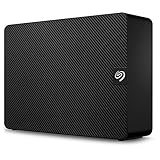

Top 3 picks at a glance
HDD vs SSD in 2026: the head-to-head numbers
| Metric | HDD (modern helium/NAS class) | SSD (consumer NVMe / SATA) |
|---|---|---|
| Cost per terabyte | ~$12–$20 | ~$50–$90 |
| Largest single drive | 24TB mainstream; 30TB+ HAMR enterprise | 8TB consumer NVMe; 4TB typical SATA |
| Sequential read | ~250–290 MB/s | ~550 MB/s SATA; 7,000–14,000 MB/s NVMe |
| 4K random access | Hundreds of IOPS | Hundreds of thousands of IOPS |
| Powered-off retention | Years (magnetic domains) | JEDEC client spec: 1 year at 30°C — at rated endurance |
| Recovery after failure | Often possible (cleanroom, PCB swap) | Often impossible (controller encryption, TRIM) |
| Noise / shock tolerance | Audible; fragile when running | Silent; survives drops |
Advantage 1: Cost per terabyte isn’t close
Run the math on a realistic 100TB archive — say a Plex library plus raw project files:
- HDD route: five 20TB NAS-class drives (Seagate IronWolf Pro, WD Red Pro, or recertified Exos units) at roughly $280–$420 each = $1,400–$2,100, or about $14–21 per usable TB.
- SSD route: thirteen 8TB NVMe drives at $500–$700 each = $6,500–$9,100. Even with 4TB SATA drives you’d need 25 of them and still spend ~$6,000.
That’s a 3.5–5× price gap, and it widens at higher capacities because large SSDs carry a per-drive premium while HDD cost scales almost linearly. Enterprise QLC SSDs do exist at 60TB+, but they cost thousands per drive — they solve density problems for data centers, not price problems for you.
The honest counterweight: five spinning disks draw roughly 25–35W idle, around 240–300 kWh per year — call it $40–50 annually at typical residential rates. An all-flash array sips single-digit watts. Over five years that narrows the gap slightly, but nowhere near closing it.
Advantage 2: Maximum capacity per slot
A single 3.5-inch bay holds a 24TB conventional drive today, with 30TB-class HAMR models like Seagate’s Exos M line shipping into enterprise channels. Consumer NVMe tops out at 8TB. If your case or NAS has five bays, that’s 120–150TB of HDD versus 40TB of flash — and motherboard M.2 slots are far scarcer than SATA ports. For anyone building serious local storage, HDDs are the only way to hit triple-digit terabytes without a rack.
Advantage 3: Cold-storage longevity
NAND flash stores data as trapped electrical charge, and charge leaks. The JEDEC client-SSD specification only guarantees one year of powered-off retention at 30°C — measured on a drive at the end of its write endurance life. A fresh SSD in a cool room will likely hold data longer, but a well-worn drive parked in a warm closet can start losing cells within months. It’s physics, not a defect.
An HDD stores bits as magnetic orientation, which is stable for years with no power at all. The practical failure points — rubber dampers aging, lubricant stiction, head parks — respond to simple handling:
- Store the drive cool, dry, and in an antistatic bag, ideally under 25–30°C.
- Power it up once a year, let it spin for an hour, and run a SMART check.
- For archives older than ~5 years, copy the data to a fresh drive — cheap insurance at $15/TB.
For “write once, shelve it” backups — wedding photos, tax records, a finished game archive — this makes the HDD the safer medium by design.
Advantage 4: Data recovery odds
When an HDD dies, it usually dies mechanically: a failed motor, degraded heads, a fried PCB. The platters themselves often remain intact, and a cleanroom lab can swap heads or transplant platters to image the data. Even DIY logical recovery works — a hard drive’s sectors map linearly, so deleted files persist until overwritten.
SSD failure is uglier. Most NVMe drives encrypt all data by default with keys held in the controller; when the controller dies, the NAND contents are effectively random noise. The flash translation layer scatters your files across dozens of dies via proprietary wear-leveling maps that die with the firmware. And TRIM — which runs continuously on any modern OS — physically erases deleted blocks within seconds to minutes, so “undelete” recovery is essentially zero. Recovery labs charge more for SSDs and succeed less often.
Where the SSD still wins — be honest with yourself
The benefits of an SSD over an HDD are just as decisive in the opposite direction. The key advantage of an SSD over an HDD is latency: random 4K reads are 100–1,000× faster, which is why boot drives, active game libraries, and anything running DirectStorage belong on flash. Add silence, drop survival, laptop battery life, and never needing defrag — and the summary of what the advantages of SSD over HDD are is simple: everything you interact with directly should live on one. The HDD’s role in 2026 is capacity behind the scenes, not responsiveness in front of you.
Decision matrix: match the drive to the job
| Your situation | Pick | Why |
|---|---|---|
| Boot drive / main gaming PC | NVMe Gen4/Gen5 SSD | Load times, DirectStorage, OS responsiveness |
| 20TB+ media server or NAS | CMR NAS-class HDD | 4–5× cheaper per TB; sequential speed is plenty |
| Offline backup stored on a shelf | HDD | Retention without power; recoverable if it fails |
| Laptop or portable drive | SSD | Shock resistance, battery, silence |
| 4K/8K video scratch disk | NVMe SSD | Random throughput under sustained load |
| Surveillance / DVR continuous writes | Surveillance-class HDD | Tuned for sequential loops; cheap capacity |
| Massive “install and forget” game archive | HDD, with active titles on SSD | Copy games to NVMe when you actually play them |
If you buy an HDD in 2026: checks that matter
- Confirm CMR, not SMR, for RAID or NAS use. Shingled drives crawl during RAID rebuilds. Check the spec sheet — Seagate labels IronWolf and Exos as CMR; WD publishes a CMR/SMR list. SMR is acceptable only for write-once archival duty.
- Buy NAS-rated models for 24/7 duty. IronWolf Pro, WD Red Pro, and Exos-class drives carry 5-year warranties and vibration compensation that desktop drives lack.
- Enable SMART monitoring (smartmontools, or your NAS dashboard). Watch reallocated and pending sector counts — HDDs usually degrade loudly and warn you weeks before dying, which is itself an advantage over flash.
- Follow 3-2-1 anyway: three copies, two media types, one off-site. HDD’s better recovery odds are a safety net, not a backup plan.
FAQ
Is an HDD still worth buying in 2026?
Yes — for anything over ~8TB, NAS duty, or cold backup. For your OS and active games, no; that gap closed years ago.
Do HDDs last longer than SSDs?
Powered on, both typically outlive their warranties. Powered off on a shelf, the HDD wins clearly thanks to magnetic retention.
Can deleted files be recovered more easily from an HDD?
Yes. Without TRIM, deleted data sits on the platters until overwritten; on an SSD it’s usually gone within minutes.
Will HDDs be phased out soon?
Unlikely. Hyperscalers still buy most spinning capacity, and HAMR roadmaps push past 40TB this decade — the economics of bulk storage still favor platters.


