
Acer Nitro 5 laptops built between 2019 and 2023 (AN515-4x and AN515-5x) run DDR4 SO-DIMMs across two physical slots, officially capped at 16GB but tested stable at 32GB and 64GB depending on the memory controller. The newer AN515-57 and AN515-58 switched to DDR5, and that generation is where the real gotchas start: some SKUs solder half the memory to the board and leave only one slot free, which changes both your upgrade ceiling and the speed the surviving slot will actually run at.
As an Amazon Associate we earn from qualifying purchases at no extra cost to you.

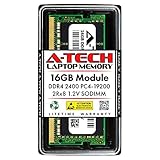


Top 3 picks at a glance
Which RAM generation does your Nitro 5 use?
Acer split the Nitro 5 line across three memory generations, and the model suffix on the bottom panel or in Windows System Information tells you which one you have.
| Model | CPU platform | RAM type | Slots | Factory config seen |
|---|---|---|---|---|
| AN515-43 / -44 | AMD Ryzen 4000 | DDR4-3200 | 2x SO-DIMM | 8GB or 16GB, both slots populated or one open |
| AN515-45 / -46 | AMD Ryzen 5000 | DDR4-3200 | 2x SO-DIMM | 8GB single stick, one slot free |
| AN515-55 | Intel 10th/11th Gen | DDR4-2933/3200 | 2x SO-DIMM | 8GB or 16GB, one slot free |
| AN515-57 | Intel 12th Gen | DDR5-4800 | 2x SO-DIMM | 8GB or 16GB, one slot free |
| AN515-58 | Intel 13th Gen | DDR5-4800/5200 | 1x SO-DIMM + 1x soldered on some SKUs | 8GB soldered + 1 open slot on budget trims |
The AN515-58 is the model people get burned by. Acer sells configurations where 8GB is soldered directly to the motherboard and a single SO-DIMM slot handles the rest. If your unit shipped with 8GB total and Windows shows it as one bank, you’re looking at a single-channel, single-slot layout, not the two-slot upgrade path older Nitro 5 buyers are used to.
Official max vs what actually works
Acer’s spec sheet lists 16GB as the maximum for every DDR4 Nitro 5 and either 16GB or 32GB for DDR5 models, depending on the year the page was published. That number reflects what was available in SO-DIMM capacities when the laptop launched, not a hard controller limit.
- DDR4 models (AN515-4x/5x): the memory controller in Ryzen 4000/5000 and Intel 10th-11th Gen mobile chips addresses up to 64GB across two slots (2x 32GB). Two 32GB DDR4 SO-DIMMs work in practically every unit reported running this platform, giving you 64GB total.
- AN515-57 (DDR5, 12th Gen): the same logic applies. 2x 32GB DDR5 SO-DIMMs are recognized for 64GB total, well past the 32GB Acer advertises.
- AN515-58 with soldered memory: your ceiling is fixed by the single open slot. If 8GB is soldered, a 32GB SO-DIMM in the open slot gets you 40GB total, but it runs asymmetrically. If 16GB is soldered, adding a 32GB stick gets you 48GB. Check which config you have before buying, because the soldered amount isn’t printed anywhere obvious except the original Acer order spec.
So if you’re weighing acer nitro 5 8gb ram against acer nitro 5 16gb ram at purchase time, treat the RAM spec as a starting point, not a limit. On the fully socketed models, 8GB and 16GB configurations are the same laptop with different sticks installed, and both accept the same upgrade path.
Single-channel vs dual-channel: the part that actually affects performance
This matters more than raw capacity for gaming. A single 8GB or 16GB SO-DIMM in one slot runs single-channel, which roughly halves memory bandwidth compared to two matched sticks in dual-channel. On integrated graphics this is a bigger hit than on a laptop with a dedicated GPU, since iGPUs borrow system RAM for frame buffer duty, but even with an RTX-class discrete GPU, CPU-bound titles and 1% low framerates suffer in single-channel mode.
Worked example: a Ryzen 5 5600H Nitro 5 with a single 3200MHz DDR4 stick delivers a theoretical peak bandwidth of about 25.6 GB/s (64-bit bus x 3200MT/s x 8 bytes / 1000). Populate the second slot with a matching stick and the bus widens to 128-bit, doubling theoretical bandwidth to roughly 51.2 GB/s. In CPU-limited esports titles (competitive shooters, MOBAs) at 1080p high refresh, that difference commonly shows up as a 10-20% framerate gain, purely from filling the second slot with a matched module, no CPU or GPU change involved.
If your Nitro 5 shipped with one 8GB stick and one empty slot, adding a second 8GB stick of the same speed and timings is the single highest value upgrade you can make before you even think about capacity.
Exact speeds each chipset will run at
SO-DIMMs are backward compatible but not forward compatible, and JEDEC speed bins matter less than what the memory controller actually negotiates.
| Platform | Rated speed you can buy | Speed it actually runs at |
|---|---|---|
| Ryzen 4000 (AN515-43/44) | DDR4-3200 or faster | Locked to DDR4-3200 |
| Ryzen 5000 (AN515-45/46) | DDR4-3200 or faster | Locked to DDR4-3200 |
| Intel 10th Gen (AN515-55) | DDR4-2933 or faster | Locked to DDR4-2933 |
| Intel 11th Gen (AN515-55 refresh) | DDR4-3200 or faster | Locked to DDR4-3200 |
| Intel 12th Gen (AN515-57) | DDR5-4800 or faster | Locked to DDR5-4800 |
| Intel 13th Gen (AN515-58) | DDR5-5200 or faster | Runs at DDR5-4800 or 5200 depending on BIOS/JEDEC profile support |
Buying DDR5-6400 SO-DIMMs for an AN515-57 doesn’t get you 6400MT/s. The memory controller and BIOS clock the modules down to the platform’s supported speed, so you’re paying for headroom the laptop can’t use. Match the rated speed to what the table shows, and spend the savings on capacity instead.
Step-by-step: upgrading RAM safely
- 1. Identify your exact model. Run msinfo32 in Windows or check the sticker underneath, since AN515-57 and AN515-58 look nearly identical but use different DDR5 speed bins.
- 2. Check current channel configuration. Open Task Manager > Performance > Memory. If it says “1 of 2 slots used,” you have an open slot. If it says “Slots used: 1” with no second slot mentioned in CPU-Z’s SPD tab, some memory may be soldered.
- 3. Buy matched pairs when going dual-channel. Two identical SO-DIMMs (same capacity, speed, and ideally same brand/kit) avoid the mixed-timing penalties that occur when pairing mismatched sticks.
- 4. Power down, unplug, and discharge. Remove the battery connector if accessible, then hold the power button for 10 seconds to clear residual charge before opening the bottom panel.
- 5. Ground yourself before touching the modules. Static discharge is the most common cause of a DOA SO-DIMM in a first-time upgrade.
- 6. Seat at a 30-degree angle, then press flat. SO-DIMMs click into place; if it doesn’t seat evenly on both sides, don’t force it, recheck the notch alignment.
- 7. Boot and confirm in Task Manager or CPU-Z. Confirm both capacity and that it reports dual-channel, not just the total GB figure.
Should you also do the SSD while the laptop is open?
Since an acer nitro 5 ssd upgrade requires opening the exact same bottom panel as the RAM swap, it’s worth doing both in one pass if your unit still has a factory 256GB or 512GB drive. Every Nitro 5 generation from AN515-43 through AN515-58 includes at least one M.2 NVMe slot, and most 2021-onward units include a second M.2 slot or a spare 2.5-inch SATA bay alongside it. Check whether your specific config has an occupied SATA bay before buying a second drive, since some trims use that space for a bigger battery instead.
Decision matrix: what to buy for your situation
| Your situation | Recommended upgrade |
|---|---|
| DDR4 Nitro 5, single 8GB stick installed | Add a matched 8GB DDR4-3200 SO-DIMM for dual-channel 16GB, usually $25-$40 |
| DDR4 Nitro 5, want max headroom for modern AAA titles | Replace both sticks with 2x 16GB or 2x 32GB DDR4-3200, usually $50-$140 for the 64GB kit |
| AN515-57, one slot open | Add one 16GB or 32GB DDR5-4800 SO-DIMM matched to the existing module’s timings where possible |
| AN515-58 with soldered base memory | Confirm soldered amount first, then fill the one open slot with the largest SO-DIMM you’re willing to buy, since there’s no second upgrade later |
| Budget build, gaming at 1080p only | 16GB total (8GB+8GB dual-channel) is sufficient for nearly all current titles |
| Streaming, heavy multitasking, or modding-heavy titles | 32GB total is the practical sweet spot; 64GB mainly helps VM or content-creation workloads |
For pure gaming, 32GB in dual-channel outperforms 64GB in single-channel every time, so if your Nitro 5 has a soldered chip occupying half its capacity, prioritize getting a matched-speed module in the open slot over chasing a bigger number on the spec sheet.
Frequently asked questions
How can I tell whether my Nitro 5 uses DDR4 or DDR5?
Check the exact model suffix on the bottom panel or run msinfo32 in Windows. AN515-43, AN515-44, AN515-45, AN515-46, and AN515-55 use DDR4. AN515-57 uses DDR5-4800, while AN515-58 uses DDR5-4800 or 5200 depending on BIOS and JEDEC profile support. Because AN515-57 and AN515-58 look nearly identical, identifying the model before buying memory is important.
Can I mix RAM modules with different capacities or brands?
You can pair modules with different capacities or brands, but matched pairs are recommended for dual-channel upgrades. Choose modules with the same capacity and speed, and ideally the same brand and kit. Mismatched sticks can introduce mixed-timing penalties. On models with soldered memory, match the open-slot module’s speed and timings to the existing memory where possible.
What happens if I install faster RAM than my Nitro 5 supports?
Faster SO-DIMMs generally run at the laptop’s supported speed rather than their advertised maximum. Ryzen 4000 and Ryzen 5000 models are locked to DDR4-3200, Intel 10th Gen to DDR4-2933, Intel 11th Gen to DDR4-3200, and Intel 12th Gen to DDR5-4800. AN515-58 may run DDR5-4800 or 5200 depending on BIOS and JEDEC support.
How do I know whether my Nitro 5 has soldered memory?
Check the original Acer order specification and inspect the slot information in Windows or CPU-Z. If Task Manager reports one used slot and CPU-Z’s SPD tab does not show a second slot, some memory may be soldered. The AN515-58 includes configurations with 8GB soldered and one open SO-DIMM slot, while other configurations may have 16GB soldered.
Will adding RAM erase my files or require reinstalling Windows?
Adding RAM does not require reinstalling Windows, but you should power down, unplug the laptop, and discharge it before opening the bottom panel. Remove the battery connector if accessible, then hold the power button for 10 seconds. After installation, boot and confirm the total capacity and dual-channel status in Task Manager or CPU-Z.


