
A buyer searching for “pc 8gb ram” is usually facing one of two problems: either they have an aging desktop or laptop that crawls under modern multitasking, or they are building a secondary machine on a tight budget and need to know which parts still make sense in 2026. The market splits into two camps that rarely overlap — individual memory modules that slot into existing hardware, and complete systems sold with 8GB already installed. Picking the right one depends on whether your current machine still has open DIMM slots, whether you are on a DDR3 or DDR4 platform, and whether you need a working computer today or just a memory upgrade.
What separates a good pick from a wasteful purchase here is not just price per stick. It is compatibility with your specific motherboard or laptop, whether the kit provides dual-channel performance out of the box, and how the complete systems compare in real-world responsiveness for everyday tasks like browsing, office work, and video playback. We compared published specifications, listed prices, and aggregated owner feedback across all eight products below to help you match your situation to the right answer.
As an Amazon Associate we earn from qualifying purchases at no extra cost to you.



Top 3 picks at a glance
Quick Picks
| Product | Best for | Price |
|---|---|---|
| Timetec 16GB DDR3L Desktop Kit | DDR3 desktop upgrades | $38.99 |
| Dell Optiplex 3040 SFF (Renewed) | Complete budget business desktop | $132.89 |
| HP 14″ HD Everyday Laptop | Everyday laptop with SSD storage | $329.99 |
| Corsair Vengeance LPX DDR4 Kit | DDR4 gaming and productivity builds | $139.99 |
| HP 14″ Portable N4120 Laptop | Budget student and light work laptop | $299.99 |
| Generic 16GB DDR3-1600 Kit | Cheapest DDR3 desktop upgrade | $37.99 |
| Timetec 16GB DDR3L SODIMM Kit | Laptop DDR3 upgrades | $38.99 |
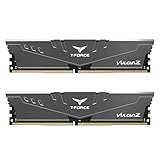
| TEAMGROUP T-Force Vulcan Z DDR4 | DDR4 value performance | $129.99 |
How We Picked
We evaluated each product on four criteria: platform compatibility (does it match the generation of hardware a buyer is likely running?), price-to-capacity ratio (dollars per gigabyte of usable memory), real-world owner satisfaction regarding stability and reported failures, and whether the product solves the underlying need — a complete working system versus a component upgrade. A cheap RAM kit is worthless if your motherboard does not have DDR3 slots, and a complete system at $130 is only good value if its processor and storage still handle your workload.
The 8 Best PC 8GB RAM in 2026
Timetec 16GB DDR3L Desktop Kit (2x8GB)
This kit targets owners of older desktops that still have DDR3 or DDR3L slots — typically machines from the 2012 through 2015 era that shipped with only 4GB or 8GB of single-channel memory. The dual 8GB modules enable dual-channel operation immediately, which owners report noticeably improves responsiveness in Windows compared to a single stick.
- Pro: Operates at both 1.35V and 1.5V, so it fits both standard DDR3 and low-voltage DDR3L boards without manual voltage tweaking.
- Pro: 2Rx8 dual-rank configuration tends to be more tolerant of older memory controllers than single-rank modules.
- Con: DDR3 is a dead-end platform — this will not be reusable in any future build.
Skip this if you are on a DDR4 or DDR5 motherboard, or if your machine already has four matched sticks at lower capacity. Buy it when you have exactly two open slots and need the cheapest path to smooth everyday performance.
Dell Optiplex 3040 SFF Business Desktop (Renewed)
A complete desktop solution for buyers who need a working machine, not just memory. The Core i3-6100 is a dual-core Skylake chip from the 6th generation, and the 256GB SSD makes a dramatic difference over the mechanical drives these machines shipped with originally. Windows 11 Pro is included and activated, which removes a common friction point with renewed hardware.
- Pro: The smallest form factor SFF chassis fits easily on a desk or shelf and draws modest power for a desktop.
- Pro: HDMI and RJ45 outputs cover display and wired networking without dongles or adapters.
- Con: 8GB of DDR4 at base speed will become limiting if you multitask heavily or run multiple browser tabs.
Skip this if you need more than basic office work, or if you already own a working desktop and just need a RAM module. Buy it when you need a complete, reliable workstation under $150 for a home office, guest room, or secondary login.
HP 14″ HD Everyday Laptop PC
Designed for buyers who want a laptop with an SSD out of the box at a sub-$350 price point. The Intel 4-core processor is sufficient for web browsing, document editing, streaming, and light multitasking. The 128GB SSD fills a practical middle ground — noticeably faster than eMMC but not as spacious as the 256GB option in pricier models.
- Pro: Solid-state storage means boot times and app launches feel snappy compared to eMMC-equipped budget laptops at similar prices.
- Pro: 8GB of RAM is the bare minimum comfortable amount for Windows 11, and this machine meets that without being soldered on (allowing a future upgrade in most configurations).
- Con: The HD display is 1366×768, which looks soft for text-heavy work at close range.
Skip this if you do significant photo editing, coding with multiple windows open, or need a sharper screen. Buy it for a student, a parent, or as a household travel machine where the SSD and Windows 11 support matter more than pixel density.
Corsair Vengeance LPX DDR4 16GB Kit (2x8GB) 3200MHz
The go-to choice for anyone building or upgrading a modern desktop. The low-profile heatspreader clears most CPU coolers, including tower designs, which eliminates a common frustration with taller RGB-equipped kits. XMP profiles make 3200MHz easy to enable, and Intel and AMD platform compatibility is broad.
- Pro: Corsair’s reputation for consistent binning means less chance of a module failing to reach rated speed.
- Pro: Black LPX design is low-profile enough to fit under virtually any air cooler without clearance issues.
- Con: Priced roughly $10 above the TEAMGROUP equivalent below, paying for brand assurance rather than raw performance gains.
Skip this if your motherboard only supports DDR3 or DDR5, or if your budget cannot stretch past a generic kit. Buy it for a first build or upgrade on a DDR4 platform where stability and cooler compatibility matter more than saving ten dollars.
HP 14″ Portable Laptop (Intel Quad-Core N4120)
A step below the HP Everyday model in both processor and storage. The Intel N4120 is a Gemini Lake chip with modest single-thread performance, and the 64GB eMMC storage is the main limitation — a Windows installation plus a handful of apps will consume most of it quickly. The included year of Office 365 adds practical value for students who need Word and Excel.
- Pro: Includes a one-year Office 365 subscription, saving the cost of a separate productivity suite.
- Pro: RJ-45 port is rare in budget laptops and useful where Wi-Fi is unreliable, such as dorms or offices.
- Con: 64GB eMMC storage is extremely tight; you will need a microSD card or cloud dependency almost immediately.
Skip this if you will install more than a few programs locally or store files on the device itself. Buy it for a child’s first laptop or a backup travel machine where the $299.99 price and included Office license justify the cramped storage.
Generic 16GB DDR3-1600 Desktop Kit (2x8GB)
At $37.99, this is the cheapest dual-channel DDR3 kit in our lineup. The specs — 1600MHz, 1.5V, CL11, 2Rx8 — are functionally identical to the Timetec kit at $38.99. The primary difference is brand recognition and warranty support, which is where the one-dollar gap disappears into buyer confidence.
- Pro: Lowest listed price in the category by a small margin, relevant for bulk upgrades of older office fleets.
- Pro: Standard 240-pin non-ECC desktop form factor fits virtually every DDR3 desktop motherboard.
- Con: Limited brand visibility means harder-to-find warranty service if a module fails.
Skip this if your platform is DDR3L only and requires 1.35V operation, since this is rated for 1.5V. Buy it when upgrading many machines in a small office and total cost outweighs per-module brand preference.
Timetec 16GB DDR3L SODIMM Kit (2x8GB)
The laptop equivalent of the desktop Timetec kit above. Uses 204-pin SODIMM modules at 1.35V or 1.5V, making it compatible with older DDR3 and DDR3L notebook platforms that still have accessible memory slots. Owners upgrading 2013-2016 laptops report this as the most straightforward performance improvement available for those machines.
- Pro: Dual-rank configuration provides a slight performance edge over single-rank modules in some laptop platforms.
- Pro: Same voltage tolerance as the desktop version — no need to identify whether your laptop requires DDR3L specifically.
- Con: Most laptops from 2017 onward solder RAM to the board, so this only helps if your machine has open SODIMM slots.
Skip this if your laptop has no accessible memory bay, which you should confirm before ordering. Buy it for a mid-2010s notebook that still runs fine but struggles with browser tabs.
TEAMGROUP T-Force Vulcan Z DDR4 16GB Kit (2x8GB) 3200MHz
The value play in the DDR4 space. At $129.99, it is ten dollars cheaper than the Corsair Vengeance LPX while delivering the same frequency, timings (CL16), and voltage. The gray heatspreader is understated compared to RGB alternatives, which some buyers prefer for a clean look.
- Pro: Best price-per-gigabyte among branded DDR4 kits in this roundup.
- Pro: TEAMGROUP has a solid track record for consistency in mainstream kits, reducing the gamble of off-brand modules.
- Con: Heatspreader height is taller than Corsair’s LPX, which can interfere with large air coolers on some builds.
Skip this if you are running a bulky tower cooler that sits directly over the RAM slots. Buy it for a clean build with a compact cooler or AIO liquid where height clearance is generous.
Buying Guide
Match the Generation Before Anything Else
DDR3, DDR3L, and DDR4 are physically and electrically different — a DDR3 stick will not fit a DDR4 slot, and forcing one will damage the board. Before ordering any module, check your motherboard manual or look up your laptop’s service information to confirm the type, voltage, and pin count. For desktops, count your open slots and note whether you need 240-pin (desktop) or 204-pin (laptop). This single check eliminates most returns in this category.
Dual-Channel Kits Beat Single Sticks
When upgrading from 8GB to 16GB, a two-module kit operating in dual-channel mode provides measurably higher bandwidth than a single 16GB stick. If your board currently has two matched 4GB sticks, replacing them with two 8GB sticks is the most cost-effective upgrade path. Mixing a new kit with existing modules of different rank, speed, or timing can cause instability, so replace pairs together.
Complete Systems Versus Component Upgrades
If your existing machine is more than eight years old, spending $38 on RAM may only extend its useful life by a year or two. A renewed desktop with 8GB and an SSD at $132 often provides a better total cost of ownership over the next three to four years than upgrading an aging system with a new memory kit. The deciding factor is whether your current CPU is still adequate for your workload — if it is, a RAM kit makes sense; if it is not, the complete system is the smarter buy.
Our Verdict
For a DDR4 desktop build or upgrade, the Corsair Vengeance LPX 16GB kit at $139.99 is the top pick — its low-profile design, broad compatibility, and Corsair’s reliability record make it the safest choice for most buyers. For anyone on a DDR3 platform needing the absolute lowest cost to restore a working machine, the generic 16GB DDR3-1600 kit at $37.99 is the budget pick. If your need is a complete working computer rather than a component, the Dell Optiplex 3040 at $132.89 wins outright, provided your workload is basic office tasks and web browsing.
FAQ
Is 8GB of RAM enough for a PC in 2026?
Eight gigabytes is the functional minimum for Windows 11 and will handle single-task web browsing, document editing, and video streaming without major issues. It becomes a bottleneck as soon as you run a modern browser with more than ten tabs open alongside a spreadsheet or a video call, which is where 16GB becomes noticeably smoother.
What is the difference between DDR3 and DDR3L?
DDR3L operates at 1.35V while standard DDR3 uses 1.5V, making DDR3L slightly cooler and more power-efficient. DDR3L slots accept both types, but a DDR3-only slot may not reliably boot with a 1.35V module at full stability. The Timetec kits in this roundup handle both voltages automatically.
Can I mix different RAM brands in the same PC?
Technically yes, but it is risky for stability. Mixing brands, speeds, or timings can force the system to downclock everything to the slowest module or cause boot failures. The safer approach is to buy a matched dual-channel kit and replace all existing modules with it.
Should I buy a renewed desktop or upgrade my current one?
If your current desktop has a CPU from roughly 2014 or earlier, a renewed system with a more recent processor and an SSD will often feel dramatically faster than simply adding RAM to the old machine. If your processor is still adequate but you are memory-starved, a $38 kit solves the problem without replacing the whole system.


