
Upgrading from an RX 6900 XT to an RX 6950 XT is not worth it for almost anyone. Both use the same 5,120-shader RDNA 2 chip and the same 16 GB, and reviews measured the 6950 XT only about 5-11% faster, at a higher power draw. If you’re buying from scratch, take whichever of the two is cheaper in good condition. If you already own a 6900 XT and want a real step up, look at a current RX 9070 XT or RTX 5070 Ti-class card instead.
As an Amazon Associate we earn from qualifying purchases at no extra cost to you.

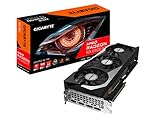

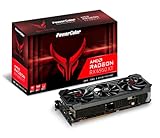
Top 3 picks at a glance
What Actually Changed in the Refresh
AMD launched the RX 6950 XT in May 2022, about eighteen months after the RX 6900 XT. It wasn’t a new design. It was a refined, higher-clocked version of the same Navi 21 silicon. Three things changed:
- Clocks: Boost rose from 2,250 MHz to 2,324 MHz, and the game clock also went up.
- Memory speed: The memory went from 16 Gbps to 18 Gbps modules, lifting bandwidth from 512 GB/s to 576 GB/s, about 12.5% more on the same 256-bit bus.
- Power: Rated TDP rose from 300 W to 335 W to support the higher clocks.
Shader count, Infinity Cache size, VRAM amount and feature set are all identical. Anything the 6950 XT can run, the 6900 XT can too, just a few frames slower.
Specification Comparison
| Specification | RX 6900 XT | RX 6950 XT |
|---|---|---|
| Architecture / process | RDNA 2.0, 7 nm | RDNA 2.0, 7 nm |
| Release date | 28 October 2020 | 10 May 2022 |
| Launch MSRP | $999 | $1,099 |
| Stream processors | 5,120 | 5,120 |
| Boost clock | 2,250 MHz | 2,324 MHz |
| VRAM | 16 GB GDDR6 | 16 GB GDDR6 |
| Bus / bandwidth | 256-bit / 512.0 GB/s | 256-bit / 576.0 GB/s |
| L2 / Infinity Cache | 4 MB / 128 MB | 4 MB / 128 MB |
| TDP | 300 W | 335 W |
| Power connectors | 2x 8-pin | 2x 8-pin |
| Length / slots | 267 mm / 3-slot | 267 mm / 3-slot |
| Outputs | 1x HDMI 2.1, 2x DP 1.4a, 1x USB Type-C | 1x HDMI 2.1, 2x DP 1.4a |
The reference 6950 XT dropped the USB Type-C port. That only matters if you use a USB-C monitor or VR headset that relied on it.
How Big Is the Performance Gain?
According to TechPowerUp’s review of the reference RX 6950 XT, the new card was about 6% faster than the reference 6900 XT across its 4K test suite. Factory-overclocked partner models widened the gap: TechPowerUp measured roughly 10-11% over the reference 6900 XT for cards such as the Sapphire Pulse, ASRock OC Formula and MSI Gaming X Trio. TechSpot (Hardware Unboxed’s written reviews) saw a similar 5-11% spread from game to game. Aggregated benchmark sites land around 5% on average.
In practice, a game running at 80 fps on a 6900 XT would run at about 84-89 fps on a 6950 XT at the same settings. That’s measurable in a chart and very hard to notice while playing. The gain is similar at 1440p and 4K. At 1080p it often shrinks further, because both cards become CPU-limited in many games.
Ray tracing
Both cards use first-generation RDNA 2 ray accelerators, so the RT gap between them matches the raster gap, roughly 5-10%. Neither handles heavy ray tracing well next to current GeForce cards or the newer RX 9000 series. The refresh doesn’t change that.
Features: Nothing New to Unlock
Because the silicon is identical, there’s no feature reason to upgrade. Both cards support FSR 2 and FSR 3 upscaling, FSR 3 frame generation, AMD Fluid Motion Frames at the driver level, and XeSS in its DP4a path. Neither officially supports FSR 4, which AMD built for the RDNA 4 RX 9000 family. AV1 hardware encoding is also absent on both, since that arrived with RDNA 3. Owners of either card are in the same position as AMD’s drivers move RDNA 2 to a maintenance-focused track. AMD has said game-specific fixes will continue, but new features land on newer architectures first.
Power, PSU and Thermals
The rated TDP rises by 35 W, but partner 6950 XT cards often run much higher. TechPowerUp recorded one heavily overclocked model drawing around 440 W in its testing for an 11% gain. That’s a lot of extra heat for the frames it adds.
PSU sizing example
- RX 6900 XT: 300 W + 125 W CPU + 150 W headroom = 575 W, so a good 650-750 W unit works.
- RX 6950 XT (reference): 335 W + 125 W + 150 W = 610 W, so 750 W is the comfortable target. For overclocked partner cards, 850 W leaves room for transient spikes.
Both use two 8-pin connectors, so there’s no cable change for the reference designs. Some premium partner 6950 XT boards add a third 8-pin, so check your PSU’s available PCIe leads before buying one.
Case fit
The reference cards share the same 267 mm, three-slot shroud. Partner 6950 XT cards are often longer and thicker, many over 300 mm, because they have to cool the extra power. A case that barely fits a reference 6900 XT may not take a large custom 6950 XT.
The Upgrade Math
At launch the 6950 XT cost $100 more ($1,099 vs $999) for about 6% more performance with reference cards. As cost per frame: on a performance index with the 6900 XT at 100 and the 6950 XT at 106, the 6900 XT cost $9.99 per point and the 6950 XT $10.37 per point. The newer card was slightly worse value even before considering upgrade costs.
For an owner swapping one for the other on the used market, the numbers are worse. A used RX 6900 XT usually sells for around $330-$420 and a used RX 6950 XT around $380-$480, depending on cooler and condition. Selling one and buying the other means paying fees, shipping and risk for a single-digit gain. That money is better saved toward a real generational upgrade.
When the 6950 XT Does Make Sense
| Your situation | Recommendation |
|---|---|
| You own a 6900 XT and game at 1080p or 1440p | Keep it. The gain would barely show. |
| You own a 6900 XT and want much more 4K or ray-tracing performance | Skip the 6950 XT and look at RX 9070 XT or RTX 5070 Ti-class cards. |
| Buying used, both available at similar prices | Take the 6950 XT for the small speed edge, if your PSU and case have room. |
| Buying used, the 6900 XT is clearly cheaper | Take the 6900 XT. It’s the better value per frame. |
| Small case or 650 W PSU | The 6900 XT, or a reference-size 6950 XT. Avoid large overclocked boards. |
| Need USB-C display output | A reference 6900 XT, which keeps the Type-C port. |
Better Ways to Spend the Upgrade Money
A 6900 XT owner who feels limited usually has a more effective option than buying a refresh card. A higher refresh-rate monitor matched to the card’s 1440p ability, a faster CPU for games that are CPU-limited at 1080p, or simply turning on FSR Quality mode in demanding games often delivers more visible improvement than 6% more GPU throughput. If the goal is better ray tracing or modern upscaling quality, only a newer architecture solves it. The RDNA 4 RX 9070 XT brings much stronger RT and FSR 4 support, and GeForce RTX 50 cards bring DLSS 4 with multi-frame generation.
Used-Market Buying Notes
Both cards are now several years old, and many passed through mining rigs in 2021-2022. Before buying, ask for proof that the card runs a stress test without artifacts, check that the fans spin smoothly, and look for signs of disassembly or missing warranty stickers. Navi 21 cards with tired thermal paste often have high hotspot temperatures. A repaste can fix that, but take it into account when negotiating. Cards that come with their original box and a remaining transferable warranty are worth paying a little more for.
Frequently Asked Questions
How much faster is the RX 6950 XT than the RX 6900 XT?
Reference models differ by about 6% at 4K in TechPowerUp’s review data. Factory-overclocked 6950 XT cards reach about 10-11% over a reference 6900 XT. In everyday gaming that’s a few frames per second.
Can an RX 6900 XT be overclocked to match a 6950 XT?
Often it can get partway there. Many 6900 XT cards can raise core clock and power limit somewhat, but they keep the slower 16 Gbps memory, so a complete match isn’t guaranteed. Results vary from card to card.
Do the two cards have the same VRAM?
Yes. Both have 16 GB of GDDR6 on a 256-bit bus with 128 MB of Infinity Cache. The 6950 XT’s memory runs faster, giving 576 GB/s instead of 512 GB/s. The capacity is the same.
What PSU do I need for an RX 6950 XT?
A quality 750 W unit suits the reference card with a typical gaming CPU. Heavily overclocked partner models can draw well over 400 W, so 850 W is safer for those. Make sure the PSU has enough separate PCIe 8-pin cables.
Is either card still good for 4K in 2026?
Both handle 4K in many games at medium to high settings, especially with FSR upscaling. Demanding releases and ray-traced titles push them to lower settings or 1440p. Their 16 GB of VRAM keeps them usable longer than many 8 GB and 12 GB cards.

