For gaming, the RX 9070 XT is the better card: it is roughly 15-30% faster than the RTX 3090 at 1440p in most published comparisons, matches or beats it in ray tracing, supports FSR 4 machine-learning upscaling, and draws less power in a much smaller 2-slot package. The RTX 3090 only wins if you need its 24 GB of VRAM for AI, 3D rendering or CUDA-based work, or if you can get one used for clearly less than a new RX 9070 XT and value DLSS support.
The RTX 3090 launched in September 2020 at $1,499 as NVIDIA’s Ampere halo card. The RX 9070 XT arrived in March 2025 at $599 as the top RDNA 4 Radeon. That a $599 card outpaces a former $1,499 flagship shows how much has changed, but the 3090’s huge memory pool keeps it relevant for buyers who do more than game.
As an Amazon Associate we earn from qualifying purchases at no extra cost to you.

Our Top Picks

Top 3 picks at a glance
Spec Comparison
| Specification | RTX 3090 | RX 9070 XT |
|---|---|---|
| Architecture | Ampere | RDNA 4.0 |
| Release date | 1 September 2020 | 6 March 2025 |
| Launch MSRP | $1,499 | $599 |
| CUDA cores / stream processors | 10496 | 4096 |
| Boost clock | 1695 MHz | 2970 MHz |
| Process | 8 nm | 4 nm |
| TDP | 350 W | 304 W |
| Memory | 24 GB GDDR6X | 16 GB GDDR6 |
| Memory bus | 384-bit | 256-bit |
| Bandwidth | 936.2 GB/s | 644.6 GB/s |
| Cache | 6 MB L2 | 8 MB L2 + 64 MB Infinity Cache |
| Interface | PCIe 4.0 x16 | PCIe 5.0 x16 |
| Power connectors | 1x 12-pin | 2x 8-pin |
| Length / width | 336 mm, 3-slot | 267 mm, 2-slot |
| Outputs | 1x HDMI, 3x DP | 1x HDMI 2.1b, 3x DP 2.1a |
Do not read the core counts literally. Ampere’s 10,496 CUDA cores count each FP32 unit, while RDNA 4’s 4,096 stream processors run at nearly 3 GHz with a large Infinity Cache. The RTX 3090’s raw advantage is memory: 24 GB on a 384-bit bus with 936 GB/s of bandwidth, still impressive in 2026.
Gaming Performance at 1080p, 1440p and 4K
Independent and first-party data point the same direction. AMD’s own launch figures claimed the RX 9070 XT averaged about 26% faster than the RTX 3090 at 4K across more than 30 games. Third-party numbers broadly agree: PC Guide’s per-game results showed the 9070 XT ahead by roughly 40-50% in titles like Cyberpunk 2077 and Assassin’s Creed Mirage at 1440p, while aggregators such as Nanoreview put the 1440p average gap around 20-25%. The RTX 3090 still wins a few outliers, notably Counter-Strike 2 in PC Guide’s results.
Taking that spread together, a fair summary is:
- 1080p: the 9070 XT leads, though both cards are often CPU-limited.
- 1440p: the 9070 XT is roughly 15-30% faster on average.
- 4K: the gap narrows somewhat as the 3090’s bandwidth helps, but the 9070 XT still generally leads by around 20-25%.
For context, Hardware Unboxed’s 55-game comparison found the RX 9070 XT only about 5% behind the RTX 5070 Ti at 4K, which puts it firmly in upper-mid-range territory that the 3090 no longer reaches. Actual frame rates depend heavily on settings, CPU and game version, but at 1440p ultra the 9070 XT typically runs demanding AAA games in the roughly 80-140 FPS range.
Ray Tracing: Ampere vs RDNA 4
Older Radeons trailed NVIDIA badly in ray tracing, but RDNA 4 changed that. AMD significantly upgraded its ray tracing units for this generation, and reviews show the 9070 XT matching or beating second-generation RT hardware like Ampere in most titles. BabelTechReviews found the two cards close in some ray-traced games, with the RTX 3090 slightly ahead in Red Dead Redemption 2 at 4K, while other titles favored the 9070 XT. In fully path-traced modes optimized for NVIDIA, such as Cyberpunk’s Overdrive mode, results are more mixed and the gap can swing either way.
Upscaling and Frame Generation
- RTX 3090: DLSS Super Resolution including the newer transformer model, which looks excellent and is supported in a huge number of games. DLSS Frame Generation is not available on RTX 30 cards; for frame generation it can use FSR 3.1 frame generation in supported titles.
- RX 9070 XT: FSR 4 machine-learning upscaling, a large image-quality jump over FSR 3.1 that brings AMD much closer to DLSS, plus FSR frame generation and driver-level Fluid Motion Frames. FSR 4 game support is smaller than DLSS but has grown steadily since launch.
On image quality alone, DLSS on the 3090 remains slightly ahead in many comparisons, but the 9070 XT’s higher base frame rate usually more than makes up for it.
24 GB vs 16 GB: Who Needs the Extra Memory?
For pure gaming, 16 GB is enough at every resolution in 2026, including 4K with ultra textures in nearly all titles. The 3090’s 24 GB matters for:
- Running local large language models or Stable Diffusion-style image generation, where VRAM decides which models fit.
- Blender, Octane or other CUDA/OptiX renderers with large scenes.
- Heavily modded games with enormous texture packs.
If any of those apply, the 3090 is a uniquely affordable 24 GB card. If you only game, the extra memory is unused headroom.
Power, PSU and Case Fit
| Card | GPU TDP | CPU | Headroom | Total | Suggested PSU |
|---|---|---|---|---|---|
| RTX 3090 | 350 W | 125 W | 150 W | 625 W | Quality 750-850 W |
| RX 9070 XT | 304 W | 125 W | 150 W | 579 W | Quality 750 W |
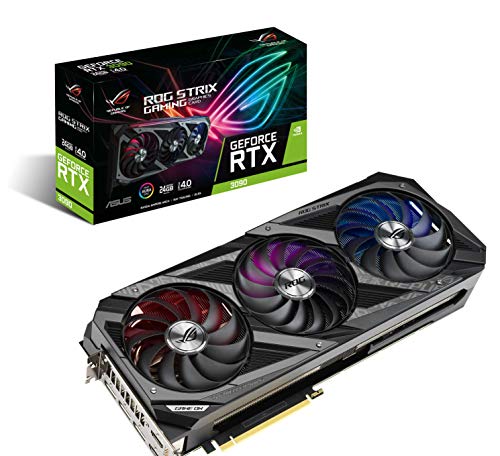
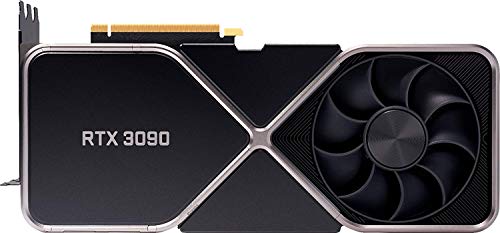
The RTX 3090 is known for sharp transient power spikes, so many builders pair it with an 850 W unit. The reference design uses a single 12-pin connector with an adapter; partner cards commonly use 2x or 3x 8-pin plugs, so check the specific model. The RX 9070 XT reference spec uses two 8-pin connectors, which almost every PSU supports, though some overclocked partner cards add a third.
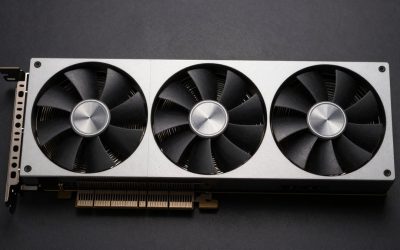
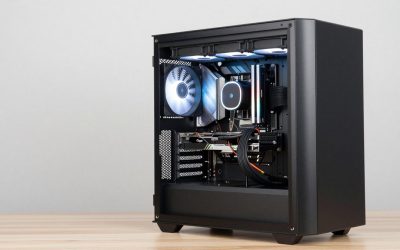
Size is a big practical difference. The RTX 3090 is listed at 336 mm long and 3 slots thick, and many partner models are similarly huge and heavy, needing a support bracket. The RX 9070 XT reference spec is 267 mm and 2 slots, though partner cards are often longer and thicker. Measure GPU clearance before buying either.
Cost per Frame
Using launch MSRPs, with the 3090 as 100 and the 9070 XT at about 122 (the middle of the 1440p range):
- RTX 3090: $1,499 / 100 = about $15.00 per performance point.
- RX 9070 XT: $599 / 122 = about $4.91 per performance point.
The used market narrows this but does not reverse it for gamers. RTX 3090 cards usually sell around $600-$800 used, supported by demand from AI hobbyists who want 24 GB. At those prices the 3090 costs as much as or more than a new RX 9070 XT while being slower in games, without warranty, and drawing more power. Used 3090s also often have degraded memory thermal pads, so check VRAM temperatures if you buy one.
Decision Table
| Use case | Better choice |
|---|---|
| 1440p high-refresh gaming | RX 9070 XT |
| 4K gaming with upscaling | RX 9070 XT |
| Local AI, large models, CUDA rendering | RTX 3090 |
| Small or mid-size case | RX 9070 XT |
| Prefer DLSS in older games without FSR 4 | RTX 3090 |
| Want warranty and new-card reliability | RX 9070 XT |
Drivers, Software and Platform Notes
Software support is a smaller factor than raw speed, but it still shapes the ownership experience. The RTX 3090 benefits from NVIDIA’s mature driver stack, broad DLSS adoption, NVIDIA Broadcast for noise removal, and first-class CUDA support in creative and AI applications. The RX 9070 XT uses AMD’s Adrenalin software, which bundles performance tuning, recording, Radeon Anti-Lag and driver-level Fluid Motion Frames in one app, and AMD’s open-source Linux drivers are a strong reason to pick Radeon for Linux gaming builds.
Platform-wise, the RX 9070 XT supports PCIe 5.0 x16 but loses very little on a PCIe 4.0 or even 3.0 board because it uses all sixteen lanes. The RTX 3090 is a PCIe 4.0 card and behaves the same way. Neither card forces a motherboard upgrade. The bigger compatibility checks are physical: the 3090’s length and weight, and confirming your PSU has enough separate PCIe cables for whichever partner model you choose.
Finally, consider longevity. The RX 9070 XT is a current-generation card that will receive game-specific driver optimizations for years, while the RTX 3090 is three generations old and increasingly a lower priority for day-one tuning.
Frequently Asked Questions
Is the RX 9070 XT faster than the RTX 3090?
Yes, in most games. Published comparisons place it roughly 15-30% ahead at 1440p, and AMD’s own figures claimed about 26% at 4K. A few titles, such as Counter-Strike 2 in some tests, still favor the RTX 3090.
Does the RX 9070 XT beat the RTX 3090 in ray tracing?
In many games it matches or beats it, thanks to RDNA 4’s upgraded ray tracing hardware. Some NVIDIA-optimized titles and path-traced modes remain close or favor the 3090.
Is the RTX 3090 still worth buying used in 2026?
Mainly for AI, rendering or other VRAM-heavy work, where 24 GB is valuable. For gaming alone, a new RX 9070 XT is usually faster, cheaper to run and comes with a warranty.
Can the RTX 3090 use DLSS 4?
It supports DLSS Super Resolution with the newer transformer model, but not DLSS Frame Generation or Multi Frame Generation, which require RTX 40 or RTX 50 cards. FSR 3.1 frame generation can be used instead in supported games.
What PSU is recommended for each card?
A quality 750 W unit suits the RX 9070 XT with a mainstream CPU. For the RTX 3090, 750-850 W is advisable because of its 350 W rating and transient spikes.
Related guides
More from Amazon
Programs that pair well with the guide above. Offers and eligibility are set by Amazon and may change.
A free business account with business pricing and bulk-buying tools for work, shop or home office.
Create a business accountFree shipping on eligible items, Prime Video and more. Eligible new members can start with a free trial.
Start a Prime free trialAudiobooks and podcasts to listen to on the go. Eligible new members can start with a free trial.
Try Audible freeAd-free music streaming. Eligible new subscribers can start with a free trial.
Try Music Unlimited freeAs an Amazon Associate we earn from qualifying purchases.