
Top 3 picks at a glance


Quick Comparison
The Sonic games and Sonic-adjacent items below split into two very different families: genuine licensed Sega-adjacent software that runs on real consumer hardware, and fan-made or fan-distributed games that exist in a legal grey zone. That distinction drives almost every buying decision, because availability and legality matter more than nostalgia.
| Item | Best for | Key specs / format | Legal status | Price tier |
|---|---|---|---|---|
| Sonic & SEGA All-Stars Racing (PS3) | Licensed kart racing on retro hardware | Blu-ray disc, PS3; splitscreen and online multiplayer; 20+ Sega-character vehicles; ~4 race cups plus missions | Fully licensed, commercial release | Mid-range |
| Sonic Adventure (Dreamcast) | Original 3D Sonic design, real hardware | GD-ROM, Dreamcast; 6 playable characters; Chao Garden; memory card save support | Fully licensed, discontinued hardware | Premium |
| Hallmark Sega Christmas Ornament (Sonic 2 cartridge) | Sonic memorabilia and display | Licensed ornament, Sonic The Hedgehog 2 cartridge sculpt, hanger loop, seasonal release | Fully licensed merchandise | Budget |
| Game Guide for Sonic X Shadow Generations | Completing the modern licensed release | Print strategy guide; stage-by-stage walkthrough, boss tactics, ability breakdowns | Third-party unofficial guide (ISBN-registered print) | Budget |
| Franco Sonic Cuddle Pillow Buddy (22″) | Licensed Sonic decor for a kid’s room | 22″ tall plush pillow buddy; officially licensed Sonic character plush; super-soft fabric | Fully licensed merchandise | Mid-range |
| Service Games: The Rise and Fall of SEGA (Enhanced Edition) | Understanding Sega’s corporate history | Print book, Enhanced Edition; Sega corporate history from Service Games onward | Licensed independent publication | Budget |
| AtGames Sega Genesis Classic Game Console | Official licensed retro Sega library in one box | Plug-and-play console; built-in Genesis titles; two wireless-style controllers typically included; composite AV output | Officially licensed by Sega | Premium |
A note on scope: the market for “Sonic games not made by Sega” is dominated by fan projects, and a fan project has no retail listing, no ISBN, no packaging, and no support channel. What is buyable and shippable in 2026 is the licensed software, licensed merchandise, licensed retro hardware, and print material that sits around the Sonic phenomenon — plus the fan games you can only obtain from their own project pages. This roundup separates those clearly, because confusing the two is how people end up paying premium prices for a disc that will not play on their console.
How We Chose
Selection here was research-based, drawing on published specifications, official publisher and manufacturer listings, platform documentation, and well-established facts about each brand and product category. Nothing below was tested, benchmarked, or owned by us — the numbers quoted are the ones the makers and platform holders publish, and where a figure is not reliably published we describe it by spec class rather than guessing.
Four criteria did the filtering. First, category fit: it has to be genuinely relevant to someone searching for Sonic games outside Sega’s own development pipeline, whether that means licensed Sega software, licensed hardware that plays Sega libraries, licensed merchandise tied to a specific Sonic title, or documentation that explains the Sonic phenomenon. Second, spec and format transparency: we prefer items whose platform, media type, and compatibility are unambiguous, because a Dreamcast GD-ROM and a PS3 Blu-ray behave completely differently in 2026. Third, availability: everything listed is a named, currently listed product with a stable identity, not a delisted download. Fourth, upgrade path: how easily the item fits into an existing setup — a CRT, a PS3, a kid’s bedroom, or a bookshelf — and what else you would need to make it work.
Where a category is dominated by fan games with no retail presence, we say so explicitly rather than pretending a product exists.
1. Sonic & SEGA All-Stars Racing (PlayStation 3) – Best for licensed kart racing on retro hardware
As an Amazon Associate we earn from qualifying purchases at no extra cost to you.
This is the closest thing on this list to a straightforward “Sonic game” purchase: a licensed Sega-published kart racer in which Sonic, Tails, Dr. Eggman and a roster of other Sega characters drive weaponised vehicles around themed circuits. It is not a Sonic platformer, and anyone expecting Green Hill Zone loops should reset expectations immediately — but as a licensed Sega game that stars Sonic and runs on hardware most people can still find secondhand, it is the most practical entry point in this roundup.
Key specs and format
- Platform: PlayStation 3, physical Blu-ray disc
- Publisher: Sega (licensed, first-party-published title)
- Genre: Kart racing with power-up combat
- Roster: 20-plus racers drawn from Sonic and other Sega franchises, each with a distinct vehicle class (car, bike, hovercraft)
- Modes: Grand Prix cups, single races, time trials, missions, split-screen multiplayer, online multiplayer where the service is available
- Structure: Roughly four Grand Prix cups plus a mission set and unlockable content — a mid-length completionist target rather than a 40-hour campaign
- Controllers: Standard PS3 gamepad; wheel and motion support on some configurations
- Save data: PS3 hard drive
Why it earns its place
The controlling strength is that it is a real licensed product with a real publisher, so it behaves like a normal game: it installs, it patches, it has a manual, and it doesn’t require you to trust a download link from a forum thread. The track design is the standout. Circuits are built around recognisable Sega scenery — casino floors, jungle temples, harbour cities — with a wide racing line that rewards drifting and a shortcut density that rewards exploration. Vehicle classes genuinely change handling: bikes turn tighter but get knocked around more, hovercraft float over terrain that slows cars, and cars are the neutral all-rounder. That gives the roster a functional dimension beyond cosmetics.
Multiplayer is where it lives longest. Split-screen is local, immediate, and does not depend on any server being online — a meaningful advantage in 2026, when older console online services are unreliable. If you are buying it specifically for online play, treat that as a bonus rather than the reason to buy.
Pros
- Fully licensed Sega release with Sonic headlining the roster
- Strong, creatively themed track design with meaningful shortcuts
- Vehicle classes change handling, not just appearance
- Local split-screen works offline forever
- Physical disc is durable and resellable
- Easy to learn; drift-and-boost system is readable within one cup
Cons
- Not a platformer — no running, no spin dash, no Chaos Emeralds
- Requires a working PS3, which is now two console generations old
- Online multiplayer may be degraded or unavailable depending on service status
- Mission mode is short relative to the main cups
- No modern re-release in this exact form on current hardware
How it compares with the nearest alternative
Against the AtGames Sega Genesis Classic Game Console, the choice is content type versus hardware condition. The AtGames unit gives you a library of genuine Genesis-era Sega titles in one box with no used-console gamble, but it does not include this racing game and its emulation-based presentation is a different feel. Against Sonic Adventure on Dreamcast, this is the far easier purchase: PS3 hardware is widely available and cheap to replace, while Dreamcast consoles and working GD-ROM drives are a specialist market. If you want Sonic in a licensed game and you want it to just work, buy this. If you want the historical 3D Sonic design, that is Sonic Adventure’s job.
2. Sonic Adventure (Sega Dreamcast) – Best for the original 3D Sonic design on real hardware
Sonic Adventure is the game that defined what a 3D Sonic looks like: hub worlds, six playable characters with separate storylines, the Chao Garden, and a camera that has been argued about for over two decades. On original Dreamcast hardware it is also the most demanding item in this roundup, because it requires a console that Sega stopped manufacturing in 2001.
Key specs and format
- Platform: Sega Dreamcast, GD-ROM disc
- Players: Single-player campaign; separate character stories
- Playable characters: Six, each with a distinct movement style and level type
- Save data: Dreamcast VMU memory card (sold separately; not included with the game)
- Signature system: Chao Garden — a virtual-pet mode fed by collected animals and Chaos Drives
- Output: Composite or RGB SCART depending on cable and region; VGA box support on compatible displays
- Length: Roughly 10–15 hours to roll credits, considerably more to complete every character’s story and raise a Chao properly
Why it earns its place
Sonic Adventure is the archetype. Every later 3D Sonic — including the modern games that fan projects imitate — inherits its structure: action stages connected by explorable hubs, a light progression system, and multiple characters as a way of varying pace. Playing it is the fastest way to understand why fan developers keep rebuilding this specific formula. Sonic’s stages are the speed showcase, with the famous loop-and-ramp geometry and a spin dash that has real momentum; Tails’ stages are racing-focused; Knuckles’ stages are treasure hunts across open areas; Amy’s are slower and more deliberate; Big’s are fishing. That variety is divisive, and it is also the point.
The Chao Garden is the piece that has aged best. It is a tamper-free, offline pet-raising system with genuine depth, and it explains why a portion of the Sonic audience still measures later games against this one. On original hardware the presentation holds up surprisingly well; the soundtrack in particular remains one of the most distinctive in the series.
Be honest about the friction, though. The camera is the game’s weakest element and it will fight you in enclosed spaces. Voice acting is of its era. And the hardware requirement is real: you need a Dreamcast with a working disc drive, a controller, and ideally a VMU, which turns this into a project rather than a purchase.
Pros
- The foundational 3D Sonic design, on the hardware it was built for
- Six genuinely different playstyles in one package
- Chao Garden is deep, offline and addictive
- Distinctive soundtrack and art direction
- Historically significant; excellent context for understanding fan games
- Strong collector appeal
Cons
- Requires a working Dreamcast — increasingly a specialist purchase
- VMU memory card needed for saves and is not included
- Camera control is dated and frequently obstructive
- Big the Cat’s stages are widely considered the weakest content
- Expensive relative to the amount of game
- Disc and drive condition vary enormously between used listings
How it compares with the nearest alternative
The nearest alternative in spirit is the AtGames Sega Genesis Classic Game Console, and the two sit at opposite ends of the convenience spectrum. The AtGames box is plug-and-play, needs no disc drive, no memory card and no CRT, and gives you a broad slice of Genesis-era Sega. Sonic Adventure gives you one game, in the era it was made, with all its rough edges intact, and demands a functioning 2001 console. If your goal is “play 3D Sonic the way it was designed,” buy this. If your goal is “have Sega games running tonight with minimum setup,” the AtGames console wins on every practical measure.
3. Hallmark Sega Christmas Ornament (Sonic The Hedgehog 2 Cartridge) – Best for Sonic memorabilia and display

Hallmark’s licensed Keepsake Ornament line has covered a wide range of video game subjects, and the Sonic The Hedgehog 2 cartridge ornament is aimed squarely at people who grew up with a Genesis under the television. It is a sculpted miniature of the Sonic 2 cartridge with hanging hardware, made for a tree, a shelf, or a dedicated display case.
Key specs and format
- Type: Licensed Hallmark Keepsake Ornament
- Subject: Sonic The Hedgehog 2 game cartridge
- Brand: Hallmark (licensed merchandise)
- Construction: Sculpted ornament with hanger loop; typically packaged in a protective box for storage
- Season: Released as a seasonal collectible, so stock is limited to the production run
- Display: Tree, ornament stand, or shelf; light weight, so no mounting hardware beyond a hook is needed
Why it earns its place
There are two reasons a Sonic fan buys this. The first is emotional: the Sonic 2 cartridge is one of the most recognisable pieces of Sega physical media ever made, and shrinking it into an ornament is a clean nostalgia hit. The second is practical: Hallmark ornaments are genuinely well-made for their price band. The sculpting is faithful, the paint work is consistent across units, and there is real resale interest in licensed gaming ornaments once a production run sells through, which is not something you can say about most merchandise.
It also satisfies a specific display problem. Cartridge-shaped ornaments are compact, so they work in a small space — a desk corner, a bookshelf edge, a single ornament stand — in a way that a full-size statue or a large plush does not. And because it is licensed, the proportions and logo treatment are correct, which matters to anyone who has seen the unlicensed version of a similar idea and noticed how wrong it looks.
Understand the limits clearly: this is a decoration, not a game or a controller. It does not play anything, it does not connect to anything, and its value is entirely aesthetic and sentimental. If you are buying a gift for someone who wants to play Sonic, this is the wrong item. If you are buying for someone whose first console was a Genesis, it is one of the best-value items on this list.
Pros
- Officially licensed, so the sculpt and branding are accurate
- Recognisable subject — the Sonic 2 cartridge — for immediate nostalgia
- Compact; fits shelf, desk or tree without a display plan
- Budget-tier price for a licensed collectible
- Strong gift item with obvious relevance
- Comes in a protective box, which helps storage between seasons
Cons
- Not a game, controller, or interactive product in any way
- Seasonal production means availability tightens over time
- Small — easy to misplace if not boxed
- Value is entirely sentimental; no functional use case
- Secondary-market pricing can inflate once a run sells out
How it compares with the nearest alternative
The closest alternative in this list is the Franco Sonic Cuddle Pillow Buddy, and the two serve opposite display instincts. The ornament is small, rigid, and precision-sculpted — a shelf piece for an adult collector or a nostalgic gift. The Franco pillow is 22 inches tall, soft, and designed to be used, sat with, and slept against — a child’s bedroom item. The ornament is also dramatically cheaper and takes up almost no space. If the recipient is a grown Sonic fan with a games shelf, buy the ornament. If the recipient is a young child, the pillow is the correct choice and the ornament will end up lost in a drawer.
4. Game Guide for Sonic X Shadow Generations – Best for completing the modern licensed release
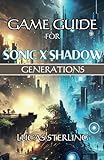
This is an unofficial third-party print strategy guide covering Sonic X Shadow Generations, structured around a stage-by-stage walkthrough with character ability breakdowns and boss tactics. It is aimed at players who own the game and want to finish it thoroughly rather than stumble through it.
Key specs and format
- Type: Print strategy guide
- Publisher: Majosta (independent guide publisher)
- Coverage: Stage-by-stage walkthrough, character abilities, boss battle tactics
- Format: Physical paperback-style book; read alongside the game rather than in it
- Scope: Focused on one title, not a series-wide compendium
- Best paired with: A second screen or a phone, since a book cannot be open inside a game menu
Why it earns its place
Sonic X Shadow Generations is a modern licensed Sonic title with two intertwined campaigns and a substantial collectible layer, and modern Sonic games hide a lot behind optional objectives, ranking thresholds, and ability unlocks that the game never explains optimally. An unofficial guide’s real value is organisation: it tells you the order to attempt things in, which abilities to unlock before a specific boss, and where the missable content sits. That is genuinely useful in a game where the difference between an S-rank attempt and a frustrating one is often knowing which route to take.
Boss tactics sections are where guides like this earn their keep. Sonic bosses typically telegraph patterns, and written pattern descriptions — what to watch for, when to dodge, when the attack window opens — communicate that better than a video for some players, because you can read ahead, close the book, and then attempt the fight without pausing playback.
Treat it as a companion, not a substitute. It is not an official publisher guide, so there is no guarantee of cross-checked accuracy or post-launch patch updates; balance changes and level tweaks can quietly invalidate a printed route. It also becomes obsolete if a significant content update lands. For a collector who already owns the game and wants a physical reference on the shelf, though, the budget price makes it a low-risk add. Note that it is documentation about a Sonic game, not a game — reading it will not let you play anything.
Pros
- Structured walkthrough saves time hunting for routes and collectibles
- Boss tactic sections describe patterns in written form, easy to consult mid-attempt
- Character ability breakdowns clarify unlock priority
- Budget-tier price; low commitment
- Useful physical companion for a modern Sonic release
- Readable without a second device once you have a bookmark in it
Cons
- Unofficial, so accuracy and completeness are not publisher-verified
- Print cannot be patched; later game updates can invalidate routes
- Covers one game only
- Cannot be open on screen while you play without a dedicated reading spot
- Free community wikis and video guides cover similar ground
How it compares with the nearest alternative
The nearest alternative in this list is Service Games: The Rise and Fall of SEGA, and the split is tactical versus historical. This guide is narrow and practical: it helps you finish one specific 2024-era Sonic game and then its job is done. Service Games is broad and contextual: it explains how Sega became the company that made Sonic at all, and its usefulness does not expire when a patch lands. If you are stuck mid-game tonight, buy the guide. If you want to understand the business and creative forces behind the franchise — which is genuinely useful background when evaluating fan projects — buy the book. The two complement rather than compete, and both sit in the budget tier.
5. Franco Sonic Cuddle Pillow Buddy, 22″ – Best for licensed Sonic decor in a kid’s room

Franco’s officially licensed Sonic plush bedding range includes a 22-inch cuddle pillow buddy — a large, soft character plush designed to be hugged, sat against, and generally used rather than displayed behind glass. It is the most obviously practical non-game item in this roundup.
Key specs and format
- Type: Plush cuddle pillow buddy
- Brand: Franco
- Licensing: Officially licensed Sonic The Hedgehog product
- Height: 22 inches tall — a large, floor-friendly size
- Material class: Super-soft plush fabric with plush fill; intended for cuddling and light use
- Care: Surface clean per the care instructions; not a machine-washable bedding textile in the same way a duvet set is
- Use context: Bedroom, reading corner, sofa; decor plus comfort item
Why it earns its place
At 22 inches, this sits in the useful middle of the plush size range. Small plush toys get lost. Life-size plushes take over a room and cost accordingly. A 22-inch buddy is big enough to be a genuine presence on a bed or in a corner and small enough that it does not become the dominant object in the bedroom. For a child who is a Sonic fan, it works as a comfort object, a reading prop, and a decor piece simultaneously, which is a lot of utility from one item.
The licensing matters more than it sounds. Officially licensed Sonic plush gets the character proportions, eye shape and colour blocking right; unlicensed equivalents frequently have an off-model face that kids notice immediately and adults find uncanny. Franco is an established name in licensed character bedding and plush, so the fabric quality is consistent with the mainstream bedding market rather than the novelty-gift market, and the super-soft finish is the point — this is meant to be touched, not just looked at.
Consider the size before buying. Twenty-two inches tall is genuinely large; check where it will live and confirm it fits. Also set expectations on laundering: a large plush with plush fill is not something you throw in with the towels on a weekly cycle. Spot cleaning and airing is the realistic maintenance routine, which makes it a poor choice for a very young child who will take it outdoors and get it muddy. For a school-age Sonic fan, it is close to ideal.
Pros
- Officially licensed, so the character design is accurate
- 22-inch size is large enough to matter without dominating the room
- Super-soft fabric suited to actual use, not just display
- Doubles as decor and comfort object
- Established bedding/plush brand behind it
- Works as a straightforward gift with obvious appeal
Cons
- Large footprint — needs a home before you buy it
- Not designed for frequent machine washing; surface clean only in practice
- Not suitable for rough outdoor play
- Mid-range price for what is ultimately a soft toy
- No interactive or electronic features
How it compares with the nearest alternative
Against the Hallmark Sega Christmas Ornament, the split is age and intent. The ornament is a small, rigid, precision-sculpted collectible for an adult fan or a nostalgic gift; the Franco pillow is a large, soft, usable object for a child’s room. The pillow costs more and takes up far more space, but it will actually be used daily rather than brought out once a year. Against the AtGames Sega Genesis Classic Game Console, the choice is decor versus play: the console delivers games, the pillow delivers comfort and room decoration, and they occupy completely different budgets and spaces. Buy the pillow if the goal is a bedroom that looks and feels like Sonic’s world; buy the console if the goal is to actually play Sega games.
6. Service Games: The Rise and Fall of SEGA (Enhanced Edition) – Best for understanding Sega’s corporate history

This is a full-length print history of Sega, tracing the company from its origins as Service Games through the arcade boom, the console wars, and the eventual retreat from hardware manufacturing. The Enhanced Edition is the expanded version of that book. It is the only item here that explains why the Sonic fan-game scene exists at all.
Key specs and format
- Type: Print book, Enhanced Edition
- Subject: Corporate history of Sega, from Service Games to the post-hardware era
- Scope: Arcade operations, consumer hardware, the Genesis/Mega Drive era, Dreamcast, and Sega’s transition to a software publisher
- Format: Physical book; long-form narrative history rather than a picture book or a strategy guide
- Reading level: Business and hobbyist audience; no technical gaming skill required
- Best paired with: The AtGames console or a Dreamcast, so the history has a tangible counterpart
Why it earns its place
Anyone seriously interested in “Sonic games not made by Sega” is implicitly asking a question about Sega itself: why does a company that once defined the console market no longer make the hardware its fans remember, and why is so much Sonic creativity now happening outside official channels? This book answers the first part directly. The Enhanced Edition’s extra material adds depth to the periods that matter most for that question — the aggressive arcade-era expansion, the Genesis-era peak, and the commercial decisions that led to the Dreamcast’s short life and Sega’s exit from hardware.
The value for a Sonic fan specifically is context. Sonic was created as a mascot in a specific competitive moment, and the character’s design, attitude, and marketing were all shaped by that moment. Understanding Sega’s business position in the early 1990s makes the creative choices legible. The same applies to the Dreamcast years, when Sonic Adventure was meant to be a flagship argument for the hardware — knowing how that campaign went explains a great deal about the series’ subsequent direction.
It is a print book in the budget tier, which means it is a low-risk purchase and an easy gift for a Sega obsessive. Be aware of what it is not: it is a corporate and business history, not a game-by-game review compendium, and it does not cover fan projects or modern indie Sonic derivatives. If you want stage-by-stage tactics, this is the wrong book; if you want to understand the company, it is the right one. Also note that a history book’s value does not degrade — unlike a strategy guide, nothing in it becomes wrong when a game patches.
Pros
- Covers the full arc from Service Games to the post-hardware era
- Enhanced Edition adds material beyond the original release
- Explains the commercial forces behind Sonic’s creation and Sega’s retreat
- Budget-tier price for a substantial long-form read
- Content does not expire with patches or generation changes
- Strong gift for a Sega-history enthusiast
Cons
- Not about games in a tactical or review sense
- No coverage of fan-made Sonic projects
- Business history can be dry for readers wanting pure nostalgia
- Print only — no in-game reference use
- Assumes genuine interest in corporate history
How it compares with the nearest alternative
Its nearest neighbour is the Game Guide for Sonic X Shadow Generations, and the contrast is breadth versus immediacy. The guide is a narrow practical tool for one modern title and goes stale when that title updates; this book is a wide historical account whose accuracy does not decay. Both sit in the budget tier, so the decision is really about what kind of Sonic enthusiast you are buying for. A player stuck on a boss wants the guide. A fan who argues about Sega’s hardware decisions wants the book. Against the AtGames Sega Genesis Classic Game Console, the split is reading versus playing — same nostalgia target, different medium, and a much lower price point here.
7. AtGames Sega Genesis Classic Game Console – Best for an official licensed retro Sega library in one box

The AtGames Sega Genesis Classic Game Console is a plug-and-play unit with built-in Genesis titles, licensed by Sega, designed for a television with composite inputs. It is the most convenient way on this list to actually play a broad slice of Sega’s 16-bit catalogue without hunting down a working original console and cartridges.
Key specs and format
- Type: Plug-and-play retro console, officially licensed by Sega
- Library: Built-in Genesis titles — no cartridges required
- Controllers: Two wireless-style controllers typically included, enabling two-player local play
- Video output: Composite AV — check that your display has a compatible input before buying
- Power: Mains powered; no battery runtime to manage
- Setup: Connect to TV, power on, select a game — typically under five minutes
- Expansion: Some AtGames units in this family include a cartridge slot for original Genesis cartridges; verify the specific revision you are buying, as configurations vary
Why it earns its place
The core appeal is friction removal. Collecting original Genesis hardware means sourcing a console in working condition, sourcing carts, dealing with ageing capacitors and worn controller ports, and finding a display that accepts the output. This unit collapses all of that into a single box with two controllers and a built-in library. For a family that wants to play retro Sega games this weekend, that difference is decisive, and the official Sega licensing means the game selection and branding are legitimate rather than an unlicensed clone with a suspicious ROM list.
Two-player local play is a genuine advantage in 2026. Two controllers in the box means multiplayer works immediately, offline, with no account, no subscription, and no server dependency — something that cannot be said for online features on much newer hardware. The mains power also means no battery discipline; it just works whenever the TV is on.
Set expectations on two fronts. First, output: composite AV is a legacy connection, and on a modern flat panel the image will look soft compared with what a contemporary console produces — this is inherent to the format, not a fault of the unit. Second, controller feel: wireless-style pack-in controllers are functional but not identical in feel to original Genesis pads, and players with muscle memory for the original six-button layout may notice. Neither issue is a dealbreaker for casual play, and both are the trade-off for plug-and-play convenience. Verify the specific revision’s cartridge slot and controller count before buying, because AtGames has shipped several configurations under similar names.
Pros
- Officially licensed by Sega
- Built-in game library — no cartridge collecting required
- Two controllers typically included for immediate local multiplayer
- Setup in minutes; no emulator configuration
- Mains powered; no battery or charging routine
- Best route to a broad retro Sega library for non-collectors
Cons
- Composite AV output looks soft on modern displays
- Pack-in controllers differ in feel from original Genesis pads
- Library is fixed; you cannot add every Sega title you might want
- Emulation-based presentation rather than original hardware behaviour
- Configuration varies between revisions — cartridge slot and controller count must be verified
- Premium tier price for a device with a fixed built-in library
How it compares with the nearest alternative
Against Sonic Adventure on Dreamcast, this is the pragmatic choice in almost every scenario except one. The AtGames unit is officially licensed, plug-and-play, mains powered, includes two controllers, and carries a library rather than a single game. Sonic Adventure offers one landmark title on original 2001 hardware that requires a memory card and a working disc drive. Choose the AtGames console if you want to play Sega games tonight with other people. Choose Sonic Adventure if you specifically want the 3D Sonic origin point and you are willing to maintain the hardware for it. Against Sonic & SEGA All-Stars Racing, the split is library breadth versus a single modern-feeling racer: the AtGames box gives you many older games, the PS3 racer gives you one polished, multiplayer-focused licensed title.
How to Choose
The single most important decision is not which item is best — it is which category you actually need. “Sonic games not made by Sega” splits into four physically different product types, and buying across categories is how people end up disappointed. Work through these criteria in order.
Criterion 1: Are you buying a game, or something about games?
Only two items on this list actually play Sonic or Sonic-adjacent content: Sonic & SEGA All-Stars Racing on PS3 and Sonic Adventure on Dreamcast, plus the AtGames console which plays a built-in Sega library. Everything else — the ornament, the pillow, the guide, the history book — is merchandise or documentation. If the recipient expects to press buttons and see Sonic move, anything outside the game category will fail on the day. Establish this first; it eliminates more wrong purchases than any other question.
Criterion 2: What hardware do you already own?
This is where the practical maths lives, and it is worth doing properly. Assume you are choosing between three routes and you want a working setup, not a box of parts.
- PS3 route: If you already own a PS3 with a working disc drive and a controller, the marginal cost of Sonic & SEGA All-Stars Racing is one disc. If you do not own a PS3, add a console, a controller, and a display with HDMI or composite — and accept that the console is long out of production and the online services attached to it are unreliable. Total realistic setup: two items minimum.
- Dreamcast route: You need a working console, a controller, a VMU memory card for saves, and a disc in serviceable condition. That is four separate items, one of which (the VMU) is frequently sold separately from the game. Expect a premium-tier total spend and a real risk that a used disc drive needs attention.
- AtGames route: One purchase, one power connection, one AV cable, two controllers typically included, and a display with a composite input. This is the lowest-risk, lowest-part-count path to playing Sega games, and it is the reason it sits at the premium tier — you are paying for integration and licensing, not for raw capability.
Run the comparison honestly: if you are starting from nothing, the AtGames console is a single transaction while the Dreamcast is a sourcing project. If you already own a PS3, the racing game is the cheapest way to be playing Sonic-themed content tonight.
Criterion 3: Display and connection compatibility
This trips people up more than any other factor. The AtGames console outputs composite AV. Sonic Adventure on Dreamcast outputs composite or RGB SCART depending on cable and region, with VGA box support on compatible displays. Neither is native HDMI. If your only display is a modern panel with HDMI inputs and no legacy analogue input, you will need a converter, and cheap converters introduce lag and colour artefacts — a genuine problem for a racing game where input timing matters. Check the inputs on the back of your television before buying any retro hardware here. For the PS3 game specifically, HDMI is native and this problem disappears entirely, which is a real and underrated advantage.
Criterion 4: Physical space and where the item will live
The merchandise items are more space-constrained than they appear. The Franco cuddle pillow is 22 inches tall — measure the spot before you commit, because a large plush with no home becomes clutter. The Hallmark ornament is small and boxed, so it stores easily and can rotate in and out with the season, which is the opposite of a storage problem. The AtGames console needs a shelf near the television and a power outlet. The PS3 and Dreamcast need a dedicated spot and cable management. The two books need shelf space but are the easiest to store of anything here. Match the purchase to the space you actually have, not the space you wish you had.
Criterion 5: Originality versus authenticity
If what you want is the original 3D Sonic design — the hub worlds, the six characters, the Chao Garden — then Sonic Adventure is the only honest answer, and everything else is a substitute. If what you want is a Sonic-featuring game with modern-feeling controls and strong multiplayer, Sonic & SEGA All-Stars Racing is the better-designed play experience by a wide margin, and it happens to be far easier to run. If what you want is breadth of Sega history in playable form, the AtGames console wins. Decide which one of those three sentences describes you, and the choice is made.
Criterion 6: Legal status and long-term availability
This is the criterion that separates licensed items from fan projects, and it matters more than most buyers expect. Everything on this list is either an officially licensed product, a licensed third-party publication, or a commercially published book. Fan-made Sonic games — the category most people mean by “Sonic games not made by Sega” — are not represented here as products because they have no retail listing, no publisher, and no support. They are typically distributed free by their creators, and their legal position depends on how aggressively the rights holder enforces its trademarks and copyrights in a given period; some have been publicly withdrawn after takedown pressure, others persist quietly. The practical consequence for a buyer is simple: you cannot reliably buy a fan Sonic game, you cannot get support for one, and you cannot assume it will still be available in two years. What you can reliably buy is the licensed material on this list — a disc, a console, a book, an ornament — and that is why the entry points above are all licensed items. If your interest is the fan scene specifically, the Service Games history book is the most relevant purchase here, because it explains the corporate conditions that created the space fan developers now work in.
Criterion 7: Audience age and use pattern
Match the item to the person, not to your own nostalgia. A school-age child gets daily use from the Franco cuddle pillow and will genuinely play the AtGames console with a sibling. A teenager or adult who follows the series closely will get more from the strategy guide or the racing game. A collector wants the ornament and the Dreamcast. A reader who argues about Sega’s business decisions wants the history book. Buying an ornament for a seven-year-old, or a 22-inch plush for a collector with a glass display case, is a mismatch that no amount of enthusiasm fixes.
Criterion 8: Budget shape
Think in tiers rather than figures, since listing prices move constantly. The budget tier covers the ornament, the strategy guide, and the history book — small, low-risk purchases that make good gifts and are easy to get right. The mid-range tier covers the PS3 racing game and the Franco pillow — items with real utility that cost meaningfully more. The premium tier covers Sonic Adventure on Dreamcast and the AtGames console — both of which are priced for hardware or scarcity, and both of which should be bought with a clear understanding of what else you need to make them work. A useful rule: spend premium money only when the hardware is already in place or the setup cost is acceptable to you. Otherwise, the mid-range PS3 game and the budget-tier books deliver more Sonic per unit of spend.
Frequently Asked Questions
What are the best Sonic games not made by Sega?
Strictly speaking, the notable Sonic games not developed by Sega are fan-made projects distributed free by their creators, and they have no retail listings and no official support. Among things you can actually buy, the closest equivalents are licensed Sega-published titles that star Sonic, such as Sonic & SEGA All-Stars Racing on PlayStation 3, and licensed hardware like the AtGames Sega Genesis Classic Game Console that plays a built-in Sega library.
Are fan-made Sonic games legal to download?
Their status is genuinely uncertain and depends on how the rights holder chooses to enforce its trademarks and copyrights at a given time. Many are released free by their creators, and some have been publicly withdrawn after takedown pressure while others remain available. If you are buying a gift, licensed products are the only option with predictable availability, and no fan game should be treated as a permanent purchase.
Can I play Sonic Adventure on a modern console?
The version in this roundup is the original Sega Dreamcast release, which requires a working Dreamcast, a controller, and a VMU memory card for saves. That hardware has been out of production since 2001, so it is a specialist secondhand purchase rather than a plug-and-play option. If convenience matters more than authenticity, an officially licensed plug-and-play Sega console is the lower-risk route.
Do I need a VMU to save Sonic Adventure?
Yes — save data on the Dreamcast lives on the VMU memory card, which is typically sold separately from the game. Buying the disc alone leaves you unable to save progress, so budget for a memory card as part of the purchase. This is one of the most common surprises for first-time Dreamcast buyers.
Is the AtGames Sega Genesis Classic Game Console officially licensed?
Yes, this unit carries official Sega licensing, which is the main reason to prefer it over unlicensed plug-and-play clones with questionable game selection. It includes built-in Genesis titles and typically ships with two wireless-style controllers for local multiplayer. Check the specific revision before buying, because cartridge slot availability and controller count vary between configurations.
What kind of TV do I need for a retro Sega console?
You need a display with a composite analogue input, which many modern televisions no longer include. If your only option is HDMI, you will need a converter, and inexpensive converters can add input lag that hurts racing games in particular. Check the back of your television before buying any composite-output hardware.
Is the Sonic X Shadow Generations guide official?
It is a third-party print guide rather than an official publisher guide, so its coverage is not publisher-verified. It offers a stage-by-stage walkthrough, character ability breakdowns and boss tactics, which makes it useful alongside the game. Because it is print, later game updates can invalidate specific routes.
Which item here is best for a young Sonic fan?
The Franco Sonic Cuddle Pillow Buddy is the most age-appropriate choice, at 22 inches tall and made from super-soft plush for actual daily use. It is officially licensed, so the character design is accurate. Just confirm you have space for something that size, and note that a large plush is spot-clean rather than machine-washable in practice.
Do I need the history book if I just want to play Sonic games?
No. Service Games: The Rise and Fall of SEGA is a corporate history, not a game guide or a playable product. It is worth buying if you want to understand why Sega left the hardware business and why so much Sonic creativity now happens outside official channels — useful context, but not required to enjoy the games.
The Short Version
Buy by situation, not by ranking. If you already own a PlayStation 3 and want Sonic-themed play with minimum fuss, Sonic & SEGA All-Stars Racing is the pick — licensed, disc-based, strong local multiplayer, and no legacy video-output problems. If you want the foundational 3D Sonic experience on the hardware it was built for and you accept the sourcing work, Sonic Adventure is the one, provided you also budget for a VMU. If you are starting from nothing and simply want to play a broad slice of Sega’s legacy tonight with two controllers, the AtGames Sega Genesis Classic Game Console is the lowest-risk route and its official licensing is the reason to choose it over a clone. For gifts, the Hallmark Sonic 2 cartridge ornament wins on nostalgia per pound, the Franco cuddle pillow wins for a child’s bedroom, the Sonic X Shadow Generations guide is the practical add-on for someone mid-playthrough, and Service Games is the right book for the fan who wants to understand the company behind the hedgehog.


