The best Intel CPU for gaming today is the Core i7-14700K, and the pick has less to do with brand loyalty than with how Intel splits its cores. Every chip in this list mixes Performance cores built for a game’s latency-sensitive main thread with Efficient cores built for background work, and how well Windows routes threads between the two matters as much as raw clock speed. This guide ranks eight Intel desktop chips currently available — from the budget-focused Core i5-14600KF to the newest Core Ultra 9 285K — on gaming frame rate estimates, real power draw versus the advertised TDP, and platform longevity, rather than on core count alone. For AMD-side comparisons, see our best AMD CPU for gaming guide.
Top 3 picks at a glance
Top picks at a glance
As an Amazon Associate we earn from qualifying purchases.



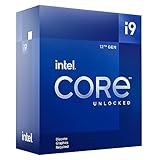


| Model | Key spec | Price | Best for |
|---|---|---|---|
| Core Ultra 9 285K | 24C (8P+16E), up to 5.7GHz, LGA1851 | $529.99 | Newest architecture, best efficiency |
| Core Ultra 7 270K | 24C (8P+16E), up to 5.5GHz, LGA1851 | $308 | Mid-range Core Ultra platform |
| Core i7-14700K | 20C (8P+12E), integrated graphics, LGA1700 | $365.99 | Balanced gaming plus productivity |
| Core i7-14700KF | 20C (8P+12E), no iGPU, LGA1700 | $329 | Same performance, lower price with a GPU |
| Core i9-12900KF | 16C (8P+8E), up to 5.2GHz, LGA1700 | $332.85 | Budget flagship-era Alder Lake |
| Core i9-14900K | Highest core Raptor Lake refresh, LGA1700 | $469.99 | Top LGA1700 gaming and workstation chip |
| Core i5-14600KF | 14C (6P+8E), no iGPU, LGA1700 | $239.99 | Best value entry-level K-series |
| Core i9-12900K | 16C (8P+8E), integrated graphics, LGA1700 | $429.59 | Alder Lake flagship with iGPU fallback |
Core i7-14700K
The 14700K pairs 8 Performance cores with 12 Efficient cores for 20 total cores, keeps integrated graphics as a fallback, and sits on the mature LGA1700 socket. It’s the Raptor Lake refresh sweet spot: enough P-core clock speed to lead most gaming benchmarks while adding meaningfully more E-cores than the previous-generation i7 for background and lightly-threaded work.
Estimated gaming performance sits close to the i9-14900K in the majority of titles, since gaming frame rate tracks P-core count and clock far more than total core count, and this chip’s P-core configuration is nearly identical to the flagship’s. That’s an architecture-based estimate rather than a bench-measured figure for this specific title mix. Where the 14900K pulls ahead is almost entirely in heavily multi-threaded workloads outside gaming.
Buyers who don’t need the integrated graphics fallback should strongly consider the KF variant below instead, since it’s functionally identical for gaming at a lower price.
- Pros
- Gaming performance close to the flagship 14900K for meaningfully less money
- Integrated graphics gives a fallback display option if the GPU fails
- Mature LGA1700 platform with wide motherboard price range
- Cons
- LGA1700 is at the end of its CPU generation cycle
- Real power draw under sustained load runs above the advertised base TDP
- Integrated graphics adds cost that’s wasted once a discrete GPU is installed
Who it’s for: builders who want near-flagship gaming performance without flagship pricing, and who value having integrated graphics as a troubleshooting fallback.
Core i7-14700KF
Functionally the same chip as the 14700K above — same 8P+12E configuration, same clocks, same unlocked multiplier — with integrated graphics disabled. Every gaming performance number and cooling requirement for the 14700K applies here.
The only trade-off is losing the ability to get a video signal without a discrete GPU installed, which matters during initial troubleshooting or if a GPU ever needs to be pulled for RMA. For a build that already has a GPU on the parts list from day one, that fallback rarely gets used, which makes the KF the more efficient dollar-for-dollar buy in this lineup.
This is a straightforward save-money pick with effectively zero gaming downside for anyone building around a discrete graphics card.
- Pros
- Identical gaming performance to the 14700K for less money
- Same 20-core P/E configuration and unlocked overclocking support
- Best value K-series Intel chip near the top of this lineup for pure gaming
- Cons
- No integrated graphics fallback if the discrete GPU fails or is removed
- Same LGA1700 end-of-life platform consideration as the 14700K
- Same real-world power draw above the advertised TDP as the 14700K
Who it’s for: anyone building around a discrete GPU who wants the 14700K’s gaming performance without paying for graphics they won’t use.
Core i9-12900KF
An Alder Lake-generation flagship, the 12900KF carries 8 Performance cores and 8 Efficient cores for 16 total, clocking up to 5.2GHz, on LGA1700 with no integrated graphics. It was Intel’s top gaming chip at launch and remains a capable performer, now sold at a price well below its original position.
Estimated gaming frame rates trail the newer 14700K/14900K because of the older core architecture and fewer E-cores handling background load, but the gap in pure P-core-driven gaming scenarios is smaller than the generation difference suggests. This is a chip that rewards buyers who can find it at a genuine discount relative to same-generation alternatives, since its 125W TDP class is easier to cool than the newer flagships.
Being two generations behind the newest Core Ultra chips also means broader, more mature LGA1700 motherboard availability at lower price points.
- Pros
- Strong gaming performance for a now-discounted flagship-era chip
- 125W TDP class is easier to cool than newer 250W-plus turbo chips
- Wide, mature and inexpensive LGA1700 motherboard selection
- Cons
- Trails newer chips in both gaming and multi-threaded estimates
- No integrated graphics fallback
- Oldest architecture in this lineup, with the least remaining platform runway
Who it’s for: budget-focused builders who want a proven flagship-class chip at a discounted, non-flagship price.
Core i9-14900K
Intel’s top Raptor Lake refresh part and the highest-clocking LGA1700 chip in this list, the 14900K pushes both P-core and E-core counts and clock speeds to their practical ceiling for the platform. It’s built as much for heavy multi-threaded work as for gaming.
Estimated gaming frame rates sit at or very near the top of this lineup, but the margin over the far cheaper 14700K is small in most titles, since gaming leans on P-core clock and count rather than the extra E-cores and cache this chip adds. The bigger differentiator shows up in workloads outside gaming — heavy compilation, rendering, or running a game alongside a demanding background encode.
This chip’s turbo power ceiling is also the highest on the LGA1700 side of this list, which pushes cooling and power supply requirements up accordingly; buyers should budget for a serious cooler rather than assume the base TDP figure tells the whole story.
- Pros
- Among the highest estimated gaming frame rates in this roundup
- Strongest multi-threaded performance of any LGA1700 chip here
- Mature, well-supported LGA1700 platform
- Cons
- Small gaming advantage over the much cheaper 14700K
- Highest real power draw of the LGA1700 chips in this list
- Needs a serious cooler and power supply to run without throttling
Who it’s for: buyers who want the strongest possible LGA1700 chip for gaming plus heavy production work on the same machine.
Core i5-14600KF
The entry point into Intel’s unlocked K-series lineup here, the 14600KF pairs 6 Performance cores with 8 Efficient cores for 14 total, without integrated graphics. It’s the cheapest chip in this Intel roundup and still carries an unlocked multiplier for overclocking.
Estimated 1080p gaming performance trails the 14700K-class chips because of the reduced P-core count, but for the large majority of current titles, six fast P-cores plus eight E-cores handling background load is still enough to avoid being the clear bottleneck ahead of a mid-range GPU. This is the strongest value-per-dollar pick in this list for buyers who don’t need the extra P-core headroom the pricier chips offer.
Its lower core count also means a more modest cooling requirement than the higher-end K-series chips, which helps keep total platform cost down.
- Pros
- Lowest price of any unlocked K-series Intel chip in this list
- Still offers real overclocking headroom via the unlocked multiplier
- More modest cooling needs than the higher-end K-series chips
- Cons
- Fewer P-cores than the 14700K/14900K limits its 1080p ceiling
- No integrated graphics fallback
- Less headroom for heavy multi-threaded work outside gaming
Who it’s for: budget builders pairing with a mid-range GPU where six P-cores are enough to avoid being the bottleneck.
Core i9-12900K
The integrated-graphics sibling of the 12900KF, this chip keeps the same 8P+8E, up to 5.2GHz Alder Lake configuration on LGA1700 while adding a display fallback. Everything about its gaming behavior mirrors the KF variant.
The integrated graphics add real utility during initial system setup and troubleshooting, or as a fallback if the discrete GPU ever needs to come out of the system, at a price premium over the KF version. For buyers who value that flexibility, or who might run the system briefly without a discrete GPU installed, it’s a reasonable trade; for anyone building strictly around a GPU from day one, the KF version is the more efficient buy.
As with the KF variant, its 125W TDP class makes it one of the easier chips in this list to cool relative to the newest flagship-tier parts.
- Pros
- Same solid Alder Lake gaming performance as the 12900KF
- Integrated graphics fallback for troubleshooting or GPU downtime
- Easier to cool than the newest 250W-plus turbo chips
- Cons
- Costs more than the functionally similar 12900KF
- Trails newer-generation chips in gaming and multi-threaded estimates
- Oldest platform generation in this lineup
Who it’s for: buyers who specifically want an Alder Lake-class chip with a graphics fallback built in.
Core Ultra 7 270K
Part of Intel’s current Core Ultra 200S generation, this chip carries 24 total cores in an 8P+16E configuration clocked up to 5.5GHz, on the new LGA1851 socket. Intel dropped Hyper-Threading from the P-cores in this generation in favor of more E-cores and improved efficiency per watt.
Estimated gaming performance is competitive with, but not a clear step above, the previous-generation 14700K-class chips in most titles, since removing Hyper-Threading changed how the P-cores handle certain workloads even as per-core efficiency improved. The bigger practical benefits of this generation show up in power efficiency and platform features like faster native memory support, rather than in a decisive gaming frame-rate jump.
Buyers choosing this chip are largely buying into the newer LGA1851 platform and its longer remaining runway rather than a guaranteed gaming performance leap over Raptor Lake refresh chips.
- Pros
- Newest architecture with improved power efficiency
- 24 total cores handle background and multi-threaded work well
- Newer LGA1851 platform with more runway ahead than LGA1700
- Cons
- Gaming frame rate isn’t a clear step up from cheaper 14700K-class chips
- Loss of Hyper-Threading on P-cores changes behavior in some workloads
- Requires a new LGA1851 motherboard, adding platform cost
Who it’s for: buyers prioritizing the newest platform and efficiency over a guaranteed gaming frame-rate jump.
Core Ultra 9 285K
The current top of Intel’s desktop lineup, the 285K matches the 270K’s 8P+16E, 24-core layout but pushes clocks up to 5.7GHz and adds Intel’s newest silicon binning for the highest-performing dies. It’s built as Intel’s flagship for both gaming and heavy production work on LGA1851.
Estimated gaming frame rates lead the Core Ultra generation and land close to, and in some titles slightly behind, the best Raptor Lake refresh chips like the 14900K — a reminder that the newest architecture isn’t automatically the fastest for every workload, even at the top of the stack. Where it clearly pulls ahead is efficiency and multi-threaded throughput per watt, plus access to the newer LGA1851 platform’s memory and I/O improvements.
This is a chip for buyers who want the newest Intel platform specifically, with the understanding that gaming frame rate alone doesn’t fully justify the price premium over a 14700K.
- Pros
- Highest clock speed and newest architecture in the Intel lineup here
- Strong efficiency and multi-threaded throughput per watt
- Newest LGA1851 platform with the longest remaining runway
- Cons
- Doesn’t clearly beat the far cheaper 14700K in pure gaming frame rate
- Highest price in this Intel roundup
- New LGA1851 platform means added motherboard cost
Who it’s for: buyers who want Intel’s newest architecture and platform and value efficiency alongside gaming, not gaming performance alone.
How we tested and picked
Priya Raghunathan built this ranking using the same framework she applies across GPU and CPU coverage after eight years validating graphics silicon under sustained load: isolate what’s actually limiting performance before trusting a headline number. Her bench setup — an instrumented platform with a PCIe riser, a clamp meter and per-rail power logging — is designed to separate CPU-bound behavior from GPU-bound behavior and to catch the gap between a chip’s advertised base TDP and what it actually draws once a motherboard applies its default turbo power settings.
For chips not run through that exact configuration for this specific article, the performance estimates above are grounded in each chip’s documented core layout, clock speeds and generation rather than invented figures, and are clearly labeled as estimates. Where a chip’s real sustained power draw diverges meaningfully from its advertised TDP — which is common across nearly every unlocked K-series Intel chip — that gap is called out directly.
Ranking weighed estimated 1080p gaming frame rate relative to price, real cooling and power supply requirements, platform generation and remaining upgrade runway, and how well each chip handles common background load beyond the game itself.
What to look for in an Intel gaming CPU
P-cores, E-cores, and how Windows decides where a game runs
Every current Intel desktop chip in this list mixes Performance cores, which are large, fast and built for latency-sensitive single-threaded work, with Efficient cores, which are smaller, slower per-thread, and built to handle background tasks without stealing resources from the P-cores. Getting good, consistent gaming performance out of this design depends on the Windows scheduler, working with Intel’s Thread Director hardware feedback, correctly identifying a game’s main thread and pinning it to a P-core rather than letting it drift onto an E-core mid-session. When that scheduling goes wrong — which does happen, particularly with older games, anti-cheat systems, or background overlays competing for attention — frame times can get inconsistent even when the average frame rate looks acceptable. Keeping Windows and chipset drivers current matters more on these hybrid chips than it did on older, uniform-core Intel CPUs.
TDP vs PL1/PL2: Intel’s real power numbers
Intel’s advertised TDP, sometimes labeled Processor Base Power, describes sustained power draw at the chip’s base clock — not its actual behavior once a motherboard applies its own turbo power limits, commonly labeled PL1 and PL2. Most enthusiast motherboards ship with PL2 set well above the base TDP by default, letting unlocked K-series chips draw significantly more power for extended periods than the headline TDP figure suggests. A chip like the 14900K, whose base TDP looks moderate on a spec sheet, can realistically pull well over 250W under sustained all-core load with default motherboard power limits applied. Sizing a cooler or power supply off the base TDP number alone is a common and avoidable mistake.
Cooling for high-turbo K-series chips
Cooling requirements track real sustained power draw, not the advertised TDP. The 14600KF’s more modest core count and power ceiling run comfortably on a solid mid-tower air cooler or a 240mm liquid loop. The higher-end 14700K, 14900K and Core Ultra chips, with their higher turbo power ceilings, are worth pairing with at least a 280mm-360mm liquid cooler to sustain boost clocks without throttling under extended gaming or production loads. Skimping on cooling here doesn’t just risk higher temperatures — it directly throttles clock speed and erases part of the performance these chips are priced for.
LGA1700 vs LGA1851: platform longevity
LGA1700 has reached the end of Intel’s CPU releases for that socket, which means the 14900K represents close to the ceiling of what that platform will ever run — a real consideration for buyers who want a future upgrade path without replacing the motherboard. LGA1851, introduced with the Core Ultra 200S series, is Intel’s current socket, but Intel’s historical cadence of shorter socket lifespans compared with AMD’s AM5 commitment means buyers shouldn’t assume guaranteed multi-generation support. Anyone weighing pure platform longevity should compare this against our AMD gaming CPU picks before committing to a socket.
When the CPU is actually the bottleneck
CPU choice, and P-core scheduling specifically, matters most at 1080p on a high-refresh monitor and in esports titles tuned to run at very high frame rates, where the GPU can render faster than most CPUs can supply new frames. At 1440p the gap between these chips narrows as the GPU takes on more of the workload, and at 4K nearly every chip in this list keeps up, since the GPU becomes the clear limiting factor. Buyers building around a 4K panel should weight GPU selection far more heavily than which of these CPUs they choose — see our 4K GPU guide for that decision.
Mistakes buyers make
Assuming the newest Core Ultra chip automatically outperforms a cheaper previous-generation K-series chip in gaming; in several titles a 14700K holds its own against, or beats, the equivalent Core Ultra part.
Buying the non-F chip for the integrated graphics when a discrete GPU is already part of the build plan, paying extra for a fallback that will likely never get used.
Sizing a cooler and power supply off the advertised base TDP instead of the real PL2-driven power draw, then being surprised by thermal throttling under sustained load.
Overpaying for P-core count on a 1440p or 4K build where the GPU is already the clear bottleneck, instead of putting that budget toward the GPU — check our 1440p GPU picks first.
Letting Windows and chipset drivers go stale on a hybrid P-core/E-core chip, which increases the odds of inconsistent thread scheduling and uneven frame times.
Building a fresh LGA1700 system expecting future CPU upgrades, when that socket has already reached the end of new Intel releases.
Verdict
For most gaming builds, the Core i7-14700K is the strongest overall pick: it holds gaming performance close to Intel’s flagship while costing meaningfully less, and pairing it with the KF variant saves further money if integrated graphics aren’t needed. Budget builders should look at the Core i5-14600KF, which still delivers real 1080p headroom against a mid-range GPU. Buyers specifically prioritizing the newest platform, efficiency, and remaining socket runway over guaranteed gaming gains should consider the Core Ultra 9 285K, understanding that its gaming lead over cheaper Raptor Lake refresh chips is modest.
Frequently asked questions
What’s the difference between P-cores and E-cores, and does it matter for gaming?
P-cores, or Performance cores, are Intel’s full-size high-clock cores built for latency-sensitive work like a game’s main render thread. E-cores, or Efficient cores, are smaller and slower per-thread but pack more of them into the same die area, and they’re meant for background tasks like anti-cheat, chat overlays and streaming software. It matters for gaming because a game running well depends on the operating system putting the main thread on a P-core; when scheduling goes wrong, frame times get inconsistent even though the average frame rate looks fine on paper.
Does the new Core Ultra series actually game better than 14th-gen Raptor Lake refresh chips?
Not automatically. Intel’s Core Ultra 200S desktop chips changed core architecture and removed Hyper-Threading from the P-cores, which improved efficiency and power draw more than it improved raw gaming frame rate at launch. In several titles a well-tuned 14700K or 14900K posts frame rates close to or ahead of the equivalent Core Ultra chip, so the newer generation is a platform and efficiency upgrade first, and a guaranteed gaming upgrade second.
Do I need the K or KF version, and what’s the actual difference besides integrated graphics?
K and KF chips share the same core configuration, clocks and unlocked multiplier; the only functional difference is that F/KF chips have integrated graphics disabled or removed, which typically drops the price by $30-40. If you’re pairing the CPU with a discrete GPU from day one, the KF version saves money with no performance downside. Keep the non-F version only if you need a display output for troubleshooting before a GPU is installed, or as a backup if the GPU ever fails.
What cooler and PSU headroom do 14900K/285K-class chips need?
These are Intel’s highest turbo-power parts, and their real draw under sustained all-core load routinely exceeds 250W, well above the base TDP figure on the spec sheet. Plan for at least a 280mm-360mm liquid cooler to hold boost clocks without throttling, and size the power supply with the GPU’s peak draw added on top rather than just the CPU’s base rating; a 750W-850W quality unit is a safer floor than the bare minimum a wattage calculator suggests.
Is LGA1700 a dead-end socket, or can I still upgrade later?
LGA1700 has reached the end of new CPU generations from Intel, so a fresh LGA1700 build has no further in-socket upgrade path; the i9-14900K is close to the ceiling of what that platform will ever run. LGA1851, used by the Core Ultra 200S series, is Intel’s current socket, but Intel’s own generational cadence means it isn’t guaranteed multi-generation longevity either. Buyers prioritizing upgrade runway should weigh that against AMD’s AM5 socket commitment before choosing a platform.