
The best PCIe 5.0 SSD for gaming right now is the Crucial T705 if you want the fastest sustained performance after cache exhaustion, or the WD Black SN8100 if you want strong speeds with a controller that runs cool enough to skip an active heatsink. Which one actually matters for your build depends on whether your motherboard shroud can move air and whether your games are DirectStorage-optimized enough to even use Gen5 bandwidth.
As an Amazon Associate we earn from qualifying purchases at no extra cost to you.

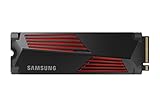


Top 3 picks at a glance
Does Gen5 Actually Cut Load Times in 2026?
Mostly, no, not dramatically, and that’s worth saying plainly before you spend $200+ on a drive. Most current game engines still bottleneck on CPU-side asset decompression, draw call submission, and shader compilation rather than raw sequential read speed. A PCIe 4.0 drive doing 7,000 MB/s and a PCIe 5.0 drive doing 12,000 MB/s will load most traditional titles within a second of each other, because the game isn’t actually streaming data fast enough to saturate either interface.
Where Gen5 pulls ahead is in titles built around DirectStorage 1.2 with GPU decompression enabled, and in workflows outside gaming, like loading huge Unreal Engine 5 projects with Nanite/Lumen caches, or working with uncompressed video. For pure “boot the game, load the level” scenarios, the differences are measured in fractions of a second to maybe 1-2 seconds on the largest open-world titles.
Why DirectStorage Doesn’t Close the Gap Yet
DirectStorage’s GPU decompression path only helps if the game ships assets compressed in a format the API can batch-decompress on the GPU (typically GDeflate). Most 2026 releases still use traditional CPU-side decompression for backward compatibility with older hardware, which means the SSD interface speed stops mattering once you clear roughly 3,500-4,000 MB/s of sustained read throughput. A handful of newer titles with proper DirectStorage 1.2 implementations do show measurable level-load improvements on Gen5 drives, generally in the 10-20% range compared to a fast Gen4 drive, but this is implementation-dependent rather than guaranteed by the interface alone.
Sustained Write Speeds After the Cache Fills
This is where Gen5 drives separate from each other more than marketing numbers suggest. Every consumer SSD uses an SLC cache, a portion of the drive that behaves like faster single-level-cell flash to absorb burst writes. Once you fill that cache, typically by installing a 100GB+ game or copying a large file set, the drive drops to its native TLC/QLC write speed, and that’s the number that actually matters for install times and large patch downloads.
| Drive | Peak Sequential Write | Sustained Write (post-cache) | Approx. Cache Size |
|---|---|---|---|
| Crucial T705 | ~12,400 MB/s | ~2,000-2,200 MB/s | ~200-250GB (on 2TB model) |
| WD Black SN8100 | ~14,900 MB/s | ~1,900-2,100 MB/s | ~150-200GB (on 2TB model) |
| Samsung 9100 Pro | ~14,800 MB/s | ~2,200-2,500 MB/s | ~200GB (on 2TB model) |
| Corsair MP700 Pro SE | ~14,000 MB/s | ~1,800-2,000 MB/s | ~180GB (on 2TB model) |
These sustained figures are approximate and vary with capacity (larger drives get larger caches and more parallel NAND dies to write across), but the pattern holds: once you’re past the cache, you’re generally in TLC NAND territory in the 1,800-2,500 MB/s range regardless of what the peak number on the box says. If you regularly install multiple 100GB+ games back to back, or you work with large video files, this post-cache number is more relevant to your day-to-day experience than the peak spec.
Thermals: Active Heatsink, Passive, or Bare Under a Shroud?
This is the part spec sheets genuinely don’t tell you well, because thermal behavior depends on controller architecture, not just TDP numbers that often go unlisted anyway.
Gen5 controllers run hot enough that throttling is a real concern, not a theoretical one. A controller running near 95-100°C will cut sequential speeds by 40-60% to protect itself, and on some drives that throttled speed is still above what most games need, so you may not notice. On others, especially during sustained workloads like copying files or extended loading in open-world games, the throttle is noticeable as stutter during asset streaming.
What Actually Determines Heatsink Needs
- Controller generation matters more than drive brand. Drives built on Phison’s E26 controller (common in many 2024-2025 Gen5 drives) generally run hot and benefit from an active fan-based heatsink, especially in cases with poor front-to-back airflow.
- Newer controllers (Phison E28, Silicon Motion SM2508, WD/SanDisk’s in-house Gen5 controller) run notably cooler, often 10-15°C lower under sustained load than first-generation Gen5 silicon, and several of these are rated to run passively under a motherboard M.2 shroud without major throttling in a case with reasonable case fan airflow.
- Motherboard shrouds vary wildly in effectiveness. A shroud with a sizeable aluminum mass and thermal pads on both sides of the drive can handle a moderate-heat Gen5 drive fine. A thin stamped-metal cover does little more than block dust.
Decision Matrix: Which Gen5 SSD Fits Your Build?
Match your situation to a configuration instead of chasing peak MB/s numbers:
| Your Situation | Recommended Pick | Why |
|---|---|---|
| Case has strong airflow, you want max sustained performance | Crucial T705 or Samsung 9100 Pro with active heatsink | Best post-cache sustained writes; airflow handles the heat |
| Compact/SFF build, no room for a tall active heatsink | Drive on SM2508 or WD in-house controller, run bare or under stock shroud | Runs cooler natively, less dependent on case airflow |
| Motherboard has a thick, finned M.2 shroud with thermal pads | Most Gen5 drives work, skip the included heatsink | Shroud mass is often enough for moderate loads; avoids double-heatsink clearance issues |
| Primarily installing/patching large games, not editing media | Any Gen4 drive, or a budget Gen5 drive | Game installs are bottlenecked by cache size and write patterns more than peak interface speed |
| Using DirectStorage-optimized titles and GPU decompression | Samsung 9100 Pro or Crucial T705 | Higher sustained throughput shows up more in GPU-decompression workloads |
A Quick Bandwidth Reality Check
To put the interface speed in perspective: a PCIe 5.0 x4 slot has roughly 14,000-16,000 MB/s of real-world usable bandwidth. A typical uncompressed 4K texture streaming budget for a demanding open-world game at 60fps is commonly cited around 1-2 GB/s of sustained asset streaming during fast traversal (think flying or fast vehicle movement in an open world). That means even a mid-tier PCIe 4.0 drive doing 5,000+ MB/s already has significant headroom over what most current games demand, which is the core reason Gen5’s load-time advantage in traditional titles is modest. The bandwidth ceiling isn’t the bottleneck yet; game engine design is.
Buying Guidance
If your budget is flexible and you want a drive that won’t be the weak link for the next few years, prioritize sustained post-cache write speed and controller thermal efficiency over the peak sequential number on the box, since that peak number is only sustained for a few seconds on most drives before the SLC cache fills. Gen5 drives in 2026 generally run $150-$280 for 2TB depending on controller and included heatsink, with 4TB models usually landing around $280-$450. Unless you’re specifically running DirectStorage-forward titles or heavy content creation workloads, a well-cooled Gen4 drive remains a reasonable, cheaper alternative that won’t meaningfully change your in-game load times.


