Our Short List of 3

- Best for: Homes building a classic stereo around a turntable, radio and a pair of passive speakers.

- Best for: Desk and small-room systems driving passive bookshelf or tower speakers from one main source.
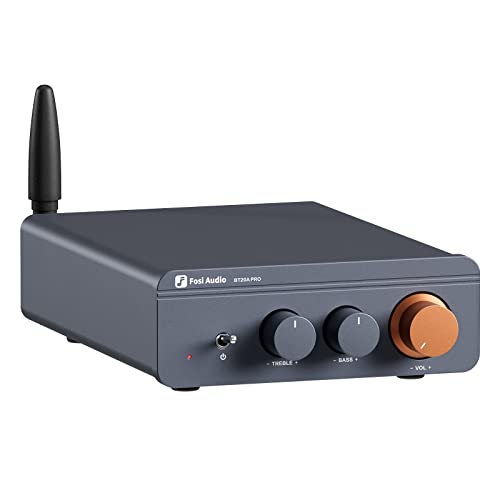
- Best for: Streaming-first setups that want wireless convenience and practical tone control in a tiny chassis.
All 3 Picks at a Glance
| Product | Specs | Action |
|---|---|---|
| 1. Sony STRDH190 Stereo Receiver |
| Check price on Amazon |
| 3. Fosi Audio V3 Stereo Amplifier |
| Check price on Amazon |
| 4. Fosi Audio BT20A Pro Stereo Amplifier |
| Check price on Amazon |
Passive speakers are only half a system. Without an amplifier to drive them, even excellent bookshelf or tower speakers sit silent, and the amplifier you choose decides how much power they receive, which sources you can plug in and how much desk or shelf space the setup consumes. This roundup covers the two shapes that home amplification takes today: traditional stereo receivers with tuners and multiple inputs, and compact Class D amplifiers that do one job in a fraction of the space. All four picks below are built for passive speakers in a home listening setup.
Every model here is the correct type for the job, which sounds obvious and is not. Listings in this category mix in guitar amplifiers, car amplifiers and headphone amplifiers, none of which belong in a home speaker system, so each pick was checked for home passive-speaker duty: two-channel speaker terminals, line-level inputs and power figures stated for home speakers. What separates the four is size, source handling and sound control.
Our Top Picks
Top 3 picks at a glance
Quick Picks
As an Amazon Associate we earn from qualifying purchases.
| Product | Best for | Key spec from title |
|---|---|---|
| Sony STRDH190 Stereo Receiver | Vinyl and radio in a classic full-size setup | 100W + 100W, Phono Input, Bluetooth |
| Yamaha R-S202BL Stereo Receiver | Simple, proven stereo power with a tuner | 100W x 2, Bluetooth, AM/FM Tuner |
| Fosi Audio V3 Stereo Amplifier | Small desks driving passive bookshelf speakers | TPA3255, 300W x 2, Pre-Out |
| Fosi Audio BT20A Pro | Wireless streaming plus tone control in a mini amp | Bluetooth 5.0, Bass and Treble Controls |
How to Choose
Start with how much power your speakers actually need
Amplifier power is quoted in watts per channel, and the honest way to use that figure is alongside your speakers’ sensitivity and the size of your room. Modest bookshelf speakers in a bedroom or office reach satisfying volume on far less power than large towers in an open living room. The full-size receivers here are rated at 100 watts per channel, while the compact Fosi models quote a maximum output figure for their Class D chips, which describes the ceiling of the design rather than a promise at every volume. Match the amplifier to the room first and the headline number second.
Decide whether a receiver or a compact amplifier fits your sources
A stereo receiver bundles amplification with a tuner and a bank of inputs, which suits a system built around radio, a turntable and a disc player. The Sony adds a dedicated phono input, so a turntable connects without a separate phono stage. A compact amplifier strips all of that away and typically offers one RCA input plus Bluetooth, which is plenty when your sources are a phone, a computer and a streamer. Neither format is more advanced; the receiver simply carries more of the system inside one box, and the mini amp leaves the shelf almost empty.
Check the outputs as carefully as the inputs
Speaker terminals decide how flexible the setup can grow. Both receivers here offer A and B speaker terminals, letting you run a second pair of speakers in another room or switch between two pairs in the same room. The Fosi V3 takes a different route and includes a pre-out, which hands the signal to a powered subwoofer or a larger amplifier later. Bluetooth version matters too if streaming is your main source, since a newer standard holds a steadier connection across a room. Read the listing’s terminal and output lines before ordering, because these details rarely appear in the product name.
Plan for heat, placement and controls
Amplifiers turn some of the power they draw into heat, and full-size receivers need open air above their vents, so measure your shelf before assuming one will fit under a cabinet door. Compact Class D designs run cooler and fit almost anywhere, which is their main practical advantage. Controls are the last consideration: tone controls on the BT20A Pro let you trim bass and treble at the amplifier itself, a small thing that becomes daily convenience when your source has no equalizer. Think about where the unit will live and how often you will touch it, not just how it measures.
The 4 Best Options
1. Sony STRDH190 Stereo Receiver
- Best for: Homes building a classic stereo around a turntable, radio and a pair of passive speakers.
Homes building a classic stereo around a turntable, radio and a pair of passive speakers.
The full-size chassis needs shelf depth and ventilation space that compact setups may not have.
Sony’s STRDH190 is the pick for a traditional system assembled around physical media. The listing confirms a phono input for a turntable, an FM tuner with station presets, Bluetooth for phone streaming and 100 watts plus 100 watts of stereo output, with speaker A and B terminals for two pairs. That combination covers the way most long-standing home systems are actually used: records some evenings, radio in the morning, a phone when friends visit. It is a full-size component that expects proper shelf space, and in exchange it asks for no extra boxes to make a turntable or a second speaker pair work.
Specs (from the listing):
– Type: 2 channel stereo receiver
– Output: 100W + 100W
– Turntable: dedicated phono input
– Wireless: Bluetooth
– Tuner: FM radio
– Speakers: A/B speaker terminals
2. Yamaha R-S202BL Stereo Receiver
The R-S202BL keeps the receiver formula deliberately simple. Yamaha rates it at 100 watts per channel, the listing confirms Bluetooth for wireless streaming and an AM/FM tuner with presets, and the rear panel carries speaker A and B terminals like the Sony. Where it differs is emphasis: this is the straightforward choice for a listener who wants radio and streamed music through one honest stereo pair without a turntable in the plan. Yamaha’s receivers have a long production history in this exact format, and the listing presents a mature, uncomplicated design rather than a feature experiment.
Specs (from the listing):
– Type: stereo receiver
– Output: 100W x 2 channels
– Wireless: Bluetooth
– Tuner: AM/FM with presets
– Speakers: A/B speaker terminals
Best for: Listeners who want radio, Bluetooth and dependable stereo power with the least possible fuss.
Watch out for: There is no phono input on this model, so a turntable would need its own phono stage.
ASIN: B01EMQI2CU
3. Fosi Audio V3 Stereo Amplifier
- Best for: Desk and small-room systems driving passive bookshelf or tower speakers from one main source.
Desk and small-room systems driving passive bookshelf or tower speakers from one main source.
There is no Bluetooth and no tuner on this model, and the quoted output is a maximum figure for the chip design.
The V3 shows how far compact amplification has come. Fosi builds it around a TPA3255 Class D chip and the listing quotes a maximum output of 300 watts per channel, with an RCA input for a wired source and a pre-out for adding a powered subwoofer or feeding a bigger amplifier later. This version ships with the 32 volt power supply, a detail worth confirming at checkout because the same model name covers more than one bundle. For a desk or a small room driving passive bookshelf speakers from a computer or streamer, it delivers the system’s core in a box smaller than a paperback.
Specs (from the listing):
– Type: 2 channel Class D stereo amplifier
– Amplifier chip: TPA3255
– Maximum output stated on listing: 300W x 2
– Input: RCA line input
– Output: pre-out for subwoofer or external amplifier
– Bundle: 32V power supply version
4. Fosi Audio BT20A Pro Stereo Amplifier
- Best for: Streaming-first setups that want wireless convenience and practical tone control in a tiny chassis.
Streaming-first setups that want wireless convenience and practical tone control in a tiny chassis.
A single RCA input limits wired sources, and there is no pre-out for expanding the system later.
The BT20A Pro is the compact option for people whose music lives on a phone. Its listing confirms Bluetooth 5.0 for wireless streaming, the same TPA3255 chip family with a stated 300 watts per channel maximum, an RCA input for a wired source, and physical bass and treble controls on the front panel. Those tone knobs are the reason to choose it over the plainer V3: they let you tame a bright room or add weight to small speakers without opening an app. It suits a kitchen, workshop or bedroom system built around streaming, where the amplifier should disappear and the music should not.
Specs (from the listing):
– Type: 2 channel Class D stereo amplifier
– Amplifier chip: TPA3255
– Maximum output stated on listing: 300W x 2
– Wireless: Bluetooth 5.0
– Input: RCA line input
– Controls: bass and treble adjustment
Which One Fits Your Situation
Your system centers on a turntable and a record shelf
Choose the Sony STRDH190. The phono input removes the need for a separate phono preamp, the FM tuner covers broadcast listening, and the A/B terminals leave room for a second pair of speakers later. It is the only pick here designed around vinyl from the start.
You want radio and streaming through one reliable box
Choose the Yamaha R-S202BL. Its AM/FM tuner and Bluetooth cover the two sources most households use daily, the power rating is ample for typical living room speakers, and the layout is simple enough that nobody in the house needs a manual to use it.
Space is tight but your speakers are proper passive models
Choose the Fosi Audio V3. It drives passive bookshelf or tower speakers from a desk-sized footprint, and the pre-out keeps a path open for a subwoofer. Add a separate streamer or use a computer as the source, since this model carries no wireless input of its own.
Music reaches the speakers from a phone, mostly
Choose the Fosi Audio BT20A Pro. Bluetooth 5.0 handles the connection, and the front-panel tone controls let you adjust the sound for the room in seconds. It is the easiest of the four to live with in a kitchen, bedroom or workshop.
Common Mistakes
- Buying a guitar, car or headphone amplifier for home speakers because the listing photos looked similar.
- Comparing a compact amp’s maximum chip output directly against a receiver’s rated output as if the figures were measured the same way.
- Ordering a receiver without measuring the shelf, then finding the chassis needs more depth and ventilation than the space allows.
- Forgetting that a turntable needs a phono input or a phono stage, and blaming the amplifier when the signal sounds thin and quiet.
- Choosing a single-input mini amp for a system that will soon add a CD player, a television and a streamer.
Frequently Asked Questions
Do passive speakers always need a separate amplifier?
Yes. A passive speaker has no built-in amplification, so something has to supply the power: a receiver, an integrated amplifier or a compact Class D amp like the Fosi models here. Powered speakers are the exception, since their amplifier is built into the cabinet and they should not be connected to speaker terminals.
How many watts does a home speaker system need?
Fewer than marketing suggests. Room size, listening distance and speaker sensitivity matter more than the headline figure. The 100 watt per channel receivers in this roundup will drive most home speakers comfortably, and the compact amps handle typical bookshelf speakers in small rooms without strain.
Can a compact amplifier really drive tower speakers?
Within reason, yes. The listing for the Fosi V3 names passive bookshelf and tower speakers as its intended load. Large towers in a big room played loudly will still favor a full-size receiver, but for ordinary listening levels a modern Class D amplifier is a legitimate option rather than a compromise.
What is the difference between a receiver and an amplifier?
An amplifier’s job is power alone. A receiver combines that amplifier with a tuner and source switching in one chassis, and models like the Sony add Bluetooth and a phono stage as well. Choose by counting your sources: the more boxes you own, the more a receiver’s inputs earn their space.
Related guides
More from Amazon
Programs that pair well with the guide above. Offers and eligibility are set by Amazon and may change.
A free business account with business pricing and bulk-buying tools for work, shop or home office.
Create a business accountFree shipping on eligible items, Prime Video and more. Eligible new members can start with a free trial.
Start a Prime free trialAudiobooks and podcasts to listen to on the go. Eligible new members can start with a free trial.
Try Audible freeAd-free music streaming. Eligible new subscribers can start with a free trial.
Try Music Unlimited freeAs an Amazon Associate we earn from qualifying purchases.