When curating a modern home office or a compact living room entertainment center, hardware choices extend far beyond mere tech specifications. Every component inside your computer chassis impacts physical clutter, ambient noise, energy consumption, and overall user experience. If you are building or buying a compact desktop or mini PC that relies on integrated graphics rather than a bulky, power-hungry discrete graphics card, one crucial hardware debate immediately arises: single stick vs dual channel ram for integrated graphics.
Integrated graphics processors (iGPUs)—such as AMD Radeon Vega/700M series or Intel UHD and Iris Xe graphics—do not possess dedicated video memory (VRAM). Instead, they borrow memory directly from your system’s RAM. Because of this architecture, your memory configuration acts as the primary bottleneck for visual performance, video playback, light gaming, and photo editing. Deciding whether to install a single RAM stick (single-channel mode) or two matching sticks (dual-channel mode) influences how your PC feels during daily household use, how much heat it radiates, and how easily you can upgrade your setup down the road.
As an Amazon Associate we earn from qualifying purchases at no extra cost to you. Product prices and availability are accurate as of the date shown and are subject to change.


When setting up a home workspace or multi-purpose recreation area—whether you spend your desk breaks reading historical martial arts manuals like the Broad-sword and Single-stick AND How To Use the Yawara Stick: Two in One series ($6.99) or heading out to the court with Tourna Single Sticks for Tennis ($42.95)—managing your computing hardware requires an eye for efficiency. Let’s evaluate how single stick and dual channel RAM configurations compare for home use.
Top 3 picks at a glance
Quick Verdict
For almost every home user relying on integrated graphics, dual channel RAM is the clear winner. Because an integrated graphics processor shares system memory, running two memory sticks doubles the memory bus width from 64-bit to 128-bit. This doubled bandwidth translates directly into 20% to 50% higher graphics performance, smoother 4K video playback, and a snappier user interface when driving multiple home office displays.
A single stick setup is only recommended if you are on an extremely tight initial budget, purchasing a tiny system with only one physical DIMM slot, or planning to buy a matching second stick within a few weeks to expand total memory capacity without discarding existing hardware.
Side by Side
| Feature / Metric | Single Stick (Single-Channel) | Dual Channel (Two Sticks) |
|---|---|---|
| Comfort & UI Smoothness | Occasional frame drops in 4K streaming; usable for basic text editing. | Silky-smooth desktop animations, zero lag during 4K video scrubbing. |
| Durability & Thermals | Concentrates heat on a single module (approx. 2.5W to 4W thermal output). | Distributes thermal load across two slots (approx. 1.5W to 3W per module). |
| Price Range | $30 – $55 for a single 16GB DDR4/DDR5 stick. | $40 – $70 for a 2x8GB dual-channel kit. |
| Maintenance & Upgrades | Easier expansion; leaves empty slot for future capacity upgrades. | Requires replacing both sticks if motherboard only has two total slots. |
| Space Needed (Physical) | Requires 1 DIMM or SO-DIMM slot; ideal for ultra-compact boards. | Requires 2 open DIMM or SO-DIMM slots; slightly wider board layout. |
| Desk Aesthetics & Noise | Higher CPU/iGPU strain can trigger slightly higher system fan pitch. | Lower iGPU wait times keep CPU fan noise lower during visual tasks. |
| Resale Value | Lower demand on secondary market for lone low-capacity sticks. | Higher demand for matched dual-channel kits on home tech markets. |
| Best For | Ultra-budget temporary builds and single-slot mini PCs. | Home offices, family media centers, and light home gaming setups. |
Where Single Stick Wins
While dual channel offers superior raw graphics bandwidth, single stick RAM configurations hold specific functional advantages for certain home hardware layouts and strict budgets.
- Maximum Upgrade Path on Budget Motherboards: Entry-level motherboards or budget prebuilt desktop towers often feature only two physical RAM slots. Installing a single 16GB stick leaves one slot completely open. This allows you to double your memory to 32GB later without throwing away your initial module.
- Lower Initial Purchase Threshold: When assembling a basic home computer, buying a single stick of DDR4 or DDR5 RAM usually costs $10 to $15 less up front than a matched 2-stick kit of equivalent total capacity.
- Compatibility with Ultra-Small Form Factor Systems: Certain micro-pc enclosures and single-board computers designed for minimalist floating desks only feature a single memory slot due to physical motherboard constraints measuring under 4×4 inches.
Where Dual Channel Ram for Integrated Graphics Wins
When comparing single stick vs dual channel ram for integrated graphics, memory bandwidth is the critical factor. Dedicated graphics cards feature specialized, high-speed memory (VRAM) operating across wide memory buses (128-bit to 384-bit). Integrated graphics chips must rely on motherboard system RAM, which runs on a modest 64-bit bus per channel.
By installing two identical RAM sticks in appropriate slots, your motherboard operates in dual-channel mode, doubling the communication channels to 128 bits. This provides instant practical benefits for the home user:
- Dramatic iGPU Performance Boost: Real-world frame rates in light titles (like casual simulator games, esports titles, or 3D home modeling software) jump by 25% to over 50% compared to single-channel mode, even when total RAM capacity is identical (e.g., 1x16GB vs 2x8GB).
- Fluid Multi-Monitor Desk Operations: If you run dual 4K monitors at your home workstation, integrated graphics processors require high data throughput to render multiple high-resolution desktop environments. Dual channel memory prevents visual stuttering when juggling video calls, web browsers with dozens of tabs, and design software.
- Improved System Efficiency: Because the integrated GPU spends less time waiting for data to travel across a narrow single channel, processor execution times drop. This means the CPU returns to idle states faster, lowering fan noise in quiet home environments.
For example, a modern mini desktop like the GMKtec M5 S Mini PC AMD Ryzen 5400U 16GB DDR4 RAM (Dual Channel) 512GB SSD ($379.98) relies heavily on its dual-channel DDR4 memory configuration out of the box. Measuring roughly 4.9 x 4.4 x 1.6 inches and weighing under 1.2 pounds, this compact machine delivers smooth home office multitasking specifically because its Radeon integrated graphics can leverage two distinct memory channels.
Cost Over 5 Years
Evaluating the long-term economics of single stick vs dual channel setups involves electricity, productivity comfort, and component longevity over a typical 5-year home computer lifecycle.
In terms of power draw, individual desktop DDR4 or DDR5 RAM modules pull between 1.5 and 4 watts depending on speed and voltage (typically 1.2V to 1.35V). Running a second stick adds roughly 2 to 3 watts of continuous power draw under load. Over 5 years of home office operation (assuming 8 hours per day at an average U.S. residential rate of $0.16 per kWh), running a dual-channel configuration costs less than $2.50 in extra electricity overall.
However, the performance advantage of dual channel prevents premature system obsolescence. A single-channel integrated graphics system will feel sluggish far sooner when operating modern web standards, high-definition streaming codecs, and operating systems. By spending an extra $10 to $15 upfront for a dual-channel kit, you easily extend the usable lifespan of your home computer by 1 to 2 years, saving hundreds of dollars in early replacement costs.
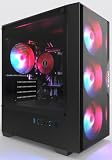
Larger prebuilt towers, such as the OKAMUS Prebuilt Desktop Computer, i7 CPU Up to 3.9GHz, Integrated Graphics Only Tower PC, 16GB RAM, 256GB M.2 SSD, RGB Fans x4,Win11 Home, WiFi 6+BT5.3, 400W PSU ($299.99), balance long-term value by housing a 400W power supply inside a standard 14 x 7 x 15-inch mid-tower chassis. This provides ample physical space and thermal headroom to upgrade memory modules over a multi-year lifespan.
Which One for Your Home
Small Apartment or Compact Desk Setup
If you live in a cozy apartment where your desk footprint must stay as minimal as possible, you are likely considering a mini PC or ultra-small desktop. In tight workspaces, system noise and heat are noticeable immediately. Choose a dual channel RAM configuration (such as 2x8GB or 2x16GB). The efficient bandwidth keeps integrated graphics temps stable, preventing system fans from ramping up to distracting decibel levels during casual evening streaming or light work.
Family with Kids and Shared Family Computer
A central family computer in the living room or study handles diverse tasks: homework, multi-tab research, family photo editing, and light gaming. Integrated graphics are standard in family PCs to save energy and space. Always opt for dual channel RAM here. Kids playing popular sandbox games or creative titles on integrated graphics will experience significantly higher, more stable frame rates without requiring an expensive dedicated graphics card.
Rental Unit or Temporary Work Setup
If you move frequently or need a low-cost secondary machine for a short-term rental arrangement, immediate upfront savings might take priority. If you purchase a standard prebuilt computer that comes with a single 16GB stick, it will easily handle document creation, spreadsheet management, and standard video calls. Keep the single stick configuration to keep initial setup costs low, knowing you can drop in a matching second stick later if your needs expand.
Long-Term Home Office Setup
For dedicated home professionals spending 40+ hours a week at a multi-monitor desk, dual channel RAM is mandatory for integrated graphics systems. Looking ahead in 2026, web applications and productivity suites rely increasingly on hardware acceleration rendered by integrated GPUs. Dual channel memory ensures uninterrupted workflow, instantaneous screen rendering, and long-term hardware reliability.
FAQ
Does dual channel RAM matter for simple home web browsing?
For basic single-tab web browsing and basic text editing, single stick memory is sufficient. However, modern browsers use hardware acceleration to render complex webpages, high-resolution media, and online map software via your integrated GPU. Dual channel RAM ensures these web elements render without visual stuttering when you have multiple tabs or monitors open.
Can I add a second single stick later to make my system dual channel?
Yes. You can purchase a single memory stick now and add a second stick later to enable dual-channel operation. For maximum stability and optimal bandwidth, the second stick should match the original module in capacity, clock speed (MHz), voltage, and timing latency (CL rating).
Why do integrated graphics benefit more from dual channel than discrete graphics cards?
Dedicated (discrete) graphics cards have their own high-speed video memory (VRAM) built directly onto the card with extremely wide memory buses (e.g., 128-bit to 384-bit). Integrated graphics have no built-in VRAM and must share standard motherboard system RAM over a narrow 64-bit bus per stick. Running dual channel doubles this system bus width to 128 bits, providing the integrated GPU with the data flow it desperately needs.
How much power does an extra stick of RAM draw in a home desktop?
An extra DDR4 or DDR5 RAM stick draws very little power—typically between 2 and 4 watts under active load, and less than 0.5 watts when idling. It has virtually no impact on your monthly home energy bill or power supply requirements.