
As an Amazon Associate we earn from qualifying purchases at no extra cost to you. Product prices and availability are accurate as of the date shown and are subject to change.


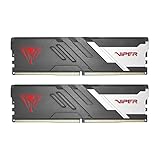
When most people start shopping for memory, they aren’t actually shopping for ranks — they’re shopping for a feeling: will my laptop open faster, will my games run smoother, will this machine last another five years? But somewhere in the product listing, between “5600MHz” and “CL46,” appears a small code like 1Rx8 or 2Rx8, and suddenly you’re facing a genuine fork in the road. Single rank vs dual rank DDR5 RAM performance is one of those specifications that sounds arcane but can meaningfully affect how your computer behaves — especially in a home filled with laptops, desktops, and family members who all want things to just work.
Let’s untangle it. A “rank” is a chunk of the memory module that the memory controller can address independently. A single rank (1R) module puts all its capacity behind one set of chips; a dual rank (2R) module splits it across two. Neither is universally “better” — they trade responsiveness for throughput in ways that depend on what your household actually does with a computer.
Top 3 picks at a glance
Quick Verdict
For most home buyers, rank is a tiebreaker, not a headline. If you’re upgrading a laptop with one open slot, a quality single rank stick like a Samsung 16GB DDR5 5600MHz SODIMM (1Rx8, CL46, 1.1V) around the $259 mark does the job efficiently at low power. If you’re building or upgrading a desktop where raw bandwidth matters — big photo libraries, virtual machines, modern games — dual rank modules, such as a 2x32GB DDR5 5600MHz dual rank kit, can squeeze out a few extra percent in bandwidth-heavy tasks, though often for a steeper price. Buy capacity and speed first; let rank decide between two otherwise equal options.
Side by Side
| Factor | Single Rank DDR5 | Dual Rank DDR5 |
|---|---|---|
| Comfort of setup | Very easy; one module per slot keeps things simple | Just as easy physically, but pairing two dual rank sticks in a four-slot board takes a little planning |
| Everyday responsiveness | Slightly snappier in light tasks due to easier scheduling | Comparable; differences are small in browsing and office work |
| Heavy multitasking | Fine for typical home use | Can hold an edge when many memory-heavy apps run at once |
| Price range | Roughly $130–$260 for a 16GB DDR5 laptop module | Roughly $400–$1,070 for 32GB–64GB desktop kits |
| Power draw | Low; DDR5 runs at about 1.1V, and fewer ranks can run cooler | Also 1.1V nominal, but more chips can add a degree or two of heat |
| Compatibility | Broadest; works in nearly any DDR5 laptop or desktop | Excellent on modern boards, but density can be picky on older BIOS versions |
| Overclocking headroom | Often reaches higher frequencies more easily | Usually tops out at slightly lower speeds but moves more data per cycle |
| Future expansion | Leaves slots free for added sticks later | Denser modules mean you can reach 64GB+ with fewer slots used |
| Resale value | Modest; memory depreciates quickly regardless of rank | High-capacity kits tend to hold demand longer among enthusiasts |
| Best for | Laptops, compact desktops, single-slot upgrades | Desktop power users, creators, capacity-hungry households |
Where Single Rank Wins
Single rank modules shine when frequency is the priority. Because the memory controller only has one rank per module to manage, signal integrity is simpler, and many kits hit their rated speeds — 5600MHz, 6000MHz, and beyond — with less fuss. For a laptop, that matters doubly: a single rank 16GB SODIMM at 1.1V sips power, helps battery life, and generates minimal heat inside a chassis that has little room to spare.
Single rank also wins on flexibility. If your laptop has two slots and you want room to grow, starting with one single rank 16GB module keeps the second slot open. And price-per-module tends to be lower — a 16GB DDR5 single rank SODIMM typically lands between $130 and $260, versus the $400–$1,070 range you’ll see for larger dual rank desktop kits.
There’s also a practical point for gamers on a budget: a dual channel pair of single rank sticks, like a 2x16GB DDR5 6000MHz CL30 kit around $480, delivers low latency and high frequency — exactly the profile that modern game engines reward. You give up a little rank-level parallelism but gain clock speed, and for most titles the clock speed wins.
Where Dual Rank Ddr5 Ram Performance Wins
Dual rank’s advantage is parallelism. With two ranks per module, the controller can prepare one rank while the other is busy, which smooths out bandwidth under heavy, sustained loads. In practice, dual rank configurations have historically shown a few percent advantage in memory bandwidth and in workloads like video encoding, large spreadsheet crunching, code compilation, and running several virtual machines at once. The gains are real but modest — typically single-digit percentages, not transformations.
Dual rank also wins on density. DDR5’s higher chip densities mean a single dual rank 32GB UDIMM packs what used to require two modules, so a 2x32GB dual rank kit gets you 64GB in two slots, leaving the rest of the board free. For a home desktop that doubles as a video editing station or a homelab server, that’s the cleanest path to high capacity.
One honest caveat: with DDR5, the performance gap between ranks has narrowed compared to earlier generations, partly because DDR5 splits each module into two independent subchannels. Don’t buy dual rank expecting a dramatic jump — think of it as a refinement, not an upgrade.
Cost Over 5 Years
Memory is a buy-once component, so the five-year math is mostly about what you spend today plus electricity. A 16GB single rank DDR5 laptop module at $200–$260, running at roughly 3–5 watts, costs perhaps $6–$12 in electricity over five years at typical American residential rates. A 64GB dual rank desktop kit at $1,000 or more draws a few extra watts at most — call it $10–$15 over the same period. Power is a rounding error either way.
The real cost question is obsolescence. A 16GB single rank setup may feel tight by 2026 standards for a household running browsers with dozens of tabs, cloud sync, video calls, and a game or two — you might spend another $150–$300 on a second module within three years. A 32GB or 64GB dual rank desktop setup costs more upfront but is far less likely to need topping off before the rest of the machine retires. If you keep computers for five-plus years, buying capacity (often dual rank) once usually beats buying twice.
Which One for Your Home
The Small Apartment Dweller
You’re likely on a laptop or a compact mini-PC, and space, heat, and battery life all matter. Go single rank. A 16GB DDR5 5600MHz single rank SODIMM in the $200–$260 range, running cool at 1.1V, keeps the machine quiet and efficient. If you game, put the budget toward a fast dual channel pair of 16GB sticks at 6000MHz instead of chasing rank configurations.
The Family with Kids or Pets
The household computer is a shared workhorse: homework, streaming, video calls, photo backups, maybe a game after bedtime. Prioritize total capacity over rank — 32GB minimum on a desktop, which usually means 2x16GB sticks. Whether those are single or dual rank matters far less than having headroom when three people are on one machine. A kit in the $350–$500 range covers it comfortably.
The Rental or Short-Term Home
If you’re in a place for a year or two, don’t over-invest. A modest single rank upgrade — one 16GB DDR5 laptop module — is affordable, reversible, and travels with you to the next machine if the specs match. Skip the $1,000+ dual rank kits; that money won’t follow you into a permanent home purchase nearly as well as cash will.
The Long-Term Home
This is where dual rank makes sense. If this is the house where the desktop lives for the next seven years and doubles as your editing rig or home server, a 2x32GB dual rank DDR5 5600MHz kit around $900–$1,070 buys capacity that won’t pinch. Pair it with a good CPU and you’ve likely postponed any memory upgrade until the machine’s other parts are outdated anyway.
FAQ
Is dual rank DDR5 always faster than single rank?
No. Dual rank can deliver slightly better sustained bandwidth in heavy workloads, but single rank modules often clock higher. In gaming and everyday use, frequency and dual channel configuration usually matter more than rank.
Can I mix single rank and dual rank modules?
Often yes, but it’s not guaranteed. Mixing ranks can affect stability and memory training times on some boards, and populating all four slots with mixed configurations may limit maximum speed. For best results, use matched modules — ideally the same brand, capacity, rank, and speed.
How do I tell if a module is single or dual rank?
Check the part number’s rank code: 1Rx8 or 1Rx16 means single rank; 2Rx8 means dual rank. Manufacturer spec sheets list it, and free utilities can report rank configuration for installed memory.
Does rank affect laptop battery life?
Not meaningfully. DDR5 runs at about 1.1V regardless of rank, and real-world battery differences between single and dual rank modules amount to minutes at most. Capacity and efficiency of the laptop’s other components matter far more.
