
For most people asking should I get an SSD or HDD in 2026, the answer is: get an SSD for your operating system and the games you actively play, then add a mechanical hard drive only if you need terabytes of cheap bulk storage. The classic “should I buy SSD or HDD” debate is largely settled by price — budget NVMe drives now sit in the same $55–$90 per terabyte range that SATA SSDs occupied a few years ago — but hard drives still win on cost-per-TB once you go past 2TB. Below is a simple decision tree, the capacity math behind it, and the right combos for a gaming PC, laptop, or console.
As an Amazon Associate we earn from qualifying purchases at no extra cost to you.


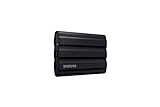
Top 3 picks at a glance
The 30-second decision tree
Work through these questions in order. Stop at the first one that applies:
- Is this drive holding your OS or games you’ll launch regularly? → SSD, no exceptions. Windows boot times, game loads, and texture streaming all punish mechanical drives.
- Does the system have only one drive bay or M.2 slot (most laptops)? → A single SSD, sized 1TB or larger. A one-drive system should never be all-HDD in 2026.
- Do you need more than ~2TB of total storage but can’t spend over roughly $150 on drives? → Split it: SSD for active games, HDD for the backlog.
- Is this for a console? → Platform rules apply (see below). A HDD alone won’t run current-gen titles on a PS5 or Xbox Series.
- Is it purely for recordings, backups, or a media library? → HDD is fine and the cheapest option per TB.
What an SSD actually changes in games
Marketing numbers are inflated, so here’s what the spec sheet differences mean at the screen:
| Drive type | Sequential read | Random access latency | Real-world effect |
|---|---|---|---|
| 7200 RPM HDD | ~150–200 MB/s | 5–15 ms | 40–90s loads in open-world games; texture pop-in, audio stutter |
| SATA SSD (2.5″ or M.2) | ~550 MB/s | <0.1 ms | Load times typically cut 2–3x; pop-in mostly gone |
| Gen3 NVMe | ~3,000–3,500 MB/s | <0.1 ms | A few seconds faster than SATA in most titles |
| Gen4 NVMe | ~5,000–7,400 MB/s | <0.1 ms | Needed for PS5 expansion and DirectStorage-ready PC games |
The biggest jump is HDD → any SSD. The latency difference is the real story: when a game requests hundreds of small texture files as you turn a corner, a hard drive’s physical seek time creates visible stutter that raw bandwidth numbers never show. Gen3 → Gen4 NVMe is a much smaller upgrade for gaming specifically, which matters when you’re deciding where to spend.
How much capacity do you actually need?
Run this quick calculation before buying — it’s where most “500GB is enough” advice falls apart:
- A “500GB” drive formats to roughly 465GB usable.
- Windows 11 plus drivers, pagefile, and system restore eats ~50–70GB.
- That leaves ~390–400GB for everything else.
- Modern AAA games average 80–150GB each, with the largest live-service titles exceeding 200GB after updates.
Result: a 500GB boot SSD comfortably holds Windows plus 3–4 big AAA games and a pile of indies. A 1TB drive pushes that to roughly 8–10 AAA installs. If your Steam library is mostly games you replay or mod, 1TB is the practical minimum; 500GB only works if you’re disciplined about uninstalling or pairing it with a second drive.
Recommended combos by budget
| Budget | Setup | Typical total cost | Best for |
|---|---|---|---|
| Under ~$50 | 500GB NVMe (Crucial P3 class or similar) | ~$30–50 | Tight builds; add storage later |
| ~$60–90 | 1TB NVMe (Kingston NV3, WD Black SN770 class) | ~$55–90 | The sweet spot for most gamers |
| ~$120–160 | 500GB–1TB NVMe boot + 2TB HDD (Seagate BarraCuda, WD Blue, Toshiba P300) | ~$110–160 combined | Big backlogs, screenshots, recordings |
| ~$150–220 | 2TB NVMe (Samsung 990 EVO, WD Black SN850X class) | ~$100–160 for the drive alone in most sales cycles | One-drive simplicity; skipping the HDD entirely |
Cost-per-TB is where the HDD still justifies itself: a 2TB hard drive runs roughly $50–70 (~$25–35/TB), while NVMe storage lands closer to $60–90/TB. Below 2TB total, the HDD’s savings are small enough that a single SSD is the smarter spend. Above 4TB — media servers, capture footage, massive emulation libraries — hard drives pull far ahead on price.
Platform-specific rules
Gaming desktop PC
You have the most flexibility. If your motherboard has two or more M.2 slots, a single 1–2TB NVMe is usually better than the SSD+HDD split — no spinning drive, no noise, no extra cables. The classic combo (500GB NVMe boot + 2TB HDD) still makes sense when you’re reusing an old drive or your total storage target is 3TB+ on a budget. Note that older boards sometimes disable a SATA port when an M.2 slot is populated — check your manual before assuming all ports work.
Gaming laptop
Laptops are the strongest argument for SSD-only. Beyond speed, a 2.5″ HDD draws roughly 2–3W in use versus well under 1W for a SATA SSD at typical loads. On a 65Wh battery averaging ~12W system draw, that ~1.5–2W saving works out to roughly 40–50 extra minutes of runtime — plus no drive noise and no risk of a head crash if the laptop gets bumped mid-load. If there’s an empty M.2 slot, add NVMe; if the only bay is 2.5″, a SATA SSD swap is the highest-impact upgrade an old gaming laptop can get.
PlayStation 5
PS5 games must run from the internal SSD or a compatible M.2 expansion: PCIe Gen4 x4, Sony recommends 5,500MB/s or faster sequential reads, with a heatsink fitted, in capacities up to 8TB. A USB HDD is useful but limited — it can store PS5 games and play PS4 titles, nothing more. Budget Gen4 drives with heatsinks typically run $70–120 for 1TB.
Xbox Series X|S
Series-optimized games only run from internal storage or the proprietary expansion card (Seagate and WD make them, usually $90–150 for 1TB). A USB HDD plays backward-compatible Xbox One/360 games and acts as cold storage for Series titles — moving a game back is faster than re-downloading, which is the HDD’s one genuine win here.
Not sure what you already have?
If you’re asking “do I have a SSD or HDD” before upgrading, check in about ten seconds:
- Windows 10/11: Open Task Manager (Ctrl+Shift+Esc) → Performance → Disk. The drive type is labeled SSD or HDD in the corner of the disk graph.
- Alternative: Run
dfrgui(Defragment and Optimize Drives) — the “Media type” column lists each drive. In PowerShell,Get-PhysicalDiskreports a MediaType field too. - No tools needed: a faint clicking or whirring during loads means a spinning disk is in there.
If a gaming PC or laptop still boots off an HDD, cloning it to a $60-class 1TB SSD is the single best value upgrade you can make — bigger than a GPU tier jump for everyday responsiveness.
When the HDD is still the right answer
- Bulk media: video captures, photo archives, movie libraries — anything read sequentially where latency doesn’t matter.
- Cold game storage: park finished games on a HDD instead of re-downloading 150GB later.
- Secondary/backups: your OS and active games live on the SSD; the HDD mirrors what you’d hate to lose.
- Very large capacity on a budget: once you need 4TB+, an HDD costs a third of what equivalent SSD storage does.
The scenario where an HDD should never be your choice in 2026: as the only drive in a machine you actively use. The $30–40 you save versus a 500GB SSD costs you minutes of loading every single day.
FAQ
Will an SSD improve my FPS?
Directly, no — frame rate is a GPU/CPU question. But an SSD reduces stutter from asset streaming, shortens fast-travel loads, and a growing number of DirectStorage titles are designed around NVMe speeds. Games feel smoother even at identical average FPS.
Do SSDs wear out? Should I worry?
SSD endurance is rated in terabytes written (TBW); a typical 1TB TLC drive carries ~600TBW. A gamer writing ~25TB per year — downloads, updates, recordings — would take over 20 years to reach that limit. HDDs die from mechanical wear and drops instead; neither is a real-world failure risk if you keep backups.
Can I move games between drives without re-downloading?
Yes. Steam, Epic, Battle.net and the Xbox app all support moving an existing install to another drive, so an SSD+HDD split doesn’t mean reinstalling — shuffle active games to the SSD and archive the rest on the HDD.
Is a Gen5 NVMe worth it for gaming?
Not yet for most players. Gen5 drives roughly double sequential speeds but deliver minimal load-time gains in current games, run hot, and cost significantly more per TB. Put the difference toward capacity instead.


