
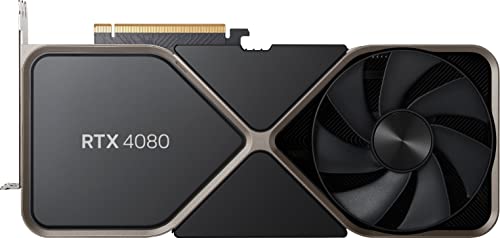
The RTX 4080 is the faster and more capable gaming card, roughly 25-40% ahead in raster and much further ahead in ray tracing, so it is the pick for 4K and ray-traced games; the RX 7900 GRE is the better value for 1440p players who mostly run rasterized games and want to spend far less. Both have 16 GB of VRAM, so the real question is how much the GeForce’s extra speed and feature set are worth to you.
As an Amazon Associate we earn from qualifying purchases at no extra cost to you.


Our Top Picks
Top 3 picks at a glance
Different Classes, Same Memory Size
These cards were never direct rivals at launch. The RTX 4080 debuted in September 2022 at $1,199 as NVIDIA’s second-tier Ada Lovelace card. The RX 7900 GRE launched in July 2023 at $549, first in China and later worldwide, as a cut-down RDNA 3 Navi 31 part. AMD’s natural competitor to the RTX 4080 was the RX 7900 XTX, while the GRE lined up against the RTX 4070 and 4070 Super. In 2026, with RTX 50 and RX 9000 current, both are previous-generation cards mostly sold used, which is why buyers now see them side by side.
Specification Comparison
| Spec | RTX 4080 | RX 7900 GRE |
|---|---|---|
| Architecture | Ada Lovelace | RDNA 3.0 |
| Release date | 20 September 2022 | 27 July 2023 |
| Launch MSRP | $1,199 | $549 |
| Shaders | 9728 CUDA cores | 5120 stream processors |
| Boost clock | 2505 MHz | 2245 MHz |
| Process | 5 nm | 5 nm |
| TDP | 320 W | 260 W |
| Memory | 16 GB GDDR6X | 16 GB GDDR6 |
| Bus width | 256-bit | 256-bit |
| Bandwidth | 716.8 GB/s | 576.0 GB/s |
| Cache | 64 MB L2 | 6 MB L2 + 64 MB L3 |
| Interface | PCIe 4.0 x16 | PCIe 4.0 x16 |
| Power connectors | 1x 16-pin | 2x 8-pin |
| Length / width | 310 mm, 3-slot | 276 mm, 2-slot |
| Outputs | 1x HDMI 2.1, 3x DP 1.4a | 1x HDMI 2.1a, 2x DP 2.1, 1x USB-C |
The RX 7900 GRE’s memory runs well below its potential at stock, and its 576 GB/s bandwidth is a notable limiter compared with the RTX 4080’s 716.8 GB/s. AMD later allowed memory overclocking that lets enthusiasts recover some of that gap, but stock figures are what reviews mostly measured.
How the Gaming Numbers Stack Up
Rasterized Games
Review data from TechPowerUp, Hardware Unboxed and other outlets places the RTX 4080 roughly 25-40% ahead of the RX 7900 GRE in raster games at 1440p and 4K, with the larger gap at 4K. GamersNexus’s GRE review showed the card leading the RTX 4070 Super by around 10% at 1440p, which puts it well behind the 4080 tier. At 1080p, CPU limits shrink the gap in many titles.
As approximate ranges that depend on settings, CPU and patch, the RX 7900 GRE typically delivers 90-140 fps at 1440p high in recent games, while the RTX 4080 often runs 120-180 fps. At 4K the GRE tends to sit around 50-80 fps in demanding titles, where the 4080 reaches roughly 70-110 fps.
Ray Tracing and Path Tracing
This is where the gap opens wide. Ada Lovelace’s third-generation RT cores are far stronger than RDNA 3’s ray accelerators, and in RT-heavy games the RTX 4080 is often 50% or more ahead. In path-traced modes like Cyberpunk 2077’s Overdrive or Alan Wake 2’s full RT, the RX 7900 GRE is not a practical option, while the RTX 4080 can deliver playable results with DLSS.
Upscaling and Frame Generation
The RTX 4080 supports DLSS 4 Super Resolution with the transformer model and DLSS Frame Generation (2x). It does not get Multi Frame Generation, which is exclusive to RTX 50. The RX 7900 GRE supports FSR 3.1 upscaling and frame generation and AMD Fluid Motion Frames 2, but not FSR 4, which is reserved for RX 9000 cards. In practice, DLSS gives better image quality at aggressive upscaling ratios, which matters most at 4K.
VRAM: Equal Footing
Both cards carry 16 GB on a 256-bit bus. That is comfortable for 1440p and adequate for 4K in nearly all current games. Neither card has a capacity advantage, though the RTX 4080’s faster GDDR6X and large 64 MB L2 cache give it more effective bandwidth at high resolutions.
Power Draw, PSU Size and Case Fit
The RTX 4080 is rated at 320 W and the RX 7900 GRE at 260 W, but Ada Lovelace’s efficiency means the 4080 often draws less than its rating in many games while delivering more performance per watt. For PSU sizing, use GPU TDP + CPU + about 150 W headroom:
- RTX 4080 with a 150 W CPU: 320 + 150 + 150 = 620 W, so a quality 750 W PSU is the practical target.
- RX 7900 GRE with the same CPU: 260 + 150 + 150 = 560 W, so a quality 650 W PSU works.
The RTX 4080 uses a 16-pin 12VHPWR connector, either directly from an ATX 3.x PSU or via the included adapter. Make sure the plug is fully seated and avoid tight bends near the card. The GRE uses two standard 8-pin connectors.
Physically, the RTX 4080 Founders Edition is 310 mm long and three slots thick, and many partner cards are larger. The RX 7900 GRE is 276 mm and two slots in its reference form. For compact mid-towers and SFF builds, the GRE is much easier to fit.
Value Check: What Each Frame Costs
Set the RX 7900 GRE at 100 and the RTX 4080 at roughly 132 (midpoint of the 25-40% raster range).
- At launch MSRP: GRE $549 / 100 = $5.49 per point; RTX 4080 $1,199 / 132 = about $9.08 per point.
- Used, with an RX 7900 GRE usually $380-$450 and an RTX 4080 usually $650-$850: GRE midpoint $415 = $4.15 per point; 4080 midpoint $750 = about $5.68 per point.
The GRE remains cheaper per raster frame by a clear margin. The RTX 4080 recovers some value through ray tracing, DLSS quality and frame generation, which those numbers do not capture. Also compare against current cards: the RX 9070 XT and RTX 5070 Ti sit in a similar performance range to the RTX 4080 in many reviews, with newer features and warranties.
Choosing by Resolution and Budget
| Use case | Better pick | Reason |
|---|---|---|
| 1440p high refresh, raster games | RX 7900 GRE | Strong frame rates at much lower cost |
| 4K gaming | RTX 4080 | Larger lead at 4K plus DLSS quality |
| Ray tracing or path tracing | RTX 4080 | Much faster RT hardware |
| Budget under $450 | RX 7900 GRE | The 4080 is out of range |
| Small case or 650 W PSU | RX 7900 GRE | 2-slot, 276 mm, lower power |
| Streaming plus gaming | RTX 4080 | NVENC and broader app support |
Used-Market Advice
Used RTX 4080 cards should be checked for 16-pin connector damage and coil whine. The RX 7900 GRE had a relatively short retail window outside China, so supply can be patchy and partner models vary in cooler quality. Prefer sellers who provide proof of purchase, since many cards still carry transferable warranties.
Beyond Gaming: Encoding and Software
Both cards include AV1 hardware encoding, so streamers get modern codec support either way. The RTX 4080 has a broader software ecosystem: NVENC is supported by nearly every streaming and recording tool, CUDA acceleration is standard in Blender, DaVinci Resolve and most AI tools, and NVIDIA Broadcast offers noise removal and camera effects. The RX 7900 GRE works well with OBS and AMD’s own software suite, and ROCm support for AI workloads has improved, but CUDA remains the more widely supported option. The GRE counters with DisplayPort 2.1 outputs, useful for the newest high-refresh 4K monitors.
Final Recommendation
For 1440p raster gaming on a sensible budget, the RX 7900 GRE delivers most of what most players need at around half the price. For 4K, ray tracing and the best upscaling, the RTX 4080 is the clearly stronger card. Before buying either used, check whether a new RX 9070 XT or RTX 5070 Ti costs only slightly more, since those cards offer comparable performance with current-generation features.
Frequently Asked Questions
How much faster is the RTX 4080 than the RX 7900 GRE?
Reviews generally put the RTX 4080 about 25-40% ahead in rasterized games, with the larger gap at 4K. In ray-traced games the lead often exceeds 50%.
Do both cards have enough VRAM for 4K?
Yes, both have 16 GB, which handles 4K in nearly all current games. The RTX 4080 has higher memory bandwidth, which helps at high resolutions.
Does the RTX 4080 support DLSS 4 Multi Frame Generation?
No. Multi Frame Generation is limited to RTX 50 cards. The RTX 4080 supports DLSS 4 Super Resolution and standard DLSS Frame Generation.
What power supply does the RTX 4080 need?
A quality 750 W unit is a safe target with a high-end gaming CPU. An ATX 3.x PSU with a native 16-pin cable is the cleanest option, though the included adapter works with standard 8-pin cables.
Is the RX 7900 GRE good for 1440p?
Yes, it is one of the stronger 1440p cards from the last generation, particularly in rasterized games. Ray tracing is its weak spot, so heavy RT titles will need FSR and reduced settings.

