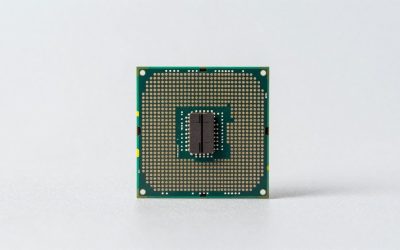
Thinking about playing Prodeus on PC and wondering what hardware you actually need? Prodeus launched on September 23, 2022, as a fast, retro-styled first-person shooter, and it is one of the lightest games of its kind to run. The official requirements ask for nothing more than a GTX 580 or an HD 7870, 2 GB of RAM and 4 GB of free space, which means the large majority of gaming PCs built over the past decade can play it without any changes at all. This guide breaks down the official PC requirements for Prodeus, the graphics cards that make sense at each resolution, and complete build recommendations if you want a machine that also handles much newer games.
As an Amazon Associate we earn from qualifying purchases at no extra cost to you.


Our Top Picks
 ASUS SFF-Ready Prime NVIDIA GeForce RTX 5070 GraphicsRTX507012 x 5 x 2 inches3.3 poundsCheck on Amazon


Top 3 picks at a glance
How Demanding Is Prodeus?
Not very. Prodeus is a retro-styled shooter with deliberately chunky pixel visuals, and its official minimum specification is built around graphics cards from 2010–2012 — an NVIDIA GTX 580 or an AMD HD 7870 — alongside a quad-core CPU running at 2 GHz, 2 GB of RAM, DirectX 9 and 4 GB of storage. The recommended tier is just as modest: a GTX 1050 or RX 560, a 3 GHz eight-core processor, 6 GB of RAM and DirectX 10. In practice that means any desktop or laptop with a dedicated GPU from the last several years runs Prodeus comfortably, and even the integrated graphics on a recent laptop chip can manage it at reduced settings. Because it is a fast-paced shooter where quick aiming and reaction time matter, the goal is a high, stable frame rate rather than maximum visual fidelity — and reaching a high frame rate here is genuinely easy. Even at 4K, Prodeus does not need a flagship card; a modern mid-range GPU is more than enough. The figures below are the official published requirements; check the game’s store page if you want to see them at the source.
Prodeus Official PC System Requirements
| Component | Minimum (official) | Recommended (official) |
|---|---|---|
| OS | Windows 7+ | Windows 7+ |
| Processor | CPU @ 2+ GHz, 4 cores | CPU @ 3+ GHz, 8 cores |
| Memory | 2 GB RAM | 6 GB RAM |
| Graphics | NVidia GTX 580 or AMD HD 7870 | NVidia GTX 1050 or AMD RX 560 |
| DirectX | Version 9.0 | Version 10 |
| Storage | 4 GB available space | 4 GB available space |
Source: the official Prodeus Steam store listing (app 964800), checked October 2026. Publishers can update these specs after patches.
These are the developer’s own published figures for Prodeus, and they are the numbers worth trusting when you judge whether a PC can run the game.
Best GPU for Prodeus by Resolution
1080p
At 1080p the official recommended card — a GTX 1050 or RX 560 — is already enough to run Prodeus, and anything newer holds a high frame rate without effort. The AMD Radeon RX 7600 (or a comparable current card such as an RTX 5060) sits far above that line, so it will run Prodeus at 1080p with every setting turned up while leaving plenty of headroom for heavier games. If you already own a GTX 1650, an RX 570 or anything similar, you do not need to change a thing for this game.
1440p
1440p is still comfortable territory for Prodeus. Cards as old as a GTX 1060 or RX 580 can handle this game at 1440p with sensible settings, and a modern mid-range GPU such as the RX 9060 XT or RTX 5060 pushes 1440p at high refresh rates with room to spare. The NVIDIA GeForce RTX 4070 SUPER is well beyond what Prodeus needs — it makes sense if you want one card that also carries you through demanding newer releases at this resolution.
4K
Prodeus is not a demanding 4K game. Its simple geometry and pixel-art textures mean a mid-range modern card — an RTX 5060 or RX 9060 XT, for example — can run it at 4K without strain, and even older high-end cards from the GTX 1080 era cope well with a few settings reduced. The NVIDIA GeForce RTX 4070 Ti SUPER is far more than this game requires, so pick a card in that class only if 4K gaming across the board is your goal.
CPU, RAM and Storage for Prodeus
Prodeus is not a CPU-heavy game. The official minimum is a quad-core processor at 2 GHz and the recommended is an eight-core at 3 GHz, which covers almost every desktop CPU released in the past decade — an older Ryzen 5 2600, a Core i5-8400 or anything newer will not hold this game back. If you happen to be building a new PC anyway, the AMD Ryzen 5 7600 is an excellent all-round gaming choice, the AMD Ryzen 7 7800X3D is one of the fastest mainstream gaming CPUs you can buy, and Intel fans can look at the Intel Core i5-14600K — all three are far above what Prodeus itself asks for.
Memory is just as undemanding. Prodeus lists 2 GB at minimum and 6 GB at recommended, so 8 GB is a practical baseline and 16 GB is plenty for the game plus a modern operating system and a browser in the background. Larger kits such as the Corsair Vengeance DDR5 32GB are worth considering for a general-purpose gaming PC rather than for this game specifically. Storage follows the same pattern: the install is only 4 GB, so a SATA SSD is more than fast enough, though a fast NVMe drive like the Samsung 990 Pro 2TB NVMe SSD keeps load times short and leaves room for a large library.
Recommended PC Builds for Prodeus
Every build below exceeds the official Prodeus requirements by a wide margin. They are meant as general-purpose gaming PCs that also run far heavier games, because a machine built strictly around this game’s requirements would be cheap and very old.
1080p budget build: AMD Radeon RX 7600 + AMD Ryzen 5 7600 + 16 GB DDR5 — well beyond the official recommended spec, and enough for high-refresh 1080p in Prodeus with settings turned up.
1440p sweet-spot build: NVIDIA GeForce RTX 4070 SUPER + AMD Ryzen 7 7800X3D + 32 GB DDR5 + 2TB NVMe SSD — a strong 1440p machine for modern games; Prodeus will run on it at very high frame rates with everything maxed.
4K high-end build: NVIDIA GeForce RTX 4070 Ti SUPER + AMD Ryzen 7 7800X3D + 32 GB DDR5 + fast NVMe SSD — aimed at 4K across the board. Prodeus is nowhere near the hardest thing this build can run.
Is It Worth Upgrading Your PC for Prodeus?
Probably not on Prodeus’s account alone. The game’s official minimum hardware is more than a decade old and its recommended spec is a GTX 1050 or RX 560 with 6 GB of RAM, so if your PC runs most games released in the last few years, it can already run Prodeus. If you are upgrading regardless, the graphics card still delivers by far the biggest jump in gaming performance, so that is the part to change first; a mid-range CPU from the last few years is more than enough here. Extra memory and an SSD are cheap quality-of-life upgrades for a modern PC, but neither is required by this game — 8 GB of RAM and a SATA SSD already cover the official recommendation. The better reason to upgrade is wanting high refresh rates at 1440p or 4K in newer titles, with Prodeus simply benefiting as a side effect.
Can You Play Prodeus on a Laptop or Handheld?
Yes, and this is one of the easiest games to run on portable hardware. A laptop with any recent dedicated GPU — even a modest GTX 1050-class chip, which is the official recommended card — handles Prodeus at 1080p, and newer integrated graphics on a recent laptop chip can manage it at reduced settings. Handhelds such as the Steam Deck and the ROG Ally run Prodeus comfortably at high settings, and the 4 GB install means it takes up very little space. If portability matters, prioritise a device with a reasonable GPU and keep the game on the internal SSD, though a microSD card is fine given how small the install is. Expect shorter battery life and more fan noise than a desktop, as with any gaming session on a laptop.
How to Boost FPS in Prodeus
If frame rates are lower than you would like, the single biggest gain usually comes from lowering the internal resolution or render scale, if the game exposes such an option, before touching anything else. After that, reduce the effects-heavy settings — shadow quality, particle and volumetric effects, and post-processing — and leave textures high, since Prodeus’s assets are small and light on VRAM. Keep your GPU drivers up to date, close background applications, and install the game on an SSD if load times bother you. On a light game like this, capping the frame rate to match your monitor’s refresh rate also keeps frame pacing consistent, which feels smoother than an uncapped, fluctuating frame rate.
Graphics Settings That Matter Most in Prodeus
If Prodeus is not hitting your target frame rate, shadow quality, particle and effects density, anti-aliasing and any post-processing options are usually the heaviest things to lower, and dropping the internal resolution or render scale gives the largest single gain.
Texture quality can stay high on almost any card, because Prodeus’s retro-styled assets are small. If your GPU driver offers an upscaling option, or the game exposes a resolution scale slider, use that to recover performance before reducing the output resolution. On a game this light, most of these changes are only necessary on older or integrated graphics.
Frequently Asked Questions
Can my PC run Prodeus?
The official minimum is a GTX 580 or AMD HD 7870 graphics card, a 2 GHz quad-core CPU, 2 GB of RAM, DirectX 9 and 4 GB of storage space, so almost any gaming PC from the last decade can run Prodeus. For the recommended experience — a GTX 1050 or RX 560, a 3 GHz eight-core CPU and 6 GB of RAM — you need very little by modern standards, and most systems built in the last five or six years already exceed it.
Is Prodeus demanding on PC?
No. Prodeus is a very light game. Its official minimum specification is built around hardware from 2010–2012, and even the recommended tier is a modest entry-level graphics card. Any recent budget gaming PC will run it well, and older machines often will too.
What GPU do I need for Prodeus at 1440p 60fps?
Very little. A GTX 1050 or RX 560 — the official recommended card — is already enough for 1080p, and something like a GTX 1660 Super, an RX 6600 or any current budget card handles 1440p at 60fps or higher with settings turned up. A NVIDIA GeForce RTX 4070 SUPER-class card is far more than this game needs; it makes sense if you want headroom for demanding newer titles at the same resolution.
How much RAM does Prodeus need?
Prodeus lists 2 GB as the minimum and 6 GB as the recommended amount of system memory. In practice, 8 GB is a sensible baseline for a modern Windows system and 16 GB is comfortable, but the game itself will not use anything close to that. There is no need to buy faster memory specifically for Prodeus.
Do I need an SSD for Prodeus?
No. Prodeus only needs 4 GB of storage space and runs fine from a mechanical drive; an SSD simply shortens load times. If you are buying storage anyway, an NVMe drive like the Samsung 990 Pro is a good general-purpose choice for a modern gaming PC, but it is not a requirement for this game.
Related guides
More from Amazon
Programs that pair well with the guide above. Offers and eligibility are set by Amazon and may change.
A free business account with business pricing and bulk-buying tools for work, shop or home office.
Create a business accountFree shipping on eligible items, Prime Video and more. Eligible new members can start with a free trial.
Start a Prime free trialAudiobooks and podcasts to listen to on the go. Eligible new members can start with a free trial.
Try Audible freeAd-free music streaming. Eligible new subscribers can start with a free trial.
Try Music Unlimited freeAs an Amazon Associate we earn from qualifying purchases.