
Designing a functional, comfortable home office or entertainment hub requires balancing performance with physical living conditions. When upgrading your storage setup, evaluating pcie 30 vs pcie 40 nvme real world speed comes down to how your computer operates within your personal living space. Synthetic benchmarks often highlight extreme numbers, but daily productivity, acoustic comfort, surface heat, and power consumption paint a much more practical picture for home users.
PCI Express (PCIe) Generation 3.0 and Generation 4.0 NVMe solid-state drives differ dramatically on paper, doubling theoretical maximum throughput from roughly 3,500 MB/s to 7,500 MB/s. However, when integrated into a home workstation, living room console setup, or compact desk rig, the real-world performance delta depends heavily on your specific daily tasks, room ventilation, and thermal tolerances.
As an Amazon Associate we earn from qualifying purchases at no extra cost to you.


Top 3 picks at a glance
Quick Verdict
For standard home offices, remote web work, basic media streaming, and casual gaming, a PCIe 3.0 NVMe SSD delivers virtually identical daily responsiveness compared to PCIe 4.0 while generating significantly less ambient heat and drawing lower wattage. However, if your home setup centers around heavy 4K/8K video editing, local network storage hosting, modern console expansion, or high-bandwidth multi-tasking, PCIe 4.0 is the clear winner. Its elevated transfer speeds save noticeable time during massive file operations, provided your PC case or console accommodates the extra heat dissipation required.
Side by Side
| Feature | PCIe 3.0 NVMe SSD | PCIe 4.0 NVMe SSD |
|---|---|---|
| Comfort | Low heat output (40°C–55°C); keeps quiet desk setups cool and silent. | Higher thermal output (55°C–75°C); requires passive heatsinks or high-airflow fans. |
| Durability | High sustained write lifespan due to lower operating temperatures. | Excellent endurance ratings, but aggressive thermal throttling if uncooled. |
| Price Range | $25 – $120 depending on capacity (1TB–2TB). | $45 – $560 depending on speed grade and heatsink build. |
| Maintenance | Minimal; rarely needs dedicated heatsinks or thermal pad replacements. | Moderate; requires dusting heat sinks and ensuring clear case airflow paths. |
| Space Needed | Standard M.2 2280 form factor; slim profile fits ultrabooks easily. | Standard 2280 or compact 2230 (30mm); often requires 10mm–15mm vertical heatsink space. |
| Look | Clean, unobtrusive black or green bare PCB design. | Industrial look with aluminum cooling fins, heat pipes, or RGB covers. |
| Resale | Moderate resale demand for legacy desktop upgrades and budget builds. | High demand across modern motherboards, workstations, and gaming consoles. |
| Best For | Silent home offices, budget-conscious setups, secondary storage drives. | High-performance workstations, media production suites, modern gaming hubs. |
Where Pcie 30 Wins
In a home environment where noise levels, energy draw, and overall thermal output matter, PCIe 3.0 drives hold a distinct operational advantage. Operating at average active power consumption levels between 2.5W and 4.5W, Gen 3 drives generate far less waste heat. This makes them ideal for fanless desktop builds, compact home theater PCs (HTPCs), or quiet study nooks where high-RPM fan noise creates unwanted background distraction.
When assessing pcie 30 vs pcie 40 nvme real world speed in daily applications like booting Windows, opening web browsers, launching word processors, or playing back 1080p stream archives, the human eye cannot detect the millisecond differences. PCIe 3.0 drives achieve sequential read speeds up to 3,500 MB/s and random access times under 0.1 milliseconds. Because typical desktop app launch files are composed of hundreds of tiny, scattered files rather than single massive archives, queue depths remain low, equalizing performance between generations.
Economically, PCIe 3.0 offers exceptional value per gigabyte. For non-critical backup drives, family photo vaults, or standard home office rigs, choosing Gen 3 frees up budget for home office essentials like ergonomic seating, monitor arms, or upgraded desk lighting without sacrificing perceptible system speed.
Where Pcie 40 Nvme Real World Speed Wins
Where PCIe 4.0 truly excels is in high-throughput productivity and heavy content creation environments. If your home office double-functions as a video editing studio, transferring a 100GB uncompressed video folder on a PCIe 3.0 drive takes roughly 35 to 45 seconds. On a top-tier PCIe 4.0 drive running at 7,450 MB/s, that same transfer finishes in under 15 seconds. Over a full working week, these time savings accumulate rapidly.
Modern home entertainment hubs also rely heavily on PCIe 4.0 standards. Game consoles like the PlayStation 5 mandate Gen 4 storage to handle instant asset streaming during gameplay. High-capacity drives built for these systems, such as the MOVE SPEED HB7450 2TB SSD for PS5 with Heatsink TLC NAND, PCIe 4.0 NVMe M.2 Internal Solid State Drive – Up to 7450MB/s, 3D Storage Expansion Compatible with PS5, Desktops and Laptops ($279.99), offer the massive bandwidth needed to eliminate load screens. For users storing entire digital media libraries locally, enterprise-class options like the MOVE SPEED HB7450 4TB Internal Solid State Drive for PS5 with Heatsink TLC NAND, PCIe 4.0 NVMe M.2 SSD- Up to 7450MB/s, 3D NAND Storage Expansion Compatible with PS5, Laptops and Desktops ($559.99) provide vast, high-speed storage that ensures smooth playback across home network shares.
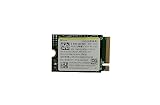
Even small-form-factor devices benefit when designed for Gen 4 spec. Compact drives like the OEM Hyn PVC10 256GB M.2 PCI-e GEN 4X4 NVME SSD Internal Solid State Drive 30mm 2230 Form Factor M Key Steam Deck ($59.45) fit into tight handhelds and ultra-compact desktop units, providing high bandwidth in an extremely small physical footprint. When mounting graphics cards in customized aesthetic desk cases, pairing your drive setup with a reliable extension like the 30cm 90Degree PCI-e 4.0 X16 Riser Cable for PCIe GeForce RTX30/40 GPU Card ($32.99) ensures full Gen 4 channel bandwidth remains stable without signal degradation across your build.
Cost Over 5 Years
When calculating the true cost of ownership over a five-year lifespan, consider both purchase price and peripheral system requirements. PCIe 3.0 drives carry a lower initial outlay, ranging from $25 for entry 500GB models to $120 for 2TB variants. Because they operate at lower temperatures, they do not require extra thermal hardware, saving an additional $10 to $20 per drive slot.
PCIe 4.0 drives carry higher initial costs, ranging from $45 for entry-level 500GB models to well over $500 for high-end 4TB solutions. Additionally, Gen 4 drives under continuous load draw 6W to 9W of power. Over five years, the direct electrical cost difference is minimal (less than $5 total on a typical residential power bill), but the extra thermal energy released into small rooms requires effective cooling. To maintain peak performance without throttling down to Gen 3 speeds, a Gen 4 drive frequently requires a dedicated aluminum heatsink or active chassis ventilation, adding slight peripheral cooling costs.
However, from a longevity standpoint, purchasing PCIe 4.0 hardware ensures complete compatibility with upcoming software architectures, DirectStorage game APIs, and modern motherboard standards well into 2026 and beyond.
Which One for Your Home
Small Apartment
In a compact apartment studio where your desk sits near your sleeping area or main living room, controlling thermal dissipation and fan noise is paramount. A PCIe 3.0 drive is ideal here for general desktop work. It keeps your computer system cool, allows passive cooling without spinning up loud case fans, and consumes minimal power. If you do require PCIe 4.0 for high-res video rendering, opt for a model equipped with a thick passive aluminum heatsink to absorb heat spikes silently.
Family with Kids/Pets
Busy family homes often mean desktop computers sit under desks where dust, pet hair, and restricted airflow are common. PCIe 3.0 drives thrive in these environment because their lower operating temperature threshold reduces thermal stress even when case airflow isn’t optimal. If equipping a family room entertainment center or gaming console with PCIe 4.0, ensure the drive features a robust integrated heatsink and perform periodic dust maintenance on the intake vents every six months.
Rental
For renters who frequently relocate or modify their desk layouts based on available space, versatility is key. PCIe 3.0 SSDs offer maximum compatibility across older and newer desktop PCs, mini PCs, and external enclosure setups without requiring specialized motherboard heat spreaders. They provide a hassle-free, plug-and-play storage upgrade that won’t strain thermal limits in variable room climates.
Long-Term Home
If you own your home and are building a dedicated home office, custom workstation, or long-term media server built to last five or more years, invest in PCIe 4.0. The higher bandwidth headroom guarantees your system handles high-bitrate home video editing, local network backups, and advanced software suites effortlessly without creating storage bottlenecks as asset sizes continue to grow.
FAQ
Will a PCIe 4.0 SSD work in a PCIe 3.0 slot on my home PC?
Yes. PCIe standards are fully backward compatible. A PCIe 4.0 NVMe drive will work in a PCIe 3.0 motherboard slot, but its transfer speeds will be capped at the PCIe 3.0 maximum rate of roughly 3,500 MB/s. It will, however, run cooler and draw slightly less power when capped at these lower speeds.
Do I need an active cooling fan for a PCIe 4.0 NVMe drive?
Most home users do not need a dedicated active fan directly on the SSD. A passive metal heatsink paired with standard computer case airflow is sufficient to keep a PCIe 4.0 drive under its 70°C throttling threshold during typical desktop use and gaming sessions.
Can I notice the real-world speed difference in daily browsing and document editing?
No. For everyday tasks such as opening web browsers, writing documents, streaming music, or managing spreadsheets, the real-world speed difference between PCIe 3.0 and PCIe 4.0 is unnoticeable. Both drive types offer sub-millisecond access times that make operating systems feel instantaneous.
Is PCIe 4.0 necessary for home gaming consoles like the PS5?
Yes. Modern game consoles require PCIe 4.0 NVMe drives meeting minimum sequential read speed requirements (typically 5,500 MB/s or higher) to support rapid asset streaming and eliminate in-game loading screens. PCIe 3.0 drives are not compatible for primary storage expansion on these platforms.


