If you are sitting on terabytes of photos, video projects, or a lifetime of files you never want to lose, at some point you hit the question professionals have wrestled with for decades: is magnetic tape a smarter cold-storage archive than a shelf of hard drives? LTO tape sounds exotic, but it has real advantages, and real catches, for the home archivist.
As an Amazon Associate we earn from qualifying purchases at no extra cost to you.


Our Top Picks


Top 3 picks at a glance
What LTO tape is
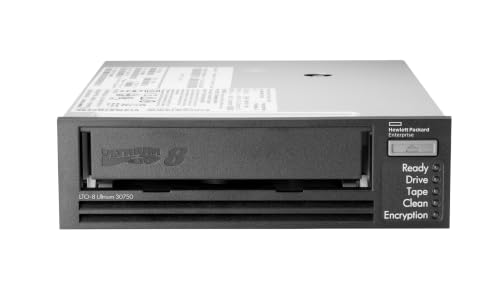
LTO (Linear Tape-Open) is an enterprise tape format used for backup and archival. Each cartridge stores a large amount of data (modern generations hold many terabytes of native capacity), costs relatively little per terabyte, and can survive on a shelf for decades if stored properly. The catch is that you need an LTO drive to read and write the cartridges, and those drives are expensive.
The core trade-off: media cost vs drive cost
Hard drives bundle the mechanism and the media together: buy a drive, and you can read it on any computer with a USB dock. Tape splits them apart. The cartridges are cheap per terabyte, but the drive is a large upfront investment, often several times the price of the storage itself. That math only tips in tape’s favor once you are archiving a very large amount of data, spreading the drive cost across many cartridges.
| Factor | LTO tape | Hard drives |
|---|---|---|
| Media cost per TB | Low | Moderate |
| Upfront hardware | High (tape drive) | Low (a USB dock) |
| Shelf life (cold) | 15-30 years rated | ~5-10 years typical |
| Access convenience | Sequential, slower to reach | Random, instant |
| Best at scale | Tens of TB and up | Small to moderate |
Longevity and the offline advantage
Tape’s biggest strengths for archiving are shelf life and true offline storage. A cartridge sitting in a case is immune to ransomware, accidental deletion, and power surges because it is not plugged into anything. Its rated archival life of 15 to 30 years comfortably beats the practical shelf life of an unpowered hard drive, whose lubricants and bearings can degrade and whose data retention is less certain over a decade.
Where hard drives win
Hard drives are simply easier. There is no special drive to buy, no sequential winding to reach a file, and any computer can read them. For most home users with a few terabytes to protect, two or three hard drives rotated and stored in different locations are cheaper overall and far more convenient than a tape setup. Random access also means you can restore a single file in seconds rather than spooling through a cartridge.
Who should actually consider tape
Tape makes sense when you are archiving very large, largely static datasets, think a videographer with tens of terabytes of finished projects, and you value decades of offline shelf life. Below roughly 20 to 40 TB, the tape drive cost is hard to justify, and hard drives (or a mix of drives plus cloud) win on total cost and simplicity. Whatever you choose, keep at least two copies; a single archive on any medium is a gamble.
Frequently asked questions
Can I just plug an LTO drive into my PC like a hard drive?
Not quite. LTO drives typically use SAS or Fibre Channel interfaces, so you need a compatible host bus adapter card, plus archival software to manage cartridges. It is more involved than a USB hard drive dock. This complexity is part of why tape suits dedicated archivists rather than casual backups.
Is tape safer than hard drives against ransomware?
Yes, when the cartridge is stored offline. Because a shelved tape is physically disconnected, malware cannot reach it, giving you a true air-gapped copy. A hard drive left permanently plugged in offers no such protection, though a drive you disconnect and store offline provides a similar air gap at smaller scale.
Bottom line
LTO tape offers cheap per-terabyte media, decades of shelf life, and unbeatable offline safety, but the expensive drive and sequential access only pay off at large scale. For most home archives of a few terabytes, rotated hard drives kept in separate locations, ideally paired with a cloud copy, are cheaper and far more convenient. Reserve tape for tens of terabytes of static data you must keep for the long haul.
Related guides
More from Amazon
Programs that pair well with the guide above. Offers and eligibility are set by Amazon and may change.
A free business account with business pricing and bulk-buying tools for work, shop or home office.
Create a business accountFree shipping on eligible items, Prime Video and more. Eligible new members can start with a free trial.
Start a Prime free trialAudiobooks and podcasts to listen to on the go. Eligible new members can start with a free trial.
Try Audible freeAd-free music streaming. Eligible new subscribers can start with a free trial.
Try Music Unlimited freeAs an Amazon Associate we earn from qualifying purchases.