This review analyzes published product information. We have not performed detailed research of this unit.
As an Amazon Associate, we earn from qualifying purchases.
A CPU choice that starts with the rest of your build
The Intel Core i5-14400F is listed as a desktop processor with 10 cores, 16 threads and a maximum frequency of up to 4.7 GHz. Those headline specifications are only part of the buying decision. For a gaming PC, the more consequential details may be its requirement for discrete graphics, its support for DDR4 and DDR5 memory, and the motherboard compatibility checks needed before installation.
This review is a specification-based assessment of the i5-14400F configuration supplied with Intel’s RM1 thermal solution. It is not a hands-on test, and the retailer listing does not establish gaming frame rates, sustained clock speeds or cooling noise. The useful question is therefore whether its documented configuration fits your planned system—not how it ranks in benchmarks that are absent from the evidence.
The supplied specifications at a glance
| Item | Listed specification |
|---|---|
| Processor | Intel Core i5-14400F desktop processor |
| Core configuration | 10 cores: 6 performance cores and 4 efficiency cores |
| Threads | 16 |
| Maximum frequency | Up to 4.7 GHz |
| Cache | 20 MB; cache level not specified in the supplied listing |
| Motherboard compatibility | Intel 600-series, potentially requiring a BIOS update, and 700-series chipset-based boards |
| Memory support | DDR4 and DDR5 |
| PCIe support | PCIe 5.0 and 4.0 |
| Included thermal solution | RM1 |
| Graphics requirement | Discrete graphics required |
| Power specifications | Not supplied |
What the hybrid core layout does—and does not—tell you
The six-performance-core, four-efficiency-core split is important because this is not a processor with ten identically described cores. Intel’s listing presents the hybrid architecture as a way to prioritize and distribute workloads across two core microarchitectures. For someone gaming while keeping other applications open, that is a relevant design characteristic. It is not, by itself, proof of a particular improvement in responsiveness or game performance.
The 16-thread specification gives another concrete description of the processor’s execution resources, but it cannot establish how a particular game will use them. Likewise, the advertised 4.7 GHz figure is an upper frequency claim, not a promise that every core will run at that speed continuously. The evidence supplies neither base frequencies nor separate performance-core and efficiency-core frequency ranges.
There is also an ambiguity worth flagging: the retailer describes the frequency using an unlocked designation without supplying any supporting overclocking details. That wording is not a sound basis for treating this exact chip as an overclocking purchase. If multiplier controls or manual tuning are central to your build, confirm those capabilities independently before committing. This assessment does not count that ambiguous wording as a benefit.
Motherboard and memory decisions need to be made together
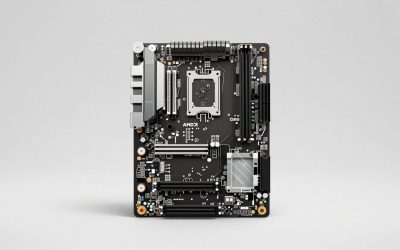
The listing identifies Intel 600-series and 700-series chipset-based motherboards as compatible, while explicitly warning that a 600-series board may need a BIOS update. That makes an existing motherboard a possible upgrade foundation, but not an automatically ready one. Check the exact board’s processor support information and required firmware before removing your current CPU or assembling a new system.
A firmware requirement can affect the installation plan, not just the shopping list. Establish how your chosen board receives its update before assuming you can install the i5-14400F and immediately boot. The supplied evidence does not identify individual motherboard models, minimum BIOS versions or update methods.
DDR4 and DDR5 support provides two memory-platform paths at the processor level. It should not be interpreted as a guarantee that any compatible motherboard accepts both memory types. Match the memory to the specific board. If retaining existing RAM is part of the upgrade strategy, verify that match first rather than selecting a board from its chipset name alone.
The listing also states PCIe 5.0 and 4.0 support. That is useful platform information, but it does not document lane counts, slot wiring or how a particular board divides connectivity between graphics and storage. Buyers planning several expansion devices should examine the motherboard layout instead of assuming the CPU’s PCIe generation support describes every slot.
Discrete graphics is a requirement, not an optional upgrade
The clearest configuration constraint is that discrete graphics is required. This processor is therefore not suitable for a plan that relies on the CPU alone to provide graphics. A build intended to postpone the graphics-card purchase needs that dependency resolved before this chip makes sense.
For a gaming system already planned around a separate graphics card, the requirement may be straightforward to accommodate. It still matters for the total component plan and for expectations about getting the machine running. Our 1440p gaming graphics-card guide offers a separate starting point for that part of the build; the CPU specifications here do not establish a measured performance match with any particular GPU.
The included cooler helps planning, but power remains unspecified
An RM1 thermal solution is included in this configuration, giving buyers a documented cooling component to account for in the initial build. That is a practical benefit over an unspecified cooler bundle. However, inclusion alone does not demonstrate quiet operation, temperature headroom or sustained performance under a particular workload.
The evidence supplies no processor power limits, measured consumption or cooler noise data. It is consequently insufficient for a firm power-supply recommendation or a conclusion about whether an aftermarket cooler would be worthwhile. Before finalizing a compact or noise-sensitive system, confirm the processor’s power specifications and the cooling arrangement’s fit with the chosen motherboard and case.
Frequently asked questions
Can the Core i5-14400F boot without a graphics card?
No, the article states that discrete graphics is required for this processor. A system intended to use the CPU alone for graphics is therefore not suitable. Buyers planning to delay purchasing a graphics card need to resolve that dependency before choosing this processor. A separate graphics card should be included in the build plan from the beginning.
Will the Core i5-14400F work with any Intel 600-series motherboard?
Not necessarily, because a 600-series motherboard may require a BIOS update before it supports the processor. The article does not identify specific motherboard models, minimum BIOS versions or update methods. Check the exact board’s processor support information and confirm how it receives firmware updates before assuming the system will boot immediately after installation.
Can one motherboard use both DDR4 and DDR5 memory with this processor?
No, the processor’s support for DDR4 and DDR5 does not mean that one motherboard accepts both memory types. Those are two possible memory-platform paths at the processor level. Match the memory to the specific motherboard, and verify compatibility first if retaining existing RAM is part of the planned upgrade.
Does the listed 4.7 GHz frequency mean the processor will always run at that speed?
No, 4.7 GHz is described as an upper frequency claim rather than a promise of continuous operation at that speed on every core. The supplied evidence does not provide base frequencies or separate performance-core and efficiency-core frequency ranges. It also does not establish sustained clock speeds under a particular workload.
Is the Core i5-14400F an unlocked processor for overclocking?
The article does not establish that it is suitable for overclocking. Although the retailer uses an unlocked designation, it supplies no supporting overclocking details, and the assessment does not count that wording as a benefit. If multiplier controls or manual tuning matter to the build, confirm those capabilities independently before purchasing this exact configuration.
Verdict: sensible to shortlist when the platform details align
The i5-14400F merits consideration for a discrete-GPU build needing its listed six-performance-core, four-efficiency-core configuration, with a choice of DDR4- or DDR5-based motherboard platforms and an included RM1 thermal solution. Its strongest documented advantages are configuration flexibility and a clearly identified core layout—not unverified gaming results. Confirm BIOS readiness, memory compatibility and power requirements, and do not base the purchase on the listing’s unsupported unlocked designation.
Sources: Supplied retailer listing for the Intel Core i5-14400F. Specifications and included-component statements above are listing claims, not independently measured findings.
Check the exact product and current offer on Amazon