
A cutting board that looks clean can still harbor Salmonella and E. coli deep inside knife scars. The effectiveness of any disinfection routine depends on the material: non-porous surfaces tolerate bleach solutions and dishwasher heat without degrading, while heavily scored or porous boards trap moisture in grooves that scrubbing never fully reaches.
The eight options below span titanium, high-density polyethylene, hybrid composites, and a resurfacing tool. What separates strong performers from weak ones in a disinfection context is whether the surface can be sanitized repeatedly without the board itself being destroyed within a year. Price and size matter, but the core question is whether you can actually kill what grows on the surface and still trust the board to remain functional afterward.
As an Amazon Associate we earn from qualifying purchases at no extra cost to you.

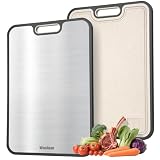


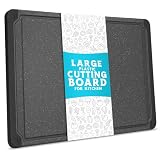

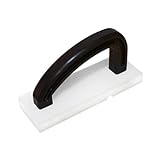
Top 3 picks at a glance
Quick Picks
| Product | Best for | Price |
|---|---|---|
| Yoshihiro Hi Soft | Cooks wanting a low-porosity wood-hybrid finish | $124.99 |
| Washour Titanium | Maximum surface sanitation speed | $19.99 |
| OXO Good Grips Utility | Small-space dishwashable prep | $20.59 |
| Smart Cutting Board and Knife Set | Color-coded separation of protein types | $78.98 |
| OXO Good Grips 2-Piece | Reversible surfaces with juice containment | $27.95 |
| Large 18-Inch Reversible Plastic | High-volume prep with dishwasher sanitization | $19.99 |
| Fotouzy Flexible Set of 4 | Budget multi-board hygiene separation | $9.99 |
| DimyFew Cutting Board Refinisher | Rescuing deeply scored boards from the trash | $27.99 |
How We Picked
We compared published material specs, dishwasher-safety ratings, and owner-reported durability over extended daily use. The four criteria we weighed: surface porosity (how deeply bacteria embed), cleanability by dishwasher or bleach without warping, resistance to knife scoring over months, and value relative to the listed price. A board that requires replacement after six months defeats the purpose of sanitizing it.
The 8 Best How To Disinfect Cutting Board in 2026
Yoshihiro Hi Soft High Performance Cutting Board (Medium)
For cooks who want a hybrid polyethylene-wood surface that accepts a dilute hydrogen-peroxide or vinegar wipe-down without absorbing liquid into its fibers. The material sits in a rare middle ground between traditional wood and full plastic.
- Pro: Low porosity compared to solid wood keeps knife grooves shallow and easier to sanitize between uses.
- Pro: Gentle enough on premium Japanese knife edges to avoid micro-chipping.
- Con: At $124.99, this costs roughly six times a functional HDPE board, and it cannot go in a dishwasher, limiting disinfection to manual wiping only.
Skip if you want a board you can sanitize with heat or bleach without anxiety.
Washour Titanium Cutting Board 16″ x 11″
A thin, non-porous titanium sheet that wipes clean with a spray of kitchen disinfectant and a paper towel. Titanium’s lack of surface pores means bacteria cannot lodge inside the material, making this the closest a home kitchen gets to a lab-bench sanitization profile.
- Pro: Completely non-absorbent; bleach, hydrogen peroxide, and dishwasher heat all work without degrading the surface.
- Pro: Resists knife scoring far longer than soft plastics, keeping the sanitizeable area smooth over months of daily use.
- Con: The hard surface dulls blades noticeably faster than wood or HDPE, requiring frequent honing.
Skip if knife-edge retention matters more than sanitization speed.
OXO Good Grips Plastic Utility Cutting Board
A compact HDPE surface with a non-slip rubber border. Its small footprint means it fits inside a standard dishwasher for a high-heat sanitizing cycle, which is the simplest home disinfection route available.
- Pro: Top-rack dishwasher safe, allowing a heated detergent cycle that kills most pathogens without manual scrubbing.
- Pro: Rubber edges prevent sliding during prep, reducing cross-contamination from unexpected board movement.
- Con: Too small for chopping whole vegetables or breaking down poultry, limiting its role to garnish and single-portion tasks.
Skip if you need one board that handles a full meal prep session.
Smart Cutting Board and Knife Set with 4 Stainless Steel Knives
This bundle claims a “self-cleaning” mechanism via UV light. The color-coded boards let you dedicate one to raw protein and sanitize it separately from produce surfaces, which is the practical disinfection strategy most food-safety guides recommend.
- Pro: Four color-coded HDPE boards reduce cross-contamination by physically separating raw-meat surfaces from ready-to-eat surfaces.
- Pro: All included boards are dishwasher safe for heat-based disinfection cycles.
- Con: The $78.98 bundle price obscures per-board cost, and UV “self-cleaning” claims lack published microbial-reduction data.
Skip if you want disinfection you can verify without trusting proprietary marketing terms.
OXO Good Grips 2-Piece Plastic Cutting Board Set
Two reversible HDPE boards with juice grooves on one face and a flat surface on the other. Double-sided design lets you flip to a cleaner face mid-session without re-washing, a practical form of contamination control between raw and cooked tasks.
- Pro: Top-rack dishwasher safe; a sanitize cycle kills residual bacteria on both faces without warping.
- Pro: Juice grooves contain liquid runoff, preventing contaminated pools from spreading to adjacent counter surfaces.
- Con: Two boards is still limited for a household that regularly handles raw poultry and produce without dedicated separation.
Skip if you cook raw and ready-to-eat items simultaneously on a regular basis.
Large Plastic Cutting Board 18-Inch Reversible
A no-frills HDPE slab with generous surface area. Size matters for disinfection in one specific way: a board large enough to keep prepped items away from the edges reduces the chance that pathogens migrate off the board onto your countertop during transfer.
- Pro: Dishwasher safe on a standard upper rack for heat sanitization without manual effort.
- Pro: Reversible design extends usable life and provides a fresh face when one side becomes scored.
- Con: At 18 inches it does not fit most sink basins for soaking, and the lack of a handle makes it awkward to carry wet.
Skip if your dishwasher rack or counter space is genuinely limited.
Fotouzy Flexible Plastic Cutting Boards Set of 4
Under ten dollars for four BPA-free flexible boards. The cheapest entry point for households wanting a dedicated surface per food group. Flexibility lets you scoop chopped food directly into a pot without dragging across a rigid edge, reducing surface contact where bacteria transfer.
- Pro: Four boards let you assign one per protein type and sanitize each independently after use.
- Pro: Full dishwasher compatibility allows simultaneous heat disinfection of all four boards in one cycle.
- Con: Thin flexible material scores quickly under heavy chopping, and deeply scratched surfaces become genuinely harder to disinfect because bleach cannot reach groove bottoms.
Skip if you do heavy vegetable or bread work that leaves deep cuts within weeks.
DimyFew Cutting Board Refinisher Chopping Board Planer
Not a cutting board but a planing tool that shaves a thin layer off a scarred HDPE or composite surface, exposing uncontaminated material underneath. For disinfection purposes this is the last resort: when grooves have become too deep for bleach to reach, removing the top millimeters restores a flat, sanitizeable surface.
- Pro: Converts a board you would otherwise discard into a clean-slated tool, eliminating embedded bacterial reservoirs.
- Pro: Handle grip and adjustable depth make it usable one-handed without clamping to a workbench.
- Con: Only works on boards thick enough to survive repeated planing; a paper-thin plastic board has no material left to shave.
Skip if your current boards are already near minimum thickness.
Buying Guide
Material Determines Your Disinfection Ceiling
Non-porous materials like titanium and HDPE accept bleach, hydrogen peroxide, and hot-water dishwasher cycles without damage. Wood and wood hybrids resist sanitization: the fibers absorb cleaning agents, and repeated moisture contact causes cracking that creates new bacterial reservoirs. If disinfection reliability is your priority, the material choice should come before size or brand.
Thickness Controls How Often You Can Resurface
Every time knife grooves become deep enough to trap moisture, disinfection efficacy drops regardless of cleaning method. A board that is at least a half-inch thick gives you several refinisher passes before it becomes too thin to use. Boards sold as “flexible” or “thin” usually cannot be salvaged once scored, making them disposable rather than maintainable.
Dishwasher Compatibility Is the Easiest Sanitization Path
A top-rack dishwasher cycle at 70°C or above kills common foodborne pathogens without requiring you to mix solutions or monitor contact time. Boards that cannot survive this process limit your routine to manual wiping, which is only as effective as your consistency. If you will not reliably soak and scrub after every use, buy only dishwashable boards.
Our Verdict
The Washour Titanium is the top pick for anyone whose primary concern is how quickly and thoroughly a board can be disinfected. Its non-porous surface eliminates the groove-depth problem that defeats bleach on plastic boards. For a budget pick, the Fotouzy Set of 4 at $9.99 lets you isolate raw-protein surfaces and run everything through a dishwasher cycle without compromise. If your existing plastic boards are already heavily scored and you want to rescue them rather than replace them, the DimyFew Refinisher is the only option here that addresses the problem directly.
FAQ
Can I use bleach to disinfect any cutting board?
Bleach solution works on HDPE and titanium surfaces. Avoid it on wood, bamboo, and hybrid composites because the porous structure absorbs the chemical, and repeated exposure causes cracking that creates deeper bacterial harbors than the bleach was trying to eliminate.
How often should I disinfect my cutting board?
After every single use with raw meat, poultry, or seafood. For produce-only use, a hot soapy wash or dishwasher cycle between uses is sufficient. The boards in this roundup that tolerate dishwasher heat make this routine essentially automatic.
When is a cutting board too damaged to disinfect?
If knife scars are deep enough that your fingernail catches firmly in the groove and water pools inside after washing, the surface has lost its ability to be sanitized. A refinisher can remove a thin layer and restore a flat surface, but only if the board has enough remaining thickness to survive the pass.
Do color-coded boards actually reduce cross-contamination?
They reduce it in practice by removing the decision point. A dedicated raw-protein board you never touch during salad prep is inherently safer than one board you attempt to sanitize mid-session. The Smart Set and Fotouzy Set both support this separation strategy at accessible price points.


