
Small-form-factor computers have less room for memory modules, airflow, and surrounding hardware than standard desktop towers. The most important distinction is not DDR5 speed, capacity, or latency—it is whether you need a compact SO-DIMM or a full-size desktop UDIMM. Physical clearance also matters when a motherboard sits beneath a large CPU cooler, inside a mini-ITX case, or near a side panel.
Top 3 picks at a glance
The Short Answer
DDR5 laptop-style SO-DIMM modules are approximately 2.74 inches long by 1.18 inches tall (6.96 by 3.00 cm). They are the safest choice for laptops, compact PCs, many mini PCs, and systems specifically designed for 262-pin SO-DIMMs.
As an Amazon Associate we earn from qualifying purchases at no extra cost to you.


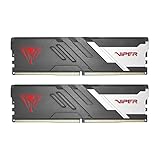
Standard desktop DDR5 UDIMMs are approximately 5.25 inches long by 1.23 inches tall (13.34 by 3.12 cm) before accounting for a heat spreader. Basic modules may remain close to that height, while gaming modules with decorative heat spreaders can measure roughly 1.40 to 2.00 inches (3.56 to 5.08 cm) tall.
For a small-form-factor build, leave at least 0.10 inch (2.5 mm) of side clearance above a bare module and preferably 0.20 to 0.40 inch (5 to 10 mm) around a heat-spreader-equipped kit. Always check the motherboard and case specifications before buying. SO-DIMM and desktop UDIMM slots are not interchangeable.
Standard Sizes
| DDR5 memory type | Approximate length | Approximate module height | Typical thickness | Typical use |
|---|---|---|---|---|
| DDR5 SO-DIMM, 262-pin | 2.74 in (6.96 cm) | 1.18 in (3.00 cm) | 0.12–0.16 in (3–4 mm) | Laptops, mini PCs, compact workstations |
| Low-profile DDR5 UDIMM | 5.25 in (13.34 cm) | 1.23–1.35 in (3.12–3.43 cm) | 0.12–0.20 in (3–5 mm) | Small desktop cases and tight cooler layouts |
| Standard desktop DDR5 UDIMM | 5.25 in (13.34 cm) | 1.40–1.70 in (3.56–4.32 cm) | 0.16–0.24 in (4–6 mm) | Most tower and gaming PCs |
| Tall gaming DDR5 UDIMM | 5.25 in (13.34 cm) | 1.80–2.00 in (4.57–5.08 cm) | 0.20–0.28 in (5–7 mm) | Builds with generous cooler and case clearance |
The length and contact layout are standardized, but total height is not. A plain JEDEC-style DDR5 module often uses a simple exposed PCB or short metal covering. Performance-oriented modules may add an aluminum heat spreader, lighting diffuser, or top bar. Those additions can increase height enough to interfere with a CPU cooler, radiator, or case panel.
DDR5 SO-DIMMs generally run at a nominal 1.1 volts under standard settings. Desktop performance kits may use approximately 1.25 to 1.45 volts when an XMP or EXPO profile is enabled. A useful planning range is about 2 to 5 watts per module during active operation, although actual consumption depends on capacity, speed, voltage, workload, and the memory controller. Memory does not have a single universal wattage rating.
Weights are rarely listed because they are small and not normally a fit concern. As a planning estimate, one SO-DIMM commonly weighs about 0.3 to 0.6 ounces (8 to 17 grams), while a desktop module with a heat spreader may weigh about 1.0 to 1.8 ounces (28 to 51 grams). Treat those as approximate handling estimates rather than certified product specifications.
Example products illustrate the format differences. The CORSAIR Vengeance DDR5 SO-DIMM 32GB kit uses two compact laptop-style modules and is listed at up to 5600 MHz. The Crucial CT16G48C40S5 is a single 16GB, 4800 MHz, 262-pin SO-DIMM. Both are intended for SO-DIMM-compatible systems. The Patriot Viper Venom 16GB and 32GB kits are desktop UDIMMs, with listed speeds of 6000 MT/s, and require a motherboard with standard desktop DDR5 slots. Listed prices in the examples range from about $236.99 to $479.99, while comparable DDR5 memory can range from roughly $50 to more than $500 depending on capacity, speed, timing, brand, and market conditions.
How to Measure Your Space
- Confirm the slot type. Read the motherboard, mini-PC, or laptop manual and look specifically for DDR5 SO-DIMM or DDR5 UDIMM. Do not select by DDR5 branding alone.
- Measure the slot footprint. For a desktop board, allow at least 5.40 inches (13.72 cm) of horizontal room from the slot end to nearby obstructions. For a SO-DIMM socket, allow at least 2.90 inches (7.37 cm).
- Measure vertical clearance. Place a ruler from the motherboard surface to the nearest obstruction: CPU cooler, fan, graphics card backplate, drive cage, or side panel. Record the smallest measurement.
- Compare the complete module height. Use the manufacturer’s maximum height, not just the PCB height. If the module is 1.70 inches tall, a space measuring exactly 1.70 inches leaves no practical installation tolerance.
- Check cooler overlap. Large air coolers can extend over the memory slots. A front fan may need to be raised, reducing case-side-panel clearance by another 0.20 to 0.60 inch (5 to 15 mm).
- Allow installation room. Memory modules often need to tilt into place. Leave extra space above the slot so the module can be inserted without scraping the cooler or case frame.
- Verify the kit layout. Two-module kits may occupy adjacent slots and can be harder to install around a cooler than one module. Check the motherboard’s recommended slot positions before assembly.
By Room or Use Case
Mini PCs and compact office computers
Choose DDR5 SO-DIMM when the system uses laptop-style sockets. Height is usually straightforward because the module lies nearly flat after installation. A 16GB or 32GB kit is suitable for typical office applications, browsing, video calls, and light creative work. Confirm whether the mini PC supports one or two modules and whether its maximum supported speed is lower than the memory’s advertised rating.
Small gaming desktops
Mini-ITX and compact micro-ATX desktops generally use desktop UDIMMs, not SO-DIMMs. Low-profile memory around 1.23 to 1.35 inches is the safer choice when a large air cooler sits beside the slots. Tall RGB kits may fit, but they can force the cooler fan upward or conflict with a radiator. Capacity and speed should be balanced against cooling, motherboard support, and processor compatibility.
Home theater PCs
For a living-room PC, prioritize low height and low visual obstruction over elaborate heat spreaders. A short desktop kit or compatible SO-DIMM keeps the build easier to service and reduces the chance of contact with a slim case panel. Check the case’s maximum CPU cooler height separately; memory clearance is often affected by the cooler rather than the case alone.
Compact workstation and editing systems
Higher-capacity kits can be useful for large images, video editing, virtual machines, and software development, but more modules may increase installation difficulty. Confirm whether the platform supports the desired total capacity and whether populated slots reduce maximum memory speed. In tight cases, two larger modules may be physically simpler than four smaller ones.
Common Sizing Mistakes
- Confusing SO-DIMM with UDIMM: Similar DDR5 labeling does not make the modules interchangeable.
- Measuring only the PCB: Heat spreaders and lighting assemblies determine the real clearance requirement.
- Ignoring the CPU cooler: A memory kit can fit the motherboard but collide with a cooler fan or fin stack.
- Using case width as the clearance measurement: Internal brackets, cable channels, and side-panel bulges reduce usable space.
- Assuming faster is always better: A 6000 MT/s kit may run at a lower setting if the processor or motherboard does not support its profile.
- Forgetting installation angle: A module needs room to tilt into its slot, not merely enough space after it is locked in place.
- Overlooking voltage profiles: XMP and EXPO settings can increase voltage and power compared with basic JEDEC operation.
FAQ
How tall is DDR5 RAM for a small-form-factor PC?
DDR5 SO-DIMM is about 1.18 inches (3.00 cm) tall. Desktop DDR5 modules range from approximately 1.23 inches (3.12 cm) for low-profile designs to about 2.00 inches (5.08 cm) for tall gaming models.
Can I use DDR5 SO-DIMM in a desktop motherboard?
Only if the motherboard specifically provides DDR5 SO-DIMM slots. Standard desktop boards use 288-pin DDR5 UDIMMs, while laptop-style modules use 262-pin SO-DIMMs. The slot design, keying, and electrical layout differ.
What clearance should I leave above DDR5 memory?
Leave at least 0.10 inch (2.5 mm) beyond the listed module height, and aim for 0.20 to 0.40 inch (5 to 10 mm) when a CPU cooler or side panel is nearby. More room is helpful for installation and airflow.
Does DDR5 RAM need a heat spreader in a compact case?
Usually not for standard-speed operation. Heat spreaders can protect the modules and support certain performance designs, but they add height. In a compact build, a lower-profile module with the required capacity and supported speed is often the easier fit.


