When setting up a modern home office, creative studio, or living room gaming setup, component selection is about finding the ideal balance between real-world performance, physical integration, and long-term value. While memory modules may look like small hardware details, memory speed and latency play a noticeable role in system responsiveness, application load times, and multitasking smoothness. The primary decision faced by desktop builders today comes down to timing profiles: specifically, evaluating the ddr5 6000 cl30 vs cl36 performance difference.
At 6000 MHz—widely recognized as the optimal sweet spot for current generation desktop processors—CAS Latency (CL) indicates how many clock cycles pass before data is served. A CL30 rating performs this in 30 cycles, whereas CL36 takes 36 cycles. In actual time, this represents a difference between 10.0 nanoseconds and 12.0 nanoseconds of first-word latency. While two nanoseconds sounds microscopic, understanding how that translates to desktop responsiveness, heat output inside compact home enclosures, and overall cost efficiency helps you choose the right kit for your workspace.
As an Amazon Associate we earn from qualifying purchases at no extra cost to you.

Quick Verdict
If you build or maintain a high-demand home workstation for 4K video editing, 3D rendering, or competitive high-refresh gaming, DDR5 6000 CL30 is the clear winner. The tighter sub-timings yield slightly better 1% low frame rates, smoother system responsiveness, and maximum stability on AMD EXPO and Intel XMP platforms. Premium options, such as the CORSAIR Vengeance RGB DDR5 RAM 32GB (2x16GB) Up to 6000MHz CL30-36-36-76 1.40V AMD EXPO Intel XMP Desktop Computer Memory – Gray (CMH32GX5M2B6000Z30K) listed at $549.99, deliver top-tier speed alongside custom RGB illumination for visually styled desktop cases.
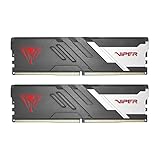
For everyday home productivity, standard remote work tasks, web browsing, and casual 1440p or 4K gaming, DDR5 6000 CL36 provides roughly 95% to 98% of the real-world performance at a lower upfront cost. If you prefer a streamlined non-RGB design that fits under large home office quiet-air coolers, high-value CL30 alternatives like the Patriot Viper Venom DDR5 RAM 32GB (2X16GB) 6000MHz CL30 Desktop Memory at $479.99 or standard CL36 memory kits offer an economical path forward without sacrificing daily stability.
Side by Side
| Factor | DDR5 6000 CL30 | DDR5 6000 CL36 |
|---|---|---|
| User Comfort & Responsiveness | Ultra-fast 10.0ns latency; eliminates minor micro-stutters during heavy multitasking. | Responsive 12.0ns latency; smooth for general desktop navigation and typical apps. |
| Durability & Thermal Stability | Requires slightly higher voltage (1.35V – 1.40V); requires decent case airflow. | Runs at slightly lower default voltages (1.25V – 1.35V); generates marginal ambient heat. |
| Price Range | $120 – $550 (Includes enthusiast high-end RGB and flagship memory kits). | $85 – $220 (Budget-friendly mainstream kits). |
| Maintenance & Tuning | Requires enabling one-click EXPO/XMP profile in BIOS for target sub-timings. | Plug-and-play simplicity; standard profile adoption across most motherboards. |
| Space Needed / Profile | Available in low-profile (34mm height) up to taller RGB modules (44mm–50mm height). | Predominantly low-profile heat spreaders (31mm–35mm height) for easy CPU cooler clearance. |
| Look & Aesthetics | High-end metallic spreaders, brushed aluminum, and customizable RGB light bars. | Minimalist matte black or gray heatsinks designed for discreet, practical builds. |
| Resale Value | High demand among PC enthusiasts and creative professionals on secondary markets. | Moderate resale demand as general mainstream hardware ages. |
| Best For | Enthusiast home studios, video production desks, and high-FPS gaming builds. | Standard home office setups, family computers, and budget-conscious builds. |
Where Ddr5 6000 Cl30 Wins
The primary advantage of CL30 memory lies in its reduced memory delay. Calculating true latency using the standard formula—(CAS Latency / Clock Speed in MHz) × 2000—yields exactly 10 nanoseconds for 6000MHz CL30. This lower delay improves CPU-to-memory communication overhead, which is especially beneficial for modern AMD Ryzen 7000/9000 series and Intel Core desktop processors that rely heavily on memory bandwidth.
In creative application suites like Adobe Premiere Pro, DaVinci Resolve, and Blender, the tighter timings reduce frame-buffer stalls when scrubbing high-bitrate 4K timelines. For home office setups that double as immersive gaming spaces, CL30 significantly improves 1% low frame rates. Rather than just boosting maximum FPS, it prevents sudden frame drops during intense scenes, ensuring smoother visuals on high-refresh-rate monitors.
Aesthetics and build quality also lean heavily in favor of CL30 kits. Premium offerings such as the CORSAIR Vengeance RGB DDR5 RAM 32GB (2x16GB) Up to 6000MHz CL30-36-36-76 1.40V AMD EXPO Intel XMP Desktop Computer Memory – Gray (CMH32GX5M2B6000Z30K) ($549.99) incorporate heavy-duty aluminum heat spreaders and custom ambient lighting. Alternatively, sleek options like the Patriot Viper Venom DDR5 RAM 32GB (2X16GB) 6000MHz CL30 Desktop Memory ($479.99) cater to minimalist home office designs where stealthy performance is preferred over bright LED displays.
Where Cl36 Performance Difference Wins
Where DDR5 6000 CL36 excels is overall value, lower operating voltage requirements, and thermal management inside home workstations. With a true latency of 12 nanoseconds, CL36 remains exceptionally fast compared to older DDR4 memory standards. For 90% of daily home computing tasks—such as managing dozens of browser tabs, streaming 4K media, editing photos, and running office suites—the practical performance difference between CL30 and CL36 is imperceptible without high-precision background timing software.
Because CL36 modules often operate at slightly lower baseline voltages (typically 1.25V to 1.35V compared to 1.35V to 1.40V on aggressive CL30 profiles), they generate marginally less heat. In small form factor (ITX) home office cases or quiet living room media centers where fan noise must be kept to a absolute minimum, lower power draw helps maintain silent thermal performance.
The secondary benefit is physical clearance and cost savings. Save $30 to $80 on your memory kit by choosing CL36, and you can reallocate those funds into direct home comfort upgrades—such as a quieter CPU air cooler, an ergonomic monitor arm, or a better desk pad.
Cost Over 5 Years
Evaluating the true cost of PC components over a five-year lifespan involves looking past the initial checkout price to consider energy draw, system stability, and future upgrade cycles.
- Initial Investment: CL36 32GB memory kits generally cost between $85 and $150, while enthusiast CL30 kits cost between $120 and $550 depending on heatsink materials, RGB profiles, and binning quality.
- Energy Consumption: A 0.05V to 0.10V difference in operating voltage across two RAM sticks translates to a negligible power consumption variance (less than 1.5 watts total). Operating 8 hours a day over 5 years results in less than $2.00 total electricity cost difference.
- Platform Longevity: Looking ahead toward 2026, software and operating system memory overheads will continue to grow. Investing in CL30 timing gives your system slightly better longevity before needing a total platform refresh, maintaining higher functional speed across a multi-year ownership window.
- Resale Value: Enthusiast-grade low-latency kits historically retain 15% to 25% higher secondary market value when you eventually decommission or upgrade your home workstation desktop.
Which One for Your Home
Small Apartment Desk Setup
In tight living areas or small bedroom offices, compact computer cases and near-silent acoustic performance take priority. DDR5 6000 CL36 kits with low-profile heat spreaders (31mm–33mm height) are ideal here. They easily clear dual-tower quiet air coolers without pushing fans upward toward your case side panels, keeping overall desk footprint and ambient noise low.
Family with Kids and Pets
For a multi-user household computer handling homework, family photo management, and casual recreation, system stability and budget efficiency matter most. CL36 memory runs cool, provides excellent stability at standard EXPO/XMP profiles, and delivers durable performance without demanding elevated voltages or specialized case ventilation.
Rental Home Workspace
If you move frequently or adapt your workstation to changing rental floor plans, a versatile, easy-to-maintain desktop setup is essential. A mid-tier DDR5 6000 CL30 kit offers plug-and-play high performance across various work tasks and gaming genres without needing manual memory tuning or complex BIOS adjustments whenever you adjust your workstation configuration.
Long-Term Home Studio
When constructing a dedicated home editing studio or high-performance personal workstation intended to last 5+ years without hardware swaps, go straight for DDR5 6000 CL30. The lower nanosecond latency accelerates file compressions, complex video renders, and heavy multitasking, maximizing the productivity return on your workspace investment.
FAQ
What is the actual nanosecond difference between CL30 and CL36 at 6000MHz?
At 6000MHz, DDR5 CL30 delivers a first-word latency of 10.0 nanoseconds, whereas CL36 delivers 12.0 nanoseconds. This creates a 2.0-nanosecond physical latency difference at the memory level.
Will I notice the ddr5 6000 cl30 vs cl36 performance difference in everyday home office tasks?
No. For general web browsing, text processing, spreadsheet management, and media streaming, both kits feel identical. The performance difference only becomes noticeable in heavy creative tasks like 4K video rendering or high-framerate gaming.
Does memory latency affect noise levels in a quiet living room PC?
Indirectly. Lower latency RAM like CL30 allows the processor to complete intensive tasks slightly faster, returning the CPU to idle states sooner. However, CL30 memory profiles run at slightly higher voltages (1.35V – 1.40V vs 1.25V – 1.35V), so proper ambient airflow inside your desktop case is recommended to maintain quiet fan curves.
Is DDR5 6000 CL30 compatible with both AMD and Intel home desktop platforms?
Yes. Most modern 6000MHz CL30 kits come equipped with dual memory profiles—supporting AMD EXPO for Ryzen processors and Intel XMP for Core processors. Always verify motherboard manufacturer memory support lists (QVL) prior to purchasing.