
Choosing the right cedarwood essential oil is harder than it looks. Shoppers typically want a reliable, aromatic oil for diffusing at home, blending into carrier oils for skin care, or adding to DIY projects like candle making. The problem is that bottles labeled identically can vary wildly in concentration, scent longevity, and sourcing transparency. A cheap bottle might smell thin and dissipate within minutes, while a well-sourced option delivers a rich, woody base note that lingers for hours.
What separates a good cedarwood essential oil from a bad one comes down to botanical specificity, extraction quality, and packaging. Oils derived from specific species—like Texas cedarwood or Atlas cedarwood—offer distinct aromatic profiles that suit different preferences. Dark glass bottles protect the liquid from UV degradation, and clearly listed volumes prevent buyers from overpaying for tiny amounts. We compiled this 2026 roundup by comparing published specifications, retail prices, and aggregated owner feedback across eight popular options to help you find the exact match for your needs.
As an Amazon Associate we earn from qualifying purchases at no extra cost to you.




Top 3 picks at a glance
Quick Picks
| Product | Best For | Price |
|---|---|---|
| Handcraft Blends Cedarwood Essential Oil | High-volume everyday diffusing | $8.99 |
| 365 by Whole Foods Market Texas Cedarwood | Budget-conscious buyers seeking pure oil | $4.88 |
| Majestic Pure Cedarwood Essential Oil | Dedicated diffuser users | $9.99 |
| Brooklyn Botany Cedarwood Essential Oil | Value seekers wanting a large bottle | $8.49 |
| Kukka Cedarwood Essential Oil | Skin care and diffuser versatility | $9.99 |
| SU JUABA Cedarwood Essential Oil | Home protection and multi-use routines | $8.99 |
| HIQILI Cedarwood Essential Oil | Hair and skin applications | $7.99 |
| Cedarwood Essential Oil 16 Fl Oz | Candle making and bulk crafting | $29.99 |
How We Picked
Evaluating essential oils requires focusing on criteria that directly impact user satisfaction. First, we looked at botanical origin and purity claims, as oils specifying their exact cedarwood species generally offer more consistent aromatic profiles. Second, we compared price-per-ounce ratios to determine which products deliver genuine value rather than just a low sticker price. Third, we analyzed owner feedback regarding scent longevity, noting which oils maintain their woody depth over time versus those that fade rapidly. Finally, we considered packaging materials, prioritizing brands that use UV-resistant dark glass to preserve the oil’s integrity during storage.
The 8 Best Cedarwood Essential Oil in 2026
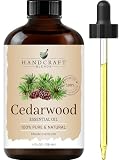
Handcraft Blends Cedarwood Essential Oil
This massive four-fluid-ounce bottle targets heavy diffuser users who go through oil quickly and want to avoid constant reordering. Owner reviews frequently praise its strong, authentic woody aroma that easily fills larger rooms without needing excessive drops. The generous volume combined with a sub-ten-dollar price tag makes it a highly practical choice for daily aromatherapy routines.
- Pro: Huge four-fluid-ounce size provides excellent longevity for frequent users.
- Pro: Strong scent throw noted consistently in positive customer feedback.
- Con: The large bottle may be cumbersome for travel or small storage spaces.
Skip this if you only need a few drops occasionally and prefer a smaller, more manageable bottle for your bathroom shelf.
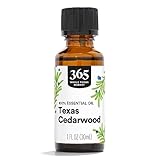
365 by Whole Foods Market Texas Cedarwood
Designed for budget-minded shoppers who refuse to compromise on purity, this one-ounce bottle specifically highlights its Texas cedarwood origin. Buyers appreciate the transparent sourcing, which suggests a slightly sharper, drier wood profile compared to generic blends. It is an ideal entry point for anyone new to aromatherapy who wants to try a specific botanical variety without committing to a large financial outlay.
- Pro: Lowest price point in this roundup at under five dollars.
- Pro: Clearly specifies Texas cedarwood origin for targeted scent profiles.
- Con: One-ounce volume depletes very quickly if used heavily in a diffuser.
Skip this if you run your diffuser daily for extended periods, as you will burn through this small bottle far too fast.
Majestic Pure Cedarwood Essential Oil for Diffuser
Majestic Pure positions this four-fluid-ounce bottle squarely at dedicated diffuser enthusiasts. Customer sentiment highlights its smooth, grounding fragrance that pairs exceptionally well with citrus or floral oils for custom home blends. The brand has a strong reputation in the aromatherapy space, and owners report that the scent remains stable even after the bottle has been open for several weeks.
- Pro: Excellent blending capabilities reported by users creating custom scent mixes.
- Pro: Large four-fluid-ounce capacity matches the higher price with ample supply.
- Con: Sits at the highest price tier among the standard four-ounce options.
Skip this if you are strictly hunting for the lowest cost per ounce, as Brooklyn Botany offers the same volume for less.
Brooklyn Botany Cedarwood Essential Oil
This option appeals to value-driven buyers who want a large format without stretching their budget. At four fluid ounces, it matches the volume of premium competitors but undercuts them in price. Owners frequently mention using it not just in diffusers, but also mixed into lotions and homemade cleaning sprays, appreciating the earthy, stabilizing scent it adds to various household routines.
- Pro: Highly competitive pricing for a huge four-fluid-ounce bottle.
- Pro: Versatile enough for both diffusion and topical carrier-oil blending according to reviews.
- Con: Some users note the initial scent is slightly milder upon opening compared to pricier rivals.
Skip this if you demand the absolute strongest immediate scent throw right out of the bottle for large, open-concept living areas.
Kukka Cedarwood Essential Oil
Kukka markets this four-fluid-ounce oil specifically for dual use in skin care and diffusers, attracting buyers who want a single bottle for multiple wellness routines. Feedback indicates that when properly diluted with a carrier oil, it absorbs well and leaves a subtle, pleasant fragrance on the skin. It bridges the gap between pure aromatherapy and personal care effectively.
- Pro: Formulated and marketed with clear guidance for both skin application and diffusion.
- Pro: Generous four-fluid-ounce size supports diverse daily uses without running out.
- Con: Higher price point reflects its specialized marketing rather than a larger volume.
Skip this if you exclusively use essential oils for room fragrancing and have no interest in topical skin care applications.
SU JUABA Cedarwood Essential Oil
This product stands out by explicitly targeting home protection alongside standard skin care and diffuser use. Buyers looking for a traditional, robust woody scent to freshen closets, drawers, and living spaces gravitate toward this option. Owner reviews suggest it delivers a deep, resinous aroma that effectively masks unwanted household odors while providing a calming atmosphere.
- Pro: Multi-purpose marketing covers home protection, skin care, and diffusion seamlessly.
- Pro: Deep, resinous scent profile excels at neutralizing stubborn household odors.
- Con: Volume is not explicitly stated in the primary product title, requiring careful spec checking before purchase.
Skip this if you require guaranteed, clearly advertised high-volume sizing for commercial or heavy craft usage.
HIQILI Cedarwood Essential Oil
HIQILI focuses this offering on hair and skin care enthusiasts who incorporate essential oils into their grooming regimens. Users report mixing it into shampoos or scalp treatments to leverage the grounding scent and potential soothing properties associated with cedarwood. It sits at a comfortable mid-range price, making it accessible for those experimenting with DIY beauty formulations.
- Pro: Specifically positioned for hair and skin integration, guiding novice formulators.
- Pro: Affordable mid-range price encourages experimentation without financial risk.
- Con: Like some others here, the exact fluid volume is omitted from the short product name.
Skip this if your sole intention is ambient room diffusion and you prefer a brand that prioritizes aromatherapy over cosmetic use.
Cedarwood Essential Oil 16 Fl Oz
This sixteen-fluid-ounce jug is built entirely for makers, crafters, and small business owners producing candles or soaps in bulk. Buying essential oil in standard retail sizes for candle making is financially impractical, and this massive volume solves that logistical headache. Reviewers in the crafting community appreciate having a unified scent batch large enough to maintain consistency across dozens of pours.
- Pro: Massive sixteen-fluid-ounce volume eliminates constant reordering for active crafters.
- Pro: Cost-effective on a per-ounce basis for high-volume production runs.
- Con: Bulk packaging often sacrifices the precision droppers found on smaller retail bottles.
Skip this if you are a casual home user; sixteen ounces of essential oil will likely oxidize and degrade long before a typical household finishes it.
Buying Guide
Botanical Species and Origin
Not all cedarwood smells the same. Oils derived from Juniperus mexicana (Texas cedarwood) tend to have a sharper, pencil-shaving aroma, while Cedrus atlantica (Atlas cedarwood) leans sweeter and more balsamic. Checking the published botanical name on the label ensures you get the exact scent profile you expect, preventing disappointment when the oil arrives smelling different than you imagined.
Volume and Price Per Ounce
A low upfront price can be deceptive if the bottle only contains a fraction of an ounce. Always calculate the cost per fluid ounce to compare true value across brands. Standard consumer sizes range from one to four fluid ounces, while bulk options reach sixteen ounces. Match the volume to your actual consumption rate to avoid buying more than you can use before the oil degrades.
Packaging and Preservation
Essential oils are volatile compounds that degrade rapidly when exposed to light and heat. High-quality cedarwood essential oil should always be packaged in dark amber or cobalt glass bottles, never clear glass or plastic. Plastic can leach chemicals into the oil, while clear glass allows UV rays to break down the aromatic molecules, resulting in a flat, lifeless scent within weeks of purchase.
Our Verdict
For most households, Handcraft Blends Cedarwood Essential Oil is our top pick. Its huge four-fluid-ounce volume, strong scent throw, and reasonable $8.99 price make it the most balanced option for daily diffuser use. If you are strictly watching your wallet, 365 by Whole Foods Market Texas Cedarwood is the undisputed budget pick at just $4.88, offering verified purity in a smaller package. However, if you are pouring candles or making soap in batches, neither of those will suffice—in that specific scenario, the 16 Fl Oz Cedarwood Essential Oil at $29.99 wins outright due to its unmatched bulk efficiency.
FAQ
Can I apply cedarwood essential oil directly to my skin?
No, you should never apply undiluted essential oil directly to your skin. Always mix a few drops into a carrier oil, such as jojoba or sweet almond oil, to prevent irritation or sensitization. Products marketed for skin care still require proper dilution ratios before topical application.
How long does the scent last in a diffuser?
Scent longevity depends on your diffuser type, room size, and the number of drops used. Generally, a high-quality cedarwood oil provides a noticeable woody base note for several hours of continuous diffusion. Heavier base notes like cedarwood naturally linger longer than lighter citrus top notes.
Is Texas cedarwood different from regular cedarwood?
Yes, Texas cedarwood comes from a specific juniper species native to North America and has a distinctly dry, sharp aroma. Generic “cedarwood” labels often blend species or use Atlas cedarwood, which smells sweeter. Check the botanical name on the product listing to confirm exactly what you are buying.
Does cedarwood essential oil expire?
While essential oils do not spoil like food, they do oxidize and lose their aromatic potency over time. Properly stored in a cool, dark place inside a tightly sealed dark glass bottle, cedarwood oil can maintain its quality for several years. Once the scent turns flat or slightly sour, it is time to replace the bottle.


