
Blood pressure cuffs come in a frustratingly wide range of quality and price. A buyer checking readings at home after a doctor’s visit, or someone managing a chronic condition daily, needs a device that delivers consistent numbers without fuss. Yet the market offers options from sixteen dollars to nearly a hundred, with meaningful differences in cuff fit, validation method, display clarity, and connectivity that directly affect whether you’ll actually use the device enough to catch a concerning trend.
We compared these eight blood pressure cuffs on published specifications, listed prices, and aggregated owner feedback from verified purchase reviews. The concrete problem separating a good choice from a bad one is narrower than most people expect: cuff size compatibility with your arm circumference, whether the measurement method suits your confidence level, and whether the device integrates into the rest of your health routine or sits forgotten in a drawer.
As an Amazon Associate we earn from qualifying purchases at no extra cost to you.



Top 3 picks at a glance
Quick Picks
| Product | Best for | Price |
|---|---|---|
| iHealth Track Smart | Users who want app connectivity | $39.99 |
| Oklar FDA Cleared Upper Arm | Lowest-cost digital upper arm option | $19.99 |
| Sinocare Upper Arm | Dual-user households on a tight budget | $16.99 |
| Oklar Wrist | Travel and compact storage | $28.99 |
| OMRON Iron | Reliable upper arm monitoring from a trusted brand | $37.79 |
| Santamedical Manual | Healthcare students and clinical practice | $19.95 |
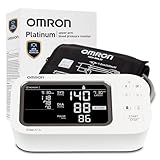
| OMRON Platinum | Premium features and wide-cuff comfort | $97.19 |
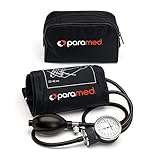
| PARAMED Aneroid | Portability with universal cuff coverage | $23.95 |
How We Picked
We narrowed this category on four criteria. First, measurement method: digital devices dominate home use for simplicity, but manual sphygmomanometers remain relevant for training and backup. Second, cuff range and fit, since an ill-sized cuff is the single largest source of inaccurate home readings. Third, price-to-features alignment, particularly whether a device charges a premium for genuinely useful additions like Bluetooth sync or dual-user memory versus marketing fluff. Fourth, owner-reported reliability: we prioritized products with consistent positive feedback over those with polarizing reviews that suggest batch inconsistencies or firmware issues.
The 8 Best Blood Pressure Cuffs in 2026
iHealth Track Smart Upper Arm Blood Pressure Monitor
This device targets people who already track health metrics on a phone and want blood pressure data flowing into the same ecosystem without manual entry. The wide-range cuff covers most adult arm sizes out of the box, reducing the guesswork of selecting a compatible band. Owner feedback highlights the clean app interface and fast sync speed as the main advantages over cheaper competitors. The one-button design means the actual measurement process is simple once you have the cuff positioned correctly. The con is that Bluetooth connectivity introduces a dependency on your phone’s operating system staying compatible with the companion app over time.
- Pro: Automatic data logging into a companion app eliminates manual record-keeping.
- Pro: Wide-range cuff accommodates a broad spectrum of arm circumferences without purchasing extras.
- Con: Relies on ongoing app and OS compatibility for full functionality.
Skip this if you prefer a standalone device with a physical memory button and no smartphone involvement.
Oklar FDA Cleared Upper Arm Blood Pressure Monitor
At under twenty dollars, this is the most affordable digital upper arm monitor on our list that carries FDA clearance documentation. It suits buyers who need a functional home monitor without paying for connectivity features they will never use. Owner reviews consistently praise the accuracy relative to price and the straightforward setup process. The display is legible and the cuff inflates with a gentle pressure that reviewers describe as comfortable. The limitation is a narrower cuff range compared to premium models, meaning buyers with larger arms may find the included band too tight or need to verify fit before purchasing.
- Pro: FDA clearance at the lowest price point among digital upper arm monitors here.
- Pro: Simple interface with no app pairing or unnecessary buttons.
- Con: Cuff range may not accommodate larger arm circumferences.
Skip this if your arm circumference falls outside the included cuff range and you want a single box solution.
Sinocare Upper Arm Blood Pressure Monitor
This model earns its spot for households where two people share one device, thanks to dedicated dual-user memory. The adjustable cuff spans 8.6 to 16.5 inches, covering a genuinely wide portion of the adult population. At under seventeen dollars it undercuts most digital competitors while offering one-button operation. Owner feedback emphasizes the value proposition and the practicality of the dual profiles. The trade-off is a display and overall build quality that reviewers describe as functional but noticeably less refined than OMRON or iHealth units, with a plasticky finish that suggests longevity concerns.
- Pro: Dual-user memory allows separate tracking for two people on one device.
- Pro: Adjustable 8.6 to 16.5 inch cuff fits a wide range of arm sizes.
- Con: Build quality and display feel budget-tier compared to pricier alternatives.
Skip this if you want a device that feels durable enough for years of daily use without visible wear.
Oklar Wrist Blood Pressure Monitor
Wrist monitors occupy a niche for people who travel frequently, live in small spaces, or find upper arm cuffs cumbersome for quick checks. This FDA-cleared, rechargeable unit eliminates battery purchases and fits in a jacket pocket. Owner reviews highlight the convenience factor and the USB charging, which pairs well with modern habits. The inherent downside of any wrist monitor applies here: readings are more sensitive to arm position relative to heart level, and users must remember to rest their wrist at chest height during each measurement. Rechargeability is a genuine pro over disposable-battery competitors.
- Pro: Rechargeable via USB, removing recurring battery costs.
- Pro: Compact form factor ideal for travel and small storage spaces.
- Con: Wrist-based measurement demands strict positional discipline for accuracy.
Skip this if your doctor expects home readings that match clinical upper-arm measurements closely.
OMRON Iron Upper Arm Blood Pressure Monitor
OMRON carries the strongest clinical-adjacent reputation in consumer blood pressure devices, and the Iron model delivers that pedigree without the Platinum price tag. It targets buyers who prioritize measurement reliability and brand trust over connectivity features. Owner feedback reinforces OMRON’s consistent accuracy reputation, with many users noting agreement between home readings and doctor’s office values. The included cuff is pre-shaped for faster positioning. The con at this price is the absence of Bluetooth or app integration, which feels like a gap when competitors under forty dollars offer it.
- Pro: OMRON’s established accuracy reputation gives confidence in readings.
- Pro: Pre-formed cuff speeds up positioning compared to flat-wrap alternatives.
- Con: No smart connectivity or app logging at a price near the iHealth Track.
Skip this if you want digital record-keeping and consider Bluetooth a must-have feature.
Santamedical Manual Blood Pressure Cuff
Manual aneroid sphygmomanometers serve a different audience than digital monitors: nursing students, EMT trainees, and clinicians who need a hands-on teaching tool or a backup when batteries die. This Santamedical unit provides a functional aneroid gauge with an adult cuff at a price that undercuts most digital options. Owner feedback from students and instructors notes the readable dial and sturdy construction for the cost. The significant barrier is that using it correctly requires a stethoscope and auscultatory skill, which means the listed price does not represent the full kit needed for operation.
- Pro: Teaches proper manual measurement technique, valuable for healthcare training.
- Pro: No batteries or electronics to fail, offering long-term reliability.
- Con: Requires a separate stethoscope and clinical skill to obtain readings.
Skip this if you need a standalone home monitor for daily self-checks without training.
OMRON Platinum Upper Arm Blood Pressure Monitor
The Platinum is the premium pick for buyers who want OMRON’s accuracy reputation combined with a wide comfort cuff and additional features like irregular heartbeat detection. At nearly double the price of the Iron, it targets users who check blood pressure multiple times daily and value a cuff that reduces discomfort during frequent inflation cycles. Owner reviews consistently call it the most accurate home monitor they have used, with the wide cuff specifically praised for people with larger arms. The price is the sole barrier; for anyone checking twice a week, the Iron covers the same clinical need at less than half the cost.
- Pro: Wide comfort cuff reduces arm pressure during repeated measurements.
- Pro: Highest owner-reported accuracy agreement with clinical readings in this group.
- Con: Premium price nearly triple the cheapest viable digital option here.
Skip this if you take readings infrequently and do not need wide-cuff comfort or irregular heartbeat alerts.
PARAMED Aneroid Sphygmomanometer
Like the Santamedical, this manual unit is oriented toward clinical and training use, but the PARAMED adds a carrying case and a universal cuff covering 8.7 to 16.5 inches, making it a more complete field kit. The D-ring cuff design simplifies one-handed wrapping. Owner feedback from field medics and students notes the portability advantage and the durability of the aneroid mechanism under regular use. The notable exclusion is the stethoscope, so buyers still need to source one separately if they do not already own it.
- Pro: Universal 8.7 to 16.5 inch cuff with D-ring for easy single-handed application.
- Pro: Included carrying case makes it genuinely portable for field or clinical rotation use.
- Con: Stethoscope not included, adding hidden cost for new users.
Skip this if you want a complete measurement solution in one purchase without sourcing accessories separately.
Buying Guide
Cuff Size Is the Most Decisive Spec
An incorrectly sized cuff produces falsely elevated or depressed readings, which is more consequential than any feature gap between devices. Measure your mid-arm circumference before shopping. If you fall near the upper or lower boundary of a cuff’s range, either select a model whose range comfortably centers on your measurement or verify that a replacement cuff in your size is available for that device. The Sinocare and PARAMED both offer ranges approaching eight inches on the small end, while the OMRON Platinum targets the larger end with its wide comfort band.
Digital Simplicity Versus Manual Control
For home self-monitoring, digital upper arm monitors eliminate the skill requirement and reduce variability between readings. The trade-off is dependence on batteries and occasional recalibration. Manual aneroid cuffs give you full control over inflation rate and require no power source, but they demand auscultatory technique. If you are a patient tracking a condition, the digital path will produce more consistent trend data. If you are a student or practitioner building clinical proficiency, the manual unit is the correct tool regardless of convenience.
Connectivity and Data Logging Are Real Conveniences
App-synced blood pressure cuffs like the iHealth Track solve the problem of manual transcription errors and forgotten logs. For users who need to show a doctor a trend over weeks, this matters. However, it introduces a compatibility dependency and a privacy surface that standalone devices avoid. If your measurement frequency is low or you are comfortable writing numbers down, the $20 to $40 premium for connectivity may not return enough value to justify itself.
Our Verdict
The top pick for most buyers is the OMRON Platinum. It combines the brand’s accuracy reputation with a wide comfort cuff that removes the most common physical complaint about upper arm monitors, making it the best choice for anyone taking daily or multiple-times-per-day readings. The budget pick is the Sinocare Upper Arm Monitor, which delivers dual-user memory, a genuinely wide cuff range, and functional accuracy at sixteen dollars, undercutting every digital alternative on this list. If you prioritize travel and compact storage over measurement method purity, the Oklar Wrist Monitor wins on form factor alone, provided you accept the positional discipline that wrist-based readings demand.
FAQ
Are cheap blood pressure cuffs accurate enough for home use?
Several models under twenty dollars on this list carry FDA clearance and receive positive owner feedback matching their higher-priced peers. The primary accuracy risk in any cuff, regardless of cost, is incorrect sizing rather than electronic imprecision, so verifying fit matters more than spending extra.
Why do my wrist monitor readings differ from upper arm readings?
Wrist cuffs measure at a point farther from the heart and are more sensitive to arm position. If your wrist is below heart level during measurement, readings will be artificially elevated. Consistent positioning at chest height reduces the discrepancy.
Do I need a stethoscope with a manual blood pressure cuff?
Yes. Manual aneroid sphygmomanometers require auscultation of the brachial artery pulse to determine systolic and diastolic values, which means a stethoscope is essential equipment alongside the cuff itself.
How often should a home blood pressure monitor be recalibrated?
Most manufacturers recommend a check against a clinical device every one to two years, or sooner if you notice sudden shifts in readings without lifestyle changes. Some models allow you to compare against a doctor’s office reading by taking both simultaneously during a visit.


