The best wireless headset for a cell phone is one that pairs over Bluetooth 5.x with multipoint support, a detachable or beamforming microphone, and at least 30 hours of battery life. If you also game on a PC or console, a dual-mode headset that combines a 2.4 GHz USB dongle with Bluetooth gives you low latency at the desk and a phone connection on the go. The picks below cover both situations, and the sections after them explain how to choose using numbers instead of marketing claims.
As an Amazon Associate we earn from qualifying purchases at no extra cost to you.

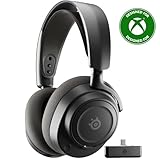

Top 3 picks at a glance
Quick comparison of the best cellphone wireless headsets
| Pick | Best for | Connection | Key specs | Typical price range |
|---|---|---|---|---|
| SteelSeries Arctis Nova 7 Wireless | Best overall (phone + PC) | 2.4 GHz + Bluetooth, simultaneous | Roughly 38 hour battery, retractable mic, 40 mm drivers | Usually $150–$200 |
| Logitech G735 Wireless | Best for style and comfort | LIGHTSPEED 2.4 GHz + Bluetooth | Around 16 hour battery with lighting, flip mic, 40 mm drivers | Usually $150–$200 |
| HyperX Cloud III Wireless | Best for battery life | 2.4 GHz dongle | Up to about 120 hours claimed, 53 mm drivers, detachable mic | Usually $150–$180 |
| Razer Barracuda X | Best budget multi-platform | 2.4 GHz USB-C dongle + 3.5 mm | About 20 hours, 40 mm drivers, detachable mic, light build | Usually $80–$110 |
| True wireless earbuds with game mode | Best for pocketable use | Bluetooth 5.x | Low-latency mode, 5–8 hours per charge plus case | Usually $50–$250 |
Best overall: SteelSeries Arctis Nova 7 Wireless
This headset earns the top spot because it solves the phone problem directly. According to the manufacturer’s spec sheet, it keeps a 2.4 GHz dongle connection and a Bluetooth connection active at the same time, so you can hear game audio from a PC while a phone call or music from your phone also comes through. It uses a retractable microphone that tucks into the earcup, which is easier to live with on a commute than a boom arm that sticks out.
Who it suits: players who split time between a desk setup and a phone, and anyone who wants one headset instead of two. The main trade-off is price. At the upper end of the mid-range, it costs more than a basic Bluetooth headset, and Bluetooth mode does not carry the same low latency as the dongle.
Best for comfort and looks: Logitech G735
The G735 uses a light, open-ear-cup design with a flip-to-mute microphone and supports both the LIGHTSPEED dongle and Bluetooth. It is a good fit if you wear a headset for long sessions and care about how it looks on a desk. The trade-off is battery life: with lighting on, the manufacturer quotes about 16 hours, which is roughly half of what the best battery-focused models manage, so you will charge it more often.
Best for battery life: HyperX Cloud III Wireless
If your biggest complaint with wireless headsets is a dead battery at the wrong time, this is the model to look at. HyperX quotes a battery life of up to roughly 120 hours, which is several weeks of casual use. It connects with a 2.4 GHz USB dongle rather than Bluetooth in its main wireless mode, so check the current spec sheet of the exact variant before buying if phone use is your priority. Its large 53 mm drivers and comfortable memory-foam pads make it a strong all-day pick for a PC, and it can still serve a phone through a wired 3.5 mm or USB-C connection where supported.
Best budget: Razer Barracuda X
The Barracuda X is light, supports a USB-C 2.4 GHz dongle that works with many Android phones and handheld PCs, and also offers a 3.5 mm cable. That makes it practical for mobile gaming on phones with a USB-C port, where the dongle gives lower latency than Bluetooth. The trade-off is simpler sound tuning and a basic microphone compared with the more expensive picks, and the lack of a full Bluetooth mode on some versions means you should confirm the connection type of the model you are buying.
Best pocketable option: gaming-focused true wireless earbuds
If you only game on your phone and never sit at a desk, earbuds with a low-latency game mode can be more comfortable than a full headset. Look for Bluetooth 5.x support, a latency figure stated by the manufacturer (often in the 60–90 ms range in game mode, compared with 150–250 ms in normal mode), and an IPX4 or better sweat resistance rating. The trade-off is battery life: five to eight hours per charge is typical, and microphone quality in noisy places is usually weaker than a boom or beamforming headset mic.
How to choose: numbers that matter
1. Latency: Bluetooth versus a 2.4 GHz dongle
Latency is the delay between something happening on screen and you hearing it. For videos, a delay under about 100 ms is usually unnoticeable because most players compensate automatically. For rhythm games or shooters, delays above roughly 60–80 ms start to be noticeable. Standard Bluetooth with the SBC codec commonly adds 150–250 ms, aptX Low Latency or a game mode can get closer to 40–80 ms, and a 2.4 GHz dongle is typically around 20–40 ms. These are typical ranges that vary by device, codec support on both the phone and the headset, and firmware.
2. Codec support on your phone
Bluetooth audio quality depends on what both ends support. iPhones use AAC and do not support aptX, so a headset that lists aptX as a feature gives no benefit on an iPhone. Many Android phones support SBC, AAC and sometimes aptX or LDAC. LC3 and Bluetooth LE Audio are newer and give better battery efficiency, but you need both the phone and headset to support them. Check your phone’s Bluetooth settings or manufacturer spec sheet before paying extra for a codec you cannot use.
3. Worked battery example
Suppose a headset is rated for 30 hours and you use it two hours a day on your commute plus three hours of evening gaming. That is five hours per day, so a full charge lasts about six days. A headset with a 16 hour rating would last about three days. If you charge weekly, the 30 hour model fits your routine; the 16 hour model means charging every second night. Quick charge helps too: many models give around 3 to 6 hours from a 15 minute top-up, according to their spec sheets.
4. Microphone type
For calls, a boom microphone placed near your mouth almost always sounds clearer than microphones built into earbuds. Retractable and detachable mics are a compromise: they are less obvious when you wear the headset around town and still sound reasonable. Noise cancelling on the microphone (not the same as active noise cancelling in the earcups) matters for calls on trains and in cafes.
Decision matrix: match your situation to a choice
| Your situation | Best choice | Why |
|---|---|---|
| iPhone only, mostly calls and music | Bluetooth headset with AAC and multipoint | aptX is unused on iPhone; multipoint avoids re-pairing |
| Android phone gaming over USB-C | 2.4 GHz USB-C dongle headset | Lowest latency without wireless codec limits |
| Phone plus PC at a desk | Dual-mode dongle + Bluetooth headset | One headset for both; simultaneous audio on some models |
| Long commutes, charging is a hassle | Headset with 30+ hour battery | Weekly charging instead of every other day |
| Tight budget under $100 | Lightweight dongle headset or wired fallback | Better audio per dollar than low-end Bluetooth |
Features that are worth paying for, and ones that are not
Multipoint Bluetooth, which lets the headset stay connected to two devices at once, is worth paying for if you move between a phone and a laptop. Active noise cancelling is useful on commutes but typically cuts battery life by a few hours. Surround sound features are mostly software and add little on a phone. RGB lighting drains the battery and does nothing for sound, so treat it as cosmetic. A replaceable battery or at least a good warranty matters more over a three-year life than extra drivers or gimmicks.
Frequently Asked Questions
Can I use a gaming headset with my phone?
Yes, if it supports Bluetooth, has a 3.5 mm jack, or has a USB-C dongle that your phone recognizes. Many gaming headsets are wired or dongle-only, so confirm the connection types before buying. A dual-mode headset is the simplest way to cover both a phone and a PC.
Is Bluetooth good enough for mobile gaming?
For casual and turn-based games, yes. For competitive shooters and rhythm games, the extra delay of standard Bluetooth is noticeable, so a headset with a low-latency mode or a USB-C dongle is better. Delay figures vary by phone, codec and headset firmware.
Do I need aptX for my phone?
Only if your Android phone supports it and you care about higher quality or lower latency. iPhones do not support aptX at all, so paying extra for it makes no sense with an iPhone. AAC is the codec that matters there.
How long should a wireless headset battery last?
Aim for at least 20 hours for casual use and 30 or more if you do not want to charge weekly. Manufacturer figures are measured at moderate volume with lighting and noise cancelling off, so real-world use is usually somewhat shorter.
Are earbuds or headsets better for phone gaming?
Headsets usually win on microphone clarity, comfort during long sessions and battery life. Earbuds win on portability. If you play more than an hour at a time, a headset is generally the more comfortable choice.
Related guides
More from Amazon
Programs that pair well with the guide above. Offers and eligibility are set by Amazon and may change.
A free business account with business pricing and bulk-buying tools for work, shop or home office.
Create a business accountFree shipping on eligible items, Prime Video and more. Eligible new members can start with a free trial.
Start a Prime free trialAudiobooks and podcasts to listen to on the go. Eligible new members can start with a free trial.
Try Audible freeAd-free music streaming. Eligible new subscribers can start with a free trial.
Try Music Unlimited freeAs an Amazon Associate we earn from qualifying purchases.