The best stereo speakers for vinyl are the ones that let a record sound like a record. Vinyl has a particular character: warm midrange, a natural sense of space, and small details in a pressing that a harsh or boomy speaker can smear away. A good pair of stereo speakers for a turntable setup keeps vocals clear, keeps bass controlled rather than bloated, and keeps the top end smooth so that cymbals and strings sound clean instead of sharp. The five pairs in this guide do that in different ways, at different sizes, and for different rooms.

A vinyl setup is a chain, and the speakers are the last link in it. The turntable reads the groove, the phono stage lifts that tiny signal up to line level, the amplifier gives it power, and the speakers turn it into sound in your room. If any link is weak, the whole chain suffers, but the speakers matter most for what you actually hear. A well-matched pair can make even a modest turntable sound engaging, while a poor match can make a fine turntable sound dull or fatiguing.
Top 3 picks at a glance

How to Choose
Passive or powered
Passive speakers connect to an amplifier or receiver with speaker wire, and the amplifier provides the power. This is the traditional vinyl route, and it lets you choose an amplifier with a built-in phono stage or add a separate phono preamp. Powered speakers connect directly to a turntable with a built-in phono stage, or to a separate phono preamp, and need no separate amplifier. Choose passive if you already own an amplifier or want to build a system piece by piece. Choose powered if you want the fewest boxes and the shortest path to listening.
Driver size and bass
The woofer size gives a rough guide to how much bass a speaker can produce. A 4-inch woofer suits nearfield listening at a desk or in a small room. A 5.25-inch or 6.5-inch woofer suits a typical living room and gives fuller bass without a separate subwoofer. Vinyl bass is often warm and full, so a speaker with controlled, tight bass usually sounds better with records than a speaker that exaggerates the low end.
Sensitivity and amplifier power
Sensitivity, measured in decibels, tells you how loud a speaker plays with a given amount of amplifier power. A higher sensitivity figure means the speaker plays louder from the same amplifier, which matters if your amplifier is modest. Most bookshelf speakers in this guide work well with a typical stereo amplifier or receiver. Check the speaker’s recommended amplifier power range and match it to your amplifier.
Cabinet, placement, and room
A speaker cabinet should be solid and free of rattles, with binding posts that accept bare wire or banana plugs. Rear-ported speakers need space behind them to breathe, so keep them a little way out from the wall. Front-ported speakers are more forgiving of close wall placement. Bookshelf speakers sound best on stands that bring the tweeter to ear height at the listening position.
Tone and listening character
Speakers have a character. Some are warm and relaxed, with a gentle top end that suits long listening sessions and older pressings. Some are lively and detailed, with a forward presentation that brings out the texture in a recording. Some are neutral, aiming to add as little colour as possible. If you listen mainly to jazz, folk, and acoustic music, a warm and smooth speaker often fits. If you listen to rock, electronic music, and modern pressings, a lively and dynamic speaker often fits.
Build, finish, and longevity
A pair of stereo speakers is a long-term purchase, and vinyl listeners tend to keep their speakers for years. Look for solid cabinets, quality binding posts, and removable grilles. A finish that suits your room matters too, because these speakers will be visible every day. Walnut, black, and white finishes are the most common, and most of the picks below come in more than one finish.
Top Picks
1. KEF Q150 Bookshelf Speakers
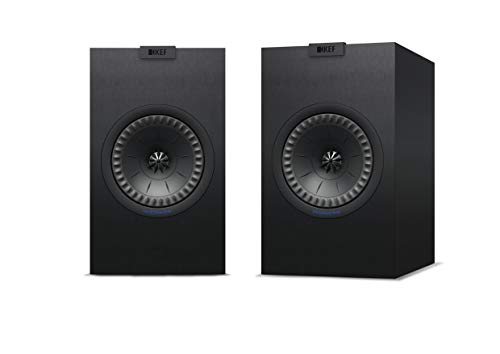
KEF Q150 Bookshelf Speakers (Pair, Black)
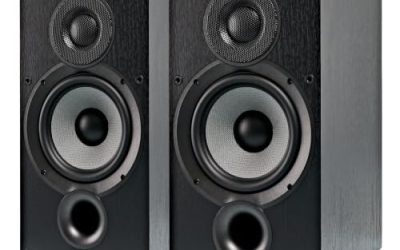
The KEF Q150 is a compact passive bookshelf speaker built around a 5.25-inch Uni-Q driver array, which places the tweeter in the centre of the midrange driver so that sound comes from a single point. That design gives the Q150 a wide and even soundstage, with stable imaging that holds up as you move around the room. Vocals sit clearly in the centre, instruments keep their place in the mix, and the speaker sounds coherent at low volumes as well as at higher ones.
The cabinet is compact enough for a bookshelf or a stand in a small to medium room, and the rear port means it benefits from a little space behind it. Bass is controlled and tuneful rather than heavy, which suits the warm low end of vinyl without turning it muddy. The top end is smooth and detailed without becoming sharp on older or worn pressings.
Who it is for: listeners in small to medium rooms who want a detailed, spacious sound from a compact pair, and who already own or plan to buy a separate amplifier.
Caveats: it is a passive pair, so it needs an amplifier and speaker wire. The rear port needs breathing room behind the cabinet, so avoid pushing it hard against a wall. Bass is controlled rather than deep, so listeners who want very low bass may want to add a subwoofer later.
2. ELAC Debut 2.0 B6.2 Bookshelf Speakers
ELAC Debut 2.0 B6.2 Bookshelf Speakers, Black (Pair)
The ELAC Debut 2.0 B6.2 is a passive bookshelf speaker with a 6.5-inch aramid-fibre woofer and a 1-inch cloth dome tweeter, designed by Andrew Jones. It is known for a warm, full sound with more bass weight than its size suggests, and it has become a common recommendation for first vinyl systems. The larger woofer gives records a satisfying low end, while the cloth dome tweeter keeps the top end smooth and forgiving on pressings that are less than perfect.
Who it is for: first-time vinyl listeners and anyone building a classic passive system who wants a warm, full sound with real bass from a bookshelf pair.
Caveats: the cabinet is fairly large for a bookshelf speaker, so check the dimensions against your space. It is passive, so it needs an amplifier. The warm tuning means it is less suited to listeners who want a very bright or analytical sound.
3. Klipsch Reference Premiere RP-600M II Bookshelf Speakers
Klipsch Reference Premiere RP-600M II Ebony Bookshelf Speakers
The Klipsch RP-600M II is a passive bookshelf speaker with a 6.5-inch Cerametallic woofer and a 1-inch titanium tweeter set in a Tractrix horn. That horn-loaded design gives the speaker high sensitivity and a lively, dynamic presentation, with crisp detail and strong impact. It plays louder than most bookshelf speakers from the same amplifier power, and it brings energy to rock, funk, and electronic records.
Who it is for: listeners who want a lively, dynamic, and detailed sound, who listen to rock and other energetic music, and who have a medium to large room.
Caveats: the forward, lively character may not suit listeners who prefer a soft or relaxed sound, or who listen mostly to quiet acoustic music. It is passive and needs an amplifier. The cabinet is larger than a compact bookshelf pair, so check the dimensions and allow space around it.
4. Edifier R1280DBs Powered Bookshelf Speakers
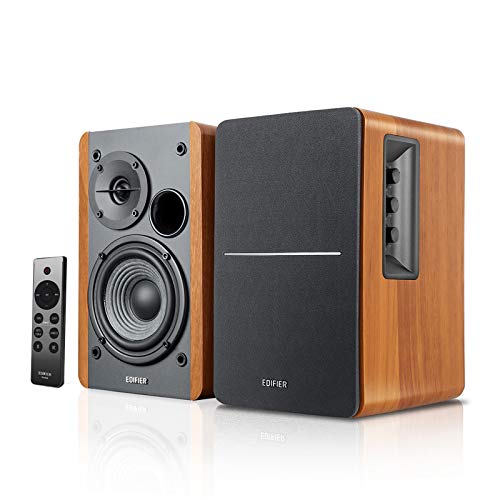
Edifier R1280DBs Active Bluetooth Bookshelf Speakers, Wood Grain
The Edifier R1280DBs is the powered pick in this guide, and it is the simplest route to vinyl listening. The amplifier is built in, so the speakers connect directly to a turntable with a built-in phono stage, or to a separate phono preamp, with no separate amplifier needed. The pair has a 4-inch woofer and a silk dome tweeter in each cabinet, with Bluetooth, optical, coaxial, and dual RCA inputs, plus a subwoofer output for listeners who want more bass later. A wireless remote controls volume and input selection, and tone controls on the rear let you adjust bass and treble to suit your room.
Who it is for: listeners who want the simplest vinyl setup, with no separate amplifier, in a small room or as a second system, and who also want Bluetooth for streaming from a phone.
Caveats: the 4-inch woofers give less bass than the larger passive picks in this guide, so very bass-heavy music may feel light without a subwoofer. A turntable without a built-in phono stage still needs a separate phono preamp. The powered design means the amplifier cannot be upgraded separately from the speakers.
5. Polk Audio T15 Bookshelf Speakers

Polk Audio T15 Home Theater and Stereo Bookshelf Speakers, Black (Pair)
The Polk Audio T15 is a compact passive bookshelf speaker with a 5.25-inch woofer and a 0.75-inch tweeter, and it is the most affordable pick in this guide. It is a straightforward two-way design with a rear port, wall-mountable cabinets, and a warm, easygoing sound that suits long listening sessions. For a first vinyl system on a modest amplifier, the T15 gives a clear step up from small desktop speakers, with fuller bass and a more open midrange.
Who it is for: listeners building a first vinyl system who want a compact, affordable passive pair for a small room, and who already own or plan to buy a modest amplifier.
Caveats: bass and detail are more limited than the larger picks in this guide, so it suits small rooms better than large ones. It is passive and needs an amplifier. The rear port needs a little space behind the cabinet, so avoid pushing it hard against a wall.
Comparison Table
| Speaker | Type | Woofer | Tweeter | Best room size | Standout trait |
|---|---|---|---|---|---|
| KEF Q150 | Passive bookshelf | 5.25-inch Uni-Q array | Uni-Q tweeter in driver centre | Small to medium | Wide, stable stereo image |
| ELAC Debut 2.0 B6.2 | Passive bookshelf | 6.5-inch aramid-fibre | 1-inch cloth dome | Medium | Warm, full sound with strong bass |
| Klipsch RP-600M II | Passive bookshelf | 6.5-inch Cerametallic | 1-inch titanium in Tractrix horn | Medium to large | Lively dynamics and high sensitivity |
| Edifier R1280DBs | Powered bookshelf | 4-inch | Silk dome | Small | Simplest setup, amplifier built in |
| Polk Audio T15 | Passive bookshelf | 5.25-inch | 0.75-inch | Small | Compact, affordable first-system pick |
Which One Is Right for You?
Start with your room and your amplifier. If you already own a stereo amplifier or receiver and you listen in a small to medium room, the KEF Q150 is a strong all-round choice, with a spacious image and a smooth top end that flatters most records. If you want a warmer, fuller sound with more bass from a bookshelf pair, and you have space for a larger cabinet, the ELAC Debut 2.0 B6.2 is the pick that most often suits a first vinyl system.
If your room is larger, or you listen to energetic music and want a speaker that plays loud and stays dynamic, the Klipsch RP-600M II fits. Its lively character and high sensitivity make it a good match for a modest amplifier in a bigger space, and its forward presentation brings out the energy in rock and funk pressings.
If you want the simplest possible setup, choose the Edifier R1280DBs. With the amplifier built in, you connect your turntable, through its built-in phono stage or a separate phono preamp, and you are listening. It suits a small room, a desk, or a second system, and its Bluetooth input covers streaming when the turntable is off. If you want the most affordable route into a passive vinyl system, choose the Polk Audio T15. It is compact, easy to place, and pairs well with an entry-level amplifier, leaving room to invest in the turntable and phono stage.
Frequently Asked Questions
Do I need a phono stage with these speakers?
Yes, somewhere in the chain. A turntable signal is much weaker than a normal line-level signal, and it needs a phono stage to bring it up to listening level. Some turntables have one built in, some amplifiers have one built in, and some setups need a separate phono preamp box. The speakers themselves do not include a phono stage, including the powered Edifier pair, so check what your turntable and amplifier already provide before you buy.
Are passive or powered speakers better for vinyl?
Neither is better in general. Passive speakers give you more choice: you pick the amplifier, you can upgrade it later, and you can match its character to your turntable. Powered speakers are simpler: the amplifier is built in, the cable count is low, and the setup is quicker. Choose passive if you enjoy building a system piece by piece, and powered if you want the shortest path from turntable to music.
How far from the wall should my speakers sit?
It depends on the design. Rear-ported speakers need more space behind them than front-ported speakers, because the port moves air out of the back of the cabinet. As a starting point, try a hand’s width or more behind a rear-ported pair, then move the speakers out a little further and listen to whether the bass becomes cleaner. If the bass sounds boomy, move the speakers further from the wall. If it sounds thin, move them a little closer.
Can I use these speakers with a subwoofer?
Yes. Most of the picks in this guide work well with a subwoofer, and the powered Edifier pair has a dedicated subwoofer output. A subwoofer adds low bass that a bookshelf pair cannot reach on its own, which suits electronic music and large orchestral records. Set the subwoofer level so that it supports the speakers rather than overpowering them, and place it where it sounds smoothest in your room.
Disclosure: As an Amazon Associate, we may earn from qualifying purchases.
Related guides
More from Amazon
Programs that pair well with the guide above. Offers and eligibility are set by Amazon and may change.
A free business account with business pricing and bulk-buying tools for work, shop or home office.
Create a business accountFree shipping on eligible items, Prime Video and more. Eligible new members can start with a free trial.
Start a Prime free trialAudiobooks and podcasts to listen to on the go. Eligible new members can start with a free trial.
Try Audible freeAd-free music streaming. Eligible new subscribers can start with a free trial.
Try Music Unlimited freeAs an Amazon Associate we earn from qualifying purchases.