The Canon EOS R50 is the best all-round lightweight mirrorless camera for most buyers. It weighs about 375 g with battery and card, has a viewfinder, and offers simple autofocus. If you stream or make video, the Sony ZV-E10 II is the better pick. The Fujifilm X-M5 is the lightest of the group, and the Canon EOS R8 is the lightest practical full-frame option.
“Lightweight” is only useful with a number attached. This guide uses body weight with battery and card (per the manufacturers’ spec sheets) and then adds a lens, because the lens often decides how light the kit really is.
As an Amazon Associate we earn from qualifying purchases at no extra cost to you.
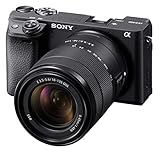


Our Top Picks
Top 3 picks at a glance
Quick comparison of the picks
| Pick | Best for | Key specs (per manufacturer) | Typical price (body or kit) |
|---|---|---|---|
| Canon EOS R50 | Best overall | ~375 g, 24.2 MP APS-C, built-in EVF, 4K up to 30p, no in-body stabilization | $650–$900 |
| Sony ZV-E10 II | Streaming and video | ~377 g, 26 MP APS-C, no EVF, 4K up to 60p, flip-out screen, NP-FZ100 battery | $950–$1,300 |
| Fujifilm X-M5 | Lightest kit, travel | ~355 g, 26 MP APS-C, no EVF, flip-out screen, 6.2K video | $800–$1,100 |
| Canon EOS R100 | Budget | ~356 g, 24 MP APS-C, EVF, fixed rear screen, 4K with a crop | $450–$650 |
| Canon EOS R8 | Lightweight full-frame | ~461 g, 24 MP full-frame, EVF, no in-body stabilization | $1,300–$1,700 |
| Sony a7C II | Full-frame with stabilization | ~514 g, 33 MP full-frame, EVF, in-body stabilization | $2,000–$2,400 |
Best overall: Canon EOS R50
The R50 is the easiest recommendation because it has no major gaps for its size. It has an electronic viewfinder, a vari-angle screen, subject-tracking autofocus and a small RF-S kit lens at about 130 g. Canon’s RF mount also has a growing lens range, including cheap primes.
Trade-off: there is no in-body stabilization, and 4K tops out at 30p. It also uses the small LP-E12 battery, so carry a spare or plan for USB power.
Best for streaming and video: Sony ZV-E10 II
This is the pick if the camera will sit on a desk or boom arm as a webcam replacement, or if you film gameplay reactions, setups and event footage. It offers 4K up to 60p, a front-facing design, a directional mic with a windscreen, and Sony’s autofocus with product-showcase behavior. Its NP-FZ100 battery is much larger than the R50’s, which matters for long sessions.
Trade-off: there is no viewfinder, so bright outdoor shooting relies on the rear screen. Stabilization is electronic only, so handheld walking footage will crop in. Check Sony’s spec sheet for recording-time and heat limits at 4K60 if you plan long continuous takes.
Best for travel and stills: Fujifilm X-M5
At roughly 355 g, the X-M5 is the lightest interchangeable-lens body on this list that still has a modern 26 MP sensor and strong video specs. Pair it with a small lens such as the XF 27mm f/2.8 R WR (about 84 g) and the whole kit is under 450 g. Fujifilm’s film simulations also make straight-out-of-camera JPEGs look good without editing.
Trade-off: there is no viewfinder and no in-body stabilization. Fujifilm’s lens range is excellent, but small, cheap zooms are fewer than in Sony or Canon systems.
Best budget: Canon EOS R100
The R100 is the cheapest way into a sub-360 g mirrorless camera with a viewfinder and a proper APS-C sensor. It suits beginners who want better image quality than a phone and a camera that disappears in a bag.
Trade-off: the rear screen is fixed, so it is a poor vlogging camera. 4K is cropped, and the autofocus and burst speeds are a step behind the R50. If you can stretch the budget, buy the R50 instead.
Best lightweight full-frame: Canon EOS R8 (and Sony a7C II)
The R8 is about 461 g with battery and card, so it is lighter than many APS-C cameras from a few years ago. It is the pick for low-light work, shallow depth of field and higher-quality video. Paired with the RF 50mm f/1.8 STM (about 160 g), the kit is roughly 620 g.
If you want in-body stabilization in a small full-frame body, the Sony a7C II is the alternative at about 514 g. It costs a lot more, and full-frame lenses are bigger, so the kit weight climbs quickly.
Trade-off for both: full-frame lenses are larger, and pricier lenses erase some of the weight advantage.
Worked example: what the kit really weighs
Body weight is only part of the load. Add a lens and a spare battery and compare the totals. Weights below are approximate and come from manufacturer spec sheets.
| Kit | Body (g) | Lens (g) | Total (g) |
|---|---|---|---|
| Canon R50 + RF-S 18-45mm | 375 | ~130 | ~505 |
| Sony ZV-E10 II + 16-50mm PZ | 377 | ~116 | ~493 |
| Fujifilm X-M5 + XC 15-45mm PZ | 355 | ~135 | ~490 |
| Canon R8 + RF 50mm f/1.8 | 461 | ~160 | ~621 |
| Sony a7C II + FE 40mm f/2.5 G | 514 | ~173 | ~687 |
Moving from APS-C to full-frame adds roughly 120–190 g even with a compact prime. Over a full day of event walking, that is about the weight of a smartphone. A good rule is to aim for a body under 400 g and a complete kit under 550 g if the camera will be carried all day.
Worked example: battery runtime for streaming
Small bodies have small batteries. Battery energy in watt-hours is voltage times capacity. The numbers below use published battery ratings, plus an assumed draw of 5 W for a camera running continuously on a live feed. Real draw varies with resolution, screen use and temperature.
- Sony NP-FZ100: 7.2 V × 2.28 Ah ≈ 16.4 Wh, so about 3.3 hours at 5 W.
- Fujifilm NP-W126S: 7.2 V × 1.26 Ah ≈ 9.1 Wh, so about 1.8 hours.
- Canon LP-E12: 7.2 V × 0.875 Ah ≈ 6.3 Wh, so about 1.3 hours.
For a three-hour stream, the Sony body gets through on one battery, while the Canon and Fujifilm need USB power or a dummy battery. Check each manufacturer’s spec sheet to confirm which bodies run while connected to USB power.
How to choose: match your situation to a camera
| Your situation | Choose | Why |
|---|---|---|
| First camera, want an eye-level viewfinder | Canon EOS R50 | EVF, easy menus, kit lens ~130 g |
| Desk streaming, long sessions | Sony ZV-E10 II | Larger battery, 4K60, flip screen |
| Carry it all day, mostly stills | Fujifilm X-M5 | Lightest body, tiny primes available |
| Under $650, want to save the most | Canon EOS R100 | Cheapest light body with EVF |
| Low-light events and LAN parties | Canon EOS R8 | Full-frame sensor in a ~461 g body |
| Handheld video without a gimbal | Sony a7C II | In-body stabilization |
Criteria that matter more than megapixels
- Stabilization: none of the sub-400 g APS-C picks have in-body stabilization. For handheld video, choose a stabilized lens or budget for a small gimbal (usually $100–$200 for a basic model, which adds 400–600 g).
- Viewfinder: the R50 and R100 have one. The ZV-E10 II and X-M5 do not, which saves weight but hurts in sunlight.
- Lens system: a light body with heavy lenses defeats the purpose. Look for compact primes under 200 g in your mount before you buy.
- Video limits: read recording-time and crop details in the spec sheet. 4K60 on APS-C bodies often adds a crop that changes your framing.
Frequently Asked Questions
What is the lightest mirrorless camera with interchangeable lenses?
Among the models covered here, the Fujifilm X-M5 is lightest at about 355 g with battery and card, with the Canon EOS R100 close behind at about 356 g. Some older or entry-level Micro Four Thirds bodies are similar, so check current manufacturer weights before buying.
Is a lightweight mirrorless camera good for streaming?
Yes, provided it outputs clean video over USB or HDMI and can run on external power. The Sony ZV-E10 II is the best fit here thanks to its larger battery and video-focused design. Always check that your chosen body supports USB webcam mode or clean HDMI at your target resolution.
Is full-frame worth the extra weight?
It is if you shoot in dim rooms, at events, or want shallow depth of field. The Canon EOS R8 adds about 85 g over the R50 body, but its lenses also tend to be larger. For daylight shooting and travel, APS-C gives you most of the quality at a lower weight and price.
Do lightweight cameras overheat?
Small bodies have less room for heat dissipation, so long 4K recording can trigger limits on some models. Manufacturers list recording-time behavior in their spec sheets and manuals. Using 1080p, an external power source and an open-air position can help during long streams.
Is a mirrorless camera better than a phone for lightweight travel?
For image quality in low light, lens choice and background blur, yes. A 500 g kit costs far more weight than a phone, though. If you rarely print or crop heavily, a phone may be enough; if you want optical zoom range, a sensor with more detail or long-form video, a light mirrorless body is worth carrying.
Related guides
More from Amazon
Programs that pair well with the guide above. Offers and eligibility are set by Amazon and may change.
A free business account with business pricing and bulk-buying tools for work, shop or home office.
Create a business accountFree shipping on eligible items, Prime Video and more. Eligible new members can start with a free trial.
Start a Prime free trialAudiobooks and podcasts to listen to on the go. Eligible new members can start with a free trial.
Try Audible freeAd-free music streaming. Eligible new subscribers can start with a free trial.
Try Music Unlimited freeAs an Amazon Associate we earn from qualifying purchases.


