The best 35mm rangefinder camera for most people who want a new body is the Leica M6 (the reissued 0.72x version), and the best-value way in is a used Canonet QL17 GIII or a Canon-era screw-mount body. Leica’s M-mount is the center of the ecosystem, so a used Voigtländer Bessa or Leica body plus a modern third-party lens is the sensible middle path. Which one is right depends on focal length, lens mount, and how much servicing risk you accept on a 40-to-60-year-old camera.
Almost every rangefinder is discontinued, so this guide is built around spec classes and decision criteria rather than a single shelf of new products. Availability, condition and pricing vary widely, so check current listings and the manufacturer’s own documentation before buying.
As an Amazon Associate we earn from qualifying purchases at no extra cost to you.


Our Top Picks
Top 3 picks at a glance
Quick comparison of the picks
| Pick | Best for | Key specs | Price range |
|---|---|---|---|
| Leica M6 (current reissue) | Best overall, buying new | M mount, TTL meter, 0.72x finder, mechanical cloth shutter, 1/1000 s top speed | Premium |
| Leica M-A | Purists who want no battery at all | M mount, fully mechanical, no meter | Premium |
| Voigtländer Bessa R2M / R3M / R4M (used) | Best M-mount value | M mount, built-in meter, aperture priority on some variants, various finder magnifications | Mid-range, used |
| Canonet QL17 GIII | Best budget, fixed lens | 40mm f/1.7 lens, leaf shutter, aperture-priority auto, battery-dependent | Budget, used |
| Canon P / Canon 7 (used) | Best budget interchangeable-lens | M39 screw mount, large bright finder, wide lens selection | Budget to mid-range, used |
| Yashica Electro 35 GSN | Best for point-and-shoot simplicity | 45mm f/1.7 lens, electronic shutter, aperture-priority auto | Budget, used |
| Minolta CLE | Best compact with a meter | M mount, aperture-priority auto, 40mm framelines, small body | Mid-range, used |
| Contax G2 | Best autofocus rangefinder | Autofocus, G-mount Zeiss lenses, motorized film advance | Mid-range to premium, used |
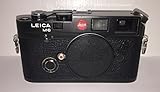
Best overall: Leica M6 (reissue)
The M6 reissue is the only mainstream rangefinder here with current factory support, a warranty on a new body, and a modern supply of lenses. It has a TTL light meter, a 0.72x viewfinder with framelines for several focal lengths, and a mechanical shutter that works at every speed without a battery. The battery only powers the meter.
Who it suits: anyone who wants one body for decades and does not want to gamble on a worn camera.
Trade-off: the cost. The body alone is premium-priced, and Leica lenses add to it, which is why many buyers pair it with Voigtländer glass.
Best for minimalists: Leica M-A
The M-A is the M6 formula with the meter removed. Per Leica’s description, it is fully mechanical, so you meter with a handheld meter, a phone app, or the sunny-16 rule. It suits people who want the least that can fail.
Trade-off: no meter means slower shooting and more missed exposures while you learn. Color negative film forgives this; slide film does not.
Best M-mount value: Voigtländer Bessa (used)
The Cosina-built Bessa R-series bodies are no longer sold new, but they remain a common used route into M or screw mount. They are lighter and cheaper than a Leica, they meter, and several variants offer aperture-priority auto. The viewfinder magnification and framelines differ by model, so check which variant you are buying.
Trade-off: the build feels less dense than a Leica, and the plastic parts and rewind mechanics are not as durable. Used examples need a quick check of the shutter and meter.
Best budget: Canonet QL17 GIII
This is the classic first rangefinder. The fixed 40mm f/1.7 lens is sharp, the leaf shutter is quiet and syncs flash at every speed, and aperture-priority auto makes it close to a point-and-shoot while still teaching rangefinder focusing.
Trade-off: the original meter battery type is obsolete. You will need an adapter or a replacement cell, and the meter reads differently depending on the cell’s voltage. The light seals and foam almost always need replacing on a used body. Have the lens checked for haze and the rangefinder patch for fading.
Best budget interchangeable lens: Canon P or Canon 7
These Canon bodies use the M39 screw mount, which has a large pool of vintage and modern lenses, and adapters let you use M-mount lenses with them. The Canon P is meterless and simple. The Canon 7 adds a meter and a wider range of framelines.
Trade-off: they are older, and the Canon 7’s meter was designed around a cell type that is no longer made. Expect to service the shutter on any example you buy.
Best for simplicity: Yashica Electro 35 GSN
A 45mm f/1.7 lens, auto exposure, and a large rangefinder patch make this a good walk-around camera. It is also a good choice when you want something that works like a compact.
Trade-off: the electronic shutter means a dead battery or failed electronics leaves you with a brick, and the Electro line is known for aging electronics. Buy from a seller who has serviced it, or budget for repair.
Best compact with a meter: Minolta CLE
The CLE is an M-mount body with aperture-priority auto and a small, light frame. It has 28mm, 40mm and 90mm framelines, which suit a 40mm lens well. It works with M-mount lenses from Leica and Voigtländer.
Trade-off: parts and repair are harder to find than for a Leica, and it lacks a 35mm or 50mm frameline. Using a 35mm lens means guessing the frame at the edges, and a 50mm means estimating the frame.
Best autofocus rangefinder: Contax G2
The G2 is a true autofocus rangefinder with a Zeiss G-mount lens range. It is the pick for people who want fast, accurate focus on moving subjects without learning manual focusing.
Trade-off: it is electronic, and the lens range is limited to the G system. It is also expensive on the used market for what it is, and repairs are specialist work.
How to choose: decision criteria with numbers
Why effective base length matters
Rangefinder focusing accuracy depends on the effective base length, which is the distance between the two viewing windows multiplied by the finder magnification. The Leica M6 at 0.72x has an effective base of about 50 mm, per Leica’s technical data. A longer effective base gives more precise focusing, which is why 0.85x and 1:1 finders are favoured with fast 50mm to 90mm lenses.
Worked example: how much depth of field you have
Using a standard circle of confusion of 0.03 mm for 35mm film, a 50mm lens focused at 2 meters gives these depth-of-field numbers:
| Aperture | Hyperfocal distance | Near limit | Far limit | Total depth |
|---|---|---|---|---|
| f/1.4 | about 59.6 m | about 1.94 m | about 2.07 m | about 13 cm |
| f/2 | about 41.7 m | about 1.91 m | about 2.10 m | about 19 cm |
At f/1.4 there is only about 13 cm of focus tolerance, so the rangefinder’s mechanical alignment has to be accurate to better than that. A rangefinder that is slightly off will look fine at f/8 but soft wide open. This is why you should test any used body with the fastest lens you plan to use, and why a rangefinder with a shorter effective base is better suited to 35mm and 40mm lenses than to a fast 75mm.
Decision matrix: your situation to a choice
| If you want… | Choose | Reason |
|---|---|---|
| A new camera with a warranty | Leica M6 or M-A | The only current factory-supported option |
| M mount on a smaller budget | Voigtländer Bessa or Minolta CLE | Same lens mount, much lower body cost |
| Wide angles (28mm and 35mm) | Leica M6 0.72x or Bessa with 35mm framelines | The 0.72x finder shows 28mm, 35mm and 50mm framelines |
| Fast 75mm to 90mm lenses | 0.85x finder or Canon with a long base | A longer effective base focuses more accurately |
| Lowest cost, one lens | Canonet QL17 GIII | A fixed lens, no mount to buy into |
| No battery dependence | Leica M-A or Canon P | A fully mechanical shutter and no meter |
| Autofocus | Contax G2 | The only autofocus rangefinder here |
Checks before buying a used body
- Rangefinder alignment: focus on a distant object at infinity and check the patch lines up, then check a close object. Both must agree.
- Patch brightness: a faded or hazy patch makes focusing slow and is expensive to repair.
- Shutter speeds: listen to the slow speeds. Uneven or sticky sounds at 1 s to 1/15 s point to a service need.
- Light seals: crumbling foam is cheap to replace but will leak light if ignored.
- Meter: compare it against a phone meter or a known scene. A reading more than one stop off suggests the wrong battery or a failing cell.
Frequently Asked Questions
Is a rangefinder better than an SLR for 35mm film?
It depends on what you shoot. A rangefinder is smaller, quieter and has no mirror slap, so it is better for street and travel photography. An SLR is better for macro, telephoto and anything where you want to see the exact framing through the lens.
Do I need a Leica to enjoy a rangefinder?
No. Voigtländer, Canon, Minolta and Yashica made capable rangefinders, and several are far cheaper. Leica’s advantage is factory support and the strongest repair network, not better pictures.
What lens should I start with on an M-mount body?
A 35mm or 40mm lens is the most forgiving starting point. It is wide enough that small focusing errors matter less, and the framelines on most M-mount bodies are accurate at that length. A 50mm is the next step.
Can I use a rangefinder with glasses?
Yes, but it depends on the finder. A high-magnification finder such as 0.85x gives a smaller view of the framelines, and with glasses you may not see the full frame. The 0.72x finder is generally easier for glasses wearers, and a 28mm frameline can be hard to see on a higher magnification finder.
How often does a used rangefinder need servicing?
A camera that has not been serviced in decades usually needs it. Expect to replace light seals and to check the shutter and rangefinder alignment. If the seller has documentation of a recent service, that is worth paying for.
Is an autofocus rangefinder worth considering?
Yes, if you want to avoid manual focus. The Contax G2 is the best-known option, with the trade-off that it depends on electronics and a limited lens range. A manual-focus rangefinder will outlast it in most cases.
Related guides
More from Amazon
Programs that pair well with the guide above. Offers and eligibility are set by Amazon and may change.
A free business account with business pricing and bulk-buying tools for work, shop or home office.
Create a business accountFree shipping on eligible items, Prime Video and more. Eligible new members can start with a free trial.
Start a Prime free trialAudiobooks and podcasts to listen to on the go. Eligible new members can start with a free trial.
Try Audible freeAd-free music streaming. Eligible new subscribers can start with a free trial.
Try Music Unlimited freeAs an Amazon Associate we earn from qualifying purchases.


