
The best heated eye massagers for relaxation are those that let you control heat independently from pressure, fit comfortably around your nose and temples, and provide at least 60 minutes of usable battery life; for most people, a mid-range model with gentle compression, adjustable heat, and a washable face pad is the sensible choice.
As an Amazon Associate we earn from qualifying purchases at no extra cost to you.
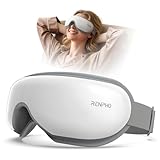
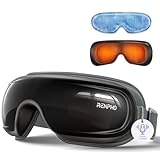


Top 3 picks at a glance
Quick comparison
| Type or example | Heat range | Massage style | Typical noise | Battery expectation | Best for |
|---|---|---|---|---|---|
| Basic heated mask | One setting, about 38–42°C | Heat only or light vibration | Silent to 35 dB | 2–5 sessions | Simple bedtime relaxation |
| Mid-range air-compression massager | About 38–45°C, often adjustable | Compression, vibration, and heat | 35–50 dB | 5–10 sessions | Everyday use and feature balance |
| Premium heated eye massager | Multiple levels, commonly 40–48°C | Independent heat, pressure, and vibration controls | 30–45 dB | 8–15 sessions | Frequent users who want fine control |
| RENPHO Eyeris 1 or Eyeris 2 class | Model-dependent, usually several heat modes | Air compression, vibration, music, and heat | Noticeable pump noise | Several short sessions per charge | Users prioritizing compression and controls |
| Breo iSee4 class | Adjustable warming with mode presets | Compression-focused massage with heat | Quiet to moderate | Several sessions per charge | Compact, structured eye-area massage |
Exact performance varies by revision, battery condition, temperature setting, and how tightly the device is worn. Treat the figures above as buying ranges rather than guarantees.
What makes a heated eye massager worth buying?
Independent heat control
Heat should not be tied permanently to the strongest massage program. A useful device offers at least two heat levels, ideally with a heat-only mode. Look for a normal operating range around 38–45°C. This is warm enough to feel soothing without making the mask uncomfortably hot for many users.
A claimed maximum temperature is less important than temperature consistency. A mask that reaches a moderate temperature evenly across both eye areas is preferable to one with a very hot center and cool edges. Automatic shutoff after roughly 10–20 minutes is also important because most products are designed for short relaxation sessions, not continuous wear.
Massage modes and pressure
Air compression is the feature that most clearly separates eye massagers from heated sleep masks. Small air bladders inflate around the brow and temples, creating rhythmic pressure. Vibration adds a buzzing or tapping sensation, while built-in audio may play nature sounds or music.
- Gentle compression: best for first use, reading breaks, or users sensitive to pressure.
- Rhythmic compression: useful when you want a more noticeable brow and temple massage.
- Vibration: can make the session feel more active but may increase noise and battery drain.
- Heat only: the simplest option for winding down without pressure around the eyes.
More modes do not automatically mean a better device. The practical question is whether each function can be adjusted or switched off independently. A strong compression cycle is uncomfortable for some people, especially when the mask presses against the nose bridge or eyelids.
Fit, glasses, and nose clearance
Fit matters more than a long feature list. Check whether the product uses a wide elastic strap, a padded nose cutout, and adjustable eye chambers. A rigid shell may seal out light well but can press against eyelashes, glasses, or a prominent nose bridge.
If you wear glasses, expect to remove them during use unless the manufacturer specifically provides clearance. Contact lenses may also feel less comfortable during warming sessions. The mask should rest securely without requiring the strap to be tightened enough to leave marks.
Choosing by situation
| Your situation | Prioritize | Avoid | Recommended setup |
|---|---|---|---|
| You want a quiet bedtime routine | Heat-only mode, low vibration, under 35 dB | Loud air pumps and mandatory audio | Low heat for 10–15 minutes |
| You enjoy a stronger massage | Adjustable compression and a stable strap | One fixed pressure level | Medium heat with the lowest comfortable pressure |
| You travel frequently | Foldable design, USB-C charging, under 400 g | Proprietary chargers and bulky cases | Heat-only or low-power mode to extend runtime |
| You use it every day | Washable face contact surfaces and replaceable pads | Non-removable fabric that absorbs skin oils | Wipe the mask after each use and wash pads weekly |
| You are sensitive to pressure | Independent compression control or heat-only operation | Rigid shells and aggressive presets | Short, low-pressure sessions while seated |
Battery life: a useful calculation
Manufacturers often advertise sessions rather than battery capacity. You can estimate practical runtime with a simple calculation. Suppose a mask has a 1,200 mAh battery at 3.7 volts:
1.2 Ah × 3.7 V = 4.44 Wh of stored energy.
If the heater, pump, vibration motor, and electronics consume an average of 2.5 watts, theoretical runtime is:
4.44 Wh ÷ 2.5 W = 1.78 hours.
Allowing for charging losses, automatic power management, and battery aging, usable runtime may be closer to 75–90 minutes. At a 15-minute session, that works out to roughly five or six sessions. Heat and strong compression usually reduce runtime more than heat-only operation.
For daily use, a battery of around 1,000–1,500 mAh is generally more convenient than a very small battery. USB-C charging is preferable because it reduces cable clutter, but charging speed matters less than whether the device can complete a session without shutting down.
Noise can determine whether you keep using it
Air-compression devices are not silent. Their pump may produce a repeating hum or clicking sound whenever the bladders inflate. A specification near 40 dB can still be audible in a quiet bedroom, especially because the pump is close to your ears. Vibration motors may add a low buzz that travels through the mask frame.
If you plan to use the massager while listening to podcasts or relaxing beside someone, choose a model with heat-only and vibration-off settings. Built-in speakers are convenient, but Bluetooth support is often more useful because you can use your own headphones or a nearby speaker. Do not use a heated eye massager while driving, walking in traffic, or doing anything that requires unobstructed awareness.
Cleaning and skin-contact details
Eye massagers sit against areas that collect sweat, makeup, sunscreen, and facial oils. A removable, washable cushion is one of the most valuable long-term features. If the padding cannot be removed, use a lightly damp microfiber cloth and a small amount of mild soap on the contact surface, then allow it to dry fully.
- Power the device off and disconnect it before cleaning.
- Do not submerge the mask or allow liquid near charging ports, speakers, pumps, or controls.
- Wipe the face pad after each use if you apply skincare or wear makeup.
- Wash removable fabric pads about once a week with mild detergent, following the product instructions.
- Do not share the mask without cleaning the contact surfaces first.
A smooth synthetic leather cushion is usually easier to wipe than porous fabric, while fabric can feel cooler and softer. Replacement pads are worth considering if you expect years of frequent use.
Comfort features versus medical claims
Warmth, gentle pressure, and vibration may help you relax or make a screen break feel more pleasant. They should not be treated as a cure for dry eye disease, migraines, glaucoma, infections, vision problems, or other medical conditions. Marketing language such as “improves circulation,” “reduces eye strain,” or “drains the sinuses” may describe a perceived comfort effect rather than an established medical treatment.
Stop using the device if it causes pain, persistent redness, blurred vision, dizziness, nausea, or worsening headaches. Seek professional advice before using one if you have had recent eye surgery, have a diagnosed eye condition, significant light sensitivity, facial nerve problems, or difficulty sensing heat. Never place a heated massager over an injured or inflamed eye.
How to use one comfortably
- Charge the device and clean the face pad.
- Start with heat-only or the lowest heat setting for 10 minutes.
- Loosen the strap until the mask blocks light without pressing firmly on the eyelids.
- If desired, add low compression for one session before trying a stronger mode.
- Keep the first few sessions short and stop if the pressure feels uncomfortable.
- Wipe the contact surfaces after use and store the mask dry.
For most buyers, the best heated eye massagers are not the hottest or most powerful models. Choose the one with controllable warmth, tolerable pump noise, a comfortable nose bridge, reliable short-session battery life, and contact surfaces you can clean easily. Those details determine whether the device becomes a useful daily comfort tool rather than an expensive gadget left in a drawer.


