The best gaming chair for most people in 2026 is the Secretlab Titan Evo, because it comes in three body sizes and has integrated adjustable lumbar support. If you sit more than six hours a day and want mesh airflow, a Herman Miller x Logitech G Vantum is the premium choice. For a tight budget, the Corsair TC100 Relaxed is a sensible entry point. Which one is right depends on three numbers: your height, your weight, and how many hours a day you actually sit.
As an Amazon Associate we earn from qualifying purchases at no extra cost to you.


Our Top Picks
 Razer Iskur V2 X Ergonomic Gaming ChairStandard27.58 x 27.58 x 49.64 inches50.26 poundsCheck on Amazon

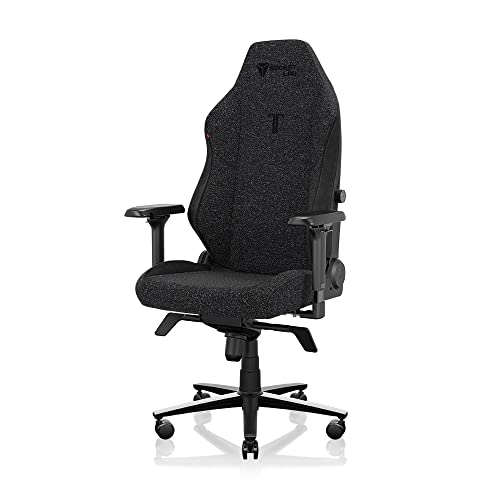
Top 3 picks at a glance
Quick comparison of the picks
| Pick | Best for | Key features | Price range |
|---|---|---|---|
| Secretlab Titan Evo | Best overall | Three sizes (Small, Regular, XL), built-in lumbar, 4D armrests, cold-cure foam, recline with tilt lock | Premium |
| Herman Miller x Logitech G Vantum | Long sessions, hot rooms | Mesh seat and back, adjustable lumbar, ergonomic-chair engineering, long warranty | Top end |
| Razer Iskur V2 | Sculpted lumbar support, racing look | Built-in lumbar, 4D armrests, firm foam, synthetic leather | Upper mid-range to premium |
| Corsair TC100 Relaxed | Best budget | Wide seat, fabric or leatherette, 4D-style armrests on most versions | Budget to mid-range |
| Noblechairs Hero | Tall or heavier users | Large frame, firm padding, wide recline range | Premium |
Specs and sizing change between revisions. Check the manufacturer’s current spec sheet for weight rating, height range and warranty before you buy.
Best overall: Secretlab Titan Evo
The Titan Evo is the safest recommendation because it solves the biggest fit problem: one size does not suit everyone. Secretlab sells Small, Regular and XL versions, each with its own height and weight range on its sizing guide. The lumbar support is built in and adjusts in depth, so you don’t need a pillow. The cold-cure foam is firm, which tends to hold up better over years than soft padding.
Trade-off: the firm foam and sculpted bucket-style seat suit upright, forward-leaning posture. Some people who like to sit cross-legged find the side bolsters restrictive. The materials are also warmer than mesh.
Best for long sessions: Herman Miller x Logitech G Vantum
This is the pick if you treat your desk as a workplace as well as a gaming spot. It is built on the same design principles as Herman Miller’s office chairs, with a breathable mesh surface and adjustable support. Mesh matters for people who run a hot PC in a small room, since a leatherette seat traps heat and moisture.
Trade-off: it sits at the top of the price range, and the look is closer to an office chair than a racing seat. The headrest and recline feel is also different from bucket-style chairs.
Best for a sculpted racing feel: Razer Iskur V2
The Iskur V2 adds an integrated lumbar curve and 4D armrests to a firm, high-back design. It suits people who want a supportive lower back without adding accessories, and who like the traditional gaming-chair look.
Trade-off: the synthetic leather runs warm, and the fixed lumbar curve suits some spines better than others. Sit in one first if you can, or make sure the return window covers a two-week trial.
Best budget: Corsair TC100 Relaxed
The TC100 Relaxed has a wider, flatter seat than most race-style chairs, so it comfortably fits larger frames and people who like to shift position. It gives you the basics at a budget-to-mid-range price: adjustable armrests, tilt and a fabric or leatherette cover.
Trade-off: the foam is softer and the lumbar support is basic, so expect to add a small cushion if you sit for long periods. Durability at this level is usually shorter than with premium chairs.
Best for tall or heavier users: Noblechairs Hero
The Hero is a large-frame chair with a tall back and firm padding. It is one of the more common recommendations for people who find standard chairs too short in the back or too narrow at the seat. Always compare your weight with the manufacturer’s stated rating rather than the marketing size label.
Trade-off: it is heavy and large, so it needs floor space. The firm padding takes a few weeks to feel broken in.
How to choose: the numbers that matter
1. Seat height range against your height
As a rough ergonomic rule of thumb, the seat should sit at about 24–27% of your body height, so your feet rest flat with your knees near 90 degrees. This is a starting estimate, not a medical measurement, and shoes change it.
| Your height | Target seat height (24–27%) | What to look for |
|---|---|---|
| 160 cm | 38–43 cm | Small size or a low-end seat height of 40 cm or less |
| 175 cm | 42–47 cm | Regular size; most chairs cover this |
| 190 cm | 46–51 cm | XL or large-frame chair with a seat that rises above 50 cm |
Worked example: at 175 cm, multiply 175 by 0.24 and 0.27 to get about 42 cm and 47 cm. If a chair’s seat only adjusts from 45 to 53 cm, your feet will dangle at the low end. You would need a footrest or a different chair.
2. Seat depth: the two-finger check
Sit all the way back. You should be able to fit two to three fingers (about 5 cm) between the seat edge and the back of your knee. If the seat is too deep, it presses on your legs and you’ll slump forward off the lumbar support. This is the main reason size options matter.
3. Weight rating
Choose a chair whose rated capacity is comfortably above your weight. A 20–30% margin is a sensible buffer for gas-lift and recline-mechanism wear. Someone who weighs 100 kg should look at chairs rated for 125 kg or more, not at ones rated right at 100.
4. Hours per day and per year
Use your real sitting time to work out how much chair you need. Four hours a day is about 1,460 hours a year, or roughly 7,300 hours over five years. At that level a budget chair with softer foam may still be fine. At eight hours a day you reach about 14,600 hours over five years, and adjustable lumbar, a better gas lift and breathable materials start to matter far more than a stylish look.
Decision matrix: match your situation to a choice
| Your situation | Choose | Why |
|---|---|---|
| 4 hours a day, tight budget | Corsair TC100 Relaxed | Wide seat and basic adjustment cover the essentials |
| 4–6 hours, average build | Secretlab Titan Evo (Regular) | Fit options and integrated lumbar |
| 6+ hours, warm room | Mesh chair such as the Vantum | Airflow and long-term support |
| Under about 165 cm | Small-size chair (Titan Evo Small) | Seat depth and height range fit shorter frames |
| Over about 185 cm or heavier build | Noblechairs Hero or Titan Evo XL | Taller back, wider seat, higher weight rating |
| Work and gaming on the same desk | Mesh or an office-chair-class model | Better posture adjustment across the day |
Gaming chair or office chair?
A gaming chair is usually the better value if you want a racing look, a head pillow and a deep recline for console or controller play. A good ergonomic office chair is often better for long desk hours because it has more adjustment points, such as seat depth, tilt tension and lumbar height. Several of the picks above blend both approaches.
Frequently Asked Questions
What is the best gaming chair overall in 2026?
The Secretlab Titan Evo is the best all-round choice because of its three sizes, integrated lumbar adjustment and firm foam. It fits a wide range of body types better than a one-size chair. If you sit very long hours in a warm room, a mesh model may be a better fit.
Are expensive gaming chairs worth it?
They are worth it if you sit more than about six hours a day, because the extra cost buys better adjustment, longer warranties and more durable foam and mechanisms. For light use of three or four hours, a budget chair can be perfectly adequate. Focus on fit before price.
How do I know what size gaming chair I need?
Compare your height and weight against the manufacturer’s sizing guide, then use the two-finger check for seat depth. Your feet should rest flat with knees near 90 degrees. If a chair is too deep or too tall for you, no amount of padding fixes it.
Is a mesh or leatherette gaming chair better?
Mesh is cooler and more breathable, so it is better for long sessions and warm rooms. Leatherette and synthetic leather are easier to wipe clean and give a firmer, more sculpted feel, but they hold heat. Pick based on room temperature and how long you sit.
How long should a gaming chair last?
Budget chairs commonly last two to four years of daily use before foam flattens or the gas lift weakens. Premium chairs with stronger mechanisms and warranties are designed to last much longer, and the manufacturer’s warranty is a useful guide. Heavy daily use and higher body weight shorten the life of any chair.
Do I need a headrest pillow and lumbar pillow?
Not if the chair has built-in lumbar adjustment that fits your back, since extra cushions can push you out of position. A small lumbar cushion helps on budget chairs with flat backs. Use a head pillow only if it sits at the base of your skull rather than pushing your head forward.
Related guides
More from Amazon
Programs that pair well with the guide above. Offers and eligibility are set by Amazon and may change.
A free business account with business pricing and bulk-buying tools for work, shop or home office.
Create a business accountFree shipping on eligible items, Prime Video and more. Eligible new members can start with a free trial.
Start a Prime free trialAudiobooks and podcasts to listen to on the go. Eligible new members can start with a free trial.
Try Audible freeAd-free music streaming. Eligible new subscribers can start with a free trial.
Try Music Unlimited freeAs an Amazon Associate we earn from qualifying purchases.


