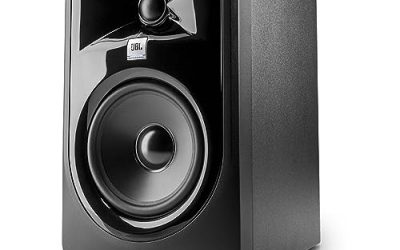
The best desk for music producing is a sturdy desk at least 140 cm wide and 70 cm deep, with a stable surface that does not wobble when you play a keyboard controller, and enough depth to set studio monitors about 1 meter from your ears. For most home studios, a height-adjustable desk like the Flexispot E7 or Uplift V2, or a purpose-built option like the Output Platform, delivers the best mix of stability and flexibility. A good desk lets you keep monitors at ear height, keeps vibration away from your mic and gives you somewhere to put every controller without clutter.
If you meant desks for video or content production, the same principles apply, so the sizing math below works for both. This guide covers the sizes, weight ratings and layouts that matter in a small studio.
Quick comparison of the best production desks
| Pick | Best for | Key specs | Typical price range |
|---|---|---|---|
| Output Platform | Best purpose-built studio desk | Modular, integrated monitor shelves, rack space, cable management | $1,500 to $3,000 |
| Flexispot E7 class standing desk | Best all-round adjustable | Dual motor, 120 kg-class lift capacity, 140 to 180 cm top options | $400 to $700 |
| Uplift V2 standing desk | Best stability at height | 4-leg or C-frame option, up to 160 kg-class capacity, many top sizes | $600 to $1,000 |
| IKEA Bekant or Idasen class | Best budget adjustable | Sit-stand frame, 120 to 160 cm tops, basic cable tray | $300 to $600 |
| Fixed solid-wood desk (spec class) | Best for vibration and tone | Dense top 3 to 4 cm thick, no motor, 150 cm wide | $300 to $800 |
| Compact studio workstation (spec class) | Best for small rooms | 100 to 120 cm wide, pull-out keyboard tray, monitor risers | $150 to $400 |
Best purpose-built: Output Platform
The Output Platform is designed for producers: it has a keyboard tray, a raised monitor shelf, and a spot for speakers at ear level. It is also expensive and bulky, so it makes sense for a dedicated room. The trade-off is that you pay a premium for those studio-specific features, and it lacks height adjustment unless you choose the modular variants.
Best all-round adjustable: Flexispot E7 class
A dual-motor standing desk with a thick top is the most versatile choice because you can alternate between sitting and standing, which matters during long sessions. Check the manufacturer’s stated lift capacity against your gear. The trade-off is that tall desks wobble more at standing height, especially with a tall controller, so choose a model with a wide leg base and a crossbar.
Best for stability: Uplift V2
Uplift offers 3-stage legs, thick tops and optional bracing. Stable desks reduce microphone-borne thumps from typing and keep a keyboard controller from bouncing. The trade-off is price and long delivery times for custom sizes.
Best budget adjustable: IKEA sit-stand
The IKEA frames are well-regarded for the price. The weak point is the lighter-weight chipboard top, so they work better for a laptop-and-controller setup than for a heavy monitor and rack arrangement.
Best for tone and vibration: a solid fixed desk
A heavy, non-motorized desk with a thick top absorbs vibration. Monitors on a rigid surface transmit less low-frequency energy into the desk than monitors on a hollow or thin one. The trade-off is you lose standing flexibility and often must assemble heavy parts.
Worked example: how deep and wide does the desk need to be?
Use a simple layout calculation. Studio monitors should form an equilateral triangle with your head, so if the speakers are 1.0 m apart you should sit about 1.0 m from each.
- Typical 5 inch near-field monitors: 25 cm deep each. Keep them 1 m apart, 1 m from you, tweeters at ear height (around 110 to 120 cm from the floor when seated).
- A 61-key controller: about 95 cm wide and 25 cm deep, so it needs a keyboard shelf or desk space in front of your monitor.
- A 27 inch monitor: about 61 cm wide and 20 cm deep including the stand.
With a 1 m triangle and a 25 cm deep keyboard, you need at least 70 to 80 cm of desk depth to place the keyboard in front of the screen with 15 to 20 cm of palm rest. A desk under 60 cm deep forces you to push the screen too close to your eyes. For width, 61 cm for the monitor, plus two 20 cm speaker footprints and some clearance, lands near 140 cm; 160 cm gives breathing room for an audio interface and a mixer.
Weight load check
Add up your gear and compare it to the rated lift capacity:
| Item | Approx weight |
|---|---|
| Two 5 in studio monitors | 10 kg |
| 27 in monitor | 6 kg |
| 61-key controller | 4 kg |
| Audio interface and small mixer | 4 kg |
| Computer or laptop and accessories | 5 kg |
| Total | about 29 kg |
A 29 kg load is well under the 100 kg-plus rating of most standing desks, but keep in mind that rated capacity is for evenly distributed loads. A rack unit or heavy keyboard at the edge produces uneven stress.
Decision matrix
| Your situation | Choose | Reason |
|---|---|---|
| Dedicated music room, bigger budget | Output Platform or similar studio desk | Built-in ear-level monitor shelves |
| Spare bedroom, long sessions | Dual-motor standing desk, 150 to 160 cm | Alternate sitting and standing |
| Laptop and small controller | 120 to 140 cm desk, 60 to 70 cm deep | Lower cost, less space needed |
| Vocal recording at the desk | Solid fixed desk plus isolation stand | Less rumble transfer |
| Streaming or video editing | Standing desk with monitor arm | Flexible ergonomics |
Setup details that matter more than the desk brand
- Isolate the monitors: Place foam isolation pads or desktop stands under the speakers so bass does not turn the desk into a resonator.
- Keep tweeters at ear height: Tilt monitors toward your ears, and keep them away from the wall to reduce bass buildup.
- Raise the controller: A keyboard tray at 70 to 72 cm from the floor keeps wrists neutral. A desk at 75 cm is typical, so a lower tray often helps.
- Plan cable routing: Use a cable tray and Velcro straps to separate power cables from audio cables, which reduces hum picked up by balanced and unbalanced leads.
- Consider a rack: A 4U to 6U desktop rack stores interfaces and preamps without taking desk surface.
- Mind the wall: Leave at least 20 to 30 cm between speakers and the back wall to limit boundary reinforcement of bass.
Common mistakes
Buying a desk that is too shallow is the most common mistake, followed by choosing a flimsy thin top that wobbles when you play. Also avoid putting speakers right on the desk without any isolation, because they excite desk resonances that confuse your mixes. Finally, do not forget leg room: a rack or controller leg can block underdesk space.
Frequently Asked Questions
What size desk do I need for a home studio?
Aim for 140 to 160 cm wide and 70 to 80 cm deep. This fits two near-field monitors, a 61-key controller, an audio interface and a computer screen with comfortable distance.
Are standing desks good for music production?
Yes, if you choose a stable dual-motor model with a thick top. They let you vary your posture, but cheap models can wobble at full height, which affects playing and recording.
How far should studio monitors be from the desk edge?
Place them so that you, the left monitor and the right monitor form roughly an equilateral triangle, commonly 1 m apart on each side for 5 inch near-field monitors.
Do I need a special studio desk?
No, many producers work well on a regular sturdy desk with monitor stands. A studio desk adds features such as angled monitor shelves and rack space, which are convenient but not required.
How do I reduce vibration on my desk?
Use isolation pads or dedicated monitor stands, choose a heavy and thick desktop, and avoid placing speakers directly on a hollow or thin surface.
Related guides
More from Amazon
Programs that pair well with the guide above. Offers and eligibility are set by Amazon and may change.
A free business account with business pricing and bulk-buying tools for work, shop or home office.
Create a business accountFree shipping on eligible items, Prime Video and more. Eligible new members can start with a free trial.
Start a Prime free trialAudiobooks and podcasts to listen to on the go. Eligible new members can start with a free trial.
Try Audible freeAd-free music streaming. Eligible new subscribers can start with a free trial.
Try Music Unlimited freeAs an Amazon Associate we earn from qualifying purchases.