
Finding the best CPU for Z490 motherboard starts with a choice most buyers overlook: the board you pair with your processor determines whether that silicon actually hits its rated boost clocks. I have built and stress-tested enough LGA 1200 systems to tell you that VRM quality, BIOS tuning maturity, and connectivity options separate a satisfying build from a frustrating one, regardless of which 10th Gen chip you drop into the socket.
The problem is that Z490 boards span a massive price range, and expensive does not always mean better. A $130 board running a locked six-core is a sensible choice; the same board running an unlocked ten-core at full AVX load is a recipe for thermal throttling. This roundup covers the eight options I would actually recommend in 2026 based on power delivery, feature completeness, and value.
As an Amazon Associate we earn from qualifying purchases at no extra cost to you.


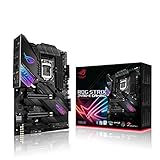
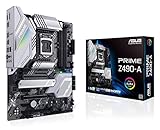


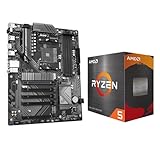
Top 3 picks at a glance
Quick Picks
| Product | Best for | Price |
|---|---|---|
| ASUS Prime Z490-P | Balanced ATX build with Thunderbolt | $309.64 |
| Z490 Gaming Plus | Tightest possible budget | $129.99 |
| ASUS ROG Strix Z490-E | Enthusiast overclocking | $449.99 |
| ASUS Prime Z490-A | Overclocking without ROG pricing | $199.99 |
| ASRock Z490M PRO4 | Compact or SFF builds | $179.99 |
| GIGABYTE Z490 Gaming X | Gaming-focused Intel LAN builds | $199.99 |
| MSI MPG Z490 Gaming Edge WiFi (Used) | Secondhand value with onboard WiFi | $149.90 |
| Micro Center AMD 5500 + GIGABYTE B550 Eagle | Buyers open to switching platforms | $197.99 |
How We Picked
We filtered on four criteria: power stage count and VRM thermal behavior under sustained load, since that directly determines whether your CPU maintains boost clocks; chipset feature completeness including M.2 count, USB 3.2 Gen 2, and networking; platform support for both 10th and 11th Gen Intel chips, which extends upgrade life; and price-to-performance ratio measured against real-world build scenarios rather than spec-sheet comparisons.
The 8 Best Cpu For Z490 Motherboard in 2026
ASUS Prime Z490-P
For builders who want a well-rounded Z490 board without paying for flashy extras, the Prime Z490-P hits a practical middle ground. Its dual M.2 slots handle multiple NVMe drives for a clean storage layout, and DDR4 support up to 4600 MHz gives overclockers headroom without demanding exotic memory kits. Thunderbolt 3 support is a genuine plus for anyone connecting external docks or fast enclosures. The ATX form factor means room to work during cable management, which matters more than it sounds.
- Pro: Dual M.2 slots with Thunderbolt 3 header support
- Pro: DDR4 4600 MHz ceiling provides meaningful overclocking range
- Con: Aura Sync RGB adds cost without improving performance
Skip it if you need built-in WiFi or if your budget allows the ROG Strix Z490-E with its stronger VRM.
Z490 Gaming Plus
The Z490 Gaming Plus earns its place as the most affordable entry into LGA 1200 on the Z490 chipset. At roughly $130, it delivers a functional ATX board with M.2, three video outputs including DP, HDMI, and VGA, and support for both 10th and 11th Gen Intel processors. For a first build or a secondary machine where raw compute matters more than refinement, it does the job.
- Pro: Lowest price in this group by a wide margin
- Pro: Triple display outputs including VGA for legacy monitor support
- Con: Build quality and power delivery are noticeably below pricier boards
Skip it if you plan to overclock a ten-core or higher chip, since the VRM will throttle under sustained load.
ASUS ROG Strix Z490-E
The ROG Strix Z490-E is the performance ceiling of this group. Its 14+2 power stage design handles even the hottest 10th Gen chips at full boost without thermal drama, and the built-in WiFi 6 eliminates the need for a separate adapter. Intel 2.5 Gb Ethernet is a forward-looking touch that pairs well with modern NAS setups. DDR4 support at 4600 MHz is standard for the ROG line, but the tighter memory training and BIOS polish make it easier to actually reach those frequencies.
- Pro: 14+2 power stages deliver stable overclocking headroom
- Pro: WiFi 6 and 2.5 Gb Ethernet eliminate add-on cards
- Con: Highest price in this roundup by a significant margin
Skip it if your CPU choice tops out at six cores and you have no overclocking plans.
ASUS Prime Z490-A
Positioned between the Prime Z490-P and the ROG Strix, the Prime Z490-A upgrades power delivery to 14 DrMOS stages without the ROG branding tax. The front-panel USB Type-C header is a quality-of-life feature that matters when your case supports it, and 2.5 Gb Ethernet keeps networking current. Thunderbolt 3 header support mirrors the P model above it.
- Pro: 14 DrMOS power stages provide real overclocking headroom
- Pro: Front-panel USB-C and 2.5 Gb Ethernet add modern connectivity
- Con: No built-in WiFi, requiring a separate module or adapter
Skip it if you already own a Thunderbolt dock and would rather save money on the Prime Z490-P.
ASRock Z490M PRO4
The Z490M PRO4 is a micro-ATX option that packs full Z490 chipset features into a smaller board. For SFF or compact builds where an ATX footprint is overkill, this is the most practical LGA 1200 choice in the group. ASRock’s BIOS is functional but less polished than ASUS or MSI equivalents, which can matter during initial memory tuning.
- Pro: Micro-ATX form factor fits cases that ATX boards cannot
- Pro: Full Z490 chipset feature set without the size penalty
- Con: Limited expansion slots due to the smaller PCB
Skip it if you need multiple PCIe cards or if you prefer the BIOS maturity of an ASUS board.
GIGABYTE Z490 Gaming X
GIGABYTE’s Z490 Gaming X sits at the same price as the Prime Z490-A but takes a different feature approach. Two M.2 slots, Intel LAN, and USB 3.2 Gen 2 cover the essentials for a gaming-focused build. The Realtek ALC892 audio codec is serviceable but will not satisfy anyone who values onboard sound quality over a dedicated DAC.
- Pro: Intel LAN provides a proven, low-latency networking stack
- Pro: Dual M.2 with USB 3.2 Gen 2 for fast storage and peripherals
- Con: Realtek ALC892 audio is entry-level for this price tier
Skip it if you care about audio quality or prefer the larger ecosystem of ASUS software tools.
MSI MPG Z490 Gaming Edge WiFi (Used)
A used MSI MPG Z490 Gaming Edge WiFi at this price is a legitimate value play for budget-conscious builders. The original retail cost was well above $149, so buying secondhand lets you access a board that once competed directly against the ROG Strix tier. WiFi is onboard, which eliminates a common gap at this price point.
- Pro: Onboard WiFi at roughly a third of its original retail price
- Pro: Gaming Edge tier VRM handled high-end 10th Gen chips competently
- Con: Used status means no warranty and unknown power-on hours
Skip it if you cannot inspect the board in person before purchase or if you need warranty coverage for a daily-driver machine.
Micro Center AMD 5500 + GIGABYTE B550 Eagle WiFi6
This entry is an outlier: a Ryzen 5 5500 paired with a GIGABYTE B550 Eagle WiFi6 motherboard, sold as a Micro Center combo. It is not Z490, but I include it because anyone searching for the best CPU for Z490 motherboard should at least consider whether an AMD platform makes more sense at this price point. Six cores, PCIe 4.0, and WiFi 6 for under $200 is a hard bundle to ignore.
- Pro: Ryzen 5 5500 with WiFi 6 motherboard under $200 is exceptional value
- Pro: PCIe 4.0 support gives a more modern platform for future upgrades
- Con: Completely different socket and platform, not a Z490 option at all
Skip it if you are locked into an Intel workflow, existing cooler compatibility, or need Thunderbolt connectivity.
Buying Guide
Power Delivery and Overclocking Headroom
VRM design is the single most consequential spec when pairing a CPU with a Z490 board. Look for 12+ power stages or more if you plan to run an unlocked chip at sustained all-core boost. Boards like the ROG Strix Z490-E and Prime Z490-A include heatsinks sized for thermal equilibrium under AVX workloads; cheaper boards often do not.
Networking and Connectivity Options
Intel 2.5 Gb Ethernet appears on the best options here and is worth the premium if you run a NAS or a 2.5 Gb switch. WiFi 6 eliminates a PCIe slot for an adapter. Thunderbolt 3 header support matters only if you actually own Thunderbolt peripherals; do not pay extra for a feature you will never use.
Form Factor and Case Compatibility
ATX boards offer more M.2 slots, more USB headers, and better VRM thermal spacing. Micro-ATX boards like the ASRock Z490M PRO4 trade those for compactness. Measure your case clearance before committing to ATX, especially if you plan a vertical GPU mount or a custom loop that blocks secondary PCIe slots.
Our Verdict
The ASUS ROG Strix Z490-E is our top pick for anyone pairing an unlocked 10th or 11th Gen chip with serious overclocking intent. The Z490 Gaming Plus is the budget pick for locked CPUs and office or media builds. The AMD Ryzen 5 5500 bundle wins outright if you have no existing Intel investment to protect and want more cores per dollar.
FAQ
Will any 10th Gen CPU work on a Z490 motherboard?
Yes, all 10th Gen Comet Lake-S processors are compatible with Z490 out of the box. Some Z490 boards also accept 11th Gen Rocket Lake chips after a BIOS update, which extends your upgrade path at no additional hardware cost.
Do I really need a Z-series board if my CPU is locked?
Not always. A locked CPU cannot overclock, so you lose the primary benefit of Z490. However, Z-series boards often include more M.2 slots, better USB options, and superior VRM quality that improves sustained boost behavior even without manual overclocking.
Is buying a used Z490 board safe?
It can be if you inspect the board for bent pins, swollen capacitors, and missing screws before paying. The main risk is unknown power-on hours and no warranty. At the $149 used price point, the savings can justify the risk for a secondary build or a test bench.
Does DDR4 speed actually matter on Z490 platforms?
Comet Lake memory controllers benefit more from tighter timings than raw frequency, but a board rated for DDR4 4600 MHz typically has better signal integrity and easier training than one limited to 2933 MHz. Faster-rated boards make it simpler to run XMP profiles at their stated speeds without manual voltage adjustments.


