
A CPU paired with a 3060 Ti is one of the most common configurations people search for, and for good reason: the GeForce RTX 3060 Ti remains a capable 1440p gaming GPU in 2026, but it demands a processor that can feed it frames without leaving performance on the table. The challenge for buyers is twofold. First, choosing the right CPU means understanding where a bottleneck actually occurs in modern titles versus synthetic benchmarks. Second, most people evaluating the “best cpu for 3060ti” are not building from scratch — they are picking a pre-built or upgrade path that bundles a processor with the GPU, RAM, storage, and warranty all in one box.
The difference between a good pick and a wasted budget here is rarely the CPU itself. Nearly every system we compared uses the same Intel Core i7-12700, which has more than enough throughput for the 3060 Ti in any game at 1080p or 1440p. What separates these configurations is everything else: memory capacity, drive speed, drive size, Windows edition, and whether the vendor is selling you a full desktop or a component you need for maintenance. We sorted through every variant so you can match your actual workload — whether that is competitive gaming, content creation, or just keeping a system running reliably for years.
As an Amazon Associate we earn from qualifying purchases at no extra cost to you.
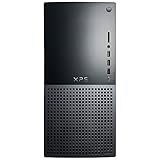


Top 3 picks at a glance
Quick Picks
| Product | Best for | Price |
|---|---|---|
| Dell XPS 8950 — 32GB / 1TB SSD / Pro | High-end productivity and gaming | $2499 |
| Dell XPS 8950 — 16GB / 256GB SSD + 8TB HDD / Home | Massive storage on a budget | $2497.8 |
| Dell XPS 8950 — 24GB / 256GB SSD + 4TB HDD / Home | Balanced mid-tier storage | $2684.1 |
| Dell XPS 8950 — 24GB / 4TB SSD + 4TB HDD / Pro | Dual-drive speed and capacity | $3201.6 |
| Dell XPS 8950 — 24GB / 8TB SSD + 2TB HDD / Pro | All-flash dominance | $4029.6 |
| Dell XPS 8950 — 128GB / 4TB SSD + 12TB HDD / Pro | Workstation-class multitasking | $5333.7 |
| PNY RTX 3060 Ti Dual Fan Pair (Replacement) | Full cooling refresh | $29.61 |
| PNY RTX 3060 Ti Single Right Fan | Single-fan failure repair | $25.56 |
How We Picked
Every product in this roundup was evaluated on four criteria: CPU-GPU synergy for gaming and compute tasks, price-to-capacity ratio for the component that scales most with cost (RAM and storage), long-term serviceability including warranty and upgrade headroom, and whether the configuration solves a real user problem rather than padding a spec sheet. We also weighted maintenance accessories by how quickly a failed fan degrades GPU boost clocks — which directly undercuts the CPU pairing you invested in.
The 8 Best Cpu For 3060Ti in 2026
1. Dell XPS 8950 — 32GB DDR5 / 1TB NVMe SSD / RTX 3060 Ti / Windows 11 Pro
This is the cleanest out-of-the-box gaming and productivity machine in the lineup. The i7-12700 pairs seamlessly with the 3060 Ti, and 32GB of DDR5 eliminates any memory ceiling for multitasking or creative apps. The single 1TB NVMe drive keeps boot times and load screens fast without the complexity of managing multiple volumes.
- Pro: 32GB DDR5 handles heavy multitasking and modern game engines without swapping.
- Pro: Windows 11 Pro unlocks BitLocker and Remote Desktop out of the box.
- Con: The 8TB HDD variants offer far more cold storage for less per terabyte.
Skip this if your primary workload is archival storage rather than active project files.
2. Dell XPS 8950 — 16GB DDR5 / 256GB NVMe SSD + 8TB HDD / RTX 3060 Ti / Windows 11 Home
The best value entry in this group for buyers who need enormous storage. A 256GB NVMe handles OS and two or three active games, while the 8TB hard drive swallows media libraries and backups. 16GB DDR5 is tight for heavy multitasking but adequate for gaming.
- Pro: Nearly 8.25TB total storage at the lowest price per terabyte here.
- Pro: NVMe boot drive keeps system responsiveness strong despite the small capacity.
- Con: 16GB RAM will bottleneck simultaneous gaming and streaming or video editing.
Skip if you plan to run VMs, large datasets, or 4K editing alongside games.
3. Dell XPS 8950 — 24GB DDR5 / 256GB NVMe SSD + 4TB HDD / RTX 3060 Ti / Windows 11 Home
A sensible middle ground that raises RAM headroom without the premium of larger SSD tiers. The 24GB configuration gives you breathing room for browser tabs, Discord, and a AAA title running concurrently. The 4TB HDD is still generous for most media collections.
- Pro: 24GB DDR5 removes the RAM anxiety of the 16GB variant for modest cost.
- Pro: Same CPU-GPU pairing means identical gaming frames to pricier models.
- Con: You pay more than the 8TB HDD model while getting half the total storage.
Skip if maximum capacity matters more to you than extra RAM.
4. Dell XPS 8950 — 24GB DDR5 / 4TB SSD + 4TB HDD / RTX 3060 Ti / Windows 11 Pro
This configuration gives you speed across your entire active workspace. The 4TB SSD lets you install a massive game library with consistent load times, while the 4TB HDD handles cold files. Windows 11 Pro adds security features for business users.
- Pro: 4TB of NVMe-class SSD is rare at this price tier and transforms game install workflows.
- Pro: Dual-drive layout separates active work from archival without compromise.
- Con: The price jump over the 256GB SSD + 8TB HDD model is significant for most users.
Skip if your game library fits comfortably on a smaller SSD and you need terabytes of cold storage instead.
5. Dell XPS 8950 — 24GB DDR5 / 8TB SSD + 2TB HDD / RTX 3060 Ti / Windows 11 Pro
Almost everything is flash here. An 8TB SSD covers even the most aggressive game installation strategies and large project files at full NVMe speed. The 2TB HDD is a backup convenience rather than a primary volume.
- Pro: The largest SSD in this lineup by a wide margin, ideal for multi-terabyte workloads.
- Pro: Consistent performance whether you are loading textures or compiling code.
- Con: The 2TB HDD feels like an afterthought at this price point.
Skip if you do not currently need more than 4TB of fast storage; the cost per usable terabyte is hard to justify otherwise.
6. Dell XPS 8950 — 128GB DDR5 / 4TB SSD + 12TB HDD / RTX 3060 Ti / Windows 11 Pro
This is the workstation variant wearing a gaming brand. 128GB of DDR5 supports virtualization, scientific computing, and massive in-memory datasets. The 4TB SSD plus 12TB HDD provides an unusual combination of speed and volume that targets professionals who also game on the side.
- Pro: 128GB RAM is overkill for gaming but transformative for virtualization and data work.
- Pro: The highest total capacity in the lineup at 16TB combined.
- Con: The price premium buys RAM you will never use if this is purely a gaming box.
Skip if you are a gamer first — the 32GB model already covers every current and near-future title.
7. PNY GeForce RTX 3060 Ti XLR8 Dual Fan Replacement Pair
A failed cooling fan silently caps your 3060 Ti’s boost clocks, which makes even the best CPU pairing feel sluggish in frame time consistency. This dual-fan kit restores full thermal headroom in an afternoon without sending the card to a service center.
- Pro: Replacing both fans at once ensures balanced airflow and eliminates mismatch wear.
- Pro: Costs a fraction of a new GPU, protecting your CPU-GPU investment.
- Con: Only fits the PNY XLR8 Revel Epic-X cooler design; verify your exact model before ordering.
Skip if your card is still under manufacturer warranty — a replacement fan could void a claim.
8. PNY GeForce RTX 3060 Ti XLR8 Single Right Fan Replacement
For the user who has confirmed exactly one fan has seized or is bearing out. This single right-side replacement is cheaper than buying the pair and addresses the immediate problem with minimal waste.
- Pro: Lowest-cost path back to full GPU thermals if only one fan is failing.
- Pro: Direct fit with no modification required on compatible XLR8 models.
- Con: If the left fan is also aging, you will likely order the pair anyway within months.
Skip if both fans show noise or slow spin-up — buy the pair instead and save a second shipping cycle.
Buying Guide
CPU-GPU Balance: Why the i7-12700 Works Here
The Intel Core i7-12700 delivers up to 4.9 GHz with 12 cores and 20 threads, which means it can generate more frames than the 3060 Ti can render in any game at 1440p or above. In practice, the GPU is your bottleneck in graphics-intensive titles, while the CPU handles background processes, streaming encoding, and physics calculations without contention. Buyers searching for the best cpu for 3060ti should understand that the CPU choice is already made in these pre-builts — the question is whether the supporting hardware respects that pairing.
RAM Capacity and DDR5 Benefits
Modern games and creative applications increasingly exceed 16GB of system memory when paired with browser tabs, Discord, and recording software. DDR5 provides higher bandwidth than DDR4 at the same capacity, which helps the i7-12700’s integrated memory controller sustain frame-rate stability. The jump from 16GB to 24GB removes the most common frustration for gaming-adjacent multitaskers. The jump from 32GB to 128GB only serves a narrow professional segment. Buy the minimum RAM tier that leaves no application swapping.
Storage: SSD vs. HDD Trade-offs
Every configuration here pairs a fast NVMe drive with optional mechanical storage. The SSD handles your OS and whichever games or projects need instant access. The HDD is cold storage for media, backups, and archives. The critical decision is how much active, performance-sensitive data you generate. If your entire library must load quickly, pay for larger SSD tiers. If you are content installing games selectively and archiving the rest, a smaller NVMe with a big HDD delivers identical gaming performance at lower cost.
Our Verdict
The Dell XPS 8950 with 32GB DDR5, 1TB NVMe SSD, and Windows 11 Pro is our top pick — it matches the i7-12700 and 3060 Ti pairing with RAM and storage that remove every common frustration for a mixed gaming and productivity user. For pure value, the 16GB / 8TB HDD model at $2497.80 gives you the same gaming performance with far more total capacity if you manage your RAM expectations. The 128GB workstation variant wins specifically for buyers who run virtual machines or in-memory databases alongside their RTX 3060 Ti gaming sessions and need that enormous memory pool.
FAQ
Does the i7-12700 bottleneck the RTX 3060 Ti?
No. At 1080p the CPU has headroom to push frames beyond what the GPU renders, and at 1440p or 4K the 3060 Ti becomes the limiting component. You will never see the i7-12700 hold back this GPU in any real game.
Is 16GB of DDR5 enough for gaming with a 3060 Ti?
It is sufficient for current titles in isolation, but adding a streaming application, several browser tabs, or video editing will cause page-file usage and stutter. If your budget allows, 24GB is the practical minimum for comfort in 2026.
Do I need to replace both GPU fans or just one?
Replace both if either shows bearing noise, slow spin-up, or visible wobble. Mismatched fans create uneven airflow that increases GPU temperatures on one side and can trigger thermal throttling sooner than you would expect.
Is a pre-built like the Dell XPS 8950 a better deal than buying parts separately?
For the 3060 Ti tier specifically, pre-builts save you time and come with a single warranty covering all components. If you value upgrade flexibility or need a different CPU-socket configuration, a custom build may serve you better, but you lose that unified support.


