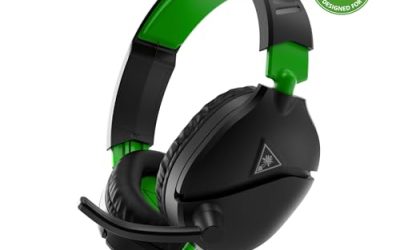
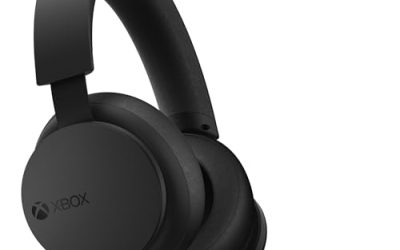
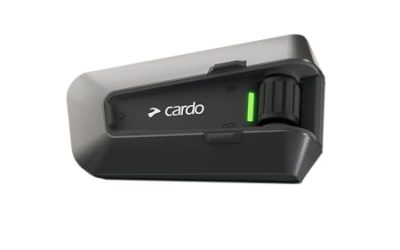
The best call center headset for most teams is a wireless or wired USB model with a noise-canceling boom microphone, a comfortable fit for eight-hour shifts and certified compatibility with your softphone platform. The Jabra Engage series, Poly Voyager and Blackwire lines, EPOS IMPACT and Logitech Zone are the families most often chosen, and the right one depends on whether agents sit at a desk, roam the floor or share seats between shifts.
As an Amazon Associate we earn from qualifying purchases at no extra cost to you.


Top 3 picks at a glance
Quick comparison of call center headset types
| Pick | Best for | Key specs | Price range |
|---|---|---|---|
| Jabra Engage 55 (wireless DECT) | Best overall for roaming agents | DECT wireless, about 150 m range per the maker, noise-canceling boom mic, 13+ hours talk time, USB link | Usually $200-$320 |
| Poly Blackwire 3300 / 5200 series (wired USB) | Best wired workhorse | USB-A or USB-C, in-line controls, noise-canceling mic, mono or stereo | Usually $50-$110 |
| EPOS IMPACT 800 series | Best for noisy floors | Active noise canceling, Bluetooth and USB, long-boom mic option | Usually $180-$320 |
| Logitech Zone Wired | Best budget wired | USB or 3.5 mm options, noise-canceling mic, in-line mute | Usually $50-$120 |
| Logitech Zone Wireless or Poly Voyager Focus 2 | Best for hybrid desk and home work | Bluetooth plus USB dongle, hybrid ANC, around 14-20 hours talk time | Usually $150-$350 |
Ranges and battery figures come from the manufacturers’ spec sheets and change between revisions, so confirm current numbers with the vendor or your reseller.
Best overall for roaming agents: Jabra Engage 55
DECT wireless headsets from the Jabra Engage line are common in contact centers because they use a dedicated radio band instead of the crowded 2.4 GHz Wi-Fi band, and they keep a stable link across a floor. A wireless call center headset removes the cord that tangles when agents stand to retrieve files or walk to a supervisor. The mono version leaves one ear free to hear the room; the stereo version blocks more of it.
The trade-off is cost and pairing. DECT headsets cost more than wired ones, each agent needs a base or dongle, and shared seats require re-pairing or a hot-desking workflow. For a team that never leaves the desk, the extra expense often does not pay off.
Best wired workhorse: Poly Blackwire
A wired USB headset is the reliable default. It has no battery to charge, no pairing and no interference, and it draws power from the computer. The Blackwire family includes mono and stereo versions with in-line call controls. Hot-desking is simple because any agent can plug in.
The trade-off is mobility, and cable wear after months of daily use. Choose a model with a replaceable or reinforced cable, and give agents a clip to keep the cord off the floor.
Best for noisy floors: EPOS IMPACT
Busy sales floors and open-plan centers produce a constant babble of competing voices. Headsets with a longer boom mic and active noise canceling on the speaker side help the agent hear the customer while the microphone keeps neighbors out of the call. Pick a boom that sits two fingers from the corner of the mouth, not a short one that records breathing sounds.
The trade-off is that active noise canceling can feel isolating and reduces awareness of supervisors. Many managers prefer mono headsets for that reason, or a stereo model with an easy transparency mode.
Best budget wired: Logitech Zone Wired
If you are equipping dozens of seats, per-unit price matters. Entry-level USB models still provide a noise-canceling boom mic and in-line mute, and many are certified for common platforms like Microsoft Teams. Buy a few spares for every ten seats, since headsets are consumables in a high-volume setting.
Best for hybrid work: Logitech Zone Wireless or Poly Voyager Focus 2
If agents split time between the office and home, a Bluetooth-plus-USB headset covers both a laptop softphone and a mobile phone. Battery life of 14-20 hours talk time covers two shifts per charge. The cost is higher than a wired model, and Bluetooth range is shorter than DECT, around 30 m in open space.
How to choose: a worked example for a 50-seat center
Match the headset to your environment using numbers, not marketing claims.
Step 1: calculate the real cost per seat
Suppose a wired headset costs $75 and lasts 18 months under heavy use, while a wireless one costs $260 and lasts 36 months. The monthly cost is $4.17 for the wired and $7.22 for the wireless. If wireless saves each agent 3 minutes per hour of walking-tether delays, that is about 24 minutes per 8-hour shift. At $18 an hour, that is $7.20 per shift, so it can pay for itself fast on a roaming floor. For seated agents who never leave the desk, wired wins on cost.
Step 2: size the battery
For wireless, divide the shift length by talk time. An 8.5-hour shift on a headset with 13 hours of talk time leaves a 4.5-hour cushion. That is enough for one charge per day. If breaks cut talk time to 6 hours, the cushion grows further. Anything under 10 hours of talk time means mid-shift charging.
Step 3: verify platform compatibility
| Check | What to confirm | Why it matters |
|---|---|---|
| Softphone certification | Teams, Zoom, Genesys, Five9, Cisco, Avaya or your own platform | Call control buttons only work with supported software |
| Connector | USB-A, USB-C or QD to a desk phone | Mismatch means adapters and failures |
| Microphone type | Noise-canceling boom, 2-3 cm from mouth | Cuts background noise and improves clarity |
| Hearing safety | Peak output limiting around 85 dB(A) over a shift | Protects agents from acoustic shock |
| Weight | Under 100 g for mono, under 150 g for stereo | Lighter headsets reduce neck fatigue |
Step 4: pilot before you buy in bulk
Give three to five agents two headset types for a week each and collect feedback on comfort, clarity and call quality. Ask supervisors to listen to recordings so you compare what customers hear, not what agents feel. Then buy the winner for the whole team.
Features that matter most in a call center
- Noise-canceling microphone: more important than speaker quality, because customers hear the mic.
- Mono versus stereo: mono keeps one ear open for the room; stereo helps in loud spaces.
- Replaceable ear cushions: leatherette cushions wear out in 6-12 months of daily use.
- Acoustic protection: look for features that limit sudden loud noises.
- Management software: central tools can update firmware and read usage data for dozens of units.
Frequently Asked Questions
Is a wireless or wired headset better for a call center?
Wired headsets win on cost, reliability and simplicity for agents who stay seated. Wireless headsets suit supervisors, trainers and agents who move around. Many centers use both.
What is the difference between mono and stereo headsets?
Mono headsets have one speaker, which leaves one ear free to hear coworkers and the room. Stereo headsets cover both ears and block more noise, which helps in loud environments but may isolate agents from their surroundings.
How often should call center headsets be replaced?
Plan on replacing wired headsets every 12-24 months and wireless ones every 24-36 months under constant use. Ear cushions and microphone foam wear first, so budget for replacement parts.
Do I need a certified headset for Microsoft Teams or Zoom?
You can use any headset with audio, but certified models offer full call control, such as answer, mute and hang up buttons that work with the software. Certification also reduces compatibility surprises after updates.
How do I keep headsets hygienic when seats are shared?
Assign personal headsets where possible. For shared seats, use removable ear cushions, wipe with alcohol-free disinfectant wipes between shifts and replace cushions on a schedule.
Related guides
More from Amazon
Programs that pair well with the guide above. Offers and eligibility are set by Amazon and may change.
A free business account with business pricing and bulk-buying tools for work, shop or home office.
Create a business accountFree shipping on eligible items, Prime Video and more. Eligible new members can start with a free trial.
Start a Prime free trialAudiobooks and podcasts to listen to on the go. Eligible new members can start with a free trial.
Try Audible freeAd-free music streaming. Eligible new subscribers can start with a free trial.
Try Music Unlimited freeAs an Amazon Associate we earn from qualifying purchases.