
Top 3 picks at a glance
Best Bass Guitar Starter Kits for Beginners
The best bass guitar starter kit for most beginners is a comfortable short- or full-scale bass paired with a 15-watt practice amp, tuner, strap, cable, picks, and a basic setup—not simply the bundle with the most accessories.
A sensible budget is usually $250–$450 for a usable entry-level package, while a better instrument-and-amp combination generally costs $400–$650. The bass itself matters most: an uncomfortable neck, sharp fret ends, noisy electronics, or poor setup can make a beginner give up before learning enough to enjoy the instrument.
As an Amazon Associate we earn from qualifying purchases at no extra cost to you.


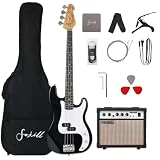
Quick comparison: which starter setup fits you?
| Recommended setup | Best for | Scale and feel | Useful amp target | Typical total range |
|---|---|---|---|---|
| Squier Sonic Precision Bass Pack | Lowest-cost complete entry | Full scale, familiar Precision-style body | Small included practice amp | $250–$400 |
| Yamaha TRBX174 + practice amp | Best balanced first full-scale bass | 34-inch scale, versatile PJ-style electronics | 15–25 watts, headphone output preferred | $350–$550 |
| Ibanez GSR200 + practice amp | Players who prioritize a slim neck | 34-inch scale, relatively fast and comfortable neck | 15–25 watts | $350–$600 |
| Ibanez GSRM20 + compact amp | Smaller players and easier reach | 28.6-inch short scale | 10–20 watts | $300–$500 |
| Better bass plus Fender Rumble 25 | Beginners who want to keep the amp longer | Depends on the chosen bass | 25 watts, headphone output and useful voicing | $500–$750 |
Prices are broad market ranges because bundles, seasonal discounts, and included accessories change frequently. Check the exact package contents before buying; the same instrument may be sold alone, with a gig bag, or as part of a retailer-specific bundle.
Best overall: Yamaha TRBX174 with a proper practice amp
The Yamaha TRBX174 is one of the safest foundations for a first bass because its PJ-style pickup layout covers both focused Precision-style punch and a brighter Jazz-style bridge-pickup sound. Its 34-inch scale gives the normal low-end response most players expect, while the body shape and moderate weight are less intimidating than many traditional full-size basses.
Its strongest beginner advantage is upgrade potential. A learner can replace the strings, improve the setup, and later upgrade the amp without immediately needing to replace the instrument. The neck is not unusually thin, so players with very small hands may prefer a short-scale model, but it is a practical long-term choice for rock, pop, metal, blues, and worship music.
Pair it with a 15- or 25-watt bass combo rather than the smallest possible amplifier. Look for a headphone output, gain and volume controls, an auxiliary or USB playback feature, and at least one tone-shaping control. These features make quiet practice and playing along with lessons much easier.
Best for a slim neck: Ibanez GSR200
The Ibanez GSR200 is a strong choice when neck comfort is the deciding factor. Its GSR neck profile feels comparatively slim, which can reduce left-hand fatigue and make first-position exercises easier. The bass also offers more tonal flexibility than a very basic single-pickup instrument.
The trade-off is that a slim neck does not automatically mean a perfect setup. Beginners should inspect whether open strings buzz, whether fretted notes sound clean, and whether the strings sit at a comfortable height. If the instrument has excessive action or uneven frets, a setup can matter more than the brand name.
For a complete kit, combine the GSR200 with a 15-watt bass combo, clip-on tuner, padded strap, instrument cable, gig bag, and a spare set of roundwound strings. If the bundle includes only a tiny generic amplifier, buying the bass separately and choosing a better amp is usually the better value.
Best short-scale option: Ibanez GSRM20
The Ibanez GSRM20 uses a 28.6-inch scale, several inches shorter than the conventional 34-inch bass scale. That reduces the distance between frets and lowers the tension required to fret notes, making it particularly useful for younger players, smaller adults, or anyone who finds a full-size bass physically tiring.
Short scale does not mean “toy.” It can produce a full sound, although the looser string feel and slightly different note response may not suit players who want the tightest possible low-end attack. Replacement strings must be chosen for short-scale compatibility; standard long strings can leave excessive winding on the tuning posts or fit poorly.
Choose this setup when reach and comfort are more important than matching the exact feel of most borrowed or professional full-scale basses. If the player later joins a band using a 34-inch instrument, the transition is possible but will require some adjustment.
Best inexpensive complete bundle: Squier Sonic Precision Bass Pack
A Squier Sonic Precision Bass Pack can be convenient for a beginner who wants the basic instrument, amplifier, cable, strap, and bag in one purchase. The Precision-style layout is simple to understand, and its strong midrange works well in rock, punk, pop, and beginner ensemble practice.
The included amp is normally the weakest part of an entry-level pack. It may be adequate for bedroom volume, but small speakers can sound thin when bass frequencies are boosted. Use the amp at moderate volume and avoid turning the bass control fully clockwise; that can create distortion and speaker strain without producing a deeper sound.
Inspect the bass carefully for fret sharpness, tuning stability, and neck relief. A low-cost pack becomes good value when the instrument is playable out of the box or needs only a modest setup. It becomes poor value if the buyer must immediately pay for fretwork, hardware repair, and a replacement amplifier.
What the amplifier should actually provide
A beginner does not need a large stage amplifier, but a bass amp should be designed for bass frequencies. A guitar amplifier is not an equivalent substitute: its speaker and circuitry may not handle sustained low notes safely at high volume.
- Power: 10–15 watts is enough for quiet home practice; 20–25 watts gives more clean headroom.
- Speaker: an 8-inch speaker is common in compact practice amps; a 10-inch speaker often sounds fuller.
- Headphone output: essential for apartment or late-night practice.
- Auxiliary input or USB audio: lets the player practice with lessons, drum tracks, or songs.
- Input gain and master volume: separate controls make it easier to obtain a clean signal.
- Basic EQ: bass, middle, and treble controls are more useful than excessive built-in effects.
Here is a practical volume calculation. If a 15-watt amp is replaced by a 25-watt amp, the electrical power increases by 25 ÷ 15 = 1.67 times. That is helpful headroom, but it is not 1.67 times louder: perceived loudness depends on speaker efficiency, cabinet design, and room placement. Spend extra money on a better speaker and headphone facility before chasing wattage.
Accessories that are worth paying for
The included accessories can determine whether the bass is used regularly. A tuner is more useful than a collection of novelty picks, and a stable strap prevents the instrument from sliding while standing.
- Clip-on tuner: chromatic tuning is easiest for a beginner and works in a noisy room.
- Instrument cable: a standard 1/4-inch cable; keep a spare if possible.
- Wide padded strap: a 2.5- to 3-inch strap distributes the weight better than a narrow guitar strap.
- Gig bag: protects the finish and makes lessons or rehearsals practical.
- Spare strings: useful, but buy the correct gauge and scale length.
- Setup budget: reserve roughly $50–$100 for professional adjustment if the bass is uncomfortable.
Setup checks before the first lesson
A starter kit should not require advanced repair, but every new bass benefits from a basic inspection. Tune the instrument, then check these points in order:
- Check tuning stability. Tune each string from below the target note, then retune after gently stretching the strings. If tuning changes sharply without playing, inspect the bridge, tuners, and nut.
- Check fret buzz. Play every fret on each string at a moderate volume. A small amount of buzz may be normal, but notes that choke, rattle loudly, or fail to ring need adjustment.
- Check action. Measure at the 12th fret. Around 2.5–3.0 mm on the lowest string and 2.0–2.5 mm on the highest string is a workable starting range, though personal preference varies.
- Check intonation. Compare the open string with the 12th-fret harmonic and fretted note. If the fretted note is sharp or flat, the bridge saddle may need moving.
- Check electronics. Rotate every control and move the cable gently. Crackling, signal cuts, or a loose jack should be corrected under the return or warranty process.
Do not turn the truss rod repeatedly to solve every buzz problem. Neck relief, bridge height, nut slots, fret leveling, and playing technique interact; a qualified technician is the safer option when adjustment is unfamiliar.
How to choose between the finalists
| Your situation | Best direction | Why |
|---|---|---|
| Small hands or shoulder discomfort | Ibanez GSRM20 or another short-scale bass | Shorter reach and lower fretting effort |
| You want one bass for several genres | Yamaha TRBX174 or another PJ-style bass | Useful pickup balance and broad upgrade path |
| You dislike thick necks | Ibanez GSR200 | Slimmer neck profile and comfortable upper access |
| Your budget is extremely limited | Squier Sonic Precision Bass Pack, after setup inspection | One purchase supplies the essential equipment |
| You will practice with headphones | Any good bass with an amp that has headphone output | Quiet practice is more valuable than extra wattage |
Frequently asked questions
Can I use a guitar amplifier with an electric bass?
A guitar amplifier is not an equivalent substitute for a bass amplifier. Bass amps are designed to handle sustained low notes, while a guitar amp’s speaker and circuitry may not handle them safely at high volume. For practice, choose a bass combo with suitable power, a bass-frequency speaker, and preferably a headphone output.
What should I do if the bass strings feel too high or buzz?
Have the instrument inspected and, if necessary, professionally adjusted. Check whether fretted notes sound clean, whether open strings buzz, and whether the action is comfortable. A basic setup can matter more than the brand name when excessive action, uneven frets, or loud rattling makes the bass difficult to play.
Are short-scale bass strings interchangeable with standard bass strings?
No, replacement strings should be chosen for the bass’s scale length. Standard long strings may leave excessive winding on the tuning posts or fit poorly on a short-scale instrument. A short-scale bass can produce a full sound, but its looser string feel and different note response may require some adjustment.
What accessories are most important for starting lessons?
A chromatic tuner, stable padded strap, instrument cable, gig bag, and correctly sized spare strings are the most useful accessories. A tuner helps in noisy rooms, while a wider strap distributes weight better. A gig bag makes lessons practical, and keeping a spare cable can prevent a minor equipment problem from stopping practice.
How loud should I set a small practice amplifier?
Use a small practice amplifier at moderate volume, especially with an inexpensive complete bundle. Avoid turning the bass control fully clockwise, because that can create distortion and speaker strain without producing deeper sound. For quiet practice, a headphone output is particularly useful, while separate input gain and master-volume controls help obtain a clean signal.
Final verdict
For most adults, the Yamaha TRBX174 with a useful 15- or 25-watt bass amp is the best all-round starter kit because it combines dependable construction, versatile sounds, normal full-scale response, and realistic upgrade potential. Choose the Ibanez GSR200 if neck comfort is the priority, the GSRM20 if a full-size bass feels too large, and the Squier Sonic Precision Bass Pack when convenience and the lowest complete cost matter most.
Whichever kit you choose, prioritize a straight, comfortable neck and a bass-specific amp over extra accessories. A modest instrument that is correctly set up and easy to practice through will provide more beginner value than a larger package filled with items that do not improve playability.


