The best Android One phone in 2026 is effectively a Google Pixel, because Android One has faded as a retail program and few new phones launch under the badge. What buyers actually want from it is stock Android, clean software and long update support. The Pixel 9a is the best-value way to get that, the Pixel 10 is the premium choice, and near-stock Motorola Moto G models cover the budget end.
As an Amazon Associate we earn from qualifying purchases at no extra cost to you.


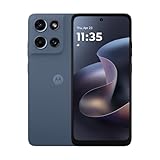
Our Top Picks
Top 3 picks at a glance
What “Android One” means now
Android One was Google’s program for partner phones that ran near-unmodified Android with a promise of timely updates. It was most visible on Nokia/HMD, Motorola One and Xiaomi Mi A models, and many of those devices are years old. Old Android One phones are poor buys today because their update windows have mostly ended, and an unpatched phone is a security risk for banking, messaging and gaming accounts.
So treat “Android One” as a checklist rather than a label:
- Clean software: little or no preinstalled bloat and no ad-driven launcher.
- Update commitment: a published number of OS and security years from the manufacturer.
- Fast patches: monthly or near-monthly security updates.
Quick comparison of the best stock-Android-style picks
| Pick | Best for | Key specs (per manufacturer) | Price range |
|---|---|---|---|
| Google Pixel 9a | Best overall value, closest to Android One | Tensor G4, 8GB RAM, 6.3-inch OLED, 5,100 mAh, 7 years of OS and security updates | Mid-range |
| Google Pixel 10 | Best premium / longest-lasting | Tensor G5, 12GB RAM, 6.3-inch OLED, roughly 4,970 mAh, 7 years of updates | Premium |
| Motorola Moto G Power (2025) | Best budget battery life | MediaTek Dimensity 6300, 5,000 mAh, 6.8-inch 120Hz LCD, near-stock software | Budget |
| Motorola Moto G (2025) | Best cheap near-stock daily phone | Dimensity 6300, 5,000 mAh, 6.7-inch 120Hz LCD, light Motorola additions | Budget |
| Nothing Phone (3a) | Best clean-but-different software | Snapdragon 7s Gen 3, 5,000 mAh, 3 OS updates and 6 years of security patches | Mid-range |
Specs and update policies are taken from the manufacturers’ published sheets and can differ by region and carrier variant, so check the exact model listing before you buy.
Best overall: Google Pixel 9a
The Pixel 9a is the strongest answer to this search. It runs Google’s own Android build, gets updates first and carries Google’s seven-year update promise. That is longer than any past Android One partner offered. The 5,100 mAh battery and the OLED panel make it a good all-rounder.
Trade-off: Tensor G4 is not a performance leader. In published reviews it handles popular mobile games at medium to high settings, but sustained heavy titles tend to throttle sooner than on Snapdragon flagships. If peak gaming frame rates matter most, look at a gaming-focused phone instead, though you will lose the clean software.
Best premium: Google Pixel 10
The Pixel 10 suits buyers who keep phones for five to seven years. It has more RAM (12GB, per Google), a newer Tensor G5 chip and the same seven-year update policy. More memory helps with background app retention and long-term slowdown.
Trade-off: It costs noticeably more than the 9a, and the everyday experience is similar. Most buyers do not get proportionally more value from the extra spend.
Best budget: Motorola Moto G Power (2025)
This is the pick for anyone who wants a big battery and almost no bloat on a low budget. Motorola’s software is close to stock, with a few useful gesture additions. The large 6.8-inch 120Hz screen and 5,000 mAh cell make it a good media and casual-gaming phone.
Trade-off: Update support is much shorter than a Pixel’s. Motorola’s budget phones have typically received one major OS upgrade and about three years of security patches, so check the current policy for your model. The Dimensity 6300 is also limited for demanding 3D games, where you should expect lower settings and frame rates often in the 30 to 40 fps range, depending on title and patch.
Best cheap daily driver: Motorola Moto G (2025)
The standard Moto G offers nearly the same hardware experience in a slightly smaller body. It suits students, secondary phones and first smartphones. The software is clean, and the battery comfortably lasts a day.
Trade-off: The same short update window and modest chip as the Power model, and camera quality in low light is the weak point.
Best alternative skin: Nothing Phone (3a)
Nothing OS is lightweight, with few preinstalled apps and fast animations, though it is not stock Android. Nothing publishes three OS updates and six years of security patches for the 3a series, which is far better than most budget rivals.
Trade-off: It has a custom interface and a distinct look, so it is not true “stock.” Availability also varies by country, and carrier certification in some regions (notably the US) can be limited.
Worked example: how many update years you really get
Update support runs from the phone’s launch date, not from your purchase date. That changes the value math:
- Pixel 9a (launched spring 2025, 7 years): security support to roughly spring 2032. Bought in 2026, you get about 6 years of coverage.
- Moto G Power (2025) (launched early 2025, about 3 years of security patches): coverage to roughly early 2028. Bought in 2026, you get about 2 years.
- Nothing Phone (3a) (launched spring 2025, 6 years of security patches): coverage to roughly 2031, so about 5 years remain.
If a budget phone costs half as much as the Pixel 9a but covers one-third of the years, the Pixel is cheaper per year of safe use. The budget Moto only makes sense if you replace phones every two years or want a secondary device.
Battery runtime example: A 5,000 mAh cell at a nominal 3.85 V holds about 19.25 Wh (5.0 Ah × 3.85 V). If your mixed use averages 1.2 W, that is roughly 16 hours of use. Heavy 3D gaming can draw 4 to 6 W, which cuts the same battery to about 3 to 5 hours. These figures are illustrative and vary with brightness, signal and game.
How to choose: decision matrix
| Your situation | Choose | Why |
|---|---|---|
| Keep the phone 5+ years | Pixel 9a or Pixel 10 | 7-year update promise |
| Want the cleanest software, mid-range spend | Pixel 9a | Google’s own build, first to get patches |
| Lowest spend, battery first | Moto G Power (2025) | 5,000 mAh, near-stock, big screen |
| Parent or child’s first phone | Moto G (2025) | Simple, durable, cheap to replace |
| Want fast, minimal UI with longer security support | Nothing Phone (3a) | 6 years of patches, light software |
| Mainly play demanding 3D games | Gaming-focused Snapdragon phone | Better sustained performance; software is less clean |
What to check before buying
- Published update policy: look for OS and security years in writing, not marketing wording.
- Carrier and band support: confirm your carrier’s bands and whether the model is certified for it, especially for unlocked imports.
- Storage: 128GB is a practical minimum if you install large games, since several mobile titles exceed 5 to 10GB each.
- Display: 90Hz or 120Hz makes scrolling and games feel smoother; OLED gives better contrast than LCD.
- Avoid old “Android One” stock: any model launched more than about three years ago on a short policy is likely out of support.
Frequently Asked Questions
Is Android One still a thing in 2026?
The program still exists in name, but very few new phones launch under it. Google’s own Pixel line has taken over as the clean-software, fast-update option. Buy by update policy rather than by the badge.
Is a Pixel the same as Android One?
No, but it delivers the same benefits. Pixels run Google’s own Android build rather than a partner build, and they currently get the longest update promise of any mainstream Android phone at seven years. That makes them the practical replacement.
Are old Nokia Android One phones worth buying used?
Generally not. Most have reached the end of their update support, and software support is the whole point of the program. Only consider one as a cheap offline device or a backup, not for banking or sensitive accounts.
Which stock-Android phone is best for gaming?
The Pixel 10 is the strongest option for clean software with solid gaming performance, while the Pixel 9a handles most popular titles at medium to high settings. For sustained high frame rates in demanding games, a Snapdragon gaming phone will usually do better, with the trade-off of heavier software.
How long should a phone get updates?
Aim for at least five years of security patches if you plan to keep it that long. A phone with three years of patches is fine as a two-to-three-year device, but the cost per safe year of use is higher for anyone planning to hold on longer.
Related guides
More from Amazon
Programs that pair well with the guide above. Offers and eligibility are set by Amazon and may change.
A free business account with business pricing and bulk-buying tools for work, shop or home office.
Create a business accountFree shipping on eligible items, Prime Video and more. Eligible new members can start with a free trial.
Start a Prime free trialAudiobooks and podcasts to listen to on the go. Eligible new members can start with a free trial.
Try Audible freeAd-free music streaming. Eligible new subscribers can start with a free trial.
Try Music Unlimited freeAs an Amazon Associate we earn from qualifying purchases.


