
The best 75 inch TV for sports in 2026 is the Sony BRAVIA 5 75-inch for balanced motion processing, upscaling, brightness, and price, while the Samsung QN90F is the stronger choice for a very bright room and the LG OLED C5 77-inch is the premium pick for wide seating and clean motion.
As an Amazon Associate we earn from qualifying purchases at no extra cost to you.


Top 3 picks at a glance
Best 75-Inch TVs for Sports: Quick Comparison
| TV | Best for | Refresh rate | Peak brightness class | Viewing angle | Typical market range |
|---|---|---|---|---|---|
| Sony BRAVIA 5 75-inch | Best overall sports balance | 120Hz | High Mini LED | Good, but best near center | Usually $1,200–$1,700 |
| Samsung QN90F 75-inch | Bright rooms and daytime viewing | 144Hz | Very high Mini LED | Very good for an LCD | Usually $2,000–$2,800 |
| LG OLED C5 77-inch | Wide seating and premium motion | 120Hz | High OLED | Excellent | Usually $2,200–$3,000 |
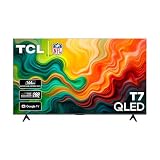
| TCL QM7K 75-inch | Value-conscious sports rooms | 144Hz | High Mini LED | Moderate | Usually $900–$1,400 |
| Hisense U8QG 75-inch | High brightness at a competitive price | 165Hz | Very high Mini LED | Moderate | Usually $1,200–$1,800 |
These are 75-inch-class recommendations. The LG OLED C5 is normally sold as a 77-inch model rather than a literal 75-inch TV, but it belongs in the comparison because its screen size, price, and performance target the same large-room audience.
Sony BRAVIA 5: Best Overall for Live Sports
The Sony BRAVIA 5 is the safest all-around recommendation for the best 75 inch TV for sports. Its Mini LED backlight provides substantially more daylight punch than a typical mid-range LCD, while Sony’s processing is particularly useful when the broadcast source is compressed, softened, or only 720p or 1080i.
Sports broadcasts contain difficult material: thin scoreboard text, rapidly moving players, grass or ice textures, and camera pans that expose judder. Sony’s XR processing can make lower-quality cable and streaming feeds look more coherent without relying on excessive sharpening. It is not the widest-viewing TV in this group, so the center seats remain preferable, but it is a strong choice for a family room with mixed broadcast quality.
Why choose it
- Good motion clarity at 120Hz without needing an aggressive soap-opera effect.
- Effective upscaling for cable, satellite, and lower-bitrate streams.
- Mini LED brightness helps preserve detail during afternoon games.
- Usually less expensive than flagship OLED and premium Mini LED models.
Samsung QN90F: Best for Bright Rooms and Reflections
The Samsung QN90F is the best fit when sunlight, ceiling lights, or lamps are the main problem. Its high-output Mini LED system can maintain a vivid picture in conditions where an OLED may look comparatively muted. The anti-reflection treatment is also valuable for sports because a bright window across the field can obscure the ball, puck, or scoreboard.
Its 144Hz panel is more useful for PC gaming than for television sports, which is generally delivered at 50 or 60 frames per second. However, the extra panel headroom can reduce visible judder when the TV converts different broadcast frame rates, and it makes the set more versatile for a gaming-and-sports room.
The QN90F uses an LCD panel, so contrast and color can vary somewhat from the center seat. Samsung’s wide-viewing technology improves this considerably, though it cannot match OLED’s near-uniform picture from extreme angles.
LG OLED C5: Best for Wide Seating and Clean Motion
The LG OLED C5 77-inch is the premium choice when viewers sit across a wide sofa or around the sides of a large room. Every pixel emits its own light, so the picture remains consistent from off-center seats, with no LCD color shift. OLED response time is also effectively instantaneous, preventing the pixel smearing that can appear behind fast-moving players on slower LCD panels.
OLED does not automatically eliminate motion blur. Television sports are usually sample-and-hold video, so the eye can still perceive blur during a fast camera pan. The C5’s motion controls can improve this, but excessive interpolation may create halos around players or make a live broadcast look like a studio drama.
Choose the C5 when reflection control and sustained daylight brightness are manageable. In a room with direct sun, the Samsung QN90F or Hisense U8QG is generally easier to see.
TCL QM7K: Best Value 75-Inch Sports TV
The TCL QM7K offers the most convincing large-screen value for viewers who want Mini LED brightness and a fast panel without moving into flagship pricing. Its 144Hz refresh rate is useful for sports, console games, and PC gaming, while the local dimming system gives the image more depth than a conventional edge-lit LCD.
Its main compromise is viewing angle. The picture is strongest from the center and can lose contrast or color saturation for seats far to the side. Upscaling is also competent rather than class-leading, so a high-quality 4K stream will look better than a noisy low-resolution cable channel.
Hisense U8QG: Brightness-First Alternative
The Hisense U8QG is worth considering for a sports bar, sunlit basement, or room where brightness takes priority. Its Mini LED backlight and high-refresh panel are designed for a punchy HDR image and fluid movement. It can make daytime sports look more energetic than a similarly priced OLED.
The trade-offs are familiar: off-axis performance is not as consistent as OLED, and aggressive default processing can make motion look artificial. It is a strong value when purchased at a competitive market price, but Sony remains the safer choice if broadcast upscaling and natural motion are more important than maximum brightness.
How to Choose for Your Room
| Your situation | Best match | Reason |
|---|---|---|
| Direct sunlight or uncovered windows | Samsung QN90F | High brightness and strong reflection handling |
| Several seats far to the left and right | LG OLED C5 77-inch | Consistent color and contrast at wide angles |
| Mostly cable or 1080p sports channels | Sony BRAVIA 5 | Better processing and upscaling priorities |
| Sports plus PC or console gaming | Samsung QN90F or TCL QM7K | 144Hz support and gaming-oriented connectivity |
| Large screen on a controlled budget | TCL QM7K | Strong brightness and refresh rate per dollar |
Recommended Settings for Sports
Start with the TV’s Cinema, Custom, or Filmmaker-style picture mode, then make these changes rather than selecting the most aggressive “Sports” preset:
- Motion smoothing: Set de-judder around 2–4 and de-blur around 5–7. This adds clarity to camera pans while reducing the soap-opera appearance. If halos appear around players, lower de-blur first.
- Sharpness: Keep it low, usually between 0 and 10 on a 0–50 scale. Broadcast compression can turn high sharpness into bright outlines around jerseys and score graphics.
- Local dimming: Use High on Mini LED TVs for daytime sports, but reduce it if small white scoreboard text blooms into the surrounding black area.
- Brightness and ambient sensor: Disable automatic brightness changes if the image keeps fluctuating during a game. Calibrate brightness once for the room’s normal lighting.
- Noise reduction: Use Low for a clean 4K stream and Auto or Low for cable. Strong noise reduction can erase grass texture and fine jersey detail.
Bandwidth and Source Quality Matter
A 4K 120Hz television cannot create detail that is absent from the broadcast. A useful bandwidth check is that uncompressed 4K at 120Hz requires roughly 32.1Gbps for 10-bit 4:4:4 video before additional transport overhead. That is why modern TVs use HDMI 2.1 inputs rated up to 40 or 48Gbps for high-refresh gaming. Most live sports streams use far less because they are compressed, but a weak streaming connection can still produce blockiness and smeared motion.
For the best result, use a wired Ethernet connection or strong 5GHz/6GHz Wi-Fi, select the highest available stream quality, and connect a cable box or streaming device directly to an HDMI input that supports the required format. A 60fps 4K stream is already a good match for most sports broadcasts; paying extra for 144Hz matters more if the TV will also serve as a gaming monitor.
Frequently asked questions
Is the LG OLED C5 actually a 75-inch TV?
No, the LG OLED C5 is normally sold as a 77-inch model rather than a literal 75-inch TV. It is included because its screen size, performance target, and large-room audience are similar to those of the other 75-inch-class recommendations. Its main advantage is consistent color and contrast for viewers seated far from the center.
Which TV is best if most of my sports come from cable or satellite?
The Sony BRAVIA 5 is the best fit when most sports come from cable or satellite. Its processing and upscaling are especially useful for compressed, softened, 720p, or 1080i broadcasts. It can make lower-quality feeds look more coherent without relying on excessive sharpening, while its Mini LED brightness helps preserve detail during afternoon games.
Does a higher refresh rate make television sports look much better?
Not necessarily, because most television sports are delivered at 50 or 60 frames per second. A 144Hz or 165Hz panel provides extra headroom and is more useful for PC or console gaming, although it can help when the TV converts different broadcast frame rates. A 120Hz television is already a strong match for live sports.
Why can sports still look blurry on an OLED TV?
Sports can still look blurry on an OLED because television video is usually sample-and-hold content, even though OLED response time is effectively instantaneous. The eye may perceive blur during a fast camera pan. Motion controls can improve clarity, but excessive interpolation may create halos around players or make a live broadcast look artificial.
Can I watch sports comfortably from seats at the side of the room?
The LG OLED C5 77-inch is the strongest choice for side seating because its picture remains consistent from off-center positions. The Sony BRAVIA 5, TCL QM7K, and Hisense U8QG are strongest near the center and can lose contrast or color saturation farther to the side. The Samsung QN90F improves LCD viewing angles but cannot match OLED at extreme angles.
Final Verdict
Choose the Sony BRAVIA 5 for the best balance of motion handling, upscaling, brightness, and price. Choose the Samsung QN90F when reflections and daylight are difficult. Choose the LG OLED C5 77-inch for the widest seating area and most consistent off-angle picture. The TCL QM7K is the value pick, while the Hisense U8QG is the brightness-first alternative.


