The best 5×7 car speakers for most people are mid-range coaxial pairs with a silk or soft-dome tweeter, 90 dB or higher sensitivity, and 40–60 watts RMS handling. They sound clearly better than factory paper cones on a stock head unit and fit without cutting. Choose a component set only if your door has room and you plan to add an amplifier.
Most “5×7” speakers are also sold as “6×8” and fit the same hole. Check depth and tweeter clearance before you check brand.
As an Amazon Associate we earn from qualifying purchases at no extra cost to you.

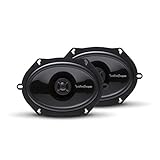
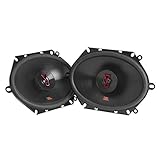
Top 3 picks at a glance
Quick comparison of the best 5×7 speaker types
Specific models change by region and year, so these picks are spec classes. Look for current models from established brands such as Kicker, Pioneer, JBL, Rockford Fosgate, Alpine, Kenwood, Infinity, Polk Audio and Focal that match them.
| Pick | Best for | Key specs to look for | Price range |
|---|---|---|---|
| Best overall: mid-range coaxial | Factory head unit or small amp | 90–92 dB sensitivity, 45–60 W RMS, silk-dome tweeter, 4 ohm | Mid-range |
| Best budget: entry coaxial | Replacing blown or worn paper cones | 88–90 dB, 25–40 W RMS, PEI or Mylar tweeter | Budget |
| Best for stock radios: high-sensitivity coaxial | Low-power head units, no amp | 92 dB or higher, 20–50 W RMS, polypropylene cone | Budget to mid-range |
| Best for sound quality: component set | Doors with room, amp planned | Separate tweeter and crossover, 50–100 W RMS, 4 ohm | Mid-range to premium |
| Best for loud systems: high-power coaxial | Amplified builds, bass-heavy music | 75–100 W RMS, rubber surround, strong magnet | Mid-range |
| Best shallow-fit: slim-mount coaxial | Tight doors, power windows with little clearance | Mounting depth under about 2 inches, 40–60 W RMS | Mid-range |
Best overall: mid-range coaxial with a dome tweeter
This is the right answer for most drivers. A coaxial speaker puts the tweeter on a bar or pod over the woofer, so you swap one part per door. Silk or soft-dome tweeters sound smoother than hard Mylar ones, and a 90 dB or higher rating means they play loud on stock power.
Trade-off: the tweeter sits low in the door, so imaging is less precise than with a component set. Without an amp you also gain clarity more than bass.
Best budget: entry-level coaxial
If the goal is to replace blown, rotted or crackling factory cones, an entry coaxial is enough. A fresh cone and surround with 25–40 W RMS handling suits any factory radio.
Trade-off: expect harsher highs, looser bass and cheaper tweeters. Don’t pair them with a big amp, because the low RMS rating leaves no headroom.
Best for stock head units: high-sensitivity speakers
Factory radios usually deliver about 10–20 watts RMS per channel, per typical manufacturer specs. At that power, sensitivity matters more than rated wattage. Look for 91–93 dB (1 watt at 1 meter) and a lightweight cone.
Trade-off: high-sensitivity designs often give up some deep bass extension compared with heavier, lower-sensitivity speakers.
Best for sound quality: 5×7 component set
Components separate the tweeter and woofer and add an external crossover. You can mount the tweeter high on the door, A-pillar or sail panel, which improves imaging. Use them with a 4-channel amplifier for the full benefit.
Trade-off: they need more installation work, such as tweeter mounting, crossover placement and wire routing. Component sets in this size are also less common than in 6.5-inch.
Best for loud systems: high-power coaxial
If you run an amp and like volume, choose 75–100 W RMS handling, a rubber surround and a robust basket. These tolerate heavier signals and bass from a subwoofer-free setup.
Trade-off: they usually have lower sensitivity and sound dull or strained on a stock head unit. They only make sense with real amplification.
Best shallow-fit option: slim-mount coaxial
Some doors, especially in older Ford and similar models, have little depth before the window glass. Slim-mount coaxial speakers keep mounting depth to about 2 inches or less. Always measure before you buy.
Trade-off: a shallow basket often means a short cone excursion, so bass is more modest.
How to choose: the decision criteria that matter
1. Fit: 5×7 versus 6×8 and mounting depth
Many vehicles with 5×7 or 6×8 openings accept either size. This is common in Ford, Mazda, Jeep, Volvo and some GM and Nissan models, but confirm with a fitment guide for your exact year and trim. Measure three things:
- Cutout width and height: the 5×7 size is about 5 by 7 inches. Many 6×8 frames are slightly larger but fit the same factory opening with the supplied bracket.
- Mounting depth: typically 2 to 2.75 inches. Roll the window fully down and check that the speaker magnet doesn’t hit the glass.
- Mounting holes: if they don’t line up, use a vehicle-specific adapter plate or wiring harness.
2. Power: RMS, not peak
Ignore “peak power” numbers on the box. Use the RMS (continuous) rating. A safe rule is to size your amplifier at 75–150% of the speaker’s RMS rating per channel.
3. Sensitivity: the number a spec sheet rarely explains
Sensitivity tells you how loud a speaker plays with 1 watt measured at 1 meter. Every 3 dB of extra sensitivity equals double the amplifier power.
Worked example: how much does sensitivity matter on a stock radio?
Assume a factory head unit delivers 15 W RMS per channel. Compare two speakers at that power:
- Output gain from 15 W: 10 x log10(15) ≈ 11.8 dB.
- Speaker A, 92 dB sensitivity: 92 + 11.8 ≈ 103.8 dB peak at 1 meter.
- Speaker B, 87 dB sensitivity: 87 + 11.8 ≈ 98.8 dB at 1 meter.
The 5 dB gap means Speaker B needs about 3.2 times the power (10^0.5) to match Speaker A. That’s roughly 48 watts versus 15. With a stock radio, Speaker B would sound quieter and strain sooner. Real cabin results are lower, since doors and road noise cut the effective level, but the relative gap stays the same.
| Your setup | Sensitivity target | RMS handling target | Best type |
|---|---|---|---|
| Stock head unit, no amp | 91 dB or higher | 20–50 W | High-sensitivity coaxial |
| Aftermarket head unit, 20 W/ch | 89–92 dB | 30–60 W | Mid-range coaxial |
| Small 4-channel amp, 50 W/ch | 87–91 dB | 50–75 W | Coaxial or component |
| Larger amp, 75 W/ch | 86–90 dB | 75–100 W | High-power coaxial or component |
| Tight door, shallow mount | 88–91 dB | 40–60 W | Slim-mount coaxial |
Power budget example
You buy a pair of 5×7 speakers rated 60 W RMS for the front and a second pair rated 60 W RMS for the rear. The ideal amp range is 75–150% of 60 W, which is 45–90 W per channel. A common 4-channel amp rated at 50–75 W RMS per channel at 4 ohms fits well. A 4-channel amp rated 100 W per channel would still work if you keep the gain conservative, but a 50–75 W amp gives cleaner headroom.
4. Materials: cone, surround and tweeter
- Cone: polypropylene resists moisture and sounds fairly neutral. Treated paper is common and sounds warm but ages faster. Woven or composite cones usually tolerate more power.
- Surround: rubber lasts longer than foam in hot or humid climates.
- Tweeter: silk and other soft domes sound smoother. Metal domes sound brighter and can be harsh in a reflective cabin.
5. Impedance: stick to 4 ohm
Almost all car audio gear and factory wiring expects 4 ohm speakers. Only choose 2 ohm or other values if you know your amplifier’s rating for that load.
6. Installation extras that improve results
- Adapter plates and harnesses: avoid cutting factory wiring and make the swap reversible.
- Sound deadening: a patch of damping material behind the speaker reduces door rattle and tightens midbass.
- Foam baffles or rings: they seal the speaker to the door panel and reduce leakage.
- Add a subwoofer: 5×7 speakers don’t produce deep bass. A small powered sub often improves the sound more than a more expensive speaker.
Which pick should you buy? Quick decision guide
- Stock radio and want a simple upgrade: high-sensitivity mid-range coaxial.
- Replacing worn factory speakers on a tight budget: entry coaxial with 88 dB or more.
- Planning a 4-channel amp: a component set or a mid-range coaxial with 50–75 W RMS.
- Little door clearance: slim-mount coaxial, after measuring depth.
- Bass-heavy listening with real amplification: high-power coaxial plus a subwoofer.
Frequently Asked Questions
Are 5×7 and 6×8 car speakers the same size?
They are very close and often interchangeable. Many vehicles accept both in the same opening, and manufacturers frequently sell one speaker labeled for both sizes. Confirm the exact cutout and depth for your vehicle before buying.
Do I need an amplifier for 5×7 speakers?
No, but it helps. A high-sensitivity coaxial pair will sound better than factory speakers on a stock radio. An amp adds volume, cleaner dynamics and bass control, especially for 50 W RMS or higher speakers.
Should I choose coaxial or component 5×7 speakers?
Choose coaxial for easier installation and a direct factory swap. Choose components when you can relocate the tweeters and use an amplifier. Components generally give better imaging but take more work, and the selection in this size is smaller.
What RMS power should I look for?
Match the speaker’s RMS rating to your power source. For a stock or low-power radio, 20–50 W RMS is enough. For a 50–75 W per channel amp, look for speakers rated 50–100 W RMS, which keeps the amp within the 75–150% rule.
Will new 5×7 speakers sound much better than factory ones?
Usually yes, because factory speakers often use thin paper cones and small magnets. Expect clearer vocals and highs and tighter midbass. Bass depth stays limited by the small cone, so a subwoofer makes the biggest difference there.
Can 5×7 speakers fit where 6.5-inch speakers go?
Not directly. The shapes and mounting patterns differ, so you need a vehicle-specific adapter bracket, and the opening may not suit either size. Check a fitment guide for your exact model first.
Related guides
More from Amazon
Programs that pair well with the guide above. Offers and eligibility are set by Amazon and may change.
A free business account with business pricing and bulk-buying tools for work, shop or home office.
Create a business accountFree shipping on eligible items, Prime Video and more. Eligible new members can start with a free trial.
Start a Prime free trialAudiobooks and podcasts to listen to on the go. Eligible new members can start with a free trial.
Try Audible freeAd-free music streaming. Eligible new subscribers can start with a free trial.
Try Music Unlimited freeAs an Amazon Associate we earn from qualifying purchases.


